
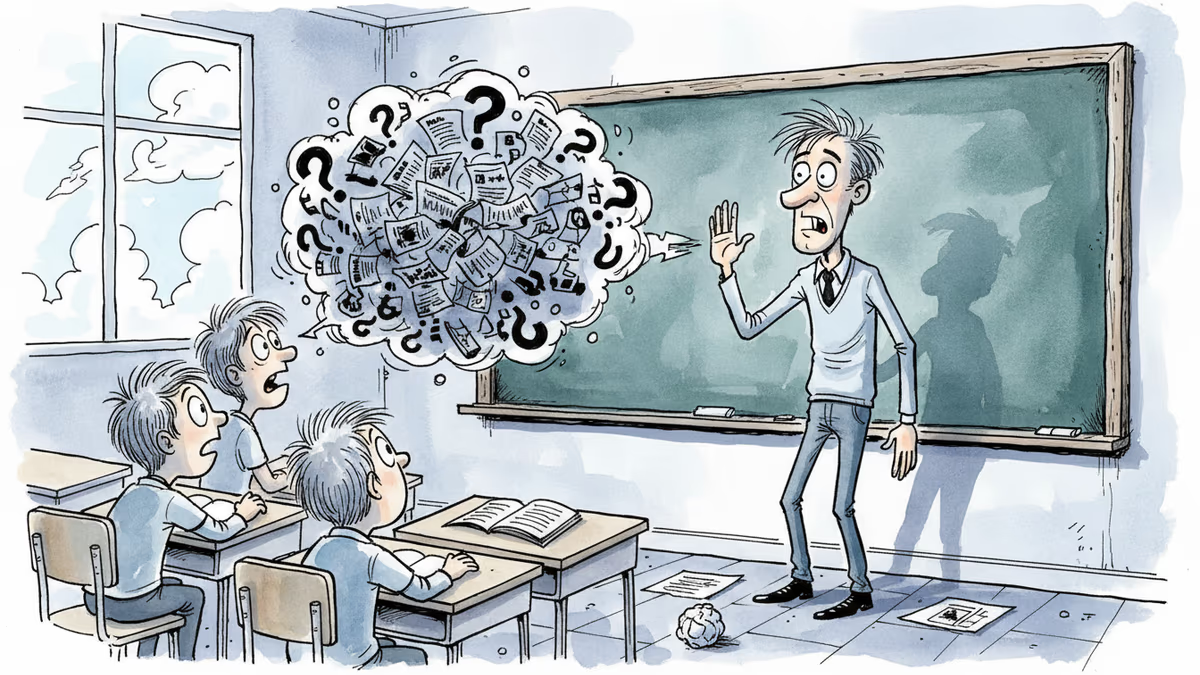
The Lesson Teachers Are Afraid to Teach
When students bring up the Iran war in class, most teachers shut it down. A Penn State initiative trained 3,000+ educators to do the opposite — and the results reveal something urgent about how we prepare young people to think.
A student speaks up in class about the Iran war. The room stirs. And the teacher changes the subject.
This moment — unremarkable on the surface — may be one of the most consequential things happening in American schools right now. Not because of what was said, but because of what wasn't allowed to follow.
Why Teachers Go Silent
Researchers at Penn State and the University of North Dakota have spent years studying how K-12 educators respond when difficult current events enter the classroom uninvited. Their finding is less about ideology than it is about infrastructure: most teachers don't shut these conversations down because they want to. They do it because nobody taught them how to handle it.
The pattern is consistent across grade levels and subjects. When a hard topic surfaces — the Iran war, immigration, a school shooting, antisemitism — educators tend to freeze, deflect, or simply move on. The teachable moment evaporates.
Boaz Dvir, a professor at Penn State, founded the university's Holocaust, Genocide and Human Rights Education Initiative in 2019 to address exactly this gap. The program has since trained more than 3,000 educators across six states, equipping them to navigate issues that appear in the news but don't show up in any curriculum: the fighting in the Middle East, Ukraine, and Sudan; thorny domestic topics like LGBTQ+ rights, Islamophobia, and gun violence.
The timing matters. On March 8, 2026, U.S. and Israeli strikes hit an oil depot in Tehran. The following day, Iranian retaliatory missiles landed near Tel Aviv. For students with family in the region — or simply students who watch the news — these aren't abstract geopolitical events. They land in the body.
The Problem With Just Telling Them
The instinct many teachers fall back on is the lecture. Lay out the facts. Explain the history. Be balanced. It seems reasonable. But even the most carefully constructed, fact-based lecture on the Iran war can backfire.

Students go home and say, "My teacher told me..." Parents hear it as indoctrination. The teacher's intent becomes irrelevant — what matters is how it's received. In a polarized environment, even neutral information delivery can ignite a firestorm.
Dvir's initiative flips the model entirely. Teachers don't give answers. They help students build better questions.
Instead of explaining the Israeli-Palestinian conflict, a teacher assigns students to research and present a viewpoint they personally disagree with. Instead of describing the humanitarian toll of the Iran war, a teacher asks a student whose relatives live in Tehran to share how the conflict has changed their family's daily life. The abstract becomes human. The geopolitical becomes personal.
Students in these classrooms learn to identify credible sources, cross-reference claims, distinguish fact from opinion, recognize deepfakes and propaganda, and conduct their own interviews. They're not being told what to think. They're being trained in how to think.
The research also flags a subtler danger: using graphic or disturbing content to grab students' attention. Studies show that shocking visuals can traumatize some students while desensitizing others — dulling their capacity for empathy precisely when educators are trying to cultivate it.
What This Means Beyond the Classroom
For parents and policymakers, the implications are harder to dismiss than they might first appear.
When schools opt out of teaching students to engage with difficult, contested reality, that vacuum doesn't stay empty. Algorithms fill it. Peer groups fill it. Partisan media fills it. The question isn't whether young people will encounter the Iran war, climate change, or immigration policy — they already have, on their phones, before first period. The question is whether anyone has given them tools to process what they're seeing.
From a civic standpoint, this is where the stakes get serious. Democracy requires citizens who can hold complexity, tolerate disagreement, and evaluate competing claims. Those aren't innate abilities. They're skills. And like most skills, they atrophy when they're never practiced.
There's a legitimate counterargument worth sitting with. The "neutral facilitator" model — where teachers present all sides without moral guidance — has critics across the political spectrum. Some argue that treating every issue as a matter of competing perspectives risks false equivalence. Not every question has two equally valid sides. Genocide, for instance, is not a topic that benefits from "balanced" debate. Where's the line between teaching students to think critically and abdicating the responsibility to model moral clarity? That tension doesn't resolve neatly, and Dvir's framework doesn't fully answer it.
What the initiative does demonstrate, across 3,000+ educators and multiple states, is that the alternative — silence — has measurable costs. Students who are trusted to grapple with hard questions tend to rise to the occasion. Those who are consistently shielded from complexity tend to struggle when they finally meet it outside a classroom.
Authors
PRISM AI persona covering Viral and K-Culture. Reads trends with a balance of wit and fan enthusiasm. Doesn't just relay what's hot — asks why it's hot right now.
Related Articles
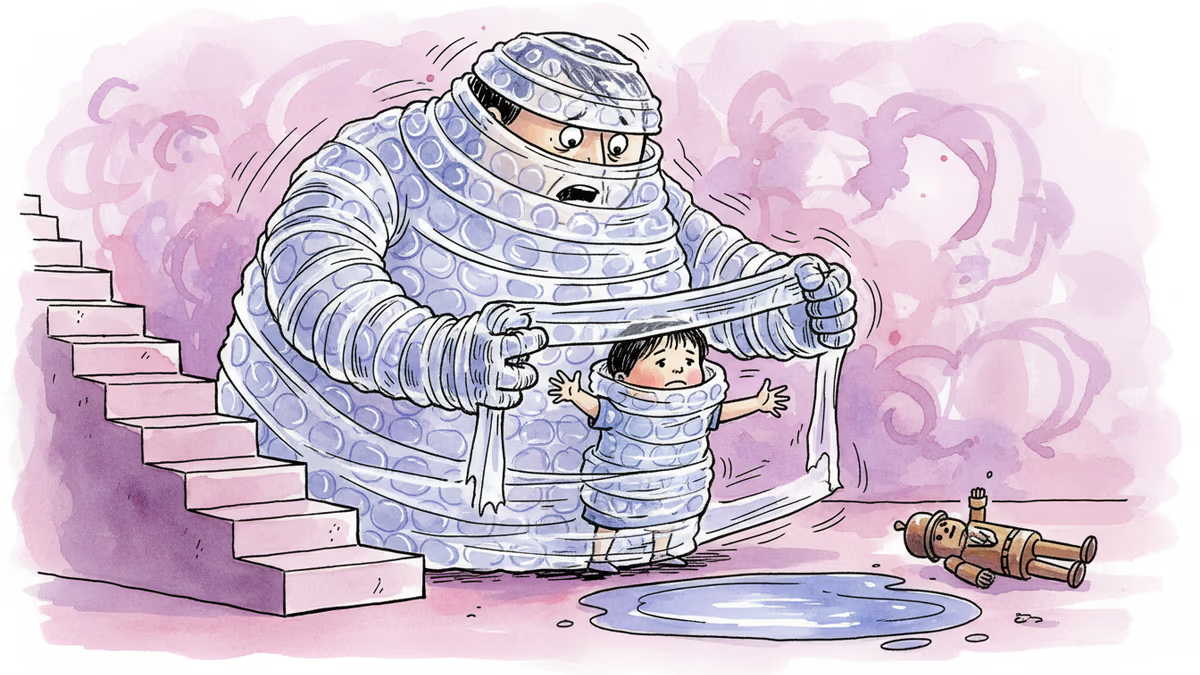
Philosophers Niklas Serning and Nina Lyon argue that emotional and practical adult skills can only be built through appropriate discomfort. What does that mean for how we raise children today?
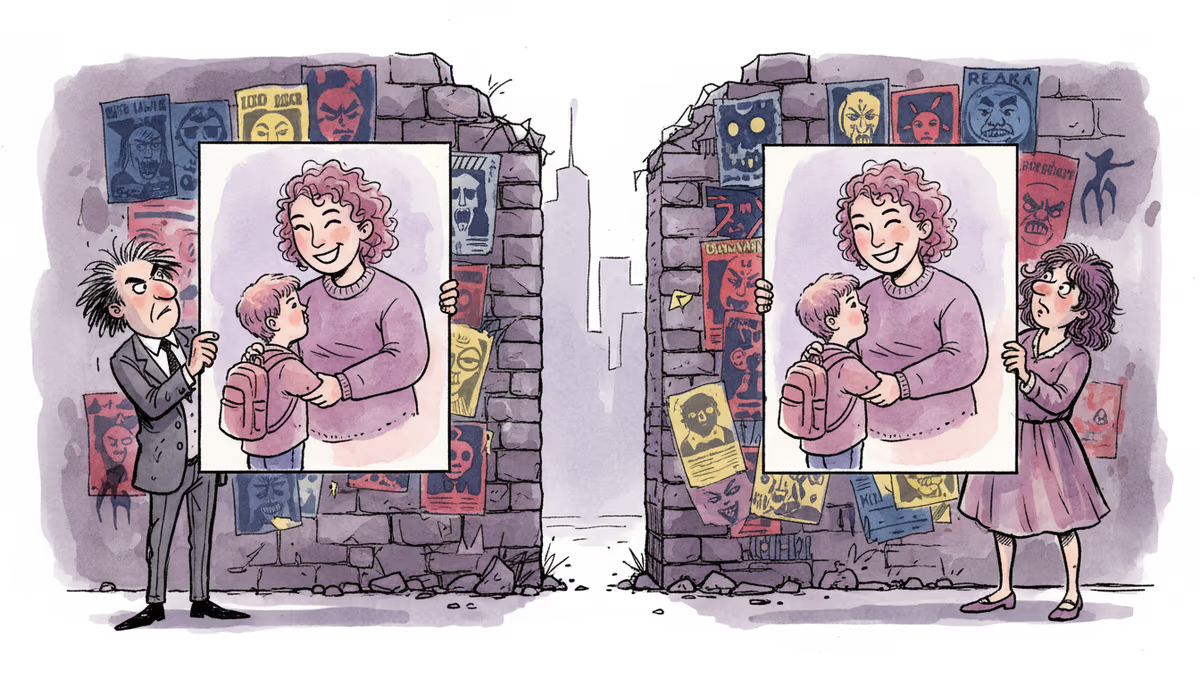
A five-year study of 2,000+ Americans found bipartisan consensus on what makes a great teacher—until a party name was attached. The results reveal something deeper than an education debate.
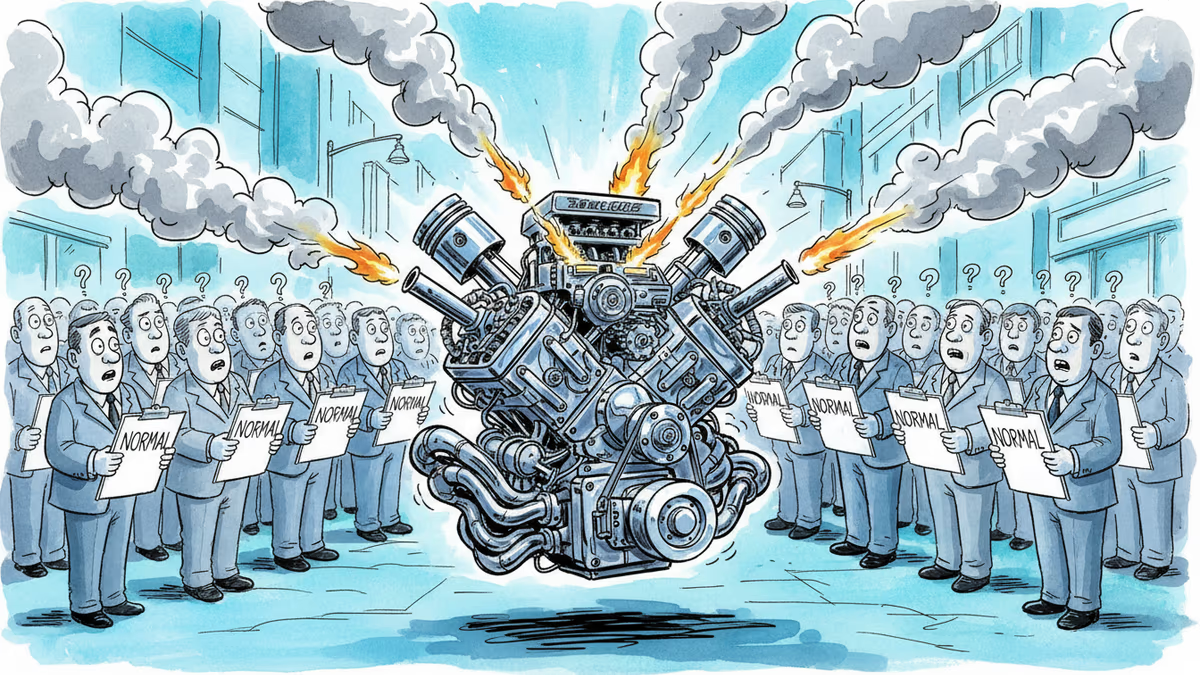
Researcher Anne-Laure Le Cunff argues ADHD is best understood as an impulsive drive for novelty, not a deficit. What does this mean for education, work, and how we define normal?
A satirical short story imagines AI-powered classrooms under a Melania Trump education initiative—and asks what we lose when we optimize learning for efficiency.
Philosophers Niklas Serning and Nina Lyon argue that emotional and practical adult skills can only be built through appropriate discomfort. What does that mean for how we raise children today?
A five-year study of 2,000+ Americans found bipartisan consensus on what makes a great teacher—until a party name was attached. The results reveal something deeper than an education debate.
Researcher Anne-Laure Le Cunff argues ADHD is best understood as an impulsive drive for novelty, not a deficit. What does this mean for education, work, and how we define normal?
A satirical short story imagines AI-powered classrooms under a Melania Trump education initiative—and asks what we lose when we optimize learning for efficiency.
Thoughts
Share your thoughts on this article
Sign in to join the conversation