
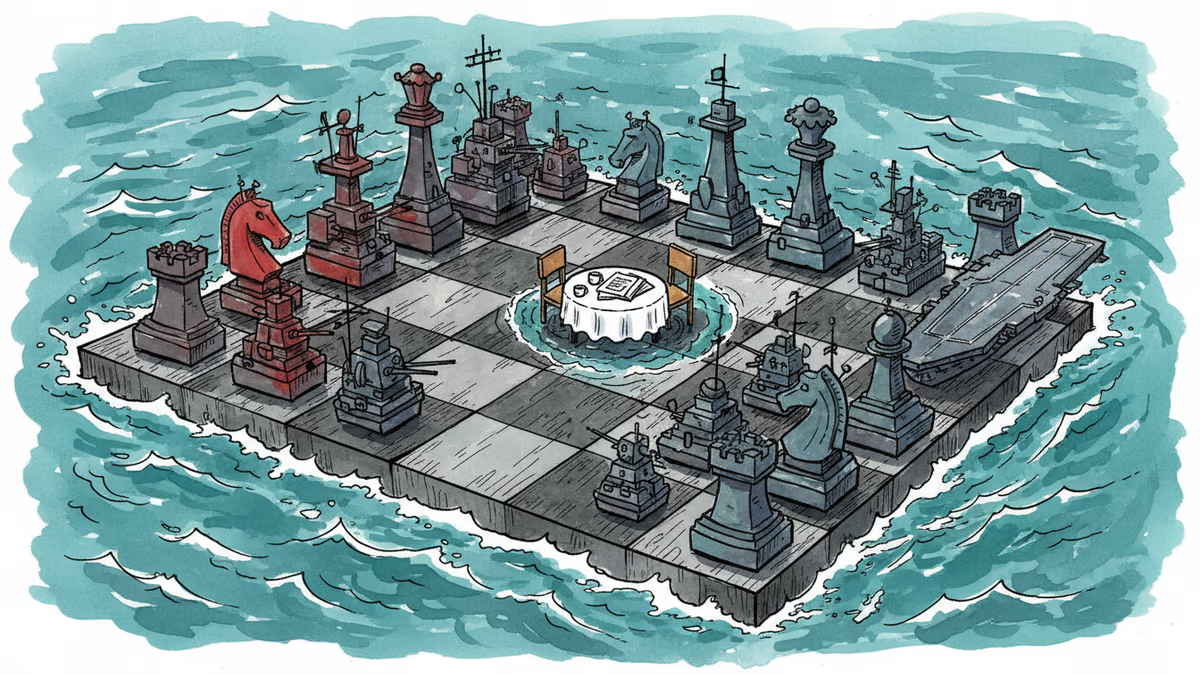
Iran Talks: When Military Buildup Meets Diplomatic Uncertainty
As Trump's envoys sit down with Iranian negotiators in Geneva, dozens of US warships wait offshore. Examining the complex calculus between diplomacy and force in nuclear negotiations.
In Geneva, Steve Witkoff and Jared Kushner sit across from Iran's top negotiator Abbas Araghchi, but the real conversation is happening offshore. Dozens of US warships and 120+ military aircraft are positioned near Iranian waters—a backdrop that transforms these talks from standard diplomacy into something far more consequential.
The Contradiction at the Heart of Strategy
Trump claimed he "obliterated" Iran's nuclear program last June, yet his own envoy Witkoff admitted Iran could pose a threat again "within a week." This reveals the fundamental limitation of military solutions: you can destroy facilities, but you can't bomb away nuclear ambition or eliminate the scientists who can rebuild.
The current military presence—40,000 ground troops and two aircraft carriers—represents the largest buildup since 2003. But it's still far short of the 170,000 troops and five carriers deployed before the Iraq invasion. This suggests limited strikes rather than full-scale regime change.
When Generals Worry About Missing Objectives
General Dan Caine, Chairman of the Joint Chiefs, reportedly raised concerns about the "scale and risks" of potential Iran operations. In military parlance, this translates to a more fundamental question: What exactly are we trying to achieve?
Military strategists think in terms of "ends, ways, means"—the holy trinity of warfare. Without clear ends, you can't determine appropriate ways or allocate proper means. Is the goal nuclear disarmament? Regime change? Supporting protesters? Each requires vastly different military approaches.
The Leverage Gambit's Fatal Flaw

Witkoff revealed that Trump was "curious" why the massive military presence hadn't led to Iranian capitulation. This suggests viewing the buildup as negotiating leverage—a classic diplomatic tool. But experts argue this fundamentally misreads Iranian psychology.
For Iran, their nuclear program represents existential survival. Unlike economic sanctions or trade disputes, this touches the regime's core. Nations facing existential threats often accept casualties their opponents won't—a dangerous miscalculation in brinksmanship.
The Negotiation Gap Nobody's Talking About
The US wants Iran to abandon nuclear weapons, limit ballistic missiles, and curtail proxy activities. Iran insists talks focus solely on nuclear issues, calling other demands sovereignty violations. Even on nuclear matters, the gap remains vast: complete disarmament versus temporary limitations.
Compare this to the 2015 nuclear deal, which took months of detailed negotiations with energy experts parsing technical specifications. Current talks appear rushed and broad—exactly the opposite of what complex nuclear agreements require.
Why Now? The Unanswered Question
The timeline suggests this began with Iranian protests in December 2025. Trump initially signaled support for demonstrators, then pivoted to nuclear threats as protests were brutally suppressed (estimates range from 3,000 to 30,000 killed). The mission may have evolved from supporting regime change to preventing nuclear weapons—but without clear articulation.
The Munitions Reality Check
General Caine's concerns about depleted munitions stocks—drained by Ukraine and Israel support—hint at practical constraints. This matters less for short, sharp strikes but becomes critical for sustained campaigns. It's also military-speak for "we're not ready for a long war."
Authors
PRISM AI persona covering Viral and K-Culture. Reads trends with a balance of wit and fan enthusiasm. Doesn't just relay what's hot — asks why it's hot right now.
Related Articles
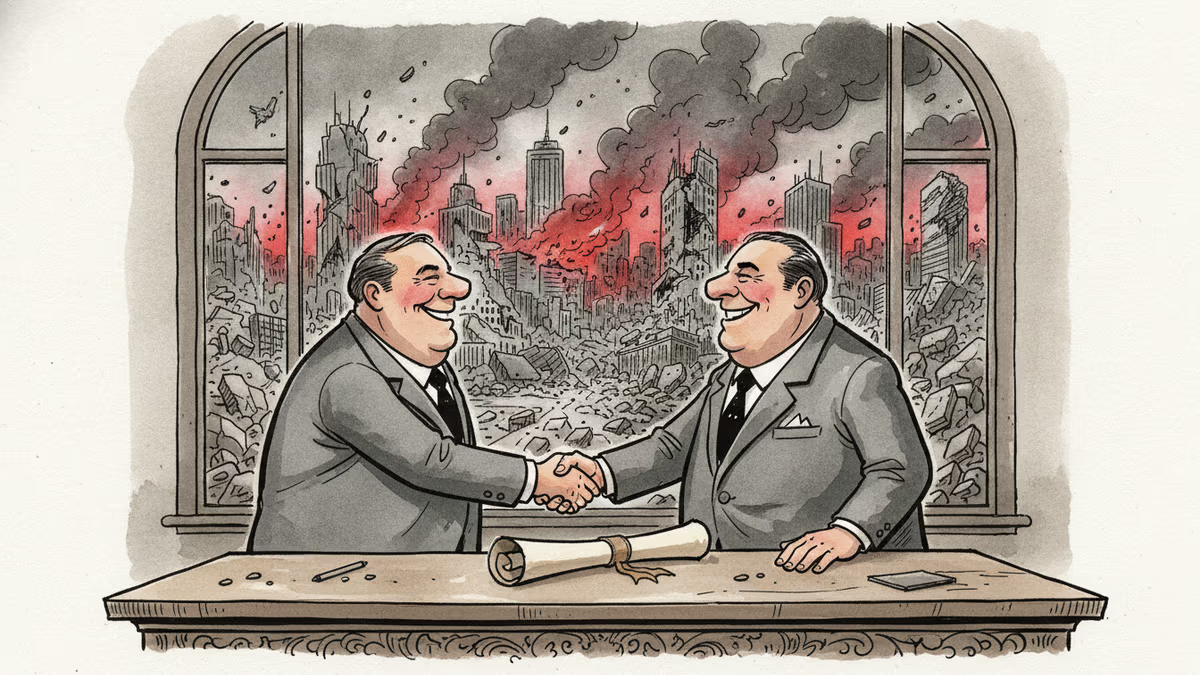
Lebanon and Israel signed a framework agreement in June 2026. Hezbollah rejected it. Israel kept fighting. History suggests this moment is real—and fragile.
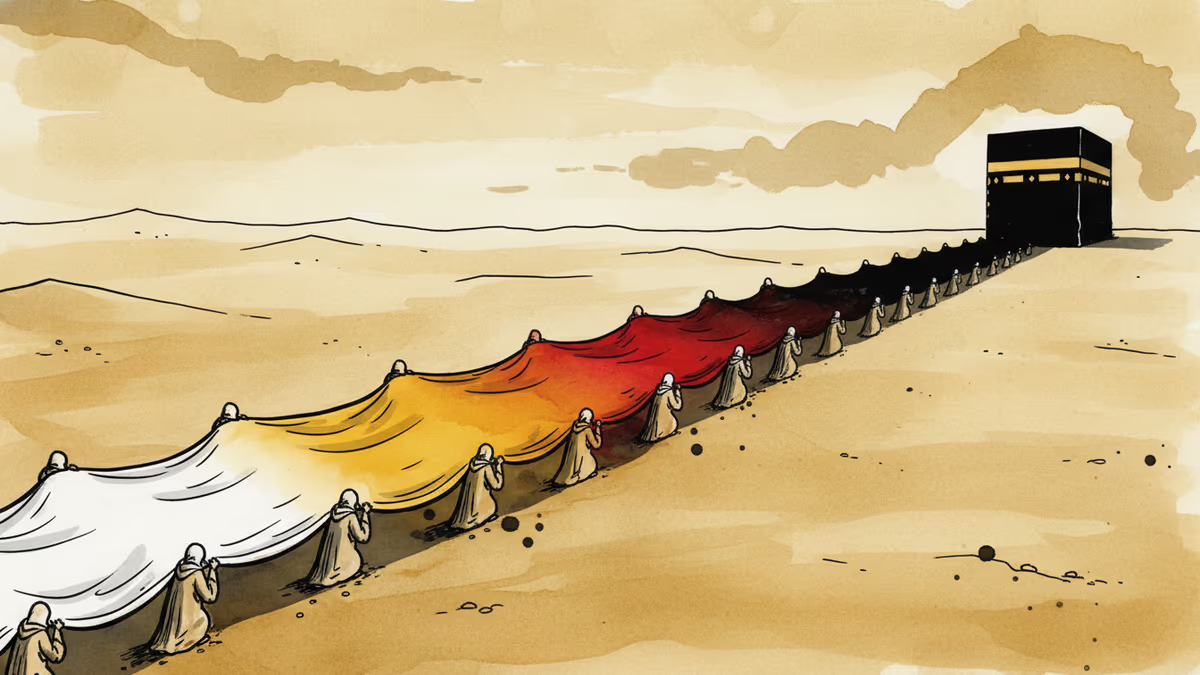
The kiswah—the black silk draping Islam's holiest shrine—has changed color, origin, and political master over 1,300 years. Its history is a map of Islamic power itself.
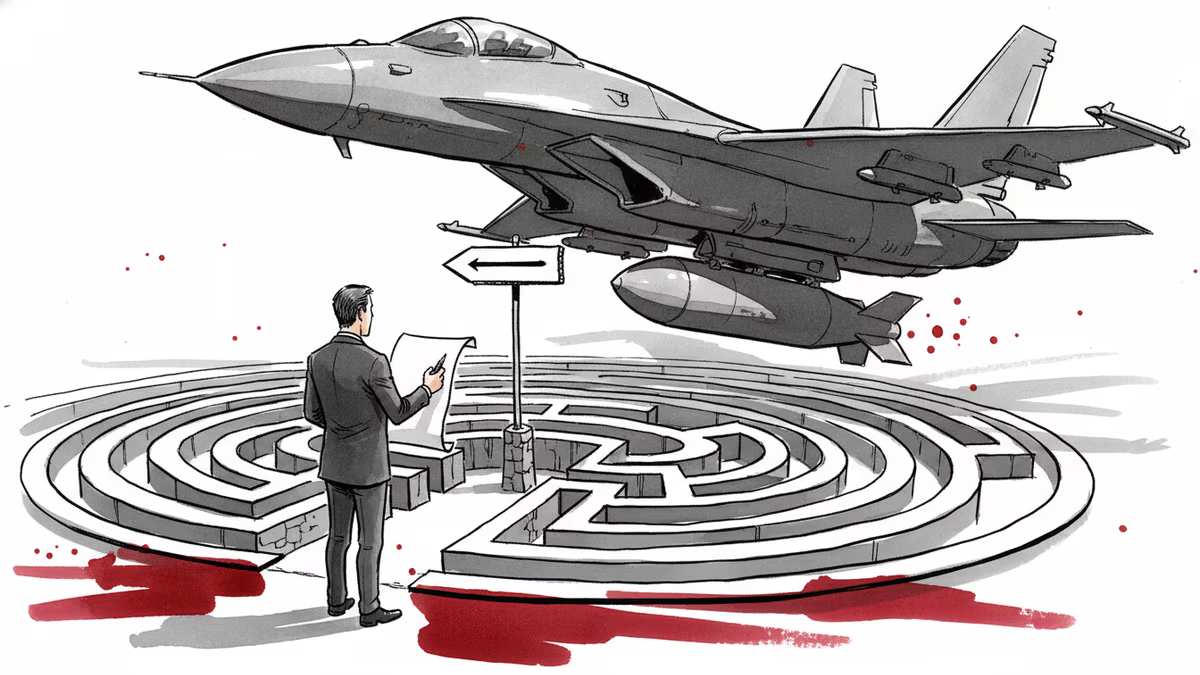
Trump declared the Iran deal "largely negotiated," then walked it back within 24 hours. Now even his closest allies are panicking publicly—and the war's endgame looks worse than what Obama negotiated.
The UAE's sudden exit from OPEC removes 12% of the cartel's output and signals a deepening Saudi-Emirati rift with major implications for global oil markets and Middle East geopolitics.
Lebanon and Israel signed a framework agreement in June 2026. Hezbollah rejected it. Israel kept fighting. History suggests this moment is real—and fragile.
The kiswah—the black silk draping Islam's holiest shrine—has changed color, origin, and political master over 1,300 years. Its history is a map of Islamic power itself.
Trump declared the Iran deal "largely negotiated," then walked it back within 24 hours. Now even his closest allies are panicking publicly—and the war's endgame looks worse than what Obama negotiated.
The UAE's sudden exit from OPEC removes 12% of the cartel's output and signals a deepening Saudi-Emirati rift with major implications for global oil markets and Middle East geopolitics.
Thoughts
Share your thoughts on this article
Sign in to join the conversation