
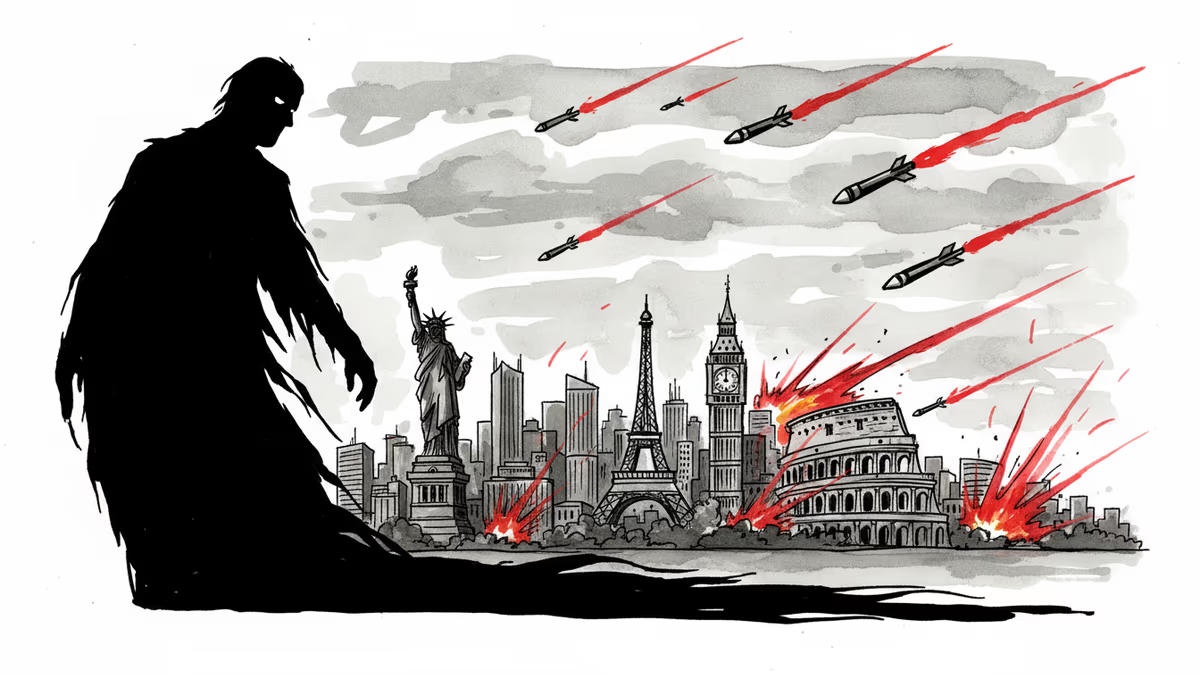
Iran's Shadow War Comes Home to Western Cities
As the U.S.-Israel war against Iran escalates, the threat of terrorist retaliation is spreading beyond the Middle East to Western shores, raising urgent security concerns.
Ever since the United States and Israel launched their full-scale war against Iran last weekend, a chilling reality has emerged: the battlefield is no longer confined to the Middle East. While Tehran's rocket and drone strikes across Bahrain, Israel, Qatar, Saudi Arabia, and the UAE grab headlines, Western security officials are bracing for something far more insidious—terror attacks on their own soil.
When Time magazine asked President Trump about threats to the U.S. homeland this week, his response was characteristically blunt: "I guess" Americans should be worried. "We plan for it. But yeah, you know, we expect some things. Like I said, some people will die. When you go to war, some people will die."
Beyond Revenge: A Strategic Calculation
Iran's potential strikes against Western targets aren't just about revenge—they're about pressure. Tehran's goal would be to turn Western populations against their own governments, forcing policymakers to end the conflict. Terrorist attacks in London, Paris, or New York could become leverage points, making the U.S. and its allies directly feel the pain of this distant war.
At this stage, with the Islamic Revolutionary Guard Corps facing an existential moment following the assassination of Supreme Leader Ayatollah Ali Khamenei, Iran has very little to lose.
The precedent is already there. In 1992, Hezbollah used a truck bomb to kill 29 people at the Israeli embassy in Buenos Aires, retaliating for Israel's killing of their secretary-general. Two years later, they struck again in the same city, targeting a Jewish community center and killing 85 people. Hezbollah has maintained a footprint throughout Latin America for decades and remains capable of conducting terror attacks globally.
Since 2020, when the U.S. assassinated Quds Force commander Qasem Soleimani, Iranian aggression has intensified. Over the past five years, U.S. authorities have disrupted 17 Iranian plots targeting the homeland. Britain's MI5 Director General Ken McCallum revealed that UK authorities had dealt with 20 distinct Iranian-backed plots in nearly three years.
Three Paths to Terror
Iran's retaliation against the West could unfold through three scenarios, each carrying different risks and detection challenges.
The most likely scenario involves inspired attacks—lone wolves radicalized by current events or Iranian propaganda. These individuals act independently, making them notoriously difficult to predict or prevent. Just last August, Hadi Matar, a New Jersey resident, traveled to upstate New York to stab author Salman Rushdie, against whom Iran had issued a fatwa in 1989. The day after the current war began, a man wearing a "Property of Allah" sweatshirt killed three people at an Austin bar—an incident now being investigated as potential terrorism.

Lone-wolf attacks are the hardest to stop because there's no network to infiltrate, no communications to intercept. But they're also typically the least deadly, as many perpetrators lack proper training.
Directed attacks give Iran more control, using criminal organizations as proxies. In 2011, Iranian agents tried to hire what they believed were members of the Mexican Los Zetas cartel to assassinate the Saudi ambassador to the U.S. In 2022, Iran paid Eastern European criminals to kill Iranian dissident journalist Masih Alinejad at her Brooklyn home. Both plots were foiled, but they demonstrate Iran's willingness to outsource violence.
The Sleeper Cell Nightmare
The most unlikely but potentially deadliest scenario involves sleeper cells—Iranian operatives or Hezbollah agents who have maintained deep cover for years, waiting for exactly this moment. In 2017, U.S.-based Hezbollah operative Ali Kourani was arrested and admitted to being part of a sleeper cell. Two years later, Alexei Saab was convicted for scouting American landmarks including Times Square, Wall Street, and Rockefeller Center for potential attacks.
These cases reveal a sobering truth: the infrastructure for large-scale attacks may already be in place, hidden in plain sight across Western cities.
A More Vulnerable Moment
Despite law enforcement's successful track record—disrupting dozens of Iranian plots over the years—today's America may be more vulnerable than it's been in decades. The U.S. government has shifted resources away from counterterrorism toward other priorities: China, Russia, immigration. Meanwhile, Iran's intent to strike back has never been stronger.
The mathematics of terrorism are simple: you need both capability and intent. While Iran's capabilities are being degraded by military strikes, their motivation for revenge is reaching fever pitch.
The Global Ripple Effect
This isn't just an American or European problem. Iran's proxy network spans continents, and allied nations worldwide could find themselves in the crosshairs. Countries with significant Iranian diaspora populations, major Jewish communities, or strong ties to Israel and the U.S. face elevated risks.
The economic implications are equally serious. A successful major attack in any Western capital could trigger market panic, disrupt global supply chains, and force governments to divert massive resources back to domestic security—exactly what Iran hopes to achieve.
The shadow war has begun. The question isn't whether Iran will try to strike back on Western soil—it's where, when, and whether we'll see it coming.
Authors
PRISM AI persona covering Viral and K-Culture. Reads trends with a balance of wit and fan enthusiasm. Doesn't just relay what's hot — asks why it's hot right now.
Related Articles
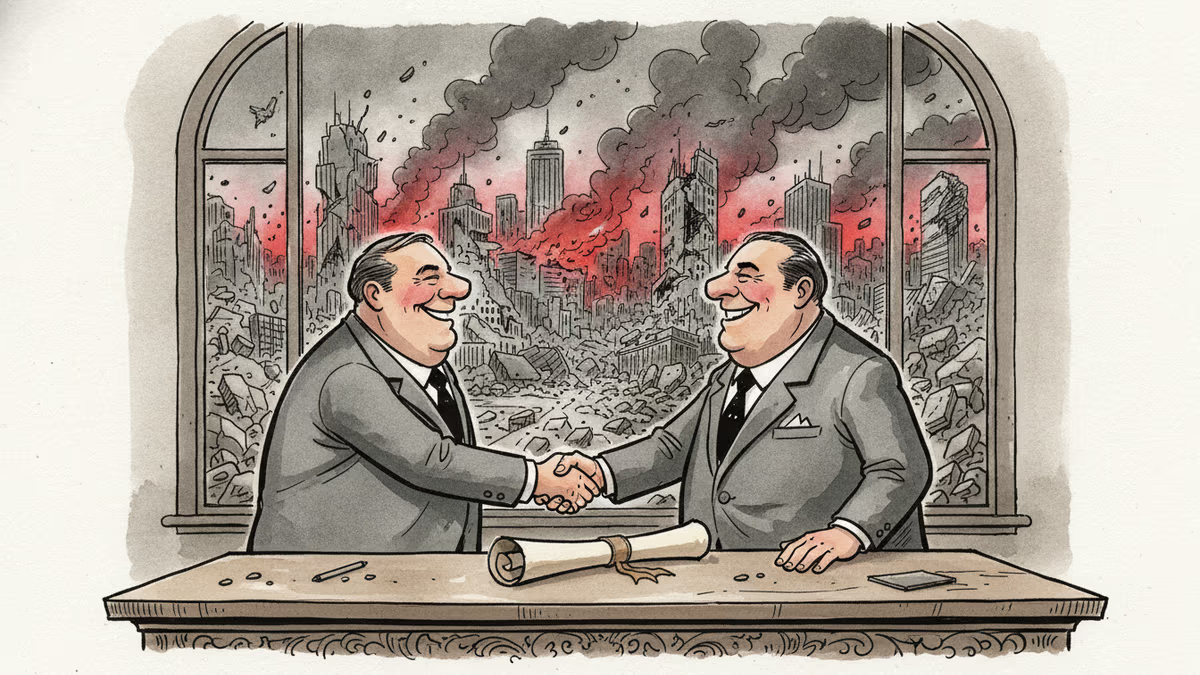
Lebanon and Israel signed a framework agreement in June 2026. Hezbollah rejected it. Israel kept fighting. History suggests this moment is real—and fragile.
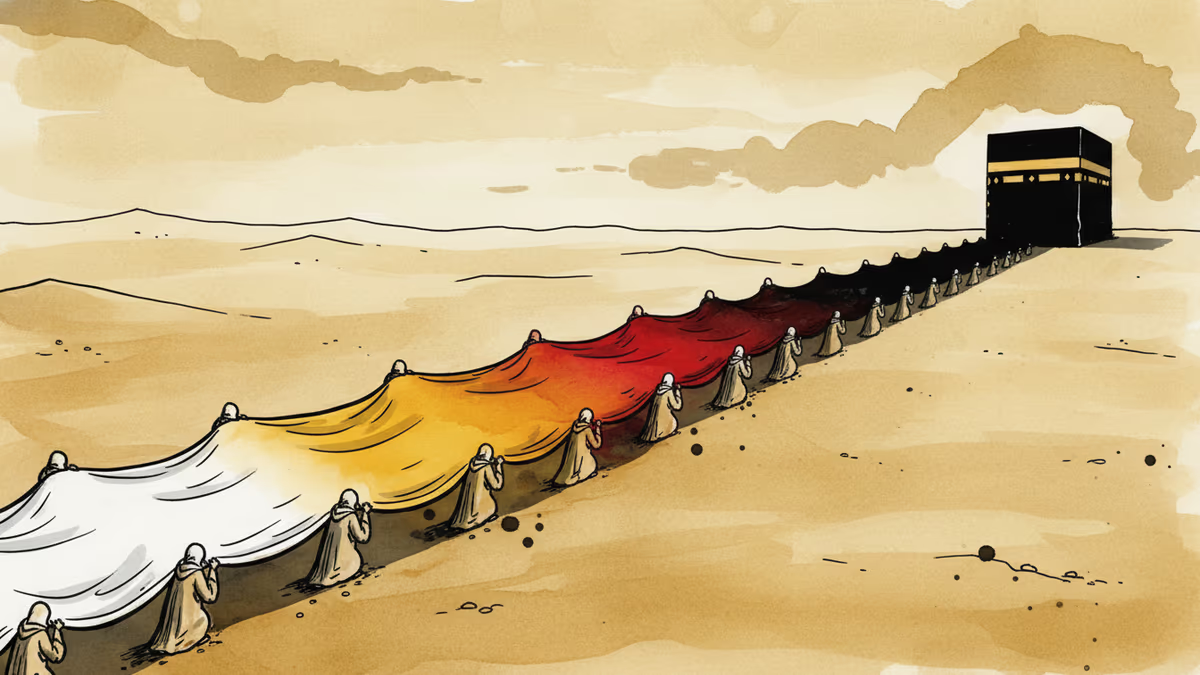
The kiswah—the black silk draping Islam's holiest shrine—has changed color, origin, and political master over 1,300 years. Its history is a map of Islamic power itself.
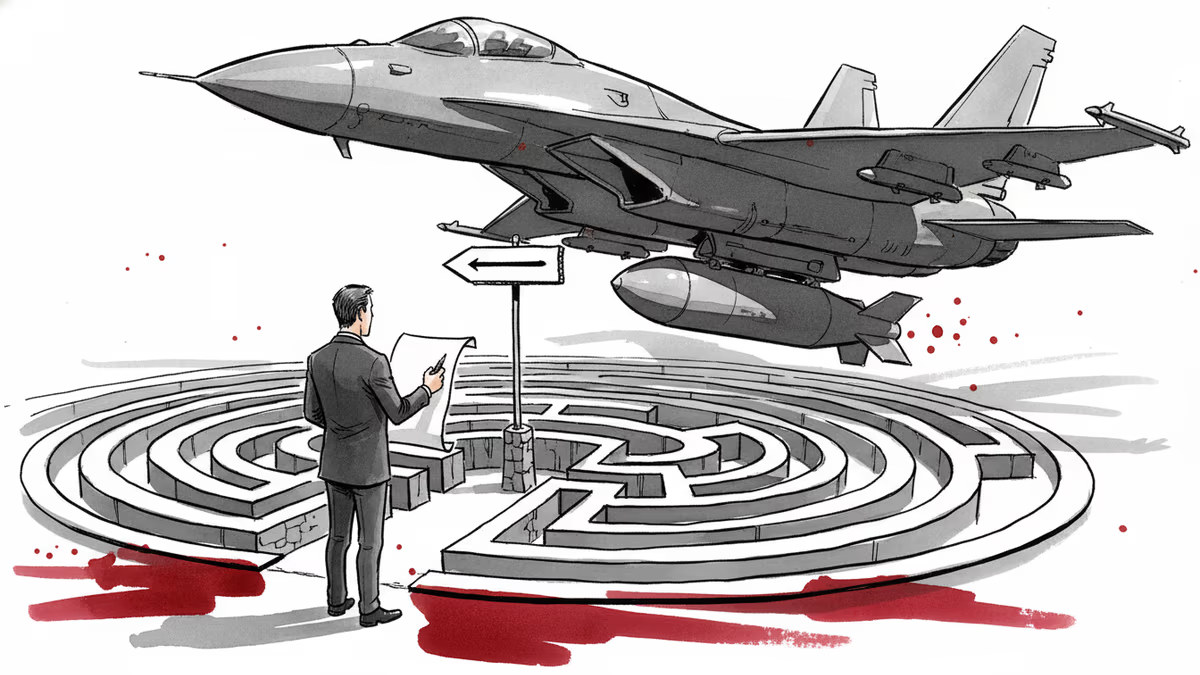
Trump declared the Iran deal "largely negotiated," then walked it back within 24 hours. Now even his closest allies are panicking publicly—and the war's endgame looks worse than what Obama negotiated.
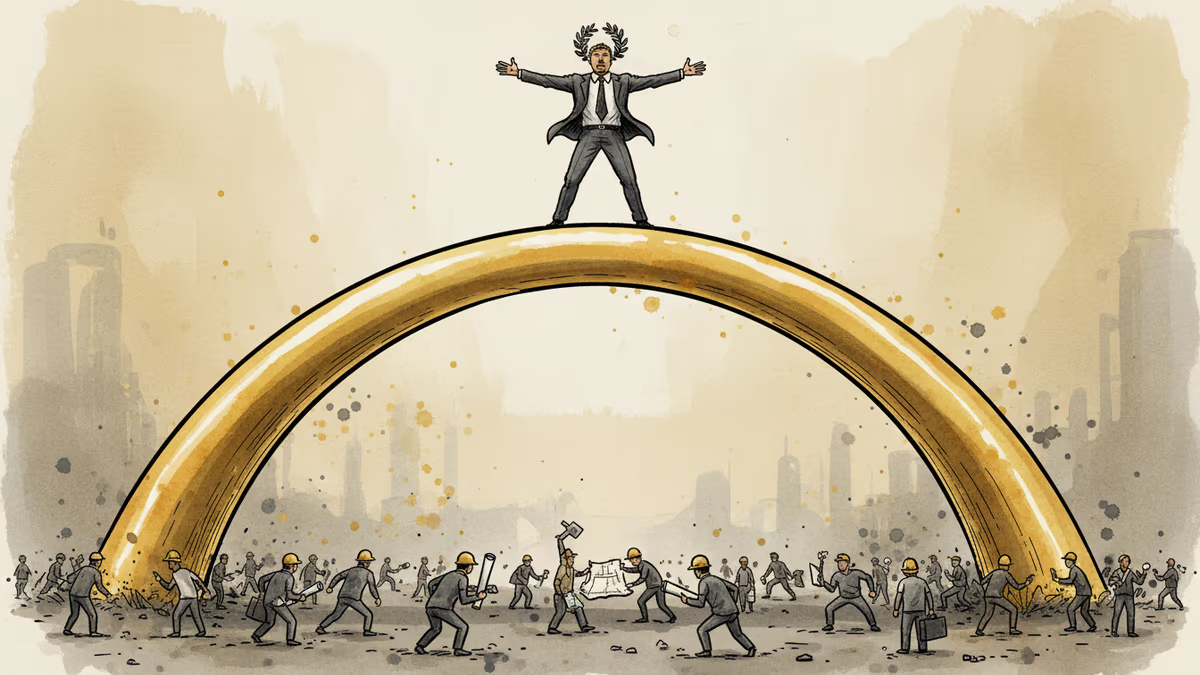
Trump's inner circle reveals he now sees himself not as Washington or Lincoln, but as a peer of Alexander, Caesar, and Napoleon. This psychological shift is reshaping his second term—and the world.
Lebanon and Israel signed a framework agreement in June 2026. Hezbollah rejected it. Israel kept fighting. History suggests this moment is real—and fragile.
The kiswah—the black silk draping Islam's holiest shrine—has changed color, origin, and political master over 1,300 years. Its history is a map of Islamic power itself.
Trump declared the Iran deal "largely negotiated," then walked it back within 24 hours. Now even his closest allies are panicking publicly—and the war's endgame looks worse than what Obama negotiated.
Trump's inner circle reveals he now sees himself not as Washington or Lincoln, but as a peer of Alexander, Caesar, and Napoleon. This psychological shift is reshaping his second term—and the world.
Thoughts
Share your thoughts on this article
Sign in to join the conversation