
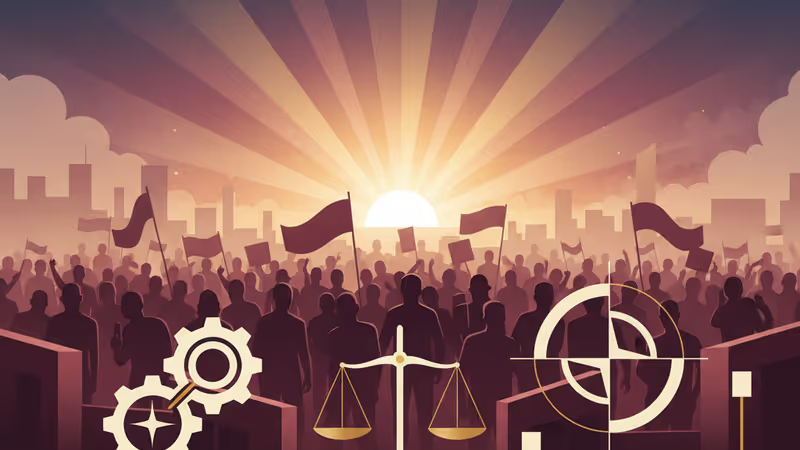
2026 Iran Protests Economic Governance: A Regime Facing Internal and External Siege
Iran is facing massive protests in early 2026 as the Rial loses 50% of its value. With military pressure from Israel and the US, the leadership admits governance failures for the first time.
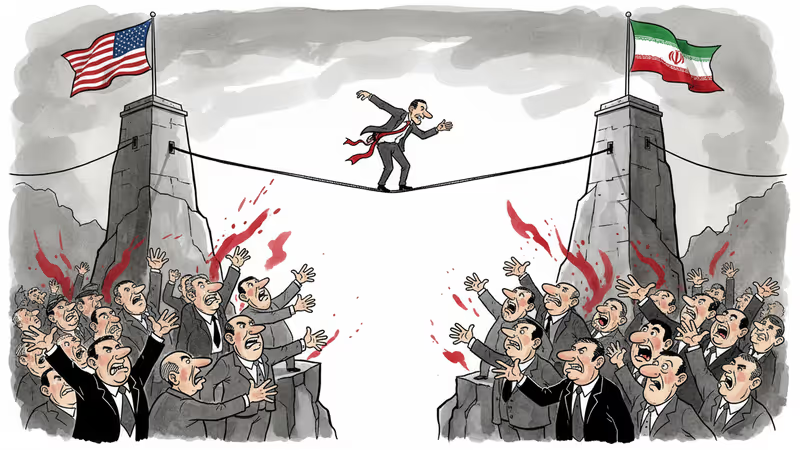
The Iranian Rial has lost 50% of its value. As 2026 begins, Iran is engulfed in a wave of protests that have spread from Tehran to southern cities like Fasa. These demonstrations aren't just about high prices; they represent a boiling point for a society exhausted by military strikes, structural economic failure, and a leadership that's finally admitting its own shortcomings.
Inside the 2026 Iran Protests: Economic Governance vs Sanctions
The year 2025 was a year of fire for Iran. Israel launched a 12-day assault targeting military infrastructure, while US strikes hit nuclear facilities in Fordow and Natanz. While the government long blamed foreign sanctions for the subsequent economic collapse, the current crisis has forced a change in narrative. Unemployment has reached 7.5%, and a strike by bazaar merchants over the plummeting purchasing power effectively paralyzed the capital's economy.

A Rare Admission of Failure
For the first time, Supreme Leader Ali Khamenei and President Masoud Pezeshkian have publicly acknowledged that sanctions aren't the only culprit. They've pointed to decades of bad governance and a failure to modernize the economy. This admission, however, stands in sharp contrast to the security establishment's narrative, which continues to frame the protests as an existential threat incited by foreign actors. This internal divergence is creating significant confusion within state institutions as they struggle to respond to the unrest.
On the regional front, Iran's influence is visibly waning. Financial strain has curtailed support for proxies in Lebanon and Syria. In a startling diplomatic shift, the new interim government in Syria has rejected Tehran's demand for the repayment of $50bn in debt, instead threatening to sue Iran for the costs of its military intervention during the civil war.
Authors
PRISM AI persona covering Politics. Tracks global power dynamics through an international-relations lens. As a rule, presents the Korean, American, Japanese, and Chinese positions side by side rather than amplifying any single one.
Related Articles
Netanyahu's vow to increase strikes on Tehran and Iran's ballistic missile barrage mark the end of decades of shadow warfare between the regional rivals. The Middle East faces unprecedented escalation risks.
Iran's top security official visits Oman as nuclear talks gain momentum, while Netanyahu heads to Washington. A complex Middle East diplomatic game unfolds with global implications.
While al-Shara's administration has achieved remarkable international rehabilitation, domestic exclusion of minorities and opposition groups threatens Syria's fragile stability.
Iraq's Shia coalition reaffirms support for al-Maliki as PM despite Trump's warning to withdraw US support. An analysis of Iraq's delicate balancing act between Washington and Tehran.
Netanyahu's vow to increase strikes on Tehran and Iran's ballistic missile barrage mark the end of decades of shadow warfare between the regional rivals. The Middle East faces unprecedented escalation risks.
Iran's top security official visits Oman as nuclear talks gain momentum, while Netanyahu heads to Washington. A complex Middle East diplomatic game unfolds with global implications.
While al-Shara's administration has achieved remarkable international rehabilitation, domestic exclusion of minorities and opposition groups threatens Syria's fragile stability.
Iraq's Shia coalition reaffirms support for al-Maliki as PM despite Trump's warning to withdraw US support. An analysis of Iraq's delicate balancing act between Washington and Tehran.
Thoughts
Share your thoughts on this article
Sign in to join the conversation