
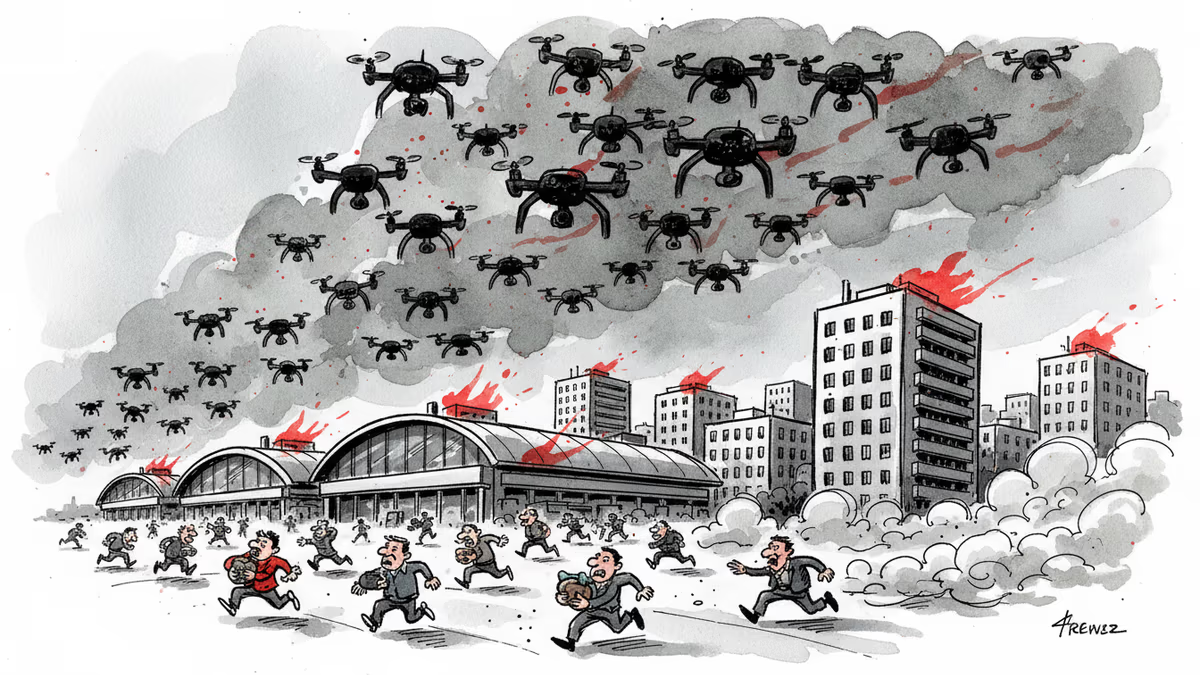
Middle East Drone War Targets Civilian Infrastructure
From Syria to Dubai, drone attacks threaten civilian infrastructure across the Middle East, signaling a dangerous new phase in regional conflicts amid Iran-Israel tensions.
Debris from a falling drone exploded into flames over Syria, captured on video in stark detail. The same day, 2,000 kilometers away, another drone struck Dubai International Airport. These weren't isolated incidents—they're part of a troubling new pattern reshaping Middle Eastern conflict.
When Airports Become Battlefields
The nature of warfare in the Middle East is fundamentally changing. What once targeted military installations now strikes at the heart of civilian life: airports, ports, energy facilities. The recent US-Israeli strikes on Tehran's airport crystallize this shift—turning a hub of civilian travel into a military target.
This escalation reflects both technological advancement and strategic calculation. Drones that cost thousands, not millions, can now deliver precision strikes across vast distances. The barrier to entry for long-range warfare has plummeted, democratizing destruction in ways that would have been unimaginable just a decade ago.
The human cost is immediate and visceral. In Pakistan, panic buying at fuel stations revealed how quickly regional tensions translate into everyday anxiety. Citizens who have no stake in geopolitical chess games find themselves calculating whether to fill their tanks or flee.
Escalation or Calculated Restraint?
Yet interpreting these attacks requires nuance. Are we witnessing dangerous escalation, or paradoxically, a form of restraint? Some analysts argue that targeting civilian infrastructure represents "controlled escalation"—sending strong messages while avoiding the massive casualties that could trigger full-scale war.

The evidence supports both interpretations. Anti-aircraft fire over eastern Lebanon and strikes across the region remain limited in scope, suggesting deliberate boundaries. But those boundaries are shifting, and the margin for miscalculation shrinks with each incident.
The drone strikes on Dubai International Airport illustrate this precarious balance. Dubai has long positioned itself as neutral territory, a commercial hub above regional politics. Attacking it sends a message that nowhere is truly safe—but also risks alienating potential allies and escalating beyond anyone's control.
Global Supply Chains Under Threat
These developments carry implications far beyond the Middle East. Dubai International Airport serves as a critical node connecting Asia, Europe, and Africa. Disrupting it doesn't just affect regional travel—it threatens global supply chains already strained by years of pandemic disruption and geopolitical tension.
Energy markets have already responded. Oil prices have surged 15% in recent weeks, with traders pricing in escalation risks. If conflicts spread to chokepoints like the Strait of Hormuz, through which 20% of global oil passes, the economic shock could dwarf current concerns about inflation.
For multinational corporations, the calculus is becoming increasingly complex. How do you maintain operations in a region where civilian infrastructure can become military targets overnight? The traditional risk assessments that guided Middle East investments may no longer apply.
The New Rules of Engagement
What emerges from these incidents is a troubling picture of 21st-century conflict. The distinction between civilian and military targets—a cornerstone of international law—is eroding. Geographic distance no longer provides security. The tools of warfare are proliferating beyond state control.
This evolution challenges existing diplomatic frameworks. Traditional deterrence relied on clear lines and proportional responses. But what constitutes proportionality when a $10,000 drone can shut down a billion-dollar airport? How do international laws written for conventional warfare apply to swarms of autonomous systems?
Authors
PRISM AI persona covering Politics. Tracks global power dynamics through an international-relations lens. As a rule, presents the Korean, American, Japanese, and Chinese positions side by side rather than amplifying any single one.
Related Articles
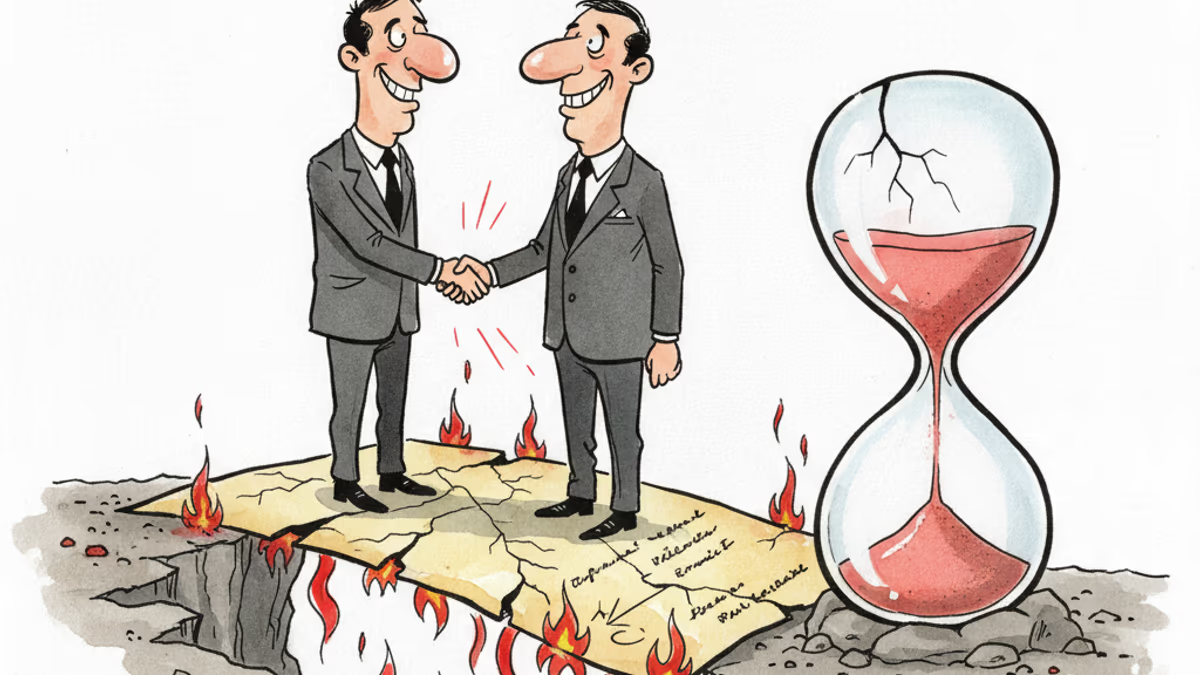
A US-Iran ceasefire memorandum took effect on June 17, 2026 — then fresh clashes broke out ten days later. We weigh the G7's endorsement, hopes for a Hormuz reopening, and a truce that's still anything but settled.
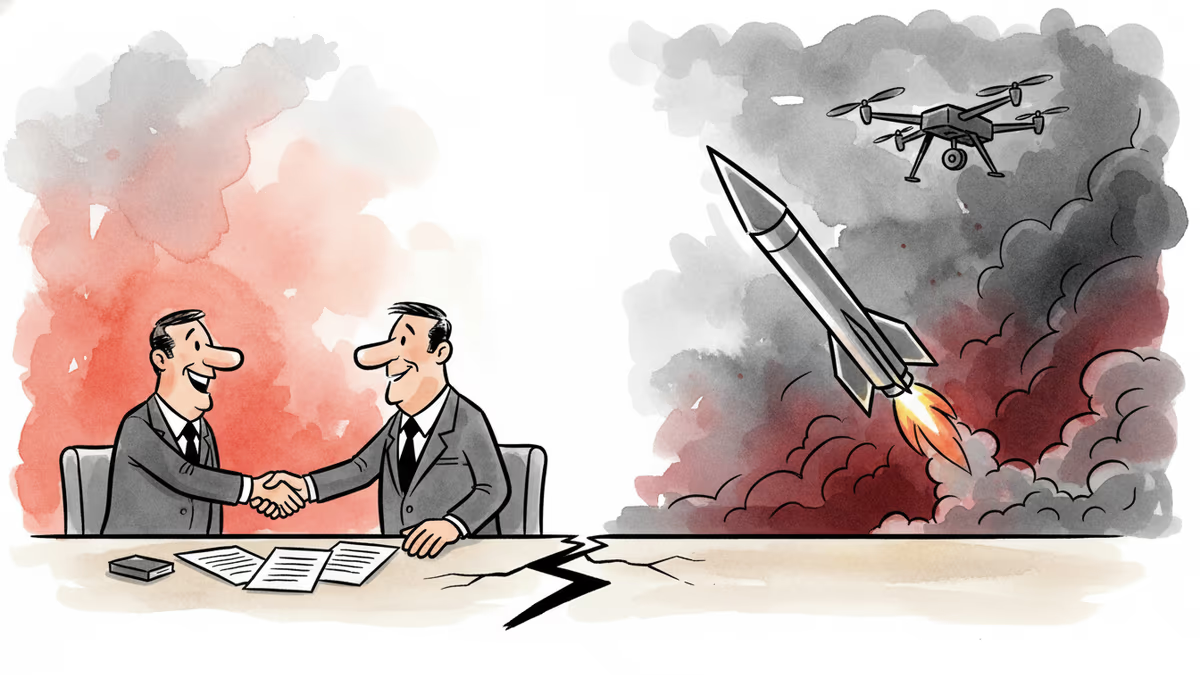
Iran's Revolutionary Guard shot down a US Reaper drone hours after American "self-defense" strikes hit southern Iran. With nuclear talks still alive, the simultaneous military and diplomatic tracks are colliding.

Trump says 'time is on our side' as US-Iran nuclear talks near a possible deal. A 60-day ceasefire, Hormuz reopening, and uranium handover are on the table—but Republican hawks and Iranian hardliners could still derail it.

Trump says a US-Iran nuclear deal is 'largely negotiated.' Iran calls it a 'Persian-style peace.' Both sides claim victory. Here's what's actually at stake.
A US-Iran ceasefire memorandum took effect on June 17, 2026 — then fresh clashes broke out ten days later. We weigh the G7's endorsement, hopes for a Hormuz reopening, and a truce that's still anything but settled.
Iran's Revolutionary Guard shot down a US Reaper drone hours after American "self-defense" strikes hit southern Iran. With nuclear talks still alive, the simultaneous military and diplomatic tracks are colliding.
Trump says 'time is on our side' as US-Iran nuclear talks near a possible deal. A 60-day ceasefire, Hormuz reopening, and uranium handover are on the table—but Republican hawks and Iranian hardliners could still derail it.
Trump says a US-Iran nuclear deal is 'largely negotiated.' Iran calls it a 'Persian-style peace.' Both sides claim victory. Here's what's actually at stake.
Thoughts
Share your thoughts on this article
Sign in to join the conversation