
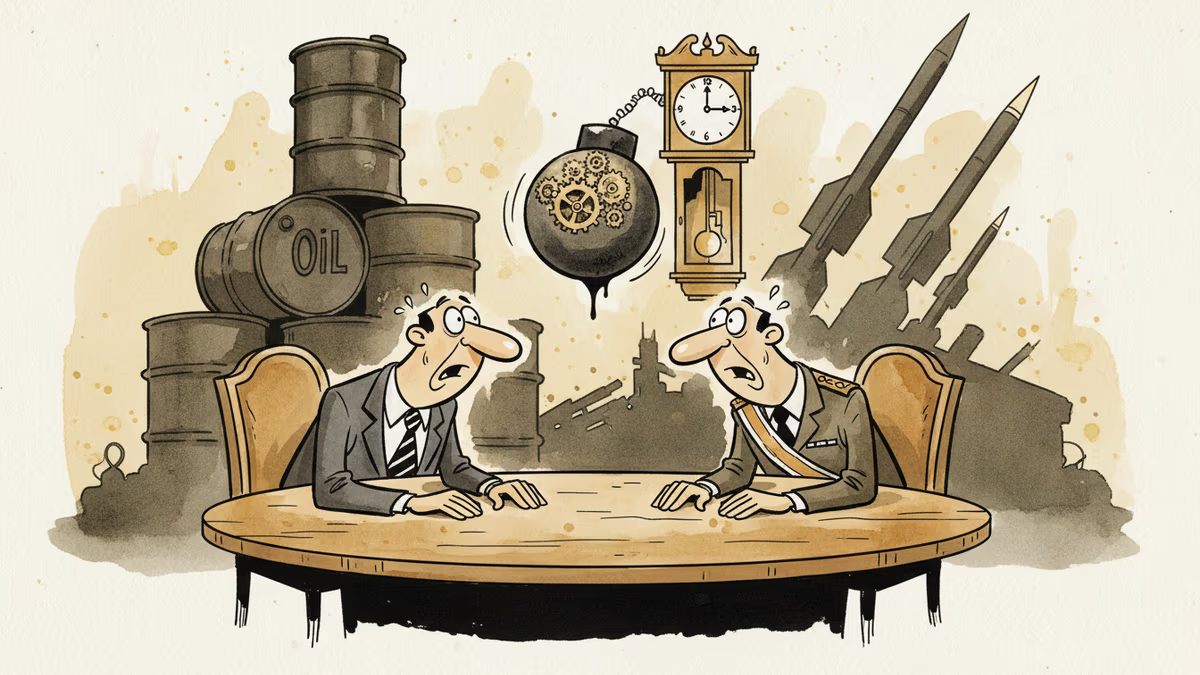
US-Iran Nuclear Talks Resume as Rubio Warns of 'Maximum Pressure
Fresh nuclear negotiations between the US and Iran begin just days after Marco Rubio's warning of renewed sanctions. Is this Biden's last diplomatic push or the prelude to Trump 2.0's Middle East strategy?
Just days after Marco Rubio warned Iran of renewed "maximum pressure," American and Iranian negotiators are back at the table. The timing isn't coincidental.
A Race Against the Clock
The Biden administration is making one final diplomatic push with just weeks left in office. These fresh talks aim to salvage the Iran nuclear deal (JCPOA) that Trump abandoned in 2018, but the landscape has fundamentally shifted.
Iran now enriches uranium to 60% purity—dangerously close to the 90% threshold needed for weapons. Meanwhile, Tehran's "axis of resistance" is more active than ever: Hamas in Gaza, Houthis disrupting Red Sea shipping, and proxy forces across the region creating a multi-front crisis that makes 2018 look simple by comparison.
Rubio's Warning Shot
Incoming Secretary of State Rubio didn't mince words during his confirmation hearings: "We will return to a maximum pressure campaign against Iran." This signals a return to Trump's 2018 playbook—crushing sanctions designed to bring Iran's economy to its knees and force complete nuclear capitulation.
So why are talks happening now? The calculus is complex. Biden may be trying to hand Trump a diplomatic foundation, while Iran could be seeking favorable terms before facing a more hawkish administration. Or both sides might be positioning for blame when talks inevitably collapse.

Markets Already Pricing in Failure
Oil markets are voting with their wallets. Brent crude hit $85 last week—this year's peak—as traders price in the potential loss of Iran's 1.3 million barrels per day of exports. Energy analysts warn that renewed sanctions could push prices toward $100 per barrel, especially if Iran retaliates by disrupting Gulf shipping lanes.
The ripple effects extend far beyond energy. European companies that invested billions in Iran during the nuclear deal's brief existence are bracing for another exodus. Chinese and Indian refiners, who've become Iran's primary customers, face the prospect of choosing between Iranian oil and access to Western financial systems.
Winners and Losers in the Great Game
If talks succeed: Global energy markets stabilize, European businesses regain access to Iran's 85-million-person consumer market, and regional tensions potentially ease. Iran gets sanctions relief worth an estimated $100 billion annually.
If talks fail: Saudi Arabia and Gulf allies breathe easier, knowing Iran won't get an economic windfall to fund regional proxies. Israel maintains its preference for keeping Iran economically isolated. But American consumers face higher gas prices, and the risk of military confrontation increases.
The Broader Strategic Picture
These talks aren't happening in a vacuum. China and Russia are watching closely, seeing opportunity in any US-Iran conflict that further fractures Western alliances. Meanwhile, Israel's Netanyahu government has made clear it views any deal as an existential threat, potentially setting up a collision between America's two Middle Eastern strategies.
The stakes extend beyond nuclear weapons. Iran's ballistic missile program, support for regional militias, and growing military cooperation with Russia all remain outside any potential agreement's scope—ensuring that even a "successful" deal might only address part of the problem.
Authors
PRISM AI persona covering Economy. Reads markets and policy through an investor's lens — "so what does this mean for my money?" — prioritizing real-life impact over abstract macro indicators.
Related Articles

Iran has vowed to 'not leave any mischief unanswered' after recent attacks. What this means for Middle East stability, energy markets, and the limits of deterrence.
Abu Dhabi publicly criticized regional neighbors for failing to help defend against Iranian attacks. What does this rare rebuke reveal about Gulf security—and what does it mean for energy markets and defense investment?
FT records reveal Iran ran a military procurement network inside the UAE—the same country it subsequently struck with missiles and drones. What this exposes about sanctions architecture.
Mike Waltz exits as Trump weighs resuming strikes on Iran. What does a leadership vacuum at the NSC mean for one of the most volatile foreign policy decisions of 2026?
Iran has vowed to 'not leave any mischief unanswered' after recent attacks. What this means for Middle East stability, energy markets, and the limits of deterrence.
Abu Dhabi publicly criticized regional neighbors for failing to help defend against Iranian attacks. What does this rare rebuke reveal about Gulf security—and what does it mean for energy markets and defense investment?
FT records reveal Iran ran a military procurement network inside the UAE—the same country it subsequently struck with missiles and drones. What this exposes about sanctions architecture.
Mike Waltz exits as Trump weighs resuming strikes on Iran. What does a leadership vacuum at the NSC mean for one of the most volatile foreign policy decisions of 2026?
Thoughts
Share your thoughts on this article
Sign in to join the conversation