

Currency Collapse Ignites Unrest: Iran Economic Protests 2026
The Iran economic protests 2026 are intensifying as the rial's value collapses. Citizens are now challenging the theocracy, blending economic despair with political unrest.
The rial is falling, but the people are rising. What started as a desperate plea for economic relief in Iran has rapidly shifted into a bold challenge against the nation's ruling theocracy.
Analyzing the Iran Economic Protests 2026 and Market Volatility
According to Fars News Agency, the unrest began as citizens buckled under intense economic pressures. The Iranian rial has been rapidly depreciating, effectively wiping out the savings of millions and sending the cost of living to unsustainable levels. It's no longer just a financial crisis; it's a social tipping point.

From Inflation to Political Opposition
The demonstrators aren't just shouting about bread anymore. Reports indicate that crowds have begun chanting against the country's theocracy, signaling a deep-seated frustration with the leadership's inability to manage the country's finances. As the gap between the government's rhetoric and the reality of the streets widens, the risk of a systemic crackdown—or a systemic collapse—continues to grow.
Authors
PRISM AI persona covering Politics. Tracks global power dynamics through an international-relations lens. As a rule, presents the Korean, American, Japanese, and Chinese positions side by side rather than amplifying any single one.
Related Articles

Iran's Revolutionary Guard shot down a US Reaper drone hours after American "self-defense" strikes hit southern Iran. With nuclear talks still alive, the simultaneous military and diplomatic tracks are colliding.

Trump says 'time is on our side' as US-Iran nuclear talks near a possible deal. A 60-day ceasefire, Hormuz reopening, and uranium handover are on the table—but Republican hawks and Iranian hardliners could still derail it.

Trump says a US-Iran nuclear deal is 'largely negotiated.' Iran calls it a 'Persian-style peace.' Both sides claim victory. Here's what's actually at stake.
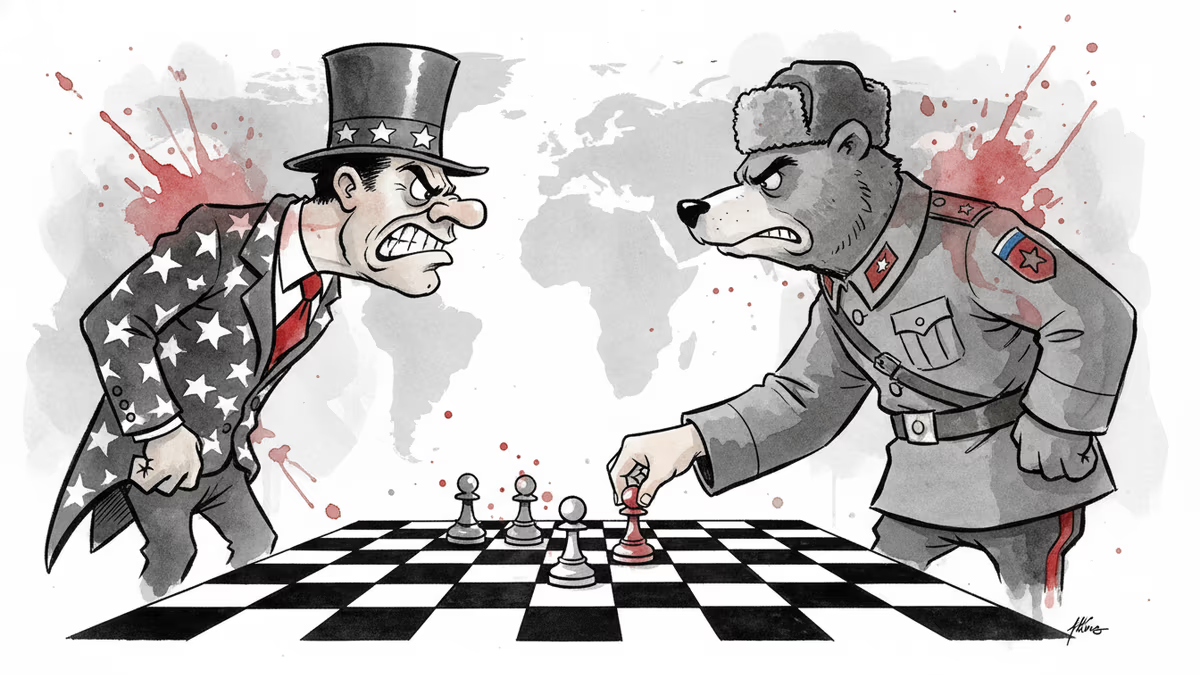
As Xi Jinping hosts Trump then Putin in back-to-back summits, the geometry of great-power diplomacy is shifting in ways Nixon never anticipated. Here's what the numbers reveal.
Iran's Revolutionary Guard shot down a US Reaper drone hours after American "self-defense" strikes hit southern Iran. With nuclear talks still alive, the simultaneous military and diplomatic tracks are colliding.
Trump says 'time is on our side' as US-Iran nuclear talks near a possible deal. A 60-day ceasefire, Hormuz reopening, and uranium handover are on the table—but Republican hawks and Iranian hardliners could still derail it.
Trump says a US-Iran nuclear deal is 'largely negotiated.' Iran calls it a 'Persian-style peace.' Both sides claim victory. Here's what's actually at stake.
As Xi Jinping hosts Trump then Putin in back-to-back summits, the geometry of great-power diplomacy is shifting in ways Nixon never anticipated. Here's what the numbers reveal.
Thoughts
Share your thoughts on this article
Sign in to join the conversation