
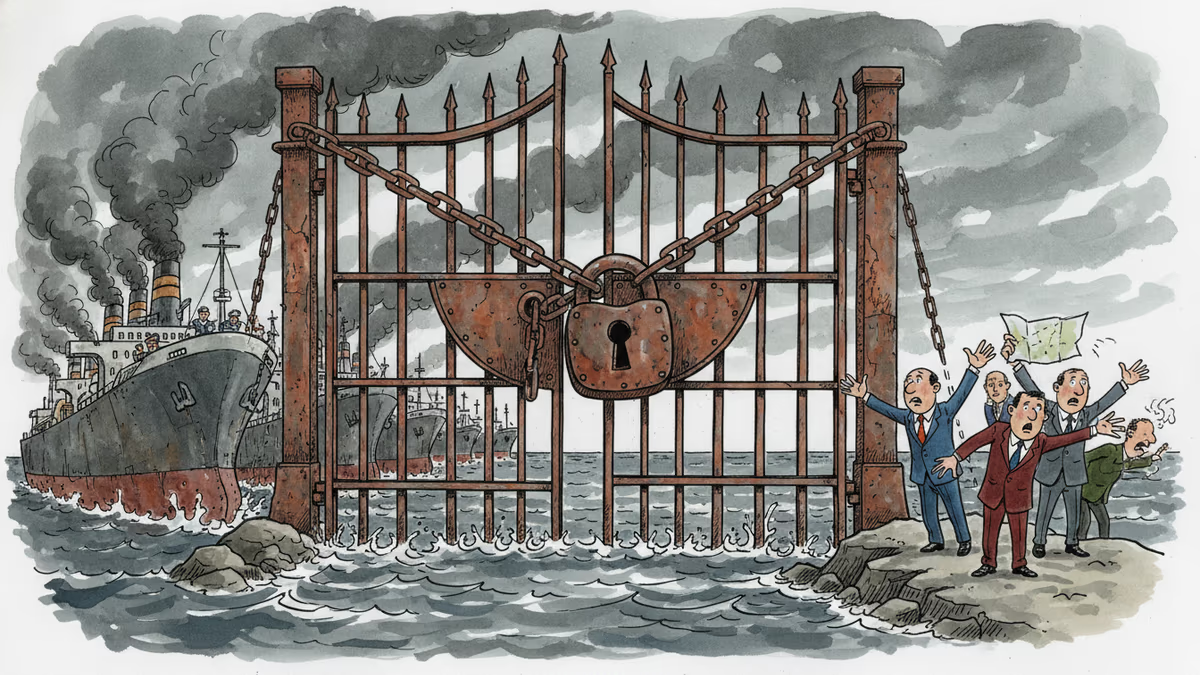
The Strait Is Closed. The Ceasefire Isn't Enough.
A U.S.-Iran ceasefire holds indefinitely, but the Strait of Hormuz remains blocked. Pakistan steps up as a mediator. India stays silent. What this standoff means for global energy and Asian geopolitics.
The guns have gone quiet. The strait has not.
As of late April 2026, the United States and Iran are holding to an indefinitely extended ceasefire — but the Strait of Hormuz, the narrow chokepoint through which roughly 20% of the world's traded oil passes every day, remains closed. A fragile non-war has replaced open conflict. And yet the economic pressure that a blockade creates continues unabated.
This is the paradox at the heart of the current standoff: a ceasefire that stopped the shooting but left the leverage intact.
What's Actually Happening
The ceasefire extension signals that neither Washington nor Tehran wants escalation — at least not right now. But Iran has clearly chosen to maintain control of the strait as a bargaining chip, a way to sustain economic pressure without firing another shot. For Tehran, this is rational: the blockade costs them relatively little militarily while imposing significant costs on global energy markets and, indirectly, on the United States and its allies.
Washington, meanwhile, faces an awkward optics problem. It can claim the ceasefire as a diplomatic achievement, but the strait — the real measure of normalization — remains shut. Critics argue this amounts to handing Iran a durable form of leverage while calling it a win.
Into this vacuum stepped an unexpected actor: Pakistan. Hosts Ankit Panda and Katie Putz on The Diplomat's Asia Geopolitics podcast flagged Pakistan's prominent mediation role as one of the more surprising developments of the conflict. Geographically, Pakistan shares a border with Iran. Diplomatically, it has long-standing ties with both the Gulf states and, more selectively, with Washington. That dual positioning has opened a lane for Islamabad to play a go-between role that neither major power can easily fill themselves.
The Silence That Speaks
If Pakistan's activism is the story, India's posture is the counter-story. Panda and Putz described New Delhi's stance as "strategic — or astrategic — silence." The ambiguity is deliberate. India was one of Iran's largest oil customers before sanctions tightened, and its trade exposure through Hormuz is substantial. Yet India has said remarkably little.
Is this silence calculated? India may be avoiding any statement that forces it to choose sides between the U.S. (its increasingly close security partner) and Iran (a critical energy and connectivity corridor). Or it may reflect genuine uncertainty about which way to lean.
The geopolitical subtext is harder to ignore. Every time Pakistan gains international credibility as a mediator, it complicates India's self-image as the region's natural leader. The two countries' rivalry doesn't pause for Middle Eastern crises — it filters through them.

Why This Moment Matters Beyond the Region
The Hormuz blockade is not just a Middle Eastern story. It is a global supply chain story, an energy security story, and — increasingly — a story about which countries have the diplomatic capital to shape outcomes in a multipolar world.
Approximately 17 million barrels of oil transit the strait daily. Saudi Arabia, Iraq, Kuwait, and the UAE all route the bulk of their exports through this single passage. A prolonged closure doesn't just push up oil prices; it reshapes shipping routes, stresses refinery logistics, and forces importers to draw down strategic reserves that cannot be replenished quickly.
For Asian economies — Japan, South Korea, India, China — the exposure is acute. These countries collectively account for the majority of Gulf oil exports. Unlike Europe, which has been accelerating its energy diversification since 2022, most Asian importers remain structurally dependent on Middle Eastern crude. There is no quick alternative.
China, notably, is both Iran's largest oil buyer and Pakistan's most significant infrastructure investor. Beijing has deep interests in how this ends — but its role in the current diplomacy remains largely opaque.
The Stakeholder Map
Different actors want different things from this standoff, and those interests don't align neatly.
The Gulf producers — Saudi Arabia, the UAE, Kuwait — want the strait open immediately. Their revenues depend on it. But they lack direct leverage over Iran and are not in the driver's seat of U.S.-Iran negotiations.
European governments are watching carefully. Post-Ukraine energy diversification gave them some buffer, but a sustained Hormuz closure would still ripple through global LNG markets and complicate their own supply calculations.
For shipping companies and commodity traders, the blockade is already repricing risk. War risk insurance premiums for vessels transiting the Gulf have spiked. Alternative routes — around the Cape of Good Hope, overland pipelines — are being stress-tested, but none can fully substitute for the strait at scale.
And for ordinary consumers in import-dependent economies, this translates, eventually, into higher fuel prices, higher transport costs, and inflationary pressure on goods that travel by sea — which is most of them.
An Uneasy Equilibrium
The current situation has the character of a negotiated pause rather than a resolution. Iran holds the strait. The U.S. holds the ceasefire framing. Pakistan holds a rare moment of diplomatic relevance. And India holds its tongue.
None of these positions are stable indefinitely. The question is what breaks the equilibrium — and in which direction. A deal that trades sanction relief for strait reopening? A hardening of positions that turns the blockade into a new normal? Or a miscalculation that turns a ceasefire into something worse?
The Diplomat's podcast framing — "strategic or astrategic silence" — captures something important. In a crisis this layered, the choice not to act is itself a form of action. And the consequences of that choice may not be visible until much later.
This content is AI-generated based on source articles. While we strive for accuracy, errors may occur. We recommend verifying with the original source.
Related Articles
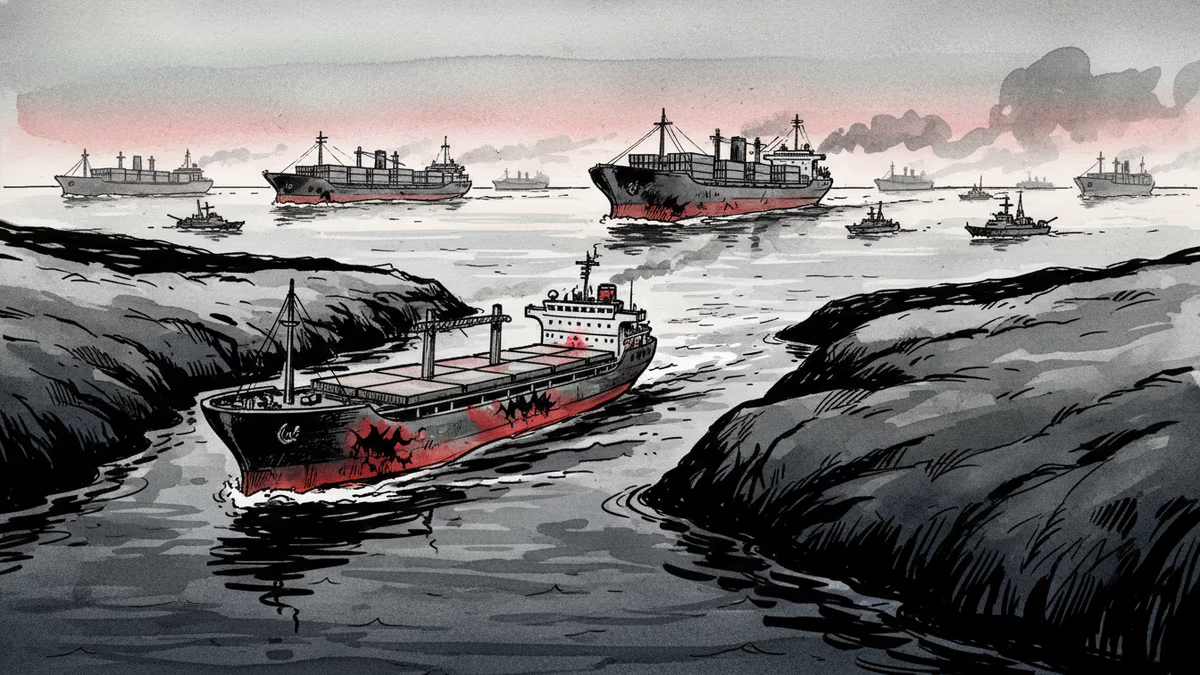
Trump publicly blamed Iran for attacking an HMM cargo vessel, framing it as the consequence of South Korea skipping the U.S.-led Strait of Hormuz escort mission. The incident puts Seoul's energy security and alliance calculus under pressure.
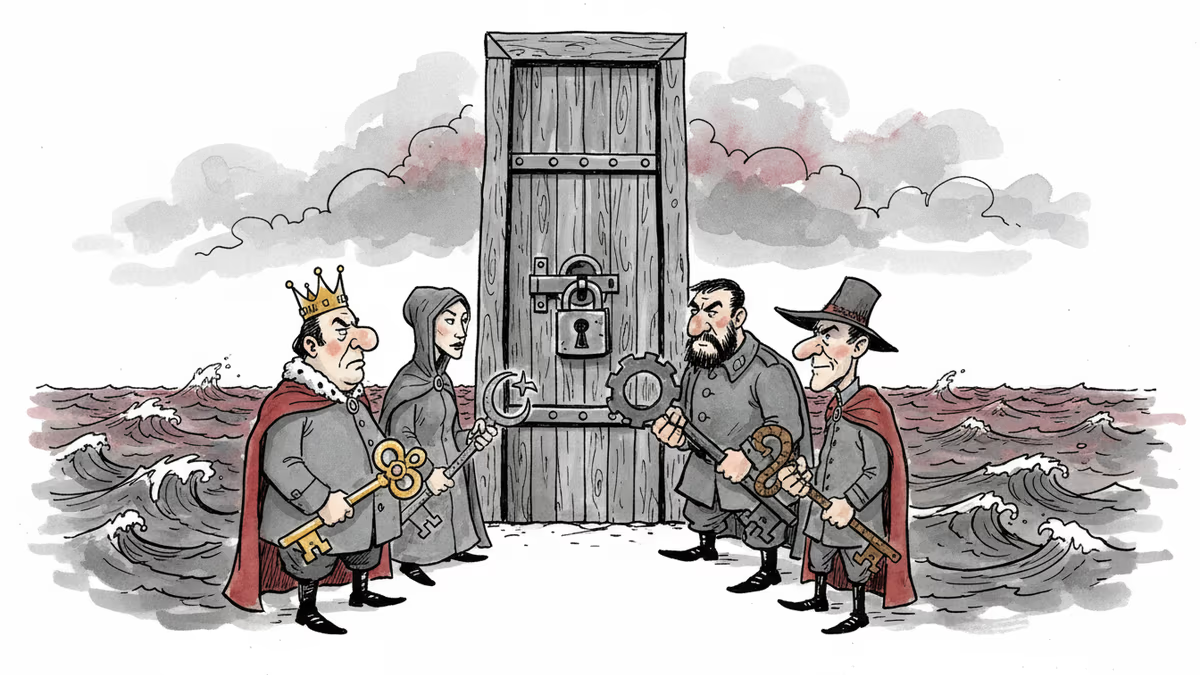
Iran sent a peace proposal to Trump via Pakistan. Araghchi flew to meet Putin in St Petersburg. Three cities, one strait, and a tangle of competing interests that may or may not add up to a deal.
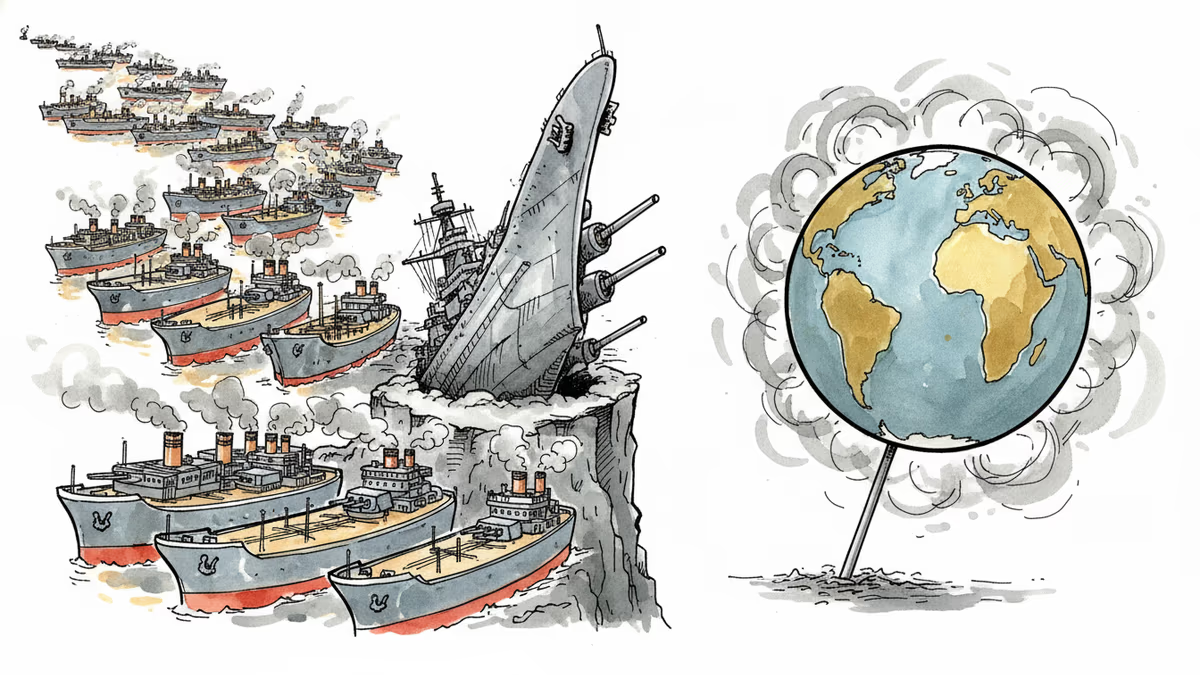
The US has moved to blockade Iranian ports via the Strait of Hormuz after peace talks collapsed. But can it be enforced — and who really pays the price?
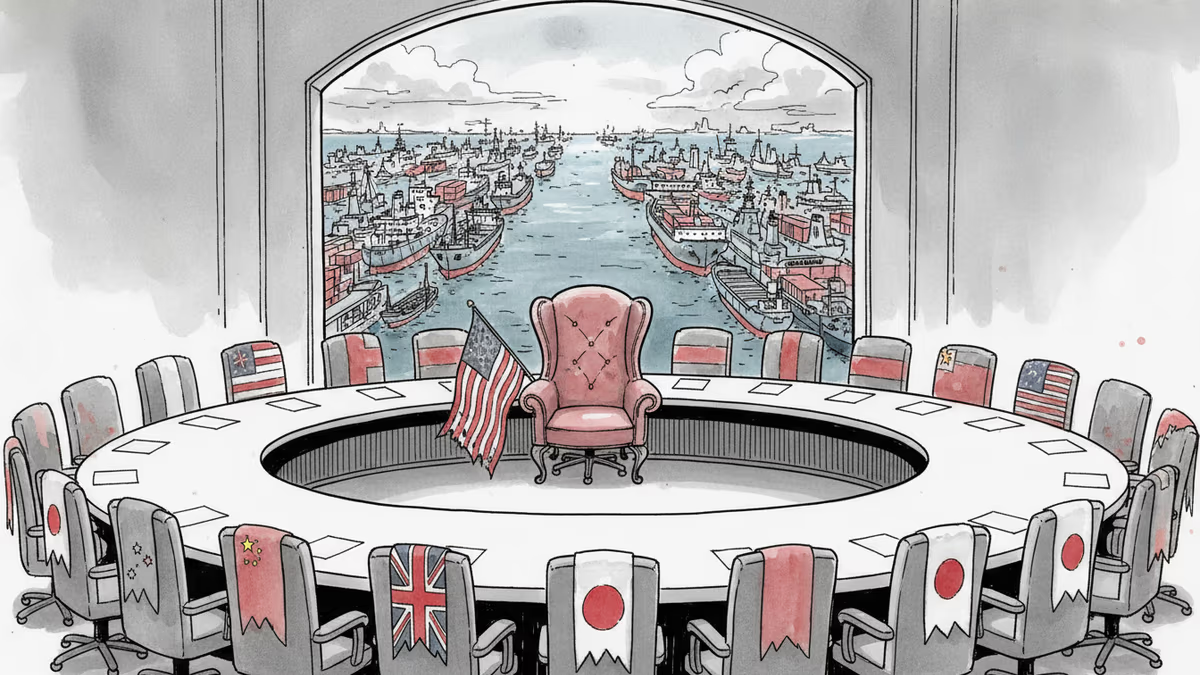
35 nations gathered to reopen the Strait of Hormuz without the U.S. Trump said it's not America's job. That absence may be reshaping the global order faster than anyone expected.
Trump publicly blamed Iran for attacking an HMM cargo vessel, framing it as the consequence of South Korea skipping the U.S.-led Strait of Hormuz escort mission. The incident puts Seoul's energy security and alliance calculus under pressure.
Iran sent a peace proposal to Trump via Pakistan. Araghchi flew to meet Putin in St Petersburg. Three cities, one strait, and a tangle of competing interests that may or may not add up to a deal.
The US has moved to blockade Iranian ports via the Strait of Hormuz after peace talks collapsed. But can it be enforced — and who really pays the price?
35 nations gathered to reopen the Strait of Hormuz without the U.S. Trump said it's not America's job. That absence may be reshaping the global order faster than anyone expected.
Thoughts
Share your thoughts on this article
Sign in to join the conversation