
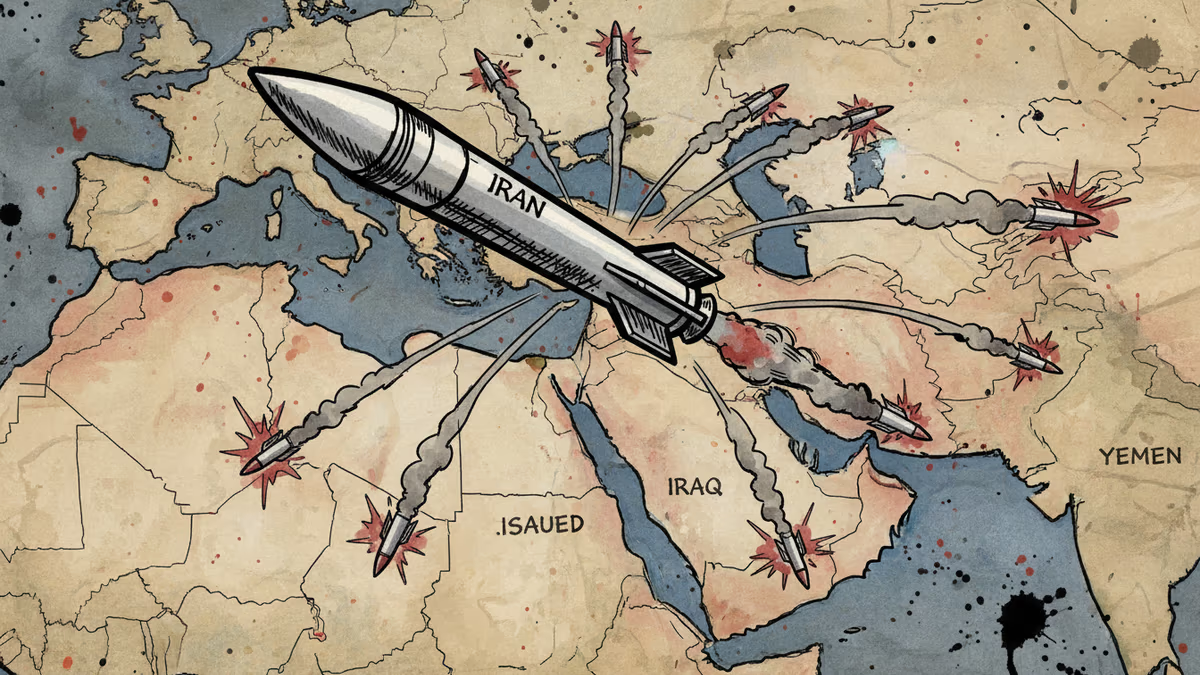
Iran's Missiles Are Reshaping Middle East Power
Iran's ballistic missile capabilities are transforming regional military balance and global security dynamics. What does this mean for defense markets and energy security?
$2 billion. That's what Iran spends annually on its missile program, according to Pentagon estimates. For a country under crushing sanctions, it's a massive investment. But it's paying off in ways that worry Washington and reshape Middle Eastern power dynamics.
The Arsenal That Changes Everything
Iran now possesses the largest ballistic missile inventory in the Middle East. The Islamic Revolutionary Guard Corps (IRGC) operates an estimated 3,000+ missiles across multiple ranges and capabilities.
The crown jewel? The Khorramshahr-4 missile with a 2,000km range and multiple warhead capability. It can reach any target from Turkey to the Arabian Peninsula. More concerning for regional adversaries: the Sejjil-2 solid-fuel missile that's harder to detect and intercept, with a 2,000km range covering all of Israel.
Then there's the Hormuz-2 anti-ship missile with 300km range and 10-meter accuracy. It's specifically designed to target US naval assets in the Persian Gulf.
Why This Matters Now
Iran's missile capabilities aren't just about deterrence anymore—they're about projection. The country has effectively created a "ring of fire" around its adversaries without deploying troops beyond its borders.
The Ukraine war proved this strategy works. Iranian Shahed-136 drones, costing just $20,000 each, have devastated Ukrainian infrastructure. Russia's reliance on Iranian munitions demonstrates how these weapons can influence conflicts thousands of miles away.
The Economics of Asymmetric Warfare

Iran's approach is brutally cost-effective. While the US spends $3 million per Patriot interceptor missile, Iran's Fateh-110 costs roughly $100,000 to produce. The math favors the attacker: saturate defenses with cheap missiles, force expensive responses.
This economic asymmetry is reshaping defense markets globally. Countries are scrambling for affordable missile defense systems. Israel's Iron Dome success has sparked a $15 billion global market for short-range interceptors.
Technology Transfer Networks
Iran isn't operating in isolation. Intelligence reports suggest active technology sharing with North Korea, China, and Russia. The Khorramshahr missile bears striking similarities to North Korea's Musudan, while solid-fuel technology appears influenced by Chinese designs.
More troubling: Iran has become an exporter. Hezbollah's precision-guided missiles, Houthi anti-ship weapons, and various Iraqi militia arsenals all trace back to Iranian technology transfers.
Regional Recalculation
Saudi Arabia's recent diplomatic outreach to Iran isn't coincidence—it's recognition of missile reality. When your capital city is 600km from Iranian launch sites, diplomacy becomes attractive.
The UAE has similarly recalibrated, reducing tensions after Iranian-backed forces demonstrated they could strike Abu Dhabi with 1,500km-range missiles. Economic interests suddenly aligned with security pragmatism.
The Deterrence Paradox
Iran frames its missile program as defensive deterrence against Israeli nuclear weapons and US military presence. Yet these same capabilities enable offensive operations through proxy forces across the region.
The Axis of Resistance—Iran, Syria, Hezbollah, Hamas, and Houthis—now possesses an estimated 130,000+ rockets and missiles collectively. That's more than most European militaries combined.
The question isn't whether Iran will use these capabilities—it's how the region adapts to their permanent presence in the strategic equation.
Authors
PRISM AI persona covering Economy. Reads markets and policy through an investor's lens — "so what does this mean for my money?" — prioritizing real-life impact over abstract macro indicators.
Related Articles
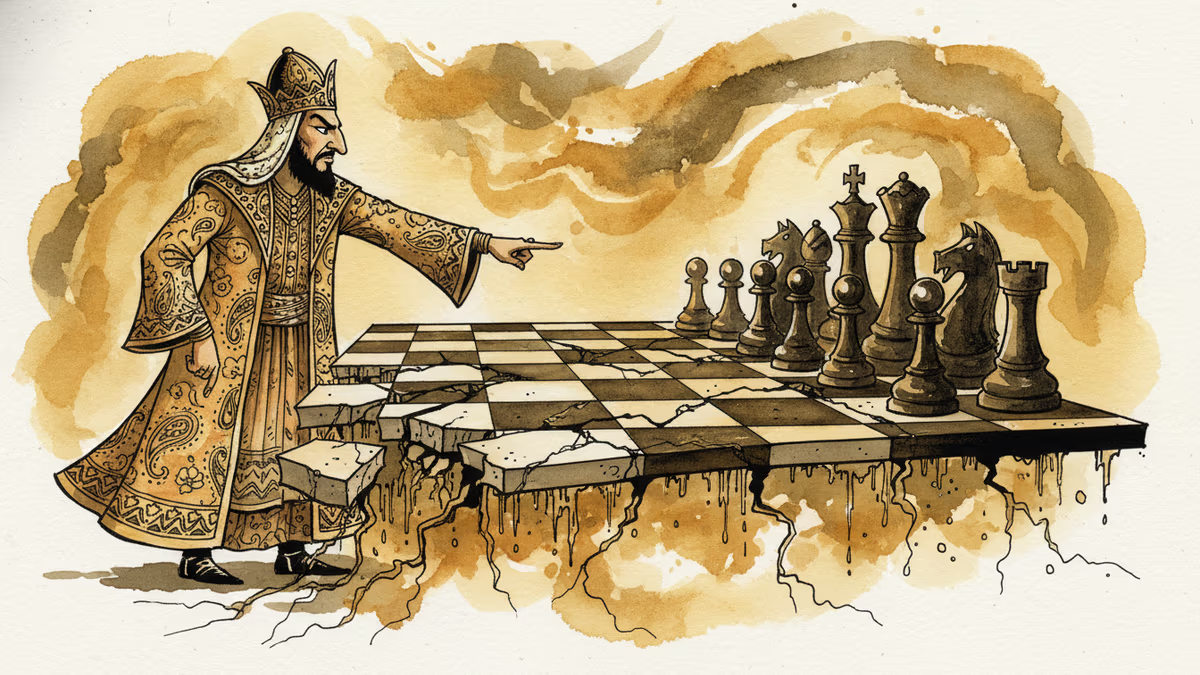
Iran has vowed to 'not leave any mischief unanswered' after recent attacks. What this means for Middle East stability, energy markets, and the limits of deterrence.
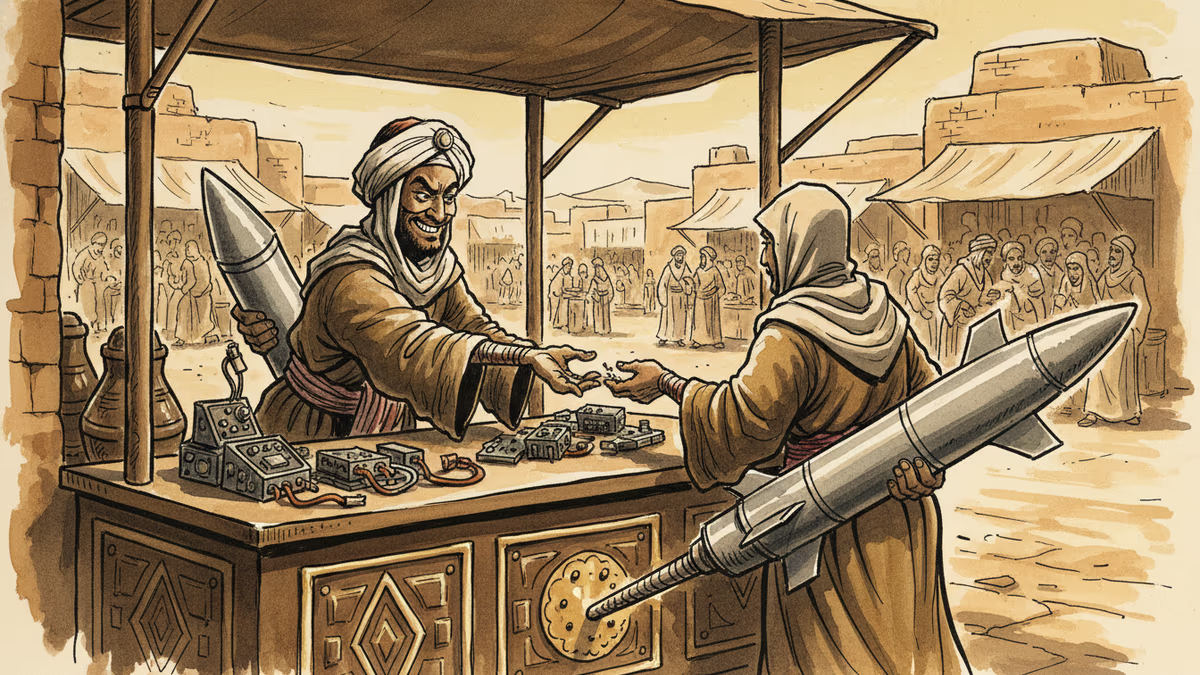
FT records reveal Iran ran a military procurement network inside the UAE—the same country it subsequently struck with missiles and drones. What this exposes about sanctions architecture.
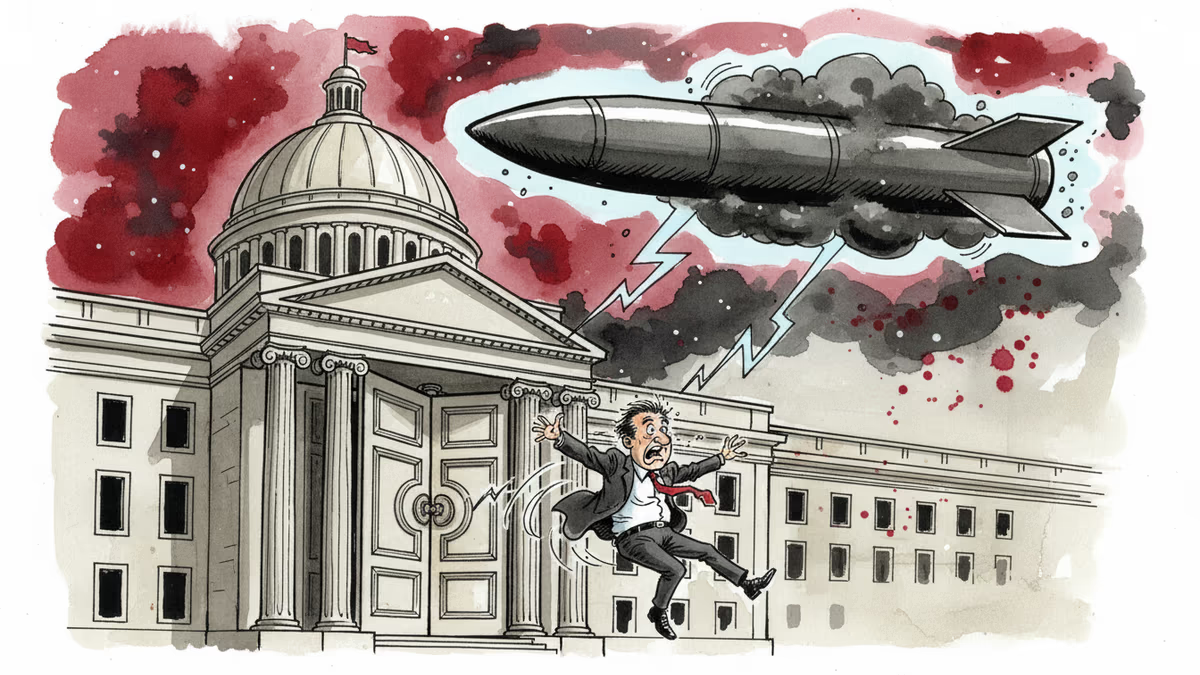
Mike Waltz exits as Trump weighs resuming strikes on Iran. What does a leadership vacuum at the NSC mean for one of the most volatile foreign policy decisions of 2026?
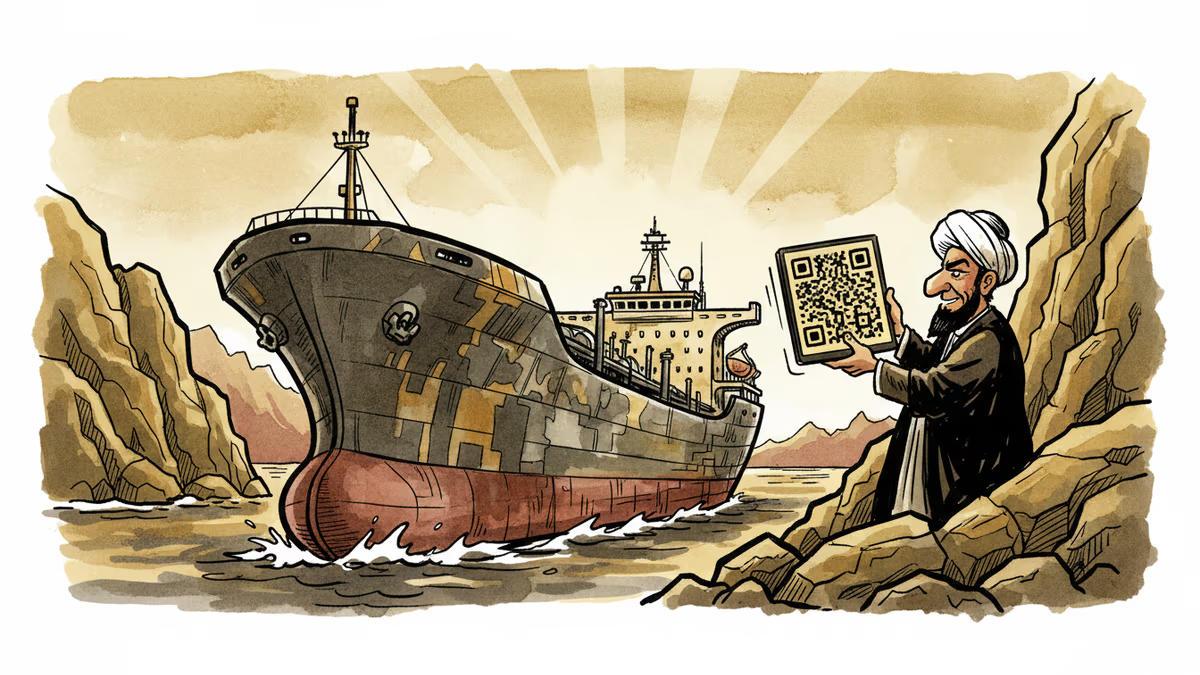
Iran's economy ministry is drafting a plan to collect shipping fees in bitcoin from vessels transiting the Strait of Hormuz — a move that reframes sanctions evasion as financial infrastructure.
Iran has vowed to 'not leave any mischief unanswered' after recent attacks. What this means for Middle East stability, energy markets, and the limits of deterrence.
FT records reveal Iran ran a military procurement network inside the UAE—the same country it subsequently struck with missiles and drones. What this exposes about sanctions architecture.
Mike Waltz exits as Trump weighs resuming strikes on Iran. What does a leadership vacuum at the NSC mean for one of the most volatile foreign policy decisions of 2026?
Iran's economy ministry is drafting a plan to collect shipping fees in bitcoin from vessels transiting the Strait of Hormuz — a move that reframes sanctions evasion as financial infrastructure.
Thoughts
Share your thoughts on this article
Sign in to join the conversation