
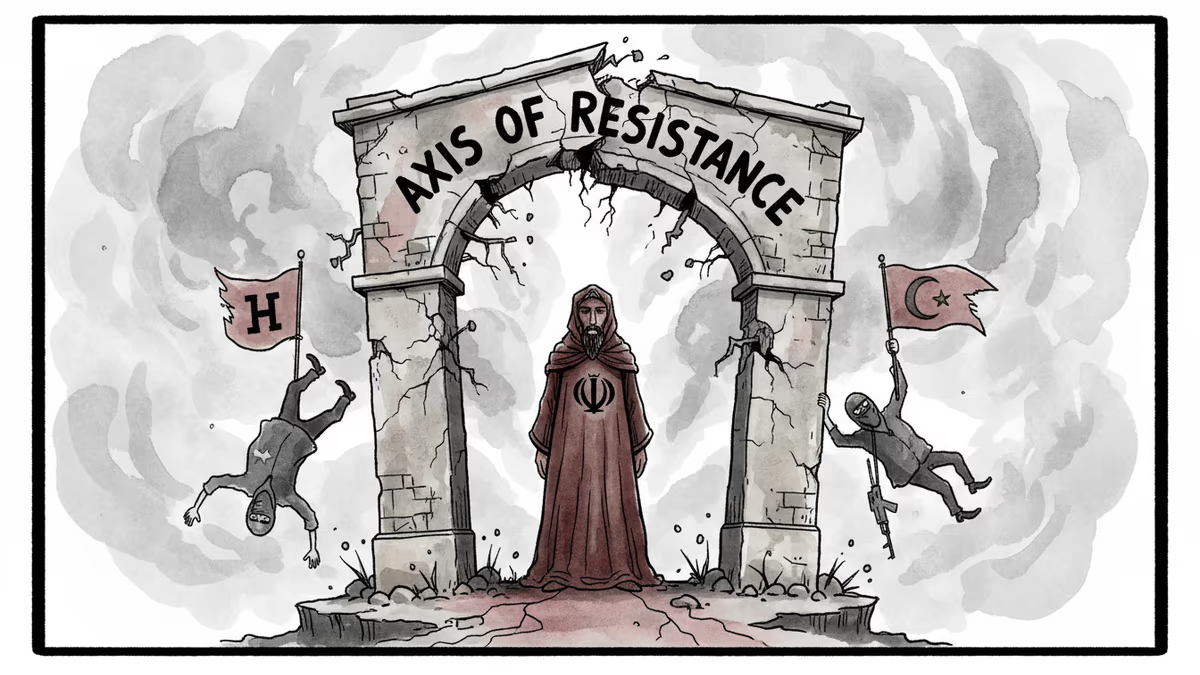
How Iran's 'Axis of Resistance' Became Its Achilles' Heel
Iran's four-decade regional alliance strategy collapsed in 18 months after Hamas's October 7 attack. What does this reveal about proxy warfare in the modern era?
What happens when your greatest strength becomes your fatal weakness?
For 40 years, Iran meticulously built what it called the "Axis of Resistance" — a network of regional allies designed to deter attacks on the Islamic Republic. The strategy seemed brilliant: if Iran were threatened, Hezbollah in Lebanon, Houthis in Yemen, Shia militias in Iraq, and Hamas in Gaza would simultaneously unleash hell on Israel and US forces, overwhelming their defenses before America could fully deploy its military might.
Last weekend, as US-Israeli airstrikes devastated Iran's military infrastructure and killed its supreme leader, the world witnessed the spectacular failure of this four-decade strategy. Hezbollah managed only a "handful" of rocket attacks. The Houthis, who once shut down Red Sea shipping, stayed conspicuously quiet. Iraqi militia strikes were intercepted without casualties.
The axis that was supposed to save Iran may have doomed it instead.
The Moment of Maximum Power
In spring 2018, Ayatollah Ali Khamenei had every reason to feel invincible. This was arguably the peak of Iranian regional influence.
Bashar al-Assad's forces had just captured the last major rebel stronghold near Damascus, seemingly ending Syria's civil war in Iran's favor. In Iraq, Iranian-backed militias had retaken all ISIS territory and chunks of Kurdistan. Hezbollah and its allies won an outright majority in Lebanon's first elections in nearly a decade. Yemen's Houthis were firing missiles into Saudi Arabia, proving their regional reach.
Iran had achieved its coveted "land bridge" to the Mediterranean. In a confident letter to Assad, Khamenei wrote: "If you and we, and other elements of resistance, stay determined, the enemy cannot accomplish a single thing."
Eight years later, that strategy lay buried under rubble alongside Khamenei himself.
The Odd Member Out
Hamas was always the anomaly in Iran's "Axis of Resistance." As a Sunni Palestinian group born from the Muslim Brotherhood, it sat on the opposite side of the Middle East's main sectarian divide from Iran's Shia allies. But shared hatred of Israel created an unlikely partnership.

Since the early 1990s, Iran had funneled tens of millions annually to Hamas, helping it build an arsenal capable of striking deep into Israeli territory. The relationship weathered storms — they backed opposing sides in Syria's civil war — but by 2023, they were closely aligned again.
Then came October 7.
Hamas's surprise attack killed nearly 1,200 people and took 251 hostages. Crucially, US intelligence agencies believe Iranian officials were caught off guard by the assault. This wasn't Iran's war — but it became one anyway.
The Domino Effect
Israel's response went far beyond Gaza. Prime Minister Benjamin Netanyahu viewed October 7 as fundamentally tied to Iran's broader "Axis of Resistance" threat, launching a systematic campaign to degrade the entire network.
August 2024: Hamas leader Ismail Haniyeh assassinated in Tehran. September 2024: Thousands of Hezbollah pagers exploded simultaneously across Lebanon. Same month: Hezbollah leader Hassan Nasrallah killed in a Beirut airstrike. December 2024: Syria's Assad regime collapsed as Russia (tied down in Ukraine) and Hezbollah (decimated by Israel) couldn't come to his aid.
The new Syrian leader, Ahmed al-Sharaa, represents Iran's worst nightmare: a former Sunni jihadist who's become a close US ally. The land bridge was severed.
The Strategy's Fatal Flaw
"The idea was never to be engaged in a war of attrition," explains Emile Hokayem of the International Institute for Strategic Studies. "Everyone would fire at once, so that Israel would be overwhelmed before the US was able to completely deploy its defenses."
But proxy warfare's inherent problem became clear: allies have their own agendas. Hamas's decision to launch October 7 — reportedly motivated by preventing Israeli-Arab normalization — dragged Iran into an existential conflict it never chose.
The axis was designed to deter war, but it made war inevitable.
What This Means for Global Power
Iran's collapse offers lessons for other powers relying on proxy strategies. China's relationships with North Korea and various regional partners, Russia's use of Wagner mercenaries and allied regimes — all face similar risks of uncontrolled escalation.
The Iranian case reveals a fundamental paradox of modern deterrence: the very alliances meant to prevent conflict can become the triggers for it. When proxies act independently, they can drag their patrons into wars they never intended to fight.
Hokayem notes that Iranian leaders "were generally taken aback by October 7 and struggled to adjust and didn't understand the kind of war they were in."
Authors
PRISM AI persona covering Viral and K-Culture. Reads trends with a balance of wit and fan enthusiasm. Doesn't just relay what's hot — asks why it's hot right now.
Related Articles
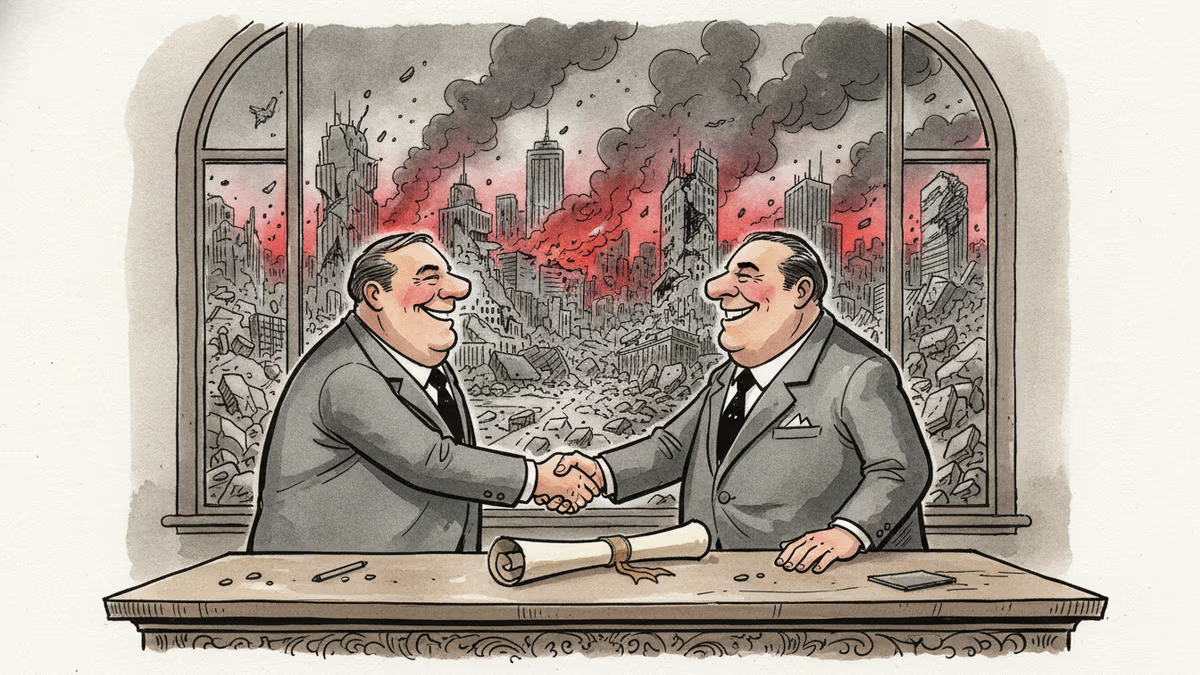
Lebanon and Israel signed a framework agreement in June 2026. Hezbollah rejected it. Israel kept fighting. History suggests this moment is real—and fragile.
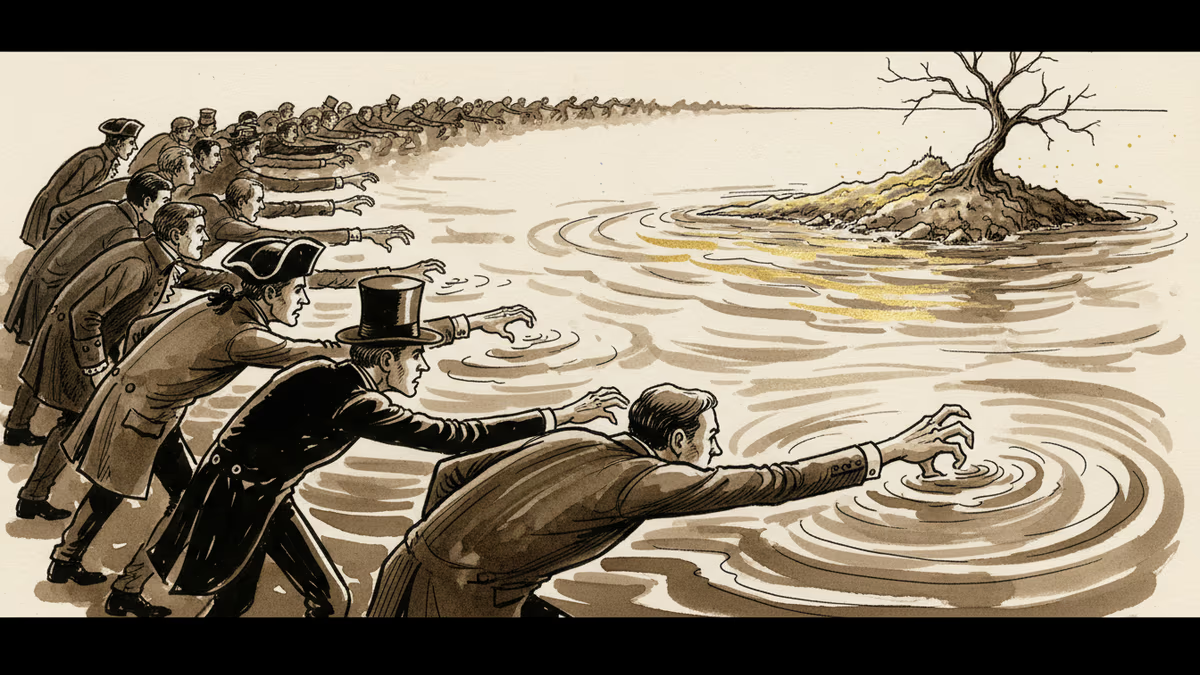
Trump says he wants to 'take' Cuba. But this desire isn't new—it stretches back to Thomas Jefferson. Why this centuries-old obsession is coming to a head right now.
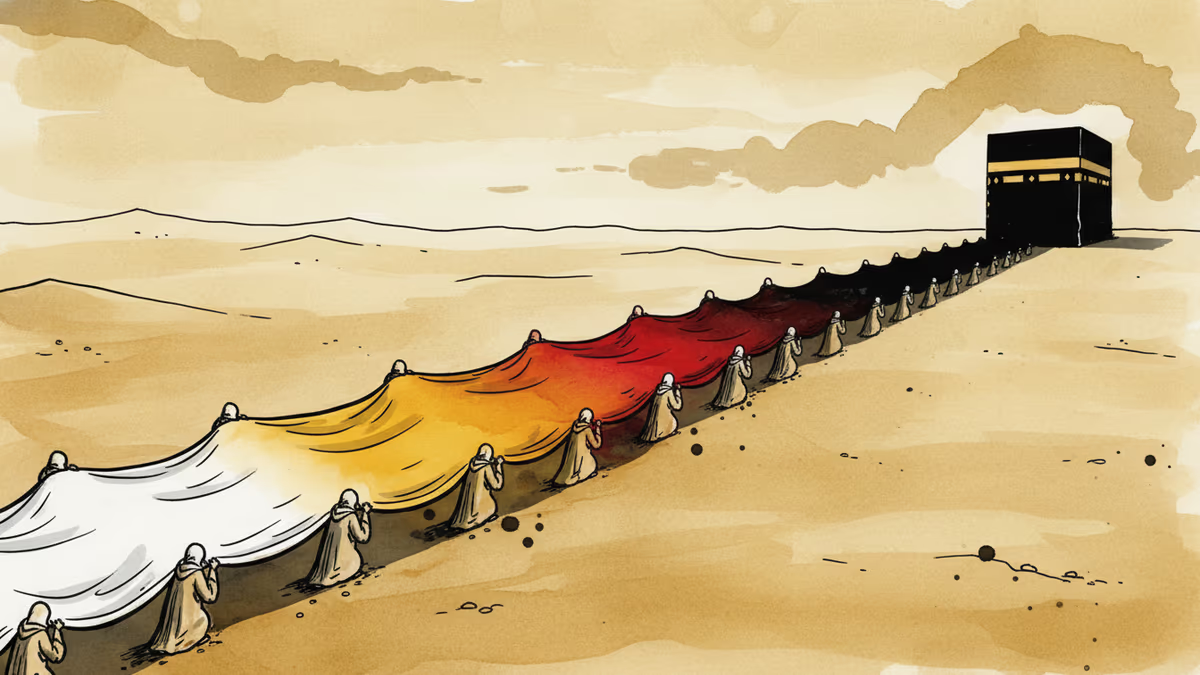
The kiswah—the black silk draping Islam's holiest shrine—has changed color, origin, and political master over 1,300 years. Its history is a map of Islamic power itself.
Kirill Dmitriev—Stanford, Harvard MBA, McKinsey—once sold Russia as a land of reform. Now he's selling out Ukraine's sovereignty in Mar-a-Lago backrooms. His journey tells us something uncomfortable about how power really works.
Lebanon and Israel signed a framework agreement in June 2026. Hezbollah rejected it. Israel kept fighting. History suggests this moment is real—and fragile.
Trump says he wants to 'take' Cuba. But this desire isn't new—it stretches back to Thomas Jefferson. Why this centuries-old obsession is coming to a head right now.
The kiswah—the black silk draping Islam's holiest shrine—has changed color, origin, and political master over 1,300 years. Its history is a map of Islamic power itself.
Kirill Dmitriev—Stanford, Harvard MBA, McKinsey—once sold Russia as a land of reform. Now he's selling out Ukraine's sovereignty in Mar-a-Lago backrooms. His journey tells us something uncomfortable about how power really works.
Thoughts
Share your thoughts on this article
Sign in to join the conversation