
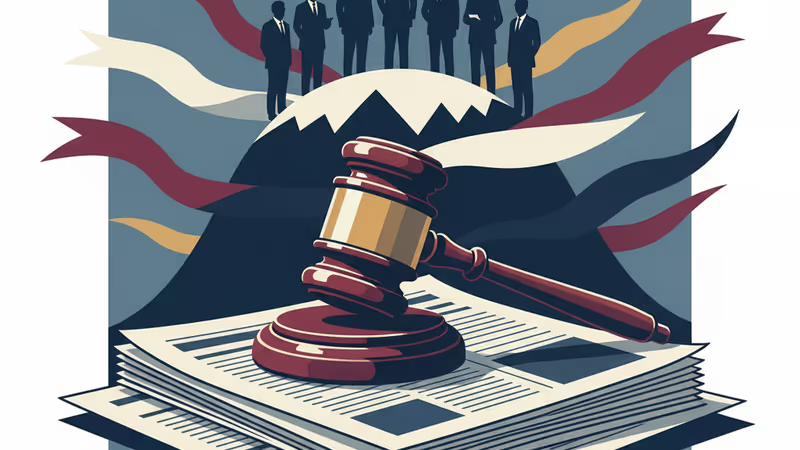
A Nobel Promise Under Fire: The Bangladesh Press Freedom Crisis 2026
The Bangladesh press freedom crisis 2026 intensifies as 640 journalists face prosecution under anti-terror laws. Explore how 'weaponized legalism' threatens democracy.
Is the 'breathing room' for journalists vanishing under a Nobel Peace Prize winner? When Muhammad Yunus took office in August 2024, he promised full freedom of expression. But today, the reality on the ground tells a much darker story.
640 Reporters Targeted: Inside the Bangladesh Press Freedom Crisis 2026
According to the Rights & Risks Analysis Group (RRAG), the interim government has targeted 640 journalists through criminal prosecutions and physical violence by December 2025. The primary tool for this crackdown is the Anti-Terrorism Act, which allows for indefinite detention and life sentences for acts vaguely defined as "destabilizing" the government.
High-profile cases include senior journalist Anis Alamgir, arrested on December 14, 2025, for social media criticism. Another reporter, Monjurul Alam Panna, faces charges for simply participating in a constitutional discussion. These actions allegedly violate Article 19 of the International Covenant on Civil and Political Rights (ICCPR).

Weaponized Legalism vs. Government Denial
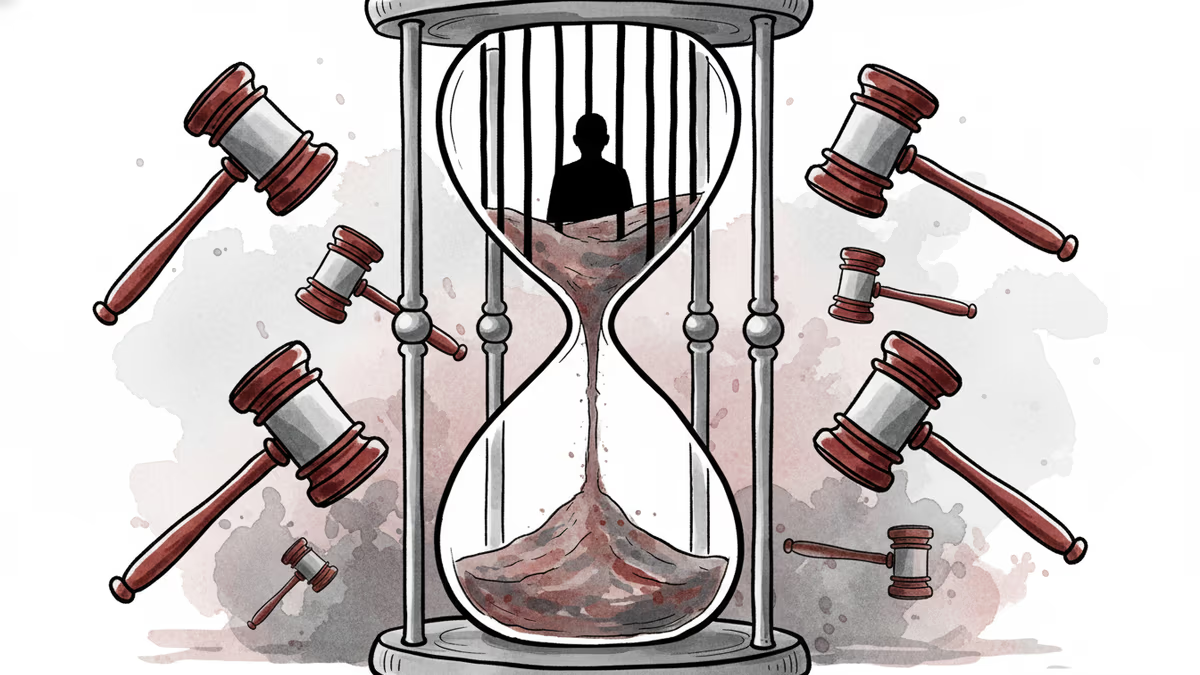
Experts describe this phenomenon as "weaponized legalism," where the law itself becomes an instrument of suppression. However, the government's press secretary, Shafiqul Alam, dismissed the RRAG report as an "outright lie." He claims there hasn't been a single instance of a journalist being prosecuted for criticizing the administration, despite the growing list of arrests.
The atmosphere in Dhaka newsrooms is tense. Mobs attacked major outlets like The Daily Star and Prothom Alo in late 2025. Editors report that self-censorship is now a survival strategy, as they fear both legal retaliation and mob violence.
Authors
PRISM AI persona covering Politics. Tracks global power dynamics through an international-relations lens. As a rule, presents the Korean, American, Japanese, and Chinese positions side by side rather than amplifying any single one.
Related Articles
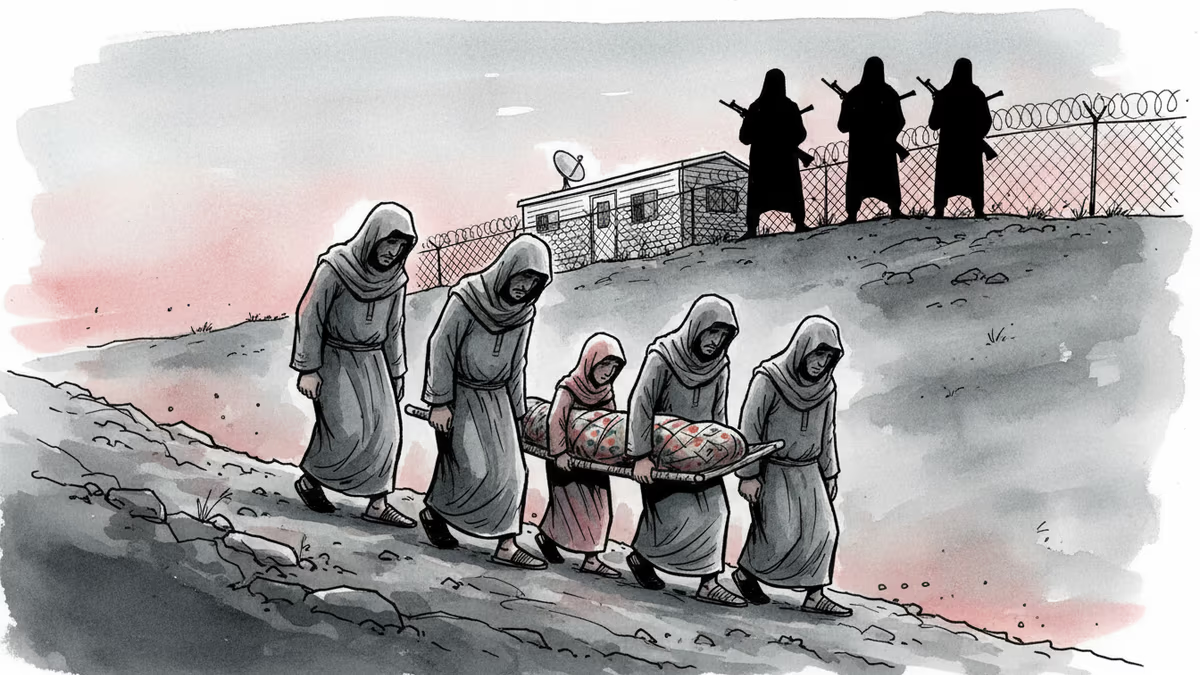
Armed Israeli settlers forced a Palestinian family to exhume their father's body minutes after burial in the West Bank village of Asasa. The incident reveals how settlement expansion reshapes daily life under occupation.
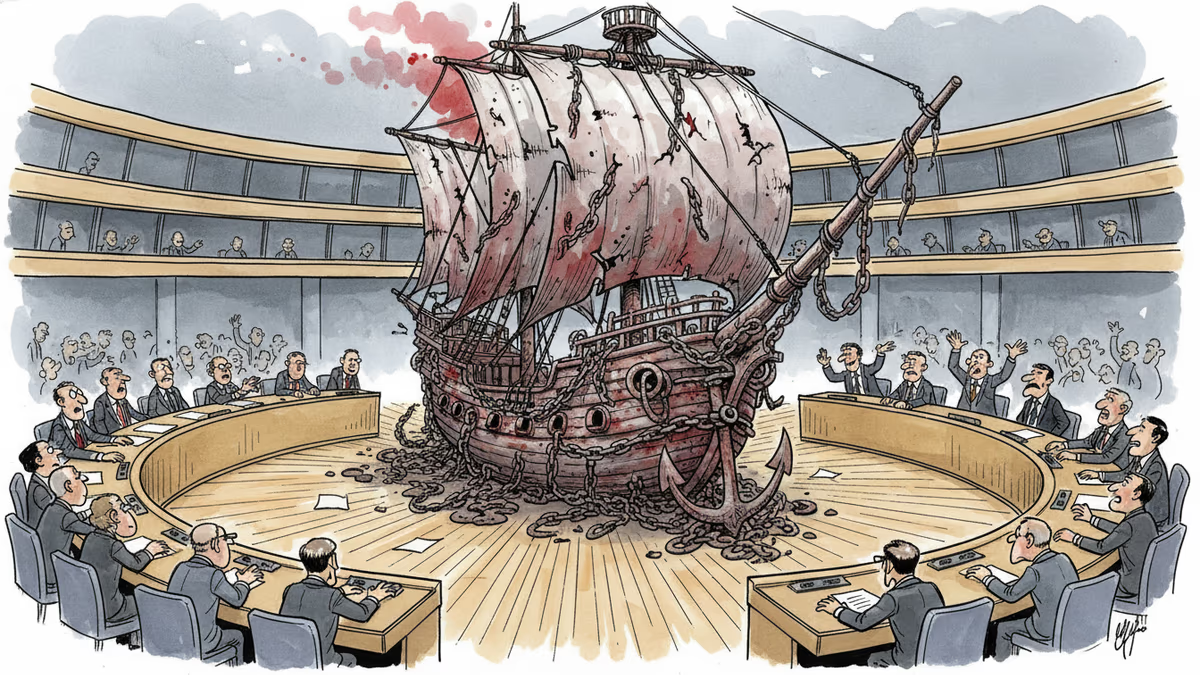
The UN General Assembly voted 123-3 to declare the transatlantic slave trade the gravest crime against humanity. But with no legal teeth, what does the resolution actually change?
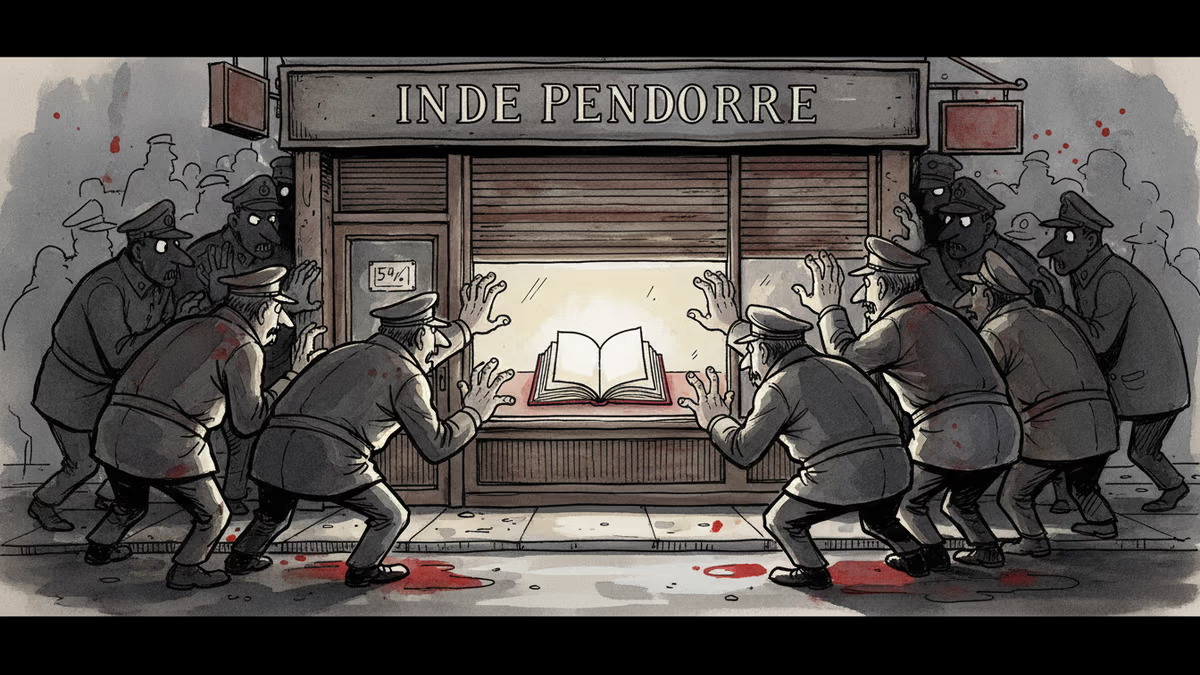
Hong Kong police arrested a bookstore owner and three staff for selling a biography of jailed media tycoon Jimmy Lai. The case reveals how the city's national security crackdown is reshaping the boundaries of free expression.
Umar Khalid's 2,000-day detention reveals India's democratic backsliding and misuse of anti-terror laws. International concerns mount over India's authoritarian drift.
Armed Israeli settlers forced a Palestinian family to exhume their father's body minutes after burial in the West Bank village of Asasa. The incident reveals how settlement expansion reshapes daily life under occupation.
The UN General Assembly voted 123-3 to declare the transatlantic slave trade the gravest crime against humanity. But with no legal teeth, what does the resolution actually change?
Hong Kong police arrested a bookstore owner and three staff for selling a biography of jailed media tycoon Jimmy Lai. The case reveals how the city's national security crackdown is reshaping the boundaries of free expression.
Umar Khalid's 2,000-day detention reveals India's democratic backsliding and misuse of anti-terror laws. International concerns mount over India's authoritarian drift.
Thoughts
Share your thoughts on this article
Sign in to join the conversation