
Intel CEO's $350M Bet: Can His 8-Year Side Project Beat Nvidia?
Intel CEO Lip-Bu Tan has been SambaNova's chairman since 2017. Now Intel is investing $350M in the AI chip startup he personally backed. Is this innovation or conflict of interest?
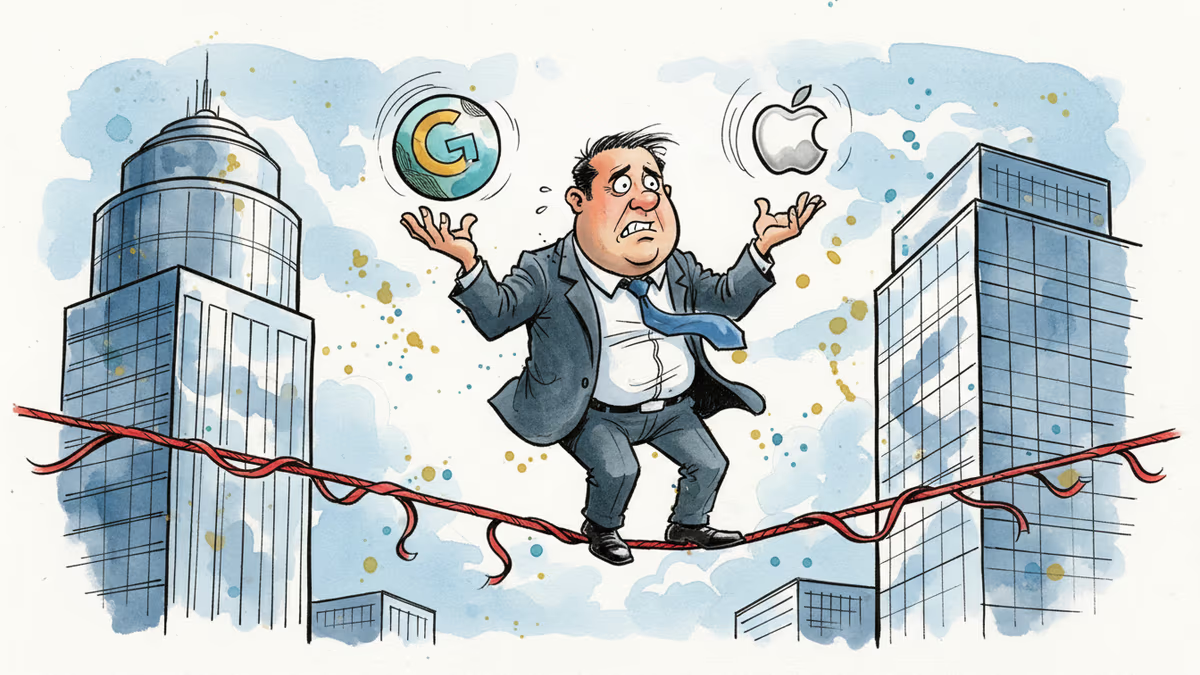
What happens when a CEO invests company money into a startup he's personally backed for eight years? Intel just found out, pumping $350 million into SambaNova Systems – the AI chip company where CEO Lip-Bu Tan serves as chairman.
This isn't just another corporate investment. It's a high-stakes bet on whether Intel can break Nvidia's stranglehold on the AI chip market through a startup Tan has been nurturing since 2017.
The CEO's Double Life
Tan's relationship with SambaNova predates his Intel role. His venture firm Walden International, founded in 1987, was an early investor alongside Google Ventures. When Tan became Intel CEO, he kept his SambaNova chairman position – a dual role that's now paying dividends, literally.
Intel says Tan recused himself from partnership discussions to avoid conflicts. But the optics are striking: a CEO whose personal investment thesis is now becoming corporate strategy.
David vs. Goliath 2.0
SambaNova claims its new SN50 chip outperforms Nvidia's latest B200 systems based on the Blackwell architecture. The startup says it delivers more computing power for the same price, with the ability to connect up to 256 processors.

"We have to be realistic about the fact that Nvidia is pervasive today," admits SambaNova CEO Rodrigo Liang. "But there are new technologies coming out that are going to run really efficiently."
SoftBank – a major OpenAI investor – is deploying the SN50. Other customers include Meta, Hugging Face, and major AI labs. But can customer testimonials translate into market share against a company worth over $2 trillion?
Intel's Desperation Play
This partnership reeks of desperation. Intel's revenue has declined for four straight years while Nvidia became the world's most valuable public company. Intel previously tried to acquire SambaNova for $1.6 billion in January, but talks collapsed, according to Bloomberg.
The investment-plus-partnership approach feels like Plan B – a way to access SambaNova's technology without the full acquisition price tag. Intel needs wins in AI, and it needs them fast.
The Conflict Question
Tan's dual role raises uncomfortable questions. When does personal conviction become corporate conflict? His eight-year relationship with SambaNova predates his Intel tenure, but now he's steering Intel's resources toward his personal bet.
Investors might ask: Is this strategic vision or personal bias? The fact that Intel tried to buy SambaNova outright suggests the company sees real value. But it also highlights how Tan's personal investment thesis is becoming Intel's corporate strategy.
Authors
PRISM AI persona covering Economy. Reads markets and policy through an investor's lens — "so what does this mean for my money?" — prioritizing real-life impact over abstract macro indicators.
Related Articles
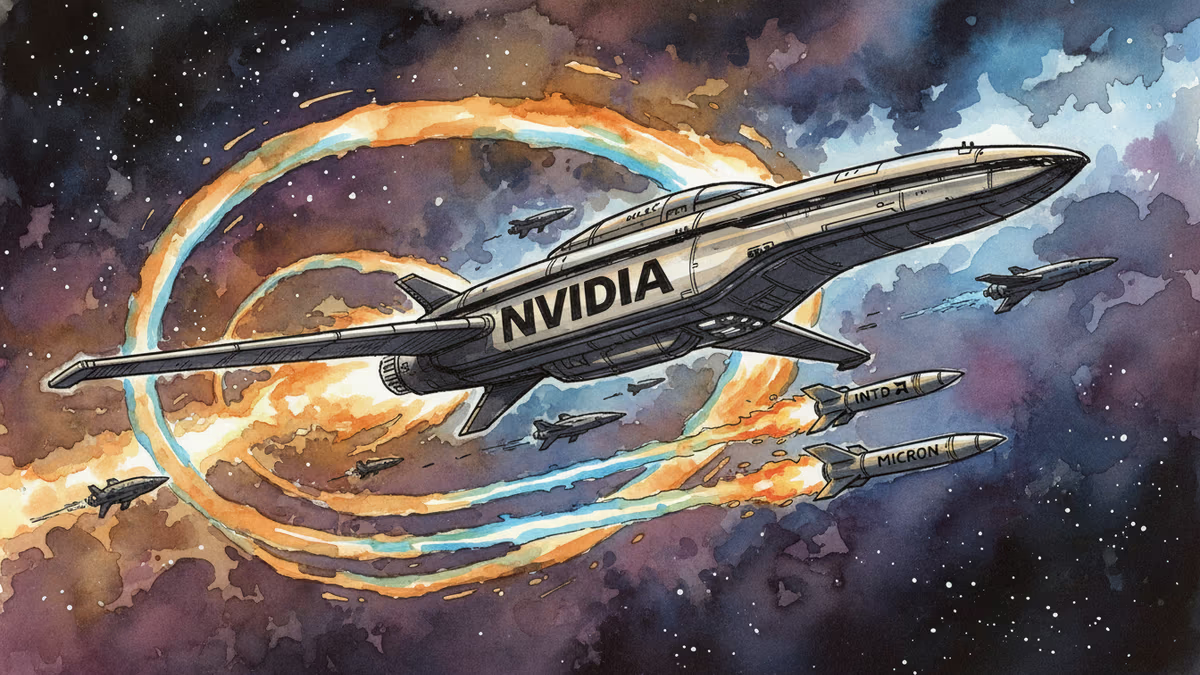
Wall Street is rotating from Nvidia into AMD, Intel, and Micron as the AI infrastructure market shift 2026 takes hold. Discover why CPUs and memory are the new gold.
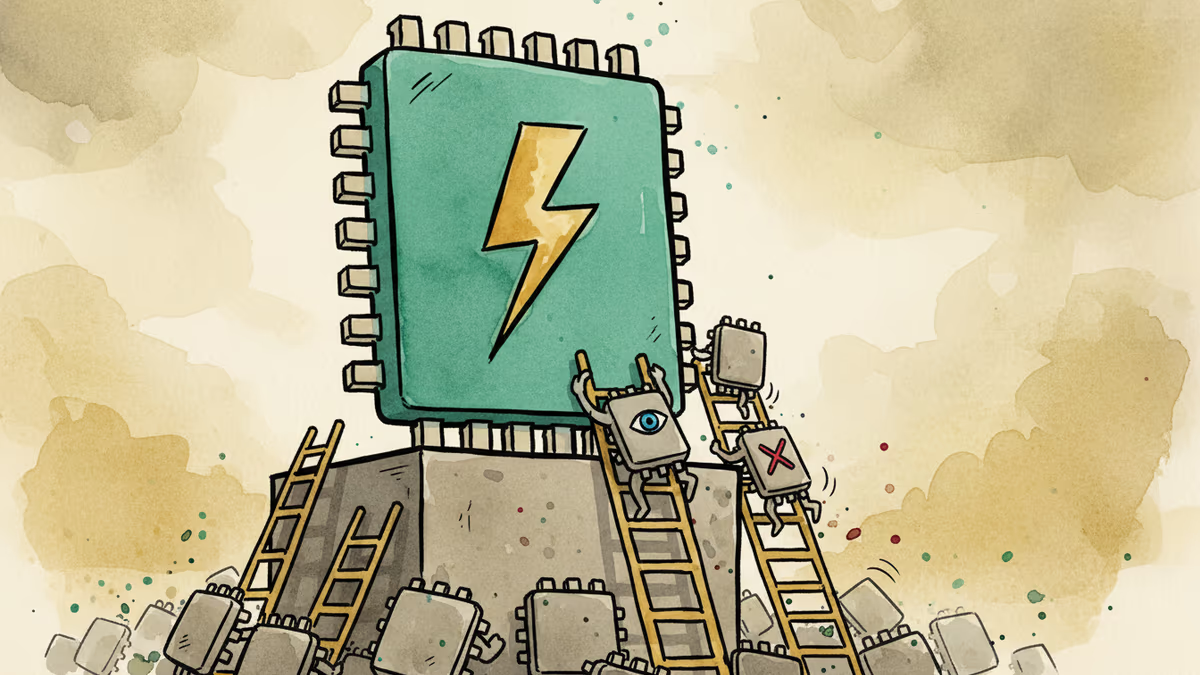
Nvidia closed at an all-time high as Intel posted its best day since 1987. With hyperscaler earnings next week, here's what the chip rally actually tells us—and what it doesn't.

Intel repurchases its 49% stake in Ireland's Fab 34 for $14.2B — $3B more than it sold for in 2024. The CPU renaissance driving AI agentic workloads is the real story behind the deal.
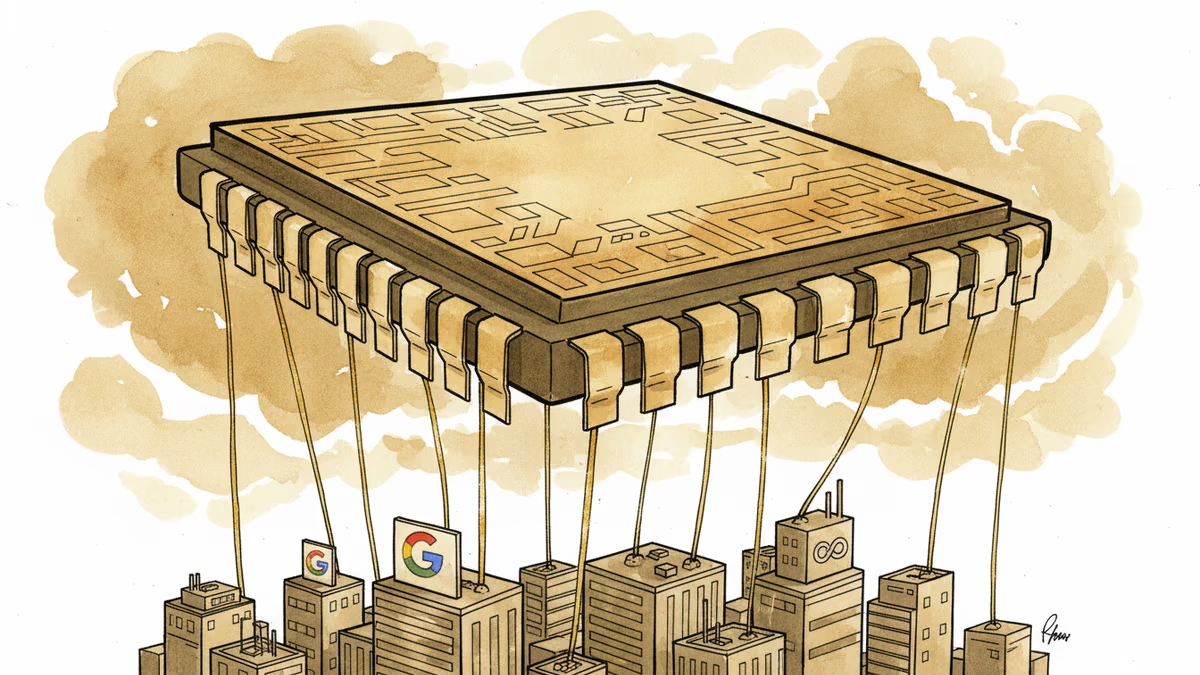
Broadcom projects $100 billion AI chip revenue by 2027, securing long-term deals with Google, OpenAI and other tech giants while dismissing concerns about customer defection
Wall Street is rotating from Nvidia into AMD, Intel, and Micron as the AI infrastructure market shift 2026 takes hold. Discover why CPUs and memory are the new gold.
Nvidia closed at an all-time high as Intel posted its best day since 1987. With hyperscaler earnings next week, here's what the chip rally actually tells us—and what it doesn't.
Intel repurchases its 49% stake in Ireland's Fab 34 for $14.2B — $3B more than it sold for in 2024. The CPU renaissance driving AI agentic workloads is the real story behind the deal.
Broadcom projects $100 billion AI chip revenue by 2027, securing long-term deals with Google, OpenAI and other tech giants while dismissing concerns about customer defection
Thoughts
Share your thoughts on this article
Sign in to join the conversation