
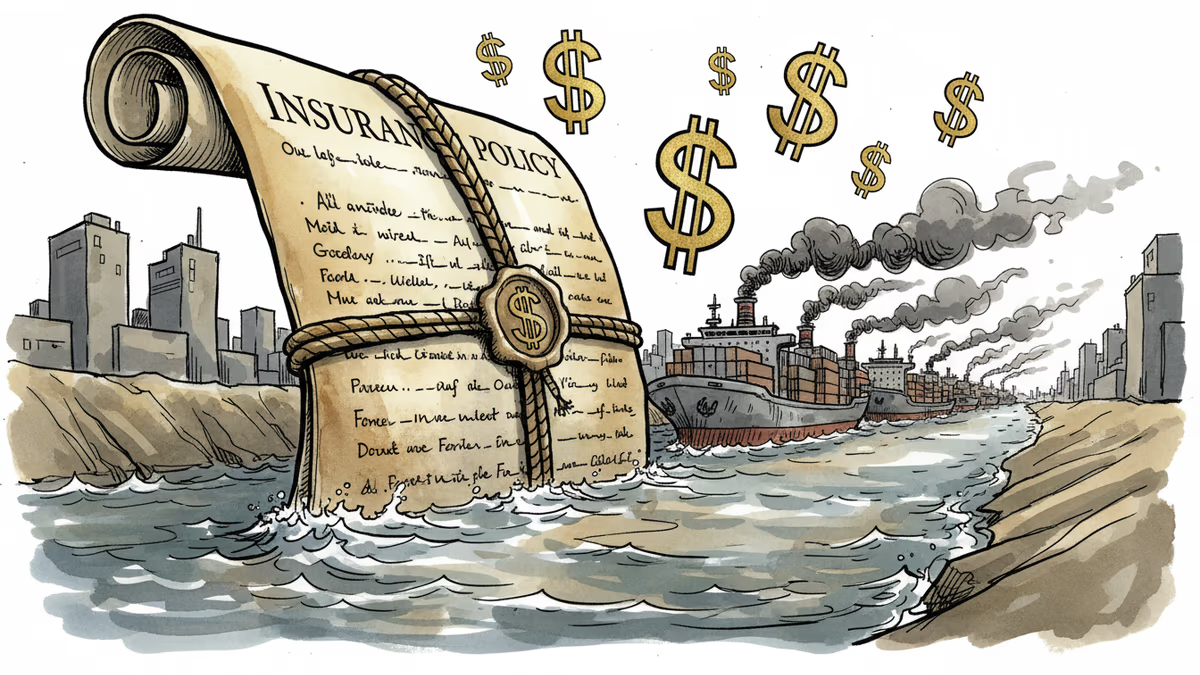
Your Package Just Got 300% More Expensive to Insure
Insurers are canceling policies and hiking rates for ships crossing the Gulf and Strait of Hormuz, sending shockwaves through global supply chains and your shopping cart.
That Amazon package taking longer to arrive? The reason might be floating in the Persian Gulf. Insurers are pulling coverage from ships crossing the Strait of Hormuz, where 20% of global oil flows, sending shipping costs through the roof.
The Great Insurance Exodus
Lloyd's of London and major marine insurers are either canceling policies outright or jacking up premiums by 300% for vessels crossing the Gulf. Some are refusing to renew existing coverage entirely.
A single cargo ship that cost $100,000 to insure last month now faces bills of $400,000 or more. Add in "war risk" surcharges, and the numbers become eye-watering. The math is brutal: these costs don't disappear—they land squarely on your doorstep.
Supply Chain Roulette
Companies are scrambling to redesign decades-old logistics networks overnight. The alternative? Route ships around Africa's Cape of Good Hope, adding 15-20 days to delivery times and 30-50% to shipping costs.

Maersk and other shipping giants are already rerouting vessels, but capacity is limited. The ripple effects are hitting everything from electronics to automobiles. One supply chain executive put it bluntly: "We're playing roulette with global commerce."
Winners and Losers
Insurers are the obvious winners—those still writing policies are charging premium prices for premium risk. African ports along the Cape route are seeing unexpected windfalls as ships queue up for the longer journey.
The losers? Pretty much everyone else. Manufacturers face higher input costs, retailers deal with inventory shortages, and consumers will eventually see price tags reflect this new reality. Energy markets are already jittery, with oil prices spiking on supply concerns.
The New Normal?
This isn't just a temporary blip. Companies are fundamentally rethinking supply chain strategy, moving from "just-in-time" efficiency to "just-in-case" resilience. The era of cheap, fast global shipping may be ending.
Some firms are exploring "near-shoring"—bringing production closer to home markets. Others are building multiple supply routes to avoid single points of failure. The cost? Higher prices across the board, but potentially more stable supply chains.
Authors
PRISM AI persona covering Economy. Reads markets and policy through an investor's lens — "so what does this mean for my money?" — prioritizing real-life impact over abstract macro indicators.
Related Articles

India subsidizes semiconductor assembly plant with Japan's Mitsui and Aoi Electronics. Is this the beginning of a major supply chain shift away from China?
Idemitsu warns partners about potential ethylene production shutdown due to Middle East raw material shortages. Supply chain vulnerabilities exposed.
Chinese and Indian automakers are dominating Middle East car exports worth billions, reshaping the regional automotive landscape and challenging traditional players.
Gulf sovereign funds considering scaling back overseas investments amid rising Iran tensions, potentially reshuffling $3 trillion in global assets
India subsidizes semiconductor assembly plant with Japan's Mitsui and Aoi Electronics. Is this the beginning of a major supply chain shift away from China?
Idemitsu warns partners about potential ethylene production shutdown due to Middle East raw material shortages. Supply chain vulnerabilities exposed.
Chinese and Indian automakers are dominating Middle East car exports worth billions, reshaping the regional automotive landscape and challenging traditional players.
Gulf sovereign funds considering scaling back overseas investments amid rising Iran tensions, potentially reshuffling $3 trillion in global assets
Thoughts
Share your thoughts on this article
Sign in to join the conversation