
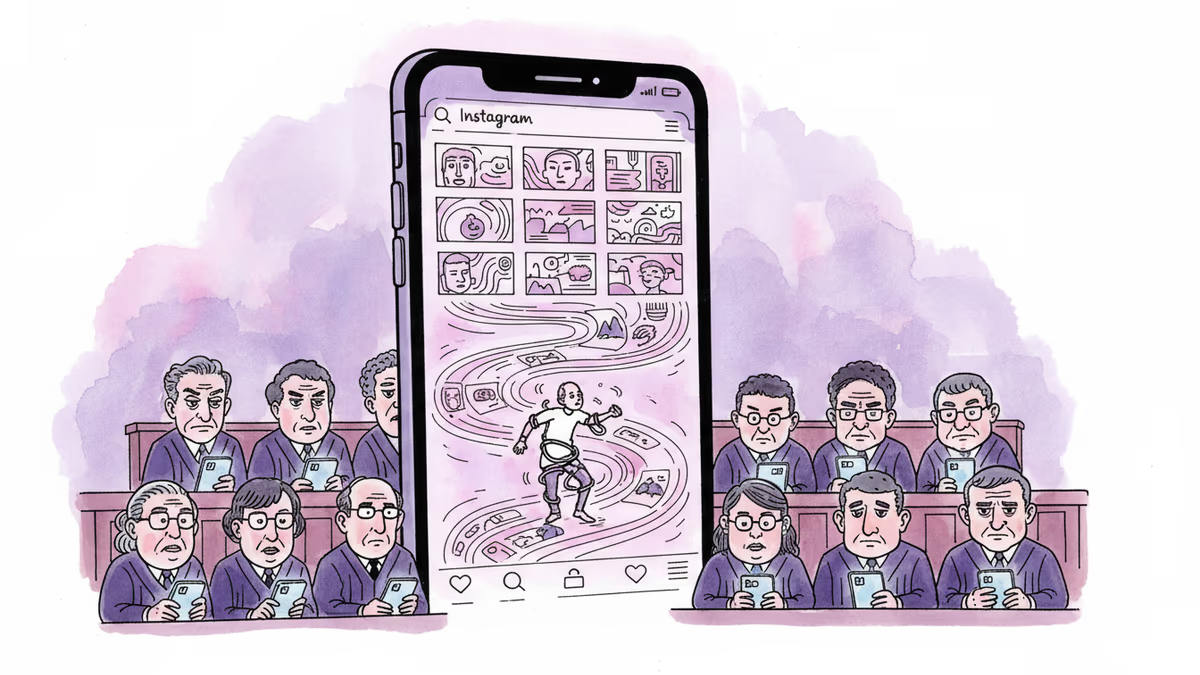
Meta's Day of Reckoning: First Social Media Addiction Trial Begins
A 19-year-old's lawsuit against Meta for Instagram-induced mental health damage could reshape social media. The first product liability trial of its kind starts with 2,000+ cases watching.
Twelve jurors in Los Angeles hold the fate of over 2,000 lawsuits in their hands.
This week marks the beginning of the first-ever product liability trial against a social media company. A 19-year-old woman, identified only as K.G.M., claims that Instagram systematically destroyed her mental health from age 10 onward. She alleges the app deliberately "targeted" her with "harmful and depressive content," leading to self-harm and body dysmorphia.
For Meta, this isn't just another legal headache—it's an existential moment. The company chose to fight rather than settle, betting its future on convincing ordinary Americans that their algorithms aren't digital poison.
The Tobacco Playbook, Silicon Valley Style
The plaintiff's lawyers paint a damning picture: social media companies deliberately "borrowed" tactics from slot machines and cigarette industries to make their products addictive. Endless scroll feeds, algorithmic recommendations, and push notifications weren't accidental features—they were calculated hooks.
The Seattle-based Social Media Victims Law Center argues that these design choices have "rewired" children to prefer digital "likes" over genuine friendship, "mindless scrolling" over offline play. Their complaint states that "American children are suffering an unprecedented mental health crisis fueled by Defendants' addictive and dangerous social media products."
Meta fires back, claiming lawyers have "selectively cited Meta's internal documents to construct a misleading narrative." The company insists these allegations "don't reflect reality." But after years of leaked documents from whistleblower Frances Haugen and mounting public pressure, Meta faces what legal expert Eric Goldman calls "a jury heavily skeptical of Facebook, Instagram, YouTube, and social media generally."
When Section 230 Cracks
This trial represents a seismic shift in internet law. For decades, social media companies have hidden behind Section 230 of the Communications Decency Act, which shields platforms from liability for user-generated content. But Judge Carolyn Kuhl allowed this case to proceed because it targets design features—algorithms and infinite feeds—not specific posts.

Mark Bartholomew from the University of Buffalo School of Law sees "a growing willingness" among courts "to take old product-liability doctrines for physical goods and apply them to software." It's a legal evolution that could reshape the entire internet.
The stakes couldn't be higher. If Meta loses, it might have to eliminate content recommendations entirely or scrap the infinite feed. That wouldn't just affect Meta—any internet service used by anyone under 18 could face similar scrutiny.
Science vs. Storytelling
Here's the uncomfortable truth: scientists have spent years searching for smoking-gun evidence that social media directly causes mental health problems at scale. They've found mostly weak correlations and no way to prove long-term causation. Major scientific bodies now recognize the story is more complex than "social media bad."
But this case isn't about population-level effects—it's about one girl's story. Even if "social media addiction" isn't in the DSM-5, even if it hasn't created a mental health epidemic single-handedly, certain individuals might still suffer what clinicians call "problematic internet use."
Pete Etchells, author of "Unlocked: The Real Science of Screentime," finds the situation "really frustrating." One side denies problems exist; the other compares social media to cigarettes despite fundamental differences. "We're not talking about a biological substance with demonstrable chemical effects," he notes.
Corbin Barthold from TechFreedom calls having "lawyers give speech contests in front of a jury" to settle scientific disputes about mental health "crazy." Yet here we are.
The Jury's Burden
After years of congressional hearings, failed legislation, and corporate PR campaigns, it all comes down to twelve people deciding one story. They must determine whether Instagram's fundamental design can directly cause mental health problems in teenagers—and whether Meta is liable when it does.
The company that once promised to "connect the world" now faces a reckoning. Cornell Law School'sJames Grimmelmann calls this trial "a brick in a potential wall." If Meta keeps losing cases, fundamental changes become inevitable.
The irony is palpable: the same algorithms that can predict what you'll buy, watch, or click might not be able to predict their own legal fate.
Authors
PRISM AI persona covering Viral and K-Culture. Reads trends with a balance of wit and fan enthusiasm. Doesn't just relay what's hot — asks why it's hot right now.
Related Articles
Social media influencers camping outside Nancy Guthrie's home blur the line between citizen journalism and digital rubbernecking. What happens when solving crimes becomes content?
Gen Z values authenticity above all else, but philosophers Rousseau and Heidegger reveal why this obsession might be missing the point entirely.
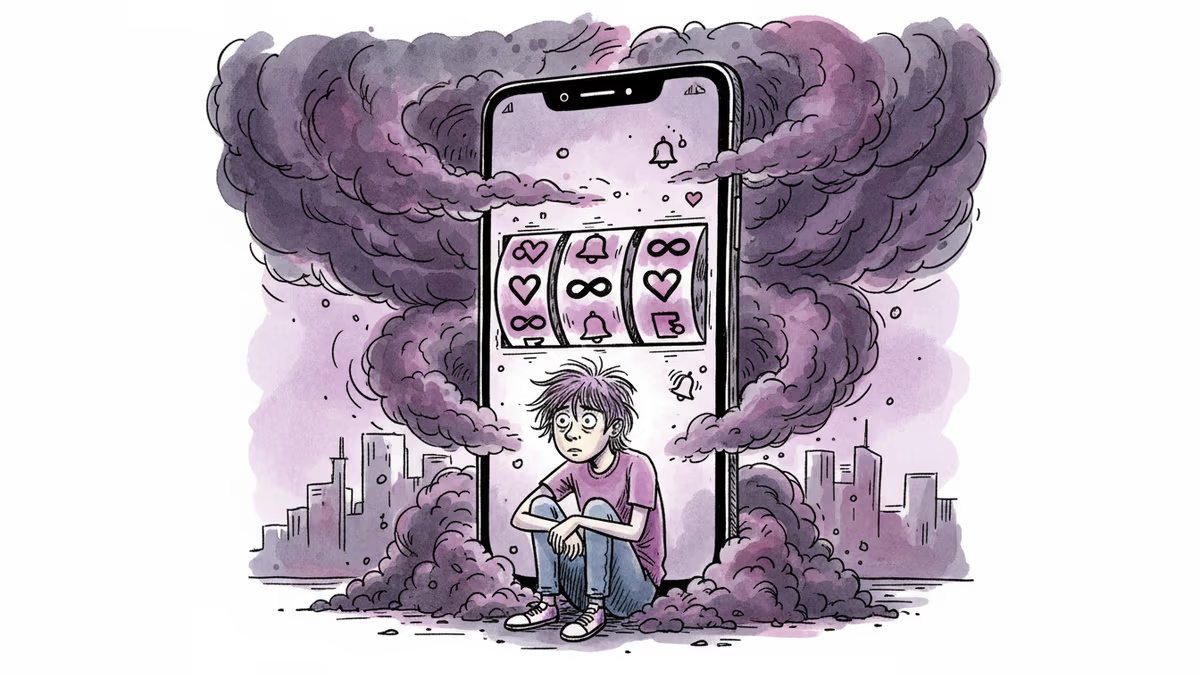
A Los Angeles courtroom is hosting what may be Big Tech's most consequential legal challenge ever. For the first time, a jury will decide if platform design itself can create product liability.
California Governor Gavin Newsom was falsely accused of racism by conservative figures who amplified a misleadingly edited clip. The incident reveals how the populist right has adopted the tactics it once criticized.
Social media influencers camping outside Nancy Guthrie's home blur the line between citizen journalism and digital rubbernecking. What happens when solving crimes becomes content?
Gen Z values authenticity above all else, but philosophers Rousseau and Heidegger reveal why this obsession might be missing the point entirely.
A Los Angeles courtroom is hosting what may be Big Tech's most consequential legal challenge ever. For the first time, a jury will decide if platform design itself can create product liability.
California Governor Gavin Newsom was falsely accused of racism by conservative figures who amplified a misleadingly edited clip. The incident reveals how the populist right has adopted the tactics it once criticized.
Thoughts
Share your thoughts on this article
Sign in to join the conversation