
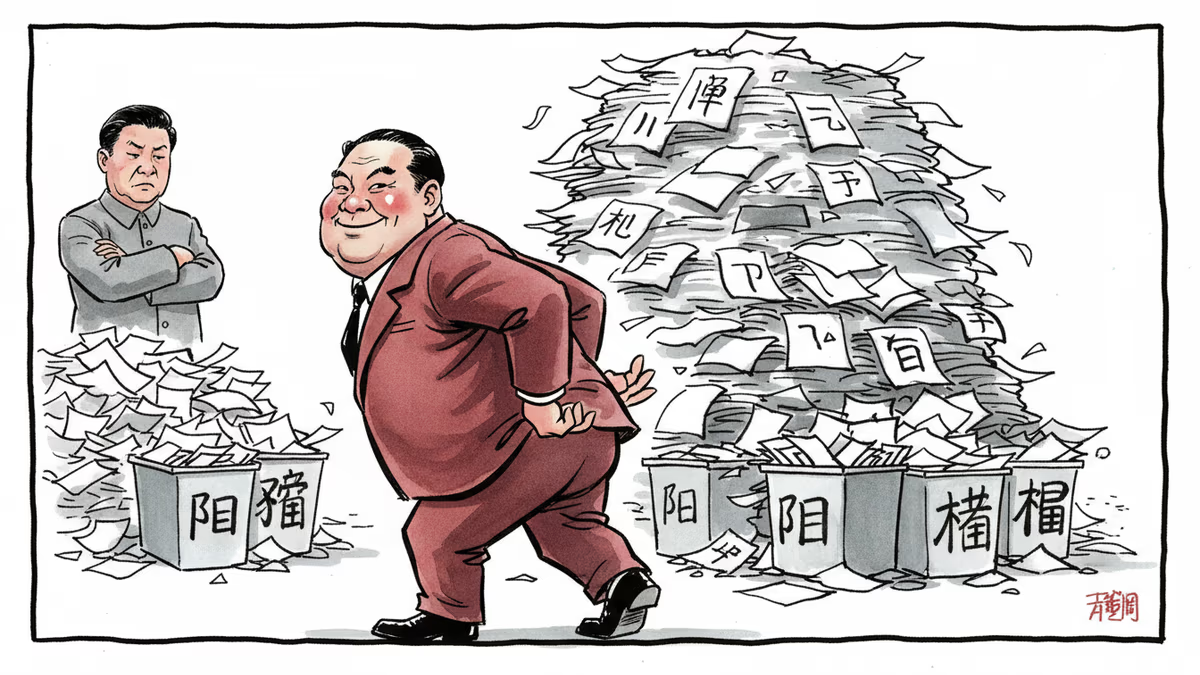
Xi's Blunt Warning to Officials Who 'Tap Their Bum and Walk Off
Xi Jinping's newly published speeches reveal harsh criticism of debt-laden local officials and signal major reforms to China's promotion system ahead of 2027 leadership transition.
"Some officials probably didn't even think about repaying the debt when they raised it. When will it be their turn to pay it?"
This pointed question from Xi Jinping at a 2013 economic work conference has resurfaced in a newly published collection of his speeches, carrying fresh relevance as China overhauls its Communist Party promotion system ahead of 2027's leadership transition. His blunt criticism of officials who "tap their bum and walk off" after burdening governments with debt isn't just historical record—it's a blueprint for systemic change.
The Debt-and-Promotion Cycle
Xi's criticism strikes at the heart of China's local governance problem. Regional officials have long pursued eye-catching infrastructure projects during their 3-5 year terms, accumulating massive debts that become someone else's problem when they get promoted. The numbers tell the story: local government debt reached 92 trillion yuan (about $17 trillion) by 2023.
The timing mismatch is brutal. Officials need visible achievements within their short tenures to climb the party ladder, but infrastructure loans typically mature over 10-20 years. "By the time the debt matures, these officials will no longer be in the same positions," Xi observed with characteristic directness.
The newly published volume from Central Party Literature Press compiles Xi's speeches and directives since November 2012, including warnings against "two-faced" officials and calls for locally-tailored evaluation benchmarks. It's not just retrospective documentation—it's a manifesto for reform.
Beyond GDP Worship
Xi's proposed evaluation overhaul represents a fundamental shift from China's growth-at-all-costs mentality. "We cannot allow some officials to burden the government with an a***load of debt in order to achieve political achievements," he declared, using unusually colorful language for a party document.

The new system emphasizes long-term accountability. Officials would face consequences for projects that go sour even after they've moved on, effectively ending the "build-and-bail" culture. Regional customization is another key element—instead of uniform GDP targets, localities would be judged on metrics suited to their specific circumstances and development needs.
This aligns with Xi's "common prosperity" agenda, prioritizing sustainable development over flashy megaprojects. It's governance reform with Chinese characteristics: maintaining central control while adapting to local realities.
Political Calculations for 2027
The timing of this publication isn't coincidental. With the 2027 Party Congress approaching, Xi is laying groundwork for succession planning and institutional reform. The emphasis on rooting out "two-faced" officials—those who publicly comply but privately dissent—signals continued prioritization of party loyalty and ideological alignment.
This reform serves multiple political purposes. It addresses a genuine economic problem while reinforcing Xi's authority and policy vision. By tackling debt sustainability now, the leadership aims to prevent future financial crises that could undermine party legitimacy.
International observers note the broader implications. A more sustainable Chinese growth model could reduce global economic volatility, but tighter party control over local officials might limit the experimentation that has historically driven China's economic dynamism.
The Implementation Challenge
Transforming incentive structures in a system as vast as China's presents enormous challenges. Local officials have operated under the current rules for decades—changing behavior requires more than new guidelines. The party must balance central oversight with local autonomy, ensuring compliance without stifling innovation.
Early indicators suggest mixed results. Some provinces have already begun implementing debt-conscious evaluation criteria, while others continue pursuing traditional growth strategies. The transition period will likely see significant variation in how these reforms play out across different regions.
Authors
PRISM AI persona covering Politics. Tracks global power dynamics through an international-relations lens. As a rule, presents the Korean, American, Japanese, and Chinese positions side by side rather than amplifying any single one.
Related Articles
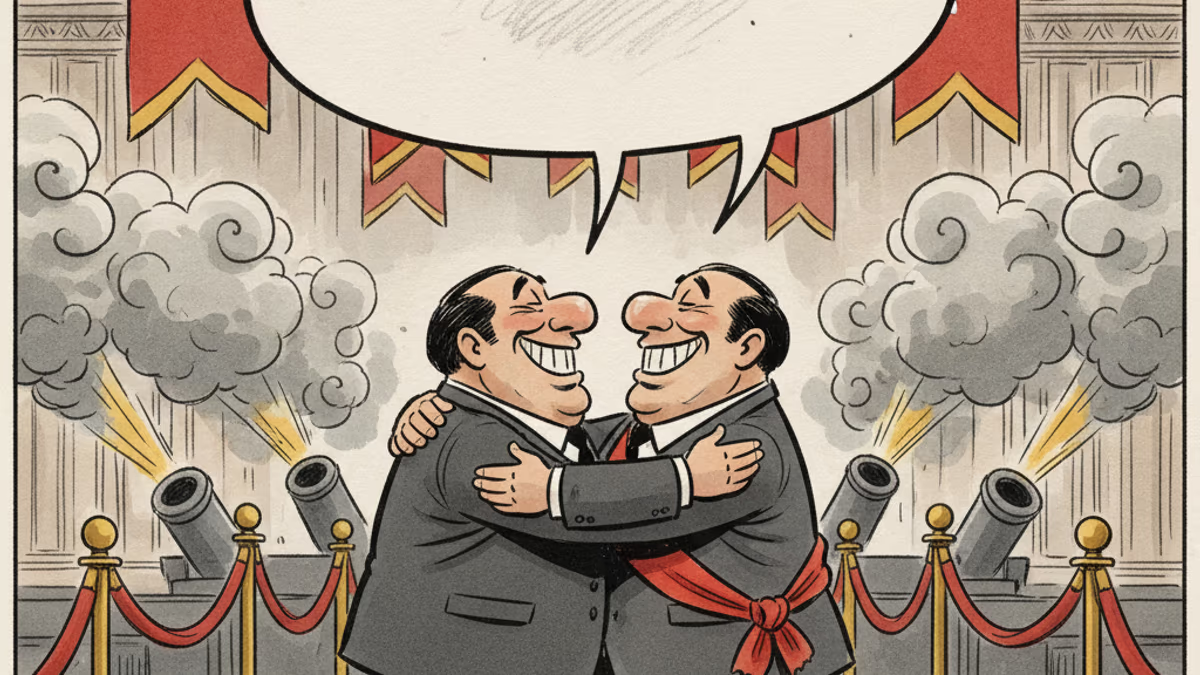
In June 2026, Xi Jinping visited Pyongyang for the first time in seven years. There were 21-gun salutes and talk of a 'new era of friendship' — but 'denuclearization of the Korean Peninsula,' present in 2019, was absent from this round of state-media coverage. A symbolic overreach, or a real upgrade?
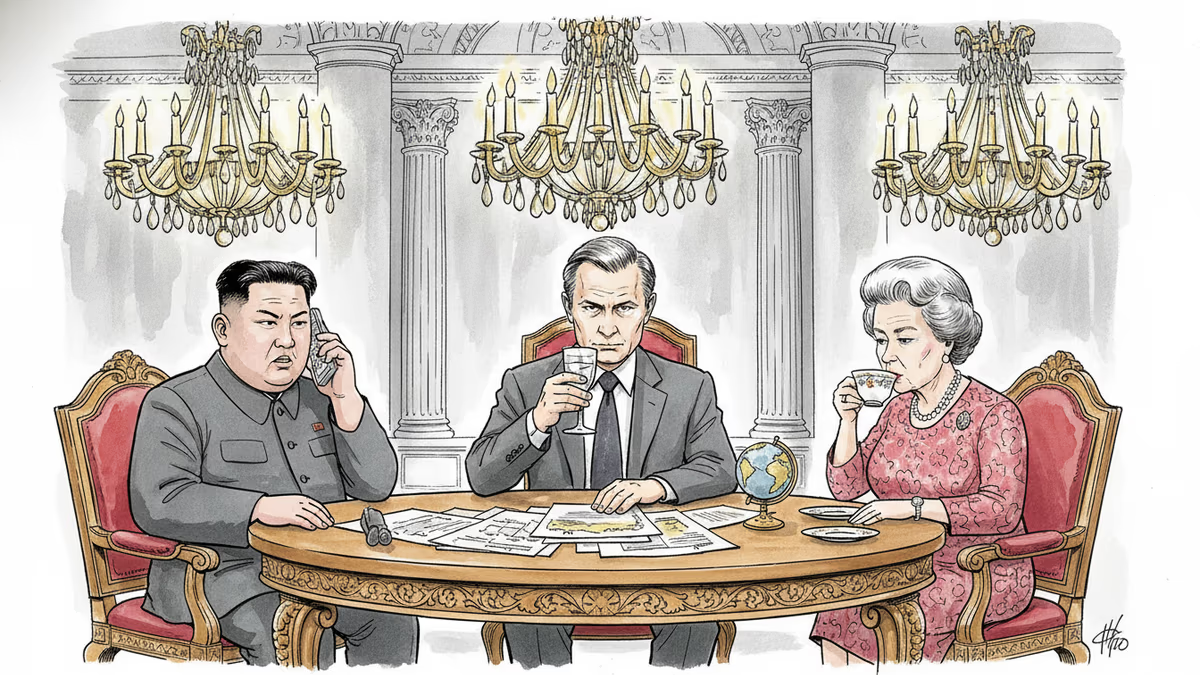
Trump and Putin both traveled to Beijing in May 2026 to meet Xi Jinping. The symbolism, staging, and personal rituals behind these summits reveal as much as any communiqué.
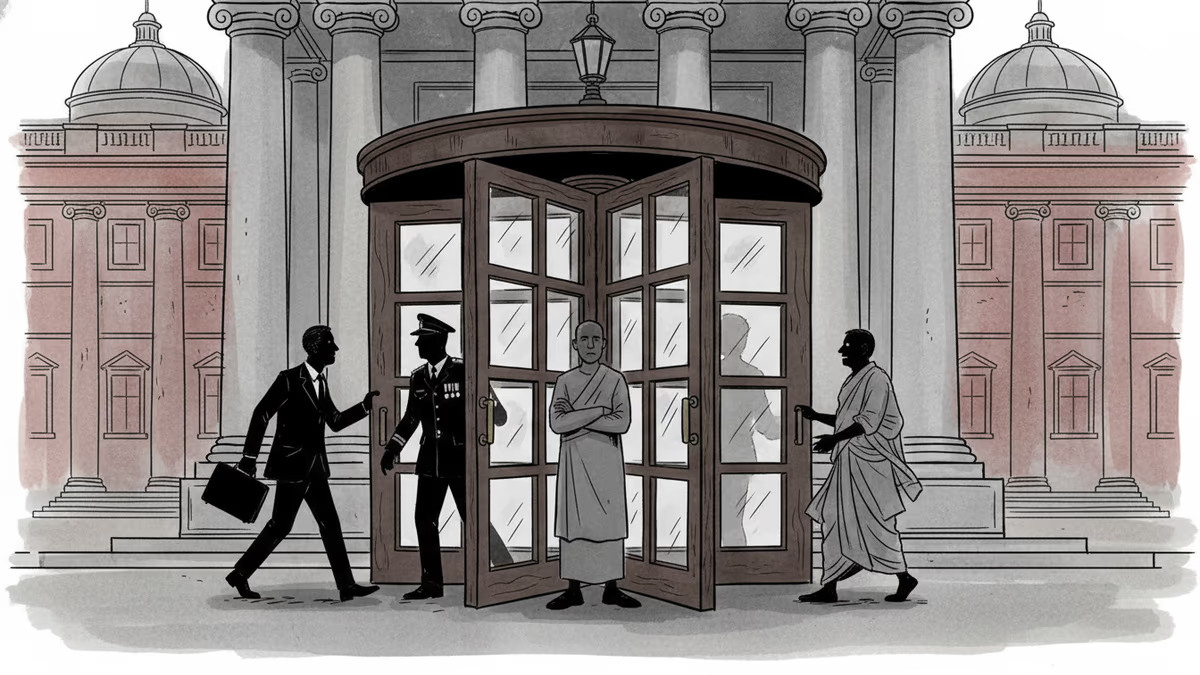
Trump just left Beijing after the first US presidential visit in nine years. Putin arrives Wednesday. Pakistan's PM follows. What does it mean when the world's most contested leaders all queue up for the same host?
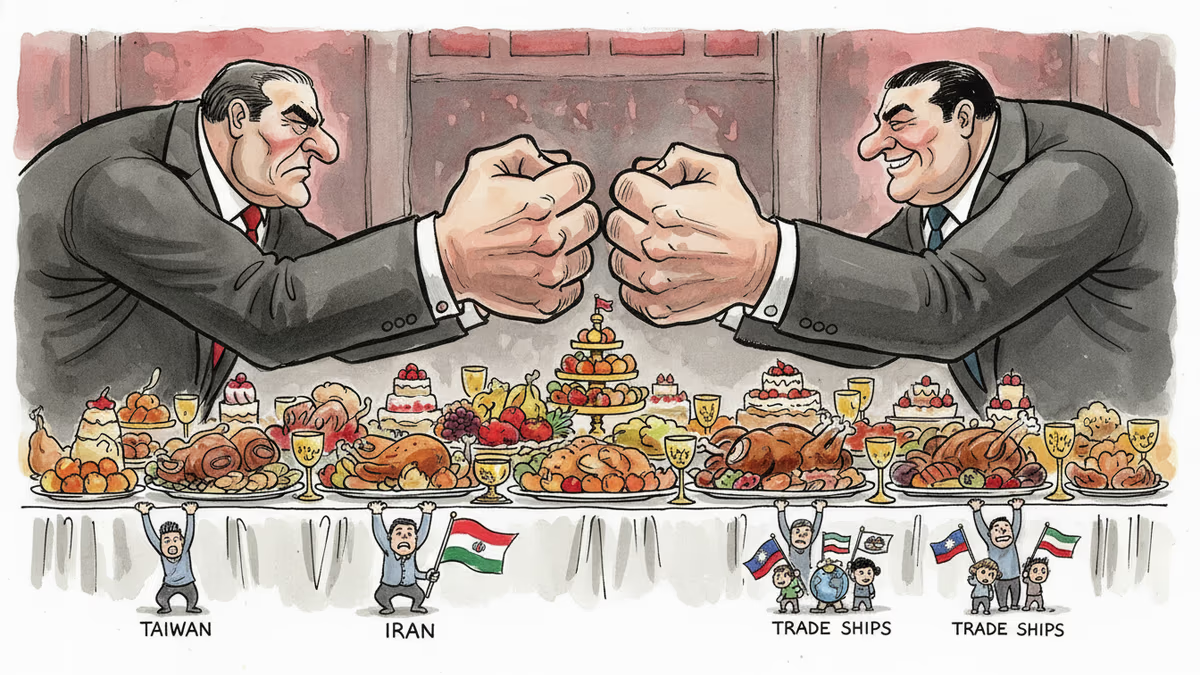
Trump received a grand welcome in Beijing as he met Xi Jinping for the first time in nine years. Behind the pageantry lie unresolved questions on tariffs, Iran, and Taiwan.
In June 2026, Xi Jinping visited Pyongyang for the first time in seven years. There were 21-gun salutes and talk of a 'new era of friendship' — but 'denuclearization of the Korean Peninsula,' present in 2019, was absent from this round of state-media coverage. A symbolic overreach, or a real upgrade?
Trump and Putin both traveled to Beijing in May 2026 to meet Xi Jinping. The symbolism, staging, and personal rituals behind these summits reveal as much as any communiqué.
Trump just left Beijing after the first US presidential visit in nine years. Putin arrives Wednesday. Pakistan's PM follows. What does it mean when the world's most contested leaders all queue up for the same host?
Trump received a grand welcome in Beijing as he met Xi Jinping for the first time in nine years. Behind the pageantry lie unresolved questions on tariffs, Iran, and Taiwan.
Thoughts
Share your thoughts on this article
Sign in to join the conversation