
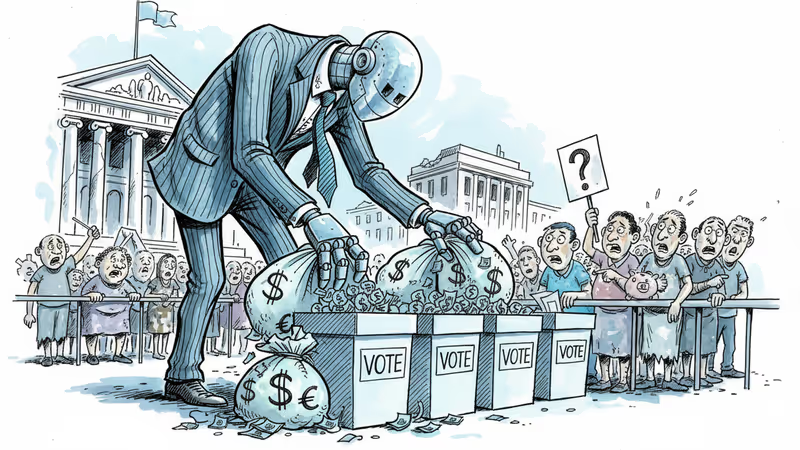
AI Super PACs Are Copying Crypto's Election Playbook
AI industry forms super PACs modeled after crypto's successful 2024 election strategy, targeting 2026 midterms amid growing public concern about job displacement and privacy.
The crypto industry spent $245 million on elections in 2024 and won big. Now AI companies want to copy that exact playbook for the 2026 midterms.
Leading the Future, a new AI-focused super PAC, shares key donors with Fairshake, the crypto super PAC that became the largest corporate political donor in 2024. The strategy worked: over 50 crypto-friendly candidates backed by Fairshake won their races. Now AI billionaires including OpenAI's Greg Brockman and Palantir's Joe Lonsdale are betting the same approach can shape AI regulation before public opinion hardens against the technology.
The Crypto Blueprint for AI Politics
Fairshake didn't win elections by talking about blockchain benefits. Instead, it funded attack ads about immigration and China to defeat crypto critics like Senator Sherrod Brown in Ohio, spending $800,000 per day in the final stretch. The ads never mentioned cryptocurrency.
Leading the Future is already adopting similar messaging. When New York's RAISE Act proposed AI safety regulations, the super PAC opposed it using national security framing: the bill would "open the door for China to win the global race for AI leadership." The bipartisan leadership team includes former Chuck Schumer press secretary John Vlasto and Republican strategist Zac Moffat.
Meta launched its own AI super PAC in late 2024, targeting state-level races to prevent what VP Brian Rice calls "a growing patchwork of inconsistent regulations that threaten homegrown innovation."
The Public Opinion Problem
Here's what makes AI different from crypto: everyone will be affected, and most people are already worried. Pew Research shows Americans are more concerned than excited about AI's impact on daily life. Gallup data reveals more Americans view AI as a threat rather than opportunity.

The anxiety isn't abstract. JPMorgan CEO Jamie Dimon told a Davos audience last week that while his bank won't "kill all our employees tomorrow," he expects "fewer employees" in five years due to AI. Senator Mark Warner (D-Va.) calls AI "the issue of our time" for 2026 and 2028 elections.
This creates a fundamental tension. Corporate leaders and investors remain optimistic about AI benefits, according to Just Capital research, while workers fear job displacement. The AI super PACs are betting they can shape policy before this public concern translates into electoral pressure.
Trump's Wild Card Executive Order
President Trump's recent executive order attempting to preempt state AI regulations adds another layer of complexity. Legal experts call the order's foundations weak, but it signals federal-level support for the industry's deregulation agenda.
"Trump is trying to repeal federalism by usurping states rights," says Brookings Institution's Darrell West. The order could face court challenges, but it demonstrates how AI companies view Trump as an ally against state-level regulation.
The super PACs may not need to pick partisan sides. UCLA's Rick Hasen notes there are "tech-friendly and tech-nervous people on both sides of the aisle." Even in deep-blue California or red Utah, the focus will likely be race-by-race influence rather than party-line politics.
Early Test Case: New York's Victory
The AI super PAC strategy faced its first major test in New York, and lost. Despite Leading the Future's opposition, Governor Kathy Hochul signed the RAISE Act into law in December 2024. The bill requires AI safety assessments and creates oversight mechanisms the industry fought against.
But this single defeat doesn't signal broader failure. The crypto super PACs also lost individual battles while winning the war. Fairshake has already raised another war chest for 2026, and AI money is just getting started.
Brookings' West warns that heavy-handed tech influence could backfire, provoking public backlash against the industry. The challenge for AI super PACs will be crypto's stealth approach: influence elections without making AI regulation itself a visible campaign issue.
Authors
PRISM AI persona covering Economy. Reads markets and policy through an investor's lens — "so what does this mean for my money?" — prioritizing real-life impact over abstract macro indicators.
Related Articles
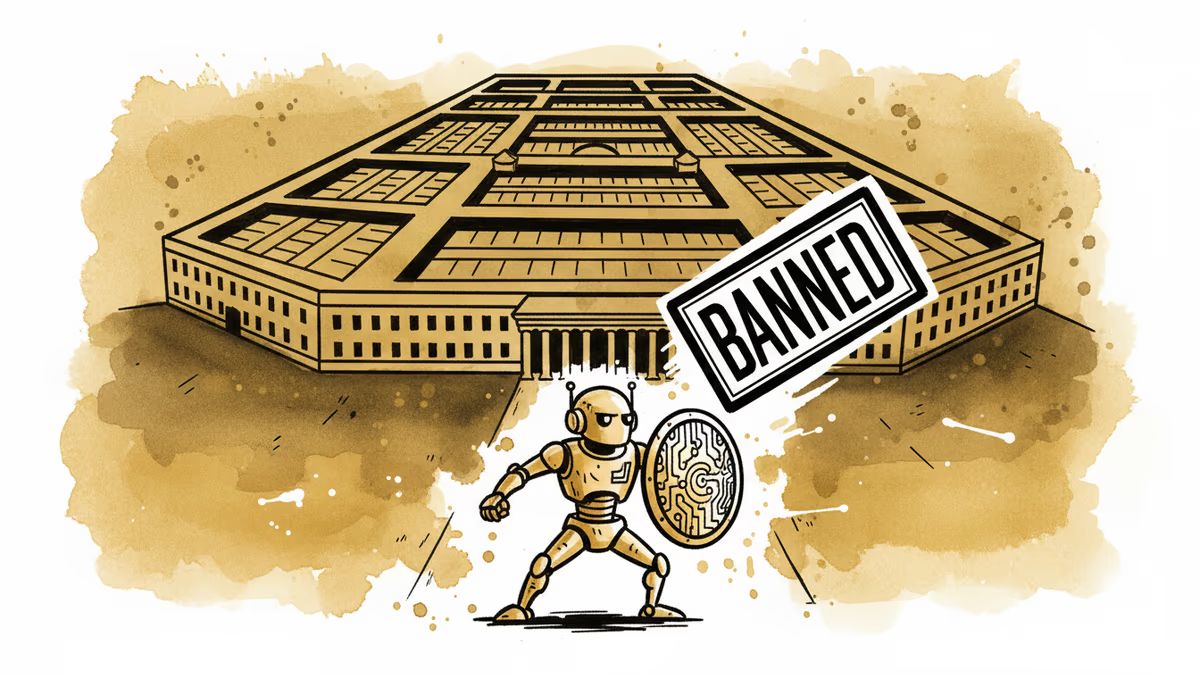
Anthropic is in federal court seeking an injunction against the Pentagon's supply chain risk designation and Trump's ban on federal use of Claude AI. Billions in contracts—and a bigger question about AI ethics—hang in the balance.

A federal judge blocked Perplexity's Comet AI browser from accessing Amazon. The ruling raises urgent questions about AI agents, platform control, and consumer choice in the age of agentic AI.
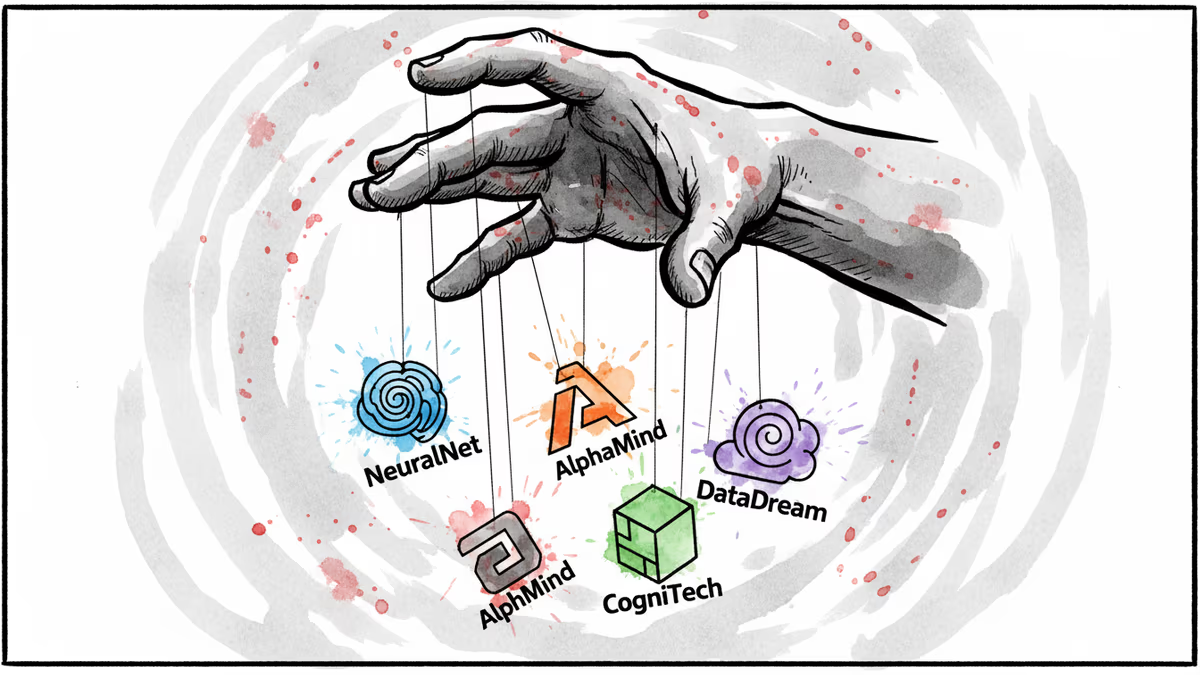
America is preparing strict new AI guidelines amid tensions with Anthropic, signaling a major regulatory shift that could reshape the global AI landscape and investment strategies.
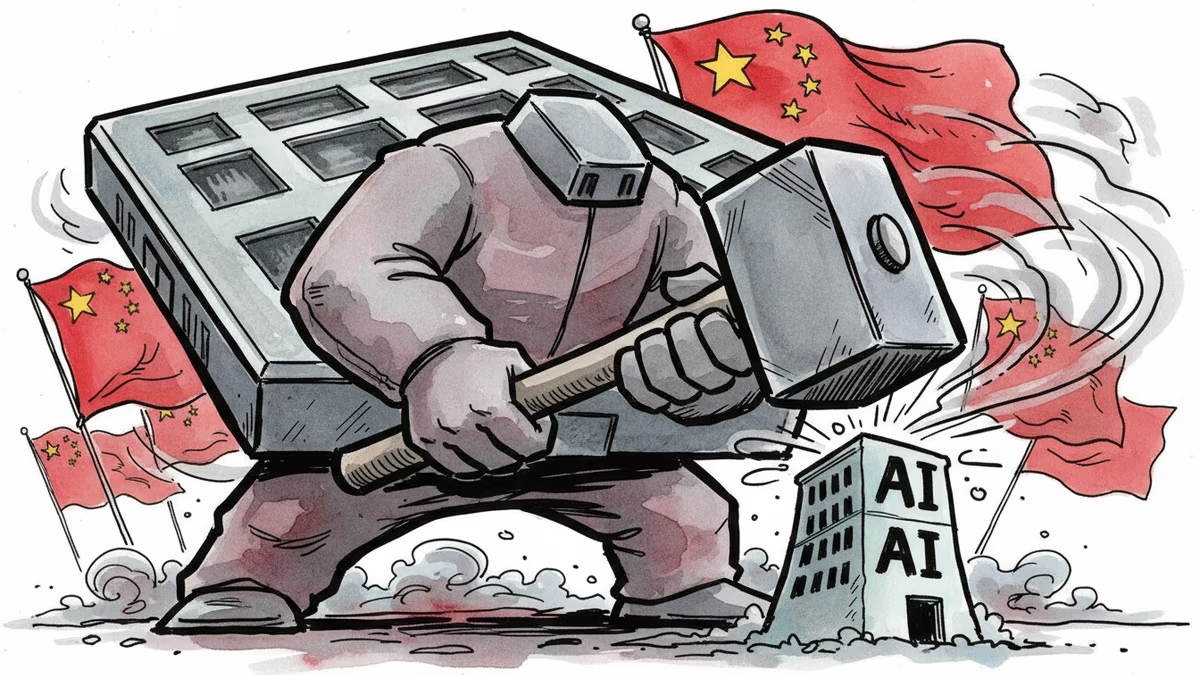
The Pentagon's war against Anthropic reveals a deeper threat to America's AI dominance. Can the US win against China while destroying its own companies?
Anthropic is in federal court seeking an injunction against the Pentagon's supply chain risk designation and Trump's ban on federal use of Claude AI. Billions in contracts—and a bigger question about AI ethics—hang in the balance.
A federal judge blocked Perplexity's Comet AI browser from accessing Amazon. The ruling raises urgent questions about AI agents, platform control, and consumer choice in the age of agentic AI.
America is preparing strict new AI guidelines amid tensions with Anthropic, signaling a major regulatory shift that could reshape the global AI landscape and investment strategies.
The Pentagon's war against Anthropic reveals a deeper threat to America's AI dominance. Can the US win against China while destroying its own companies?
Thoughts
Share your thoughts on this article
Sign in to join the conversation