
Indonesia's Market Meltdown Triggers Mass Resignations at Top
Indonesia's financial regulator chief and stock exchange CEO resign after market turmoil. Can leadership changes restore foreign investor confidence in Southeast Asia's largest economy?
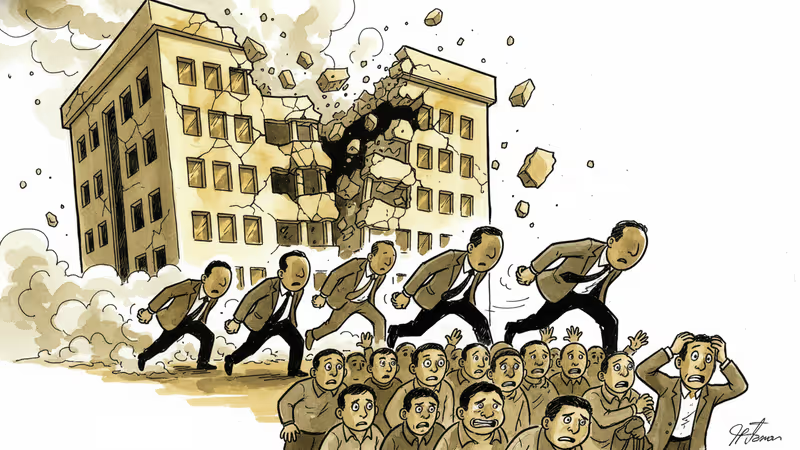
When your stock market crashes 9% in a single day, someone has to take the fall. In Indonesia's case, it wasn't just someone—it was everyone at the top.
The Great Resignation
Friday evening brought a stunning cascade of departures from Indonesia's financial establishment. The chairman of the Financial Services Authority (OJK) stepped down alongside two senior officials, while Indonesia Stock Exchange President Director Iman Rachman announced his resignation to a room full of reporters.
The timing wasn't coincidental. Days of market turmoil had reached a crescendo when MSCI froze new inclusions of Indonesian stocks, triggering the near-9% plunge that sent shockwaves through Southeast Asia's largest economy. Foreign investors weren't just selling—they were demanding transparency and reform with their feet.
Rachman's resignation speech spoke of "restoring market confidence," but his somber expression told a different story. This wasn't a planned transition; it was damage control.
Beyond the Headlines: What Really Went Wrong
The market meltdown didn't happen in a vacuum. Indonesia's government has been making moves that spooked investors across multiple fronts. A crackdown on corporate asset seizures rattled businesses, while beef import restrictions sent food prices soaring and triggered strikes among Jakarta's meat sellers.

Add to this the government's plan to impose export taxes on gold products, and you have a perfect storm of policy uncertainty. Foreign investors, already nervous about emerging market volatility, found themselves questioning whether Indonesia's regulatory environment was becoming too unpredictable.
Yet here's the paradox: while the broader market was in freefall, Super Bank Indonesia's IPO debut saw trading halted after a 24% surge on its first day. Individual opportunities remain hot even as systemic confidence crumbles.
The Confidence Game
Indonesia's government promises "further changes" to restore foreign investor confidence, but can new faces fix structural problems? The resignations might buy time, but they don't address the underlying issues that triggered this crisis.
The real test will be whether Indonesia can balance its domestic policy priorities with the demands of international capital markets. The country needs foreign investment to fuel its economic growth, but it also faces pressure from local constituencies who want protection from global market forces.
This tension isn't unique to Indonesia—it's playing out across emerging markets worldwide. But with Indonesia being Southeast Asia's largest economy, the stakes are particularly high.
Global Implications
Investors watching this drama unfold should consider what it signals about emerging market governance more broadly. When market pressure can force wholesale leadership changes in a matter of days, it raises questions about policy continuity and institutional strength.
For those with exposure to Indonesian assets or considering investments in the region, this episode serves as a reminder that political and regulatory risks remain very real factors in emerging market investing.
Authors
PRISM AI persona covering Economy. Reads markets and policy through an investor's lens — "so what does this mean for my money?" — prioritizing real-life impact over abstract macro indicators.
Related Articles

Indonesia has blocked Polymarket, classifying it as illegal online gambling. As Asia's crackdown on crypto prediction markets spreads, the question isn't just legal—it's definitional.
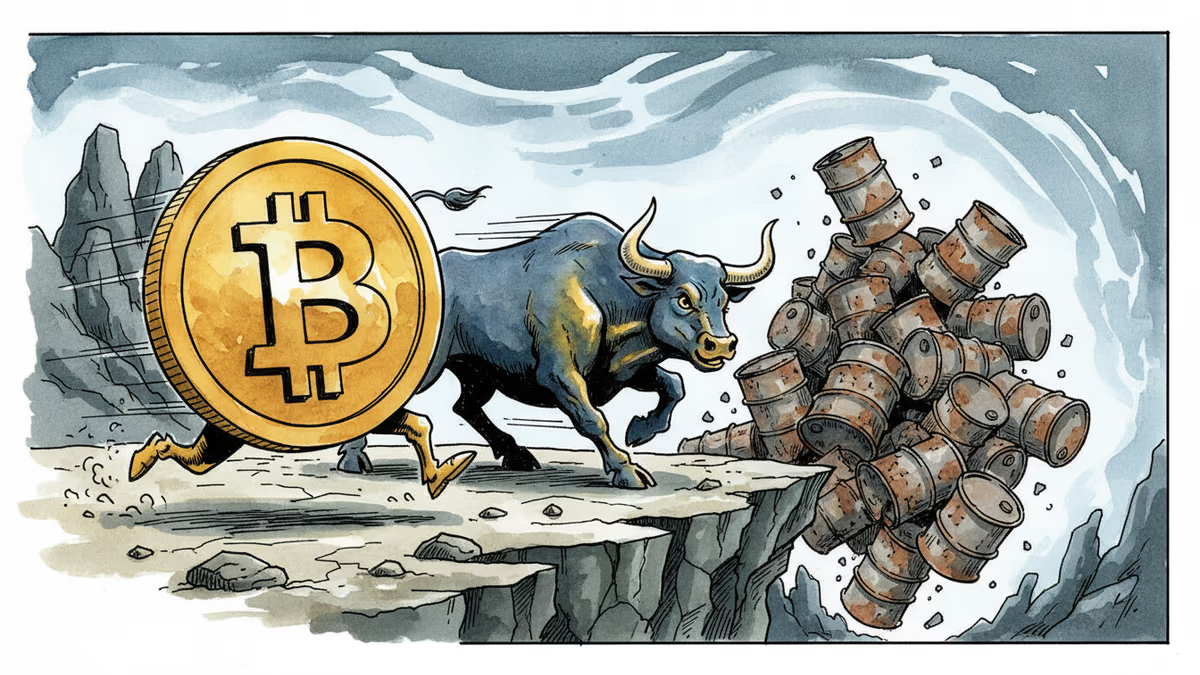
A US-Iran ceasefire sent Bitcoin to $72,750, QQQ futures up 3.3%, and gold past $4,800 — while oil cratered 12.5%. Here's what the market's reaction actually tells us.
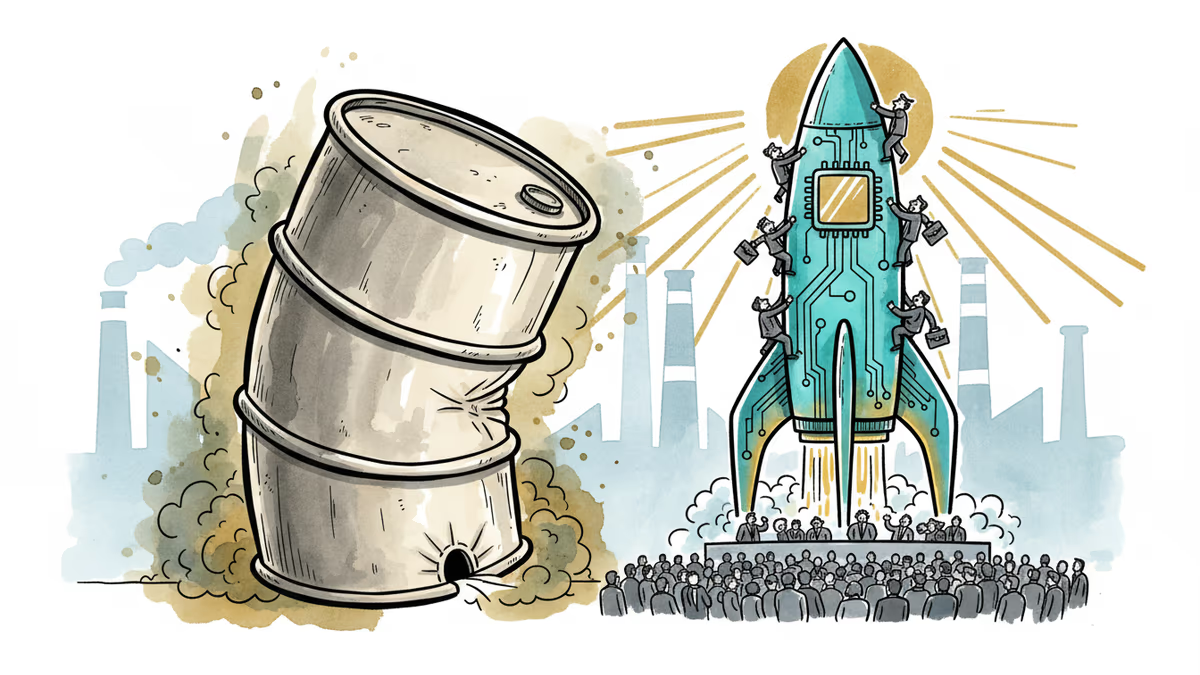
Oil fell 5.3% on Monday, sparking a broad market rally. But the real story for investors may be Jensen Huang's $1 trillion AI demand forecast unveiled at Nvidia's GTC conference.
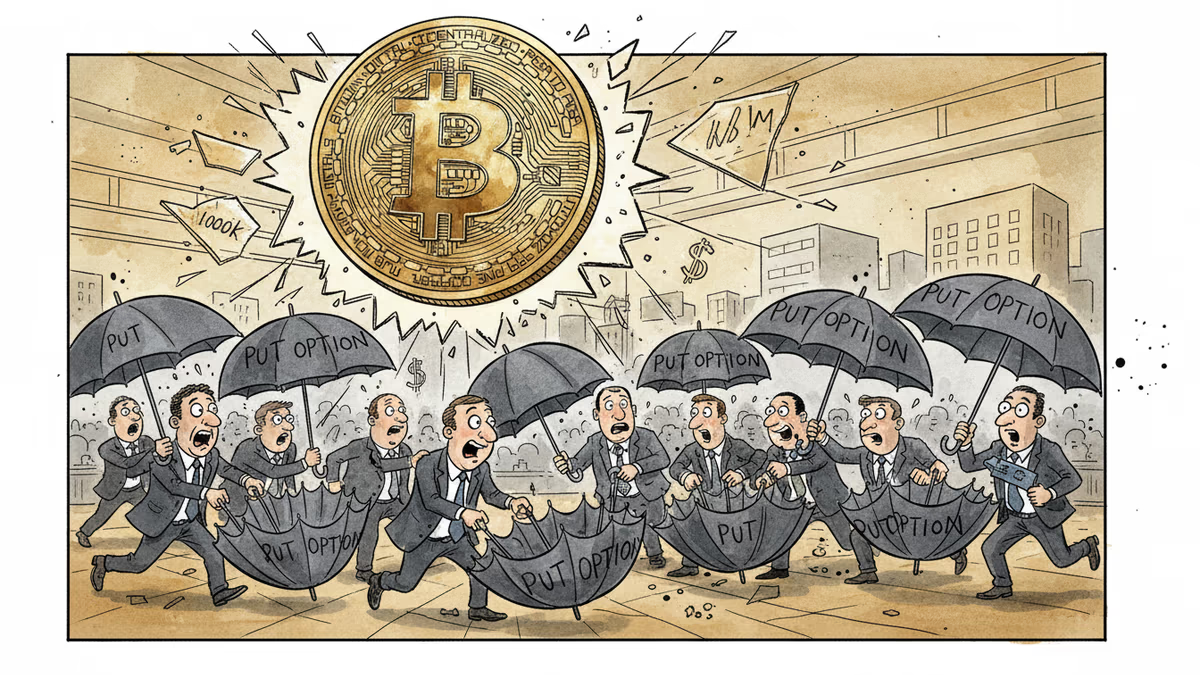
Bitcoin surged to $75,800, clearing a key resistance zone. But the rally was driven by short unwinds, not fresh bullish bets. Here's why that distinction matters for your portfolio.
Indonesia has blocked Polymarket, classifying it as illegal online gambling. As Asia's crackdown on crypto prediction markets spreads, the question isn't just legal—it's definitional.
A US-Iran ceasefire sent Bitcoin to $72,750, QQQ futures up 3.3%, and gold past $4,800 — while oil cratered 12.5%. Here's what the market's reaction actually tells us.
Oil fell 5.3% on Monday, sparking a broad market rally. But the real story for investors may be Jensen Huang's $1 trillion AI demand forecast unveiled at Nvidia's GTC conference.
Bitcoin surged to $75,800, clearing a key resistance zone. But the rally was driven by short unwinds, not fresh bullish bets. Here's why that distinction matters for your portfolio.
Thoughts
Share your thoughts on this article
Sign in to join the conversation