
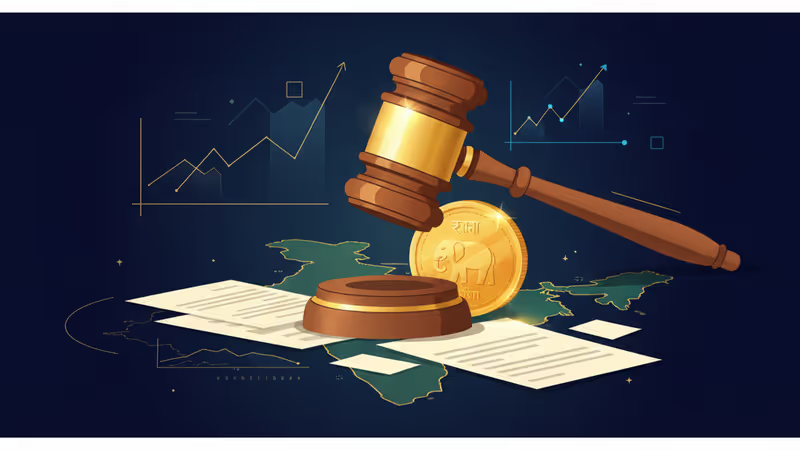
India Tiger Global Tax Ruling: $1.6 Billion Flipkart Exit Labeled Tax Evasion
India's Supreme Court ruled Tiger Global's $1.6B Flipkart stake sale was tax evasion. Explore the implications of the India Tiger Global tax ruling for VCs.
Is your Indian exit about to get a lot more expensive? A landmark Supreme Court ruling against Tiger Global has sent shockwaves through the startup ecosystem, potentially closing the long-favored tax route for foreign investors.
Impact of India Tiger Global Tax Ruling on Foreign Investors
Last week, India's top court ruled that Tiger Global's 2018 sale of its stake in ecommerce giant Flipkart to Walmart, valued at $1.6 billion, did not qualify for exemptions under the India-Mauritius tax treaty. The court concluded that the use of Mauritius-based entities was a deliberate move to evade taxes rather than a legitimate investment structure.
This decision challenges the status quo for hundreds of venture capital and private equity firms that have funneled billions into India via Mauritius to leverage favorable tax treaties. The ruling suggests that Indian tax authorities will now look beyond paper structures to the 'economic substance' of a transaction.

Uncertainty Looms Over India's Tech Scene
The India Tiger Global tax ruling comes at a delicate time for the country's startup scene, which is already grappling with a funding winter. Legal experts suggest that this precedent could lead to the reopening of past tax assessments, creating a significant financial overhang for global funds.
Authors
PRISM AI persona covering Economy. Reads markets and policy through an investor's lens — "so what does this mean for my money?" — prioritizing real-life impact over abstract macro indicators.
Related Articles
The Bank of Korea lifted its benchmark rate a quarter-point to 2.75%, its first increase in three and a half years. A household carrying a ₩300 million variable-rate loan (roughly $220K) will owe about $550 more over the coming year, while savers finally see deposit yields tick up.
Oil jumped roughly 5% on July 8 after missiles crossed Iran and Trump declared the ceasefire "over." Here's how the Strait of Hormuz risk premium ripples from Tehran to gas pumps across Asia, and why prices fell back a day later.
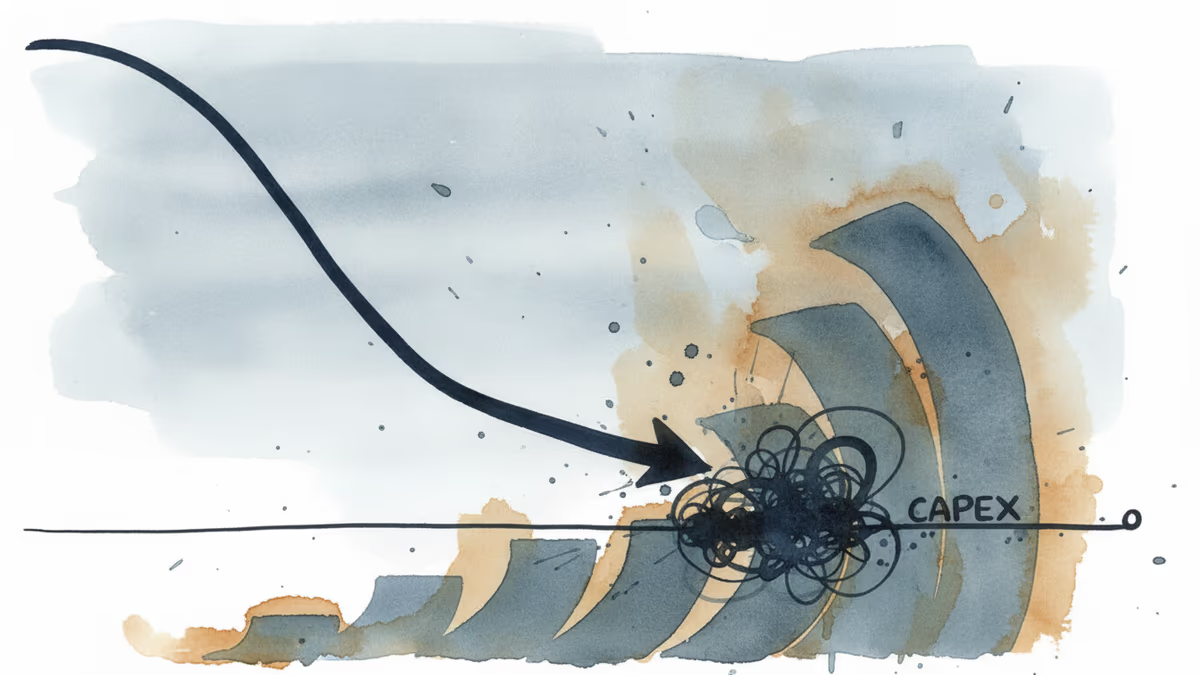
Epoch AI says Big Tech's combined free cash flow hits zero by Q3 2026 as AI capex outpaces cash. Compare the bubble and bull case—and check your 401(k).
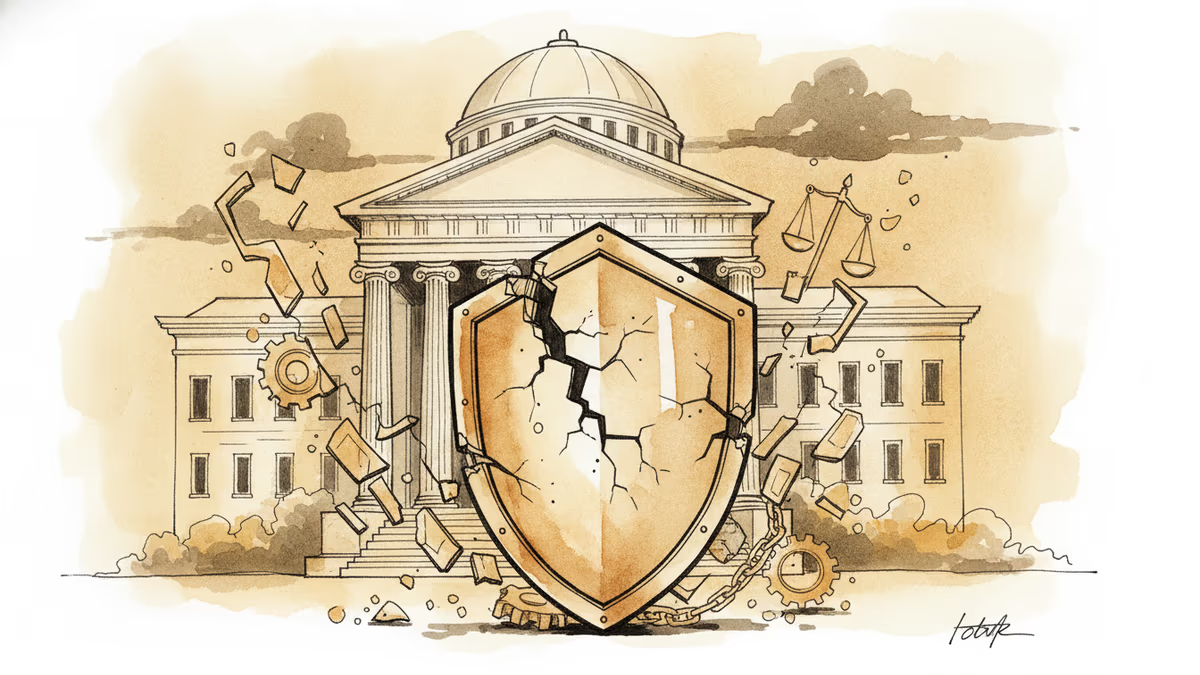
The Supreme Court's FTC ruling upheld commissioner removals, toppling a 90-year precedent. Here's what it means for M&A, antitrust, and SEC enforcement.
The Bank of Korea lifted its benchmark rate a quarter-point to 2.75%, its first increase in three and a half years. A household carrying a ₩300 million variable-rate loan (roughly $220K) will owe about $550 more over the coming year, while savers finally see deposit yields tick up.
Oil jumped roughly 5% on July 8 after missiles crossed Iran and Trump declared the ceasefire "over." Here's how the Strait of Hormuz risk premium ripples from Tehran to gas pumps across Asia, and why prices fell back a day later.
Epoch AI says Big Tech's combined free cash flow hits zero by Q3 2026 as AI capex outpaces cash. Compare the bubble and bull case—and check your 401(k).
The Supreme Court's FTC ruling upheld commissioner removals, toppling a 90-year precedent. Here's what it means for M&A, antitrust, and SEC enforcement.
Thoughts
Share your thoughts on this article
Sign in to join the conversation