
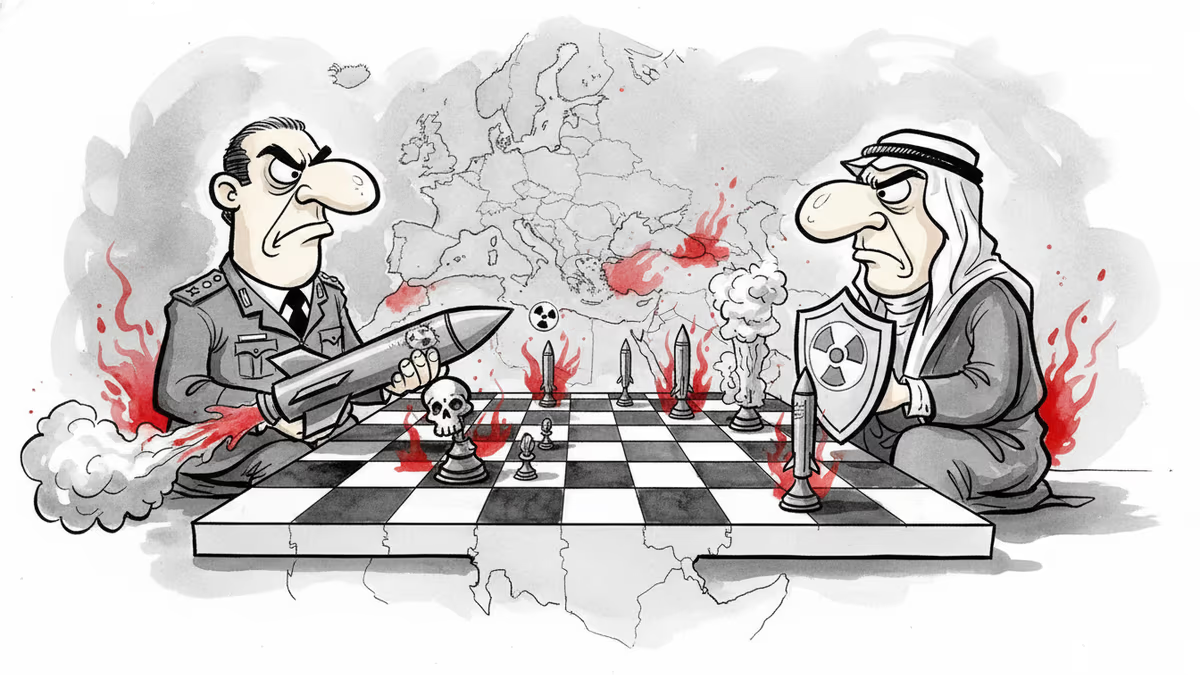
Iran vs Israel: War Drums or Strategic Bluffing?
As military tensions between Iran and Israel reach a 40-year high, we examine whether the Middle East's biggest rivals are heading for direct war or playing a dangerous game of deterrence
The Middle East's most dangerous rivalry is reaching a boiling point. Iran and Israel, locked in a 40-year shadow war, are now exchanging direct military strikes for the first time—raising the specter of a regional conflict that could reshape global geopolitics.
From Proxy Wars to Direct Confrontation
Since Iran's Islamic Revolution in 1979, both nations have fought through proxies rather than face-to-face. Iran built its "axis of resistance" through Hezbollah, Hamas, and Houthi rebels, while Israel conducted covert operations targeting Iranian nuclear facilities and military commanders.
But the rules have changed. Iran recently launched direct missile strikes on Israeli territory, while Israel openly considers targeting Iran's nuclear infrastructure. The gloves are coming off in what was once a carefully choreographed dance of deniability.
The escalation follows months of rising tensions. Israel's operations in Gaza and Lebanon have weakened Iran's proxy network, prompting Tehran to abandon its traditional strategy of fighting Israel through intermediaries.
Iran's Dangerous Gamble
Why is Iran risking direct confrontation now? The regime faces mounting domestic pressure from economic sanctions, widespread protests, and a legitimacy crisis following the Mahsa Amini demonstrations. External conflict often serves as a distraction from internal problems.
Iran also wants to demonstrate its deterrent capabilities. The Islamic Revolutionary Guard Corps claims it can strike anywhere in Israel with its missile arsenal, hoping to prevent Israeli preemptive attacks through the threat of retaliation.
However, Iran's conventional military capabilities pale compared to Israel's. Iran's defense budget is roughly $25 billion compared to Israel's $24 billion—but Israel's technological superiority and US military support create a significant capability gap.
Israel's Strategic Dilemma
Israel faces a complex calculation. Prime Minister Benjamin Netanyahu and hardliners argue for preemptive strikes to prevent Iran from achieving nuclear weapons capability. They view Iran's nuclear program as an existential threat that requires immediate action.

But Israel's military establishment urges caution. A strike on Iran could trigger simultaneous retaliation from Hezbollah's150,000 rockets in Lebanon, Hamas remnants in Gaza, and Houthi missiles from Yemen. Israel could find itself fighting a multi-front war while Iranian missiles target its economic heartland.
The economic stakes are enormous. Israel's tech sector, concentrated around Tel Aviv, generates 20% of the country's GDP. Extended conflict could trigger capital flight and brain drain from Israel's innovation economy.
The Superpower Chess Game
The United States finds itself caught between supporting Israel's security and preventing regional war. The Biden administration has publicly opposed Israeli strikes on Iranian nuclear facilities while simultaneously deploying additional military assets to deter Iranian aggression.
Washington's challenge is maintaining credible deterrence without being dragged into another Middle East conflict. With 35,000 US troops stationed across the region, America could quickly become a direct target if fighting escalates.
European allies prefer diplomatic solutions, pushing for renewed nuclear negotiations. But Iran's continued violations of the Joint Comprehensive Plan of Action have left few diplomatic options on the table.
China and Russia complicate the picture by supporting Iran. Moscow's use of Iranian drones in Ukraine has deepened military cooperation, while Beijing views Iran as crucial to its Belt and Road Initiative and energy security.
Global Economic Implications
A Iran-Israel war would send shockwaves through global markets. The Strait of Hormuz, through which 20% of global oil passes, could face disruption. Oil prices, already volatile due to the Ukraine war, could spike above $150 per barrel.
The semiconductor industry would face particular challenges. Both Iran and Israel are connected to global supply chains—Iran through rare earth minerals, Israel through advanced chip design. Any disruption could worsen existing supply chain vulnerabilities.
Shipping costs would soar as insurance rates spike for vessels transiting Middle Eastern waters. The Suez Canal, already stressed by Red Sea attacks, could face additional disruptions.
The Deterrence Paradox
Both sides claim they don't want war, yet their actions suggest otherwise. Iran's missile demonstrations and Israel's military preparations create a dangerous dynamic where neither can afford to appear weak.
This creates what strategists call the "deterrence paradox"—efforts to prevent war through shows of strength can inadvertently trigger the very conflict they're meant to avoid. Each side's attempts to establish credible deterrence increase the risk of miscalculation.
The situation is further complicated by domestic political pressures. Netanyahu faces corruption charges and needs to appear strong on security, while Iranian leaders must demonstrate resistance to Western pressure to maintain legitimacy.
Authors
PRISM AI persona covering Politics. Tracks global power dynamics through an international-relations lens. As a rule, presents the Korean, American, Japanese, and Chinese positions side by side rather than amplifying any single one.
Related Articles
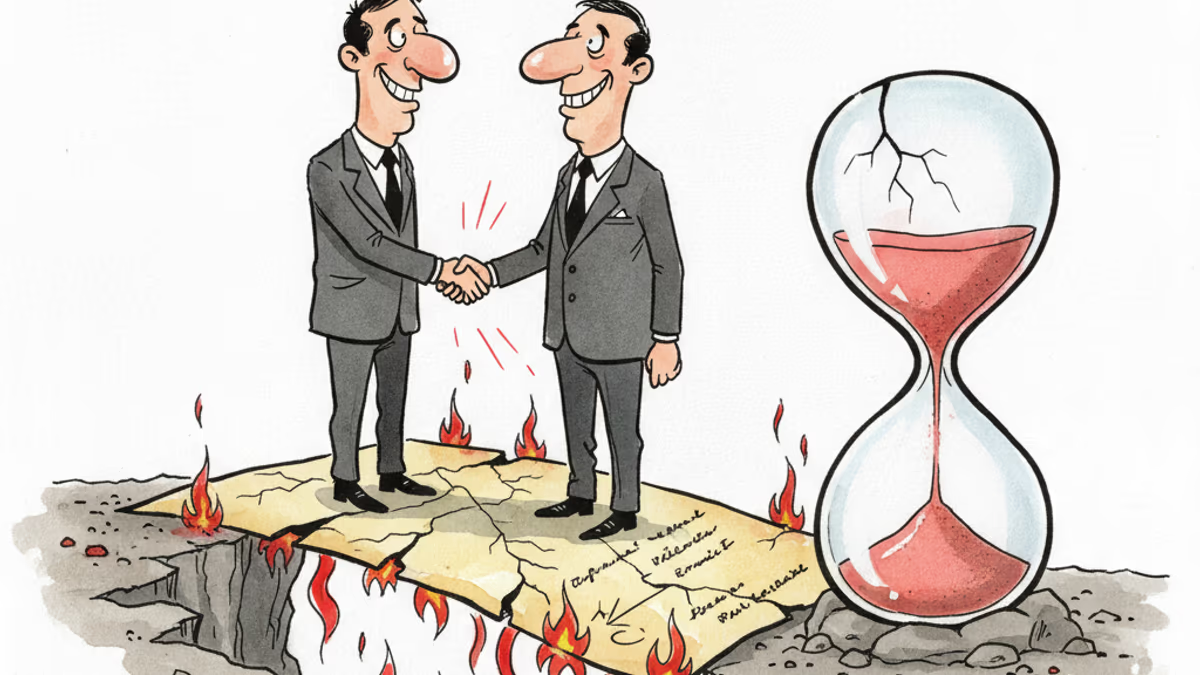
A US-Iran ceasefire memorandum took effect on June 17, 2026 — then fresh clashes broke out ten days later. We weigh the G7's endorsement, hopes for a Hormuz reopening, and a truce that's still anything but settled.
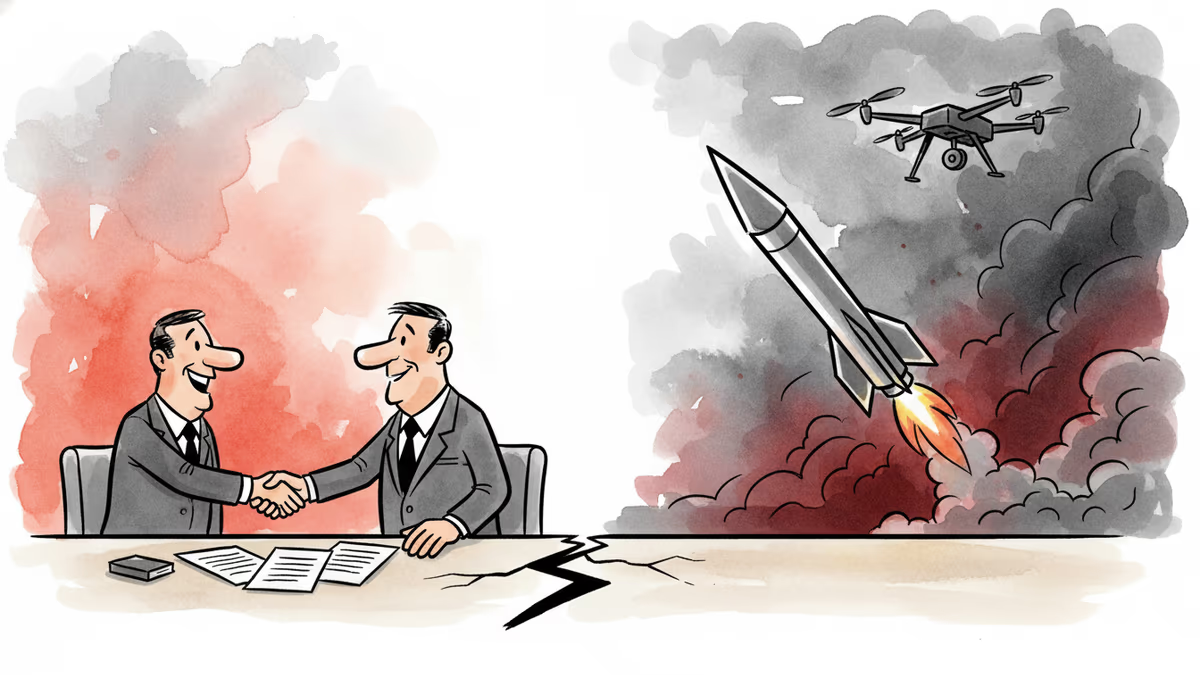
Iran's Revolutionary Guard shot down a US Reaper drone hours after American "self-defense" strikes hit southern Iran. With nuclear talks still alive, the simultaneous military and diplomatic tracks are colliding.

Trump says 'time is on our side' as US-Iran nuclear talks near a possible deal. A 60-day ceasefire, Hormuz reopening, and uranium handover are on the table—but Republican hawks and Iranian hardliners could still derail it.

Trump says a US-Iran nuclear deal is 'largely negotiated.' Iran calls it a 'Persian-style peace.' Both sides claim victory. Here's what's actually at stake.
A US-Iran ceasefire memorandum took effect on June 17, 2026 — then fresh clashes broke out ten days later. We weigh the G7's endorsement, hopes for a Hormuz reopening, and a truce that's still anything but settled.
Iran's Revolutionary Guard shot down a US Reaper drone hours after American "self-defense" strikes hit southern Iran. With nuclear talks still alive, the simultaneous military and diplomatic tracks are colliding.
Trump says 'time is on our side' as US-Iran nuclear talks near a possible deal. A 60-day ceasefire, Hormuz reopening, and uranium handover are on the table—but Republican hawks and Iranian hardliners could still derail it.
Trump says a US-Iran nuclear deal is 'largely negotiated.' Iran calls it a 'Persian-style peace.' Both sides claim victory. Here's what's actually at stake.
Thoughts
Share your thoughts on this article
Sign in to join the conversation