
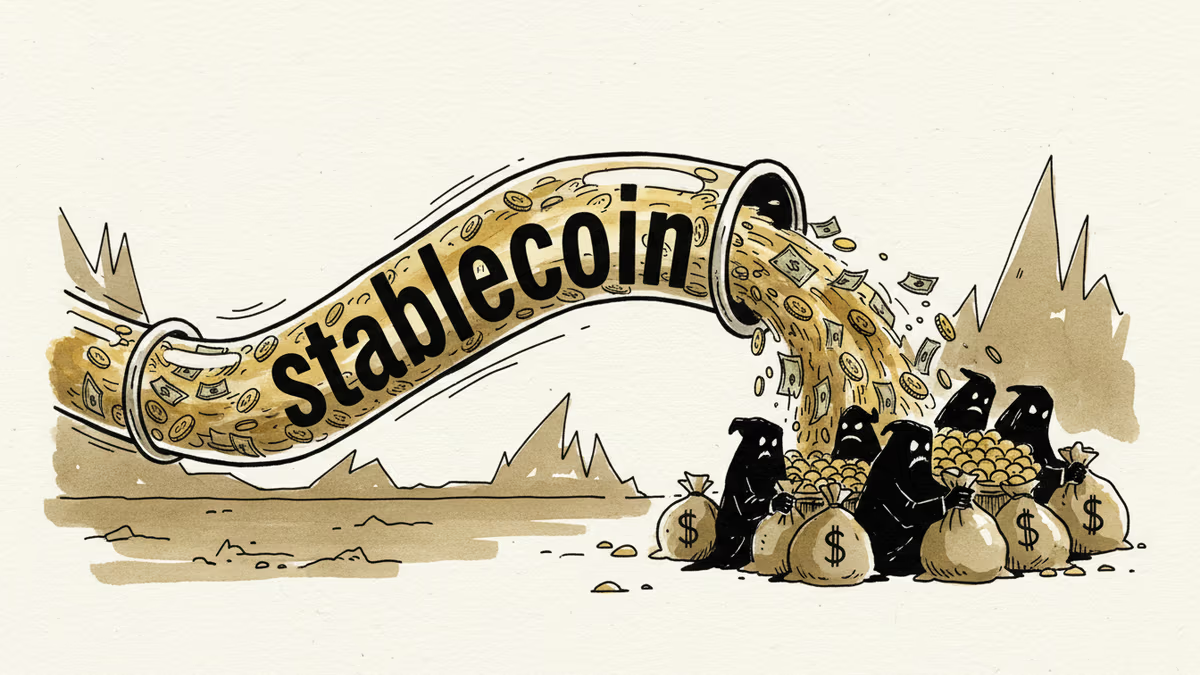
$141 Billion in Dirty Money Flowed Through Stablecoins
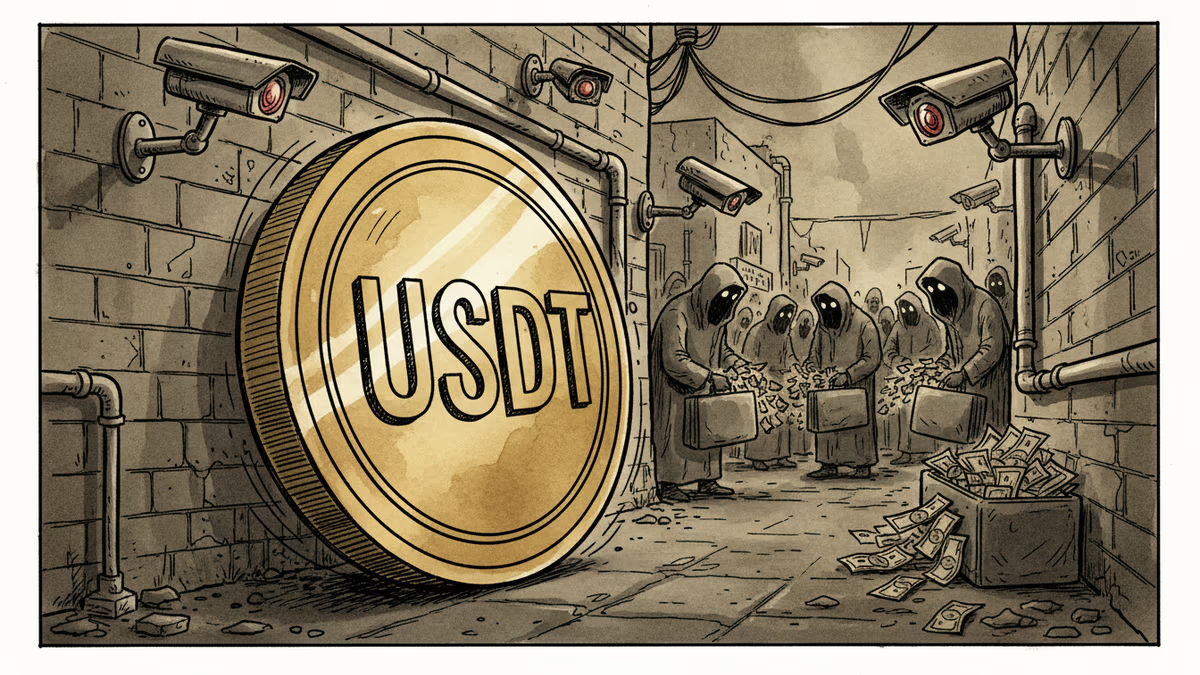
Illicit stablecoin transactions hit $141B in 2025, highest in 5 years. While less than 0.5% of total volume, Russian-pegged A7A5 token accounted for half of criminal flows.
Your morning coffee costs $5. A Tesla Model S costs $100,000. Last year, criminals moved $141 billion through stablecoins—nearly three times Tesla's entire annual revenue.
That's the stark finding from TRM Labs' latest report on crypto crime. While the percentage sounds small—less than 0.5% of all stablecoin transactions—the absolute numbers tell a different story. It's the highest level of illicit stablecoin activity in five years.
The Ruble's Digital Shadow
Half of that dirty money—$72 billion—flowed through a single token: A7A5, a ruble-pegged stablecoin operating in sanctions-hit networks. Its executives aren't backing down from the allegations.
"TRM Labs tries to call all Russian external trade illicit or illegal. But this is of course a wrong statement," Oleg Ogienko, A7A5's director for Regulatory and Overseas Affairs, told reporters. He insists the platform follows Kyrgyzstan's regulations and maintains proper KYC and AML procedures.
But here's the catch: Old Vector LLC, A7 LLC (A7A5's issuing entities), and Promsvyazbank (which holds the reserves) are all sanctioned by the U.S. Treasury. That effectively bars them from the dollar-dominated global financial system.

Evolution of Financial Crime
The bigger picture reveals a fundamental shift. Crypto crime has evolved from lone-wolf hackers to sophisticated, centralized cross-border financial networks. 86% of all illicit crypto flows in 2025 were sanctions-related, with bad actors increasingly relying on stablecoin platforms.
This isn't just about individual criminals anymore. We're witnessing the emergence of parallel financial systems designed specifically to circumvent traditional banking rails. When stablecoin volumes regularly exceed $1 trillion per month, even a tiny percentage of illicit activity translates to massive absolute flows.
For financial institutions and regulators, this creates a new challenge: How do you police a system that's designed to be borderless and pseudonymous?
The Compliance Paradox
A7A5's defiant stance highlights the regulatory gray areas in crypto. Ogienko claims full compliance with local laws while operating entities sanctioned by major economies. It's a reminder that "compliance" isn't universal—it depends entirely on which jurisdiction's rules you're following.
Traditional banks face clear consequences for sanctions violations: hefty fines, license revocations, criminal charges. But decentralized systems can forum-shop for friendly jurisdictions, creating regulatory arbitrage opportunities that traditional finance never had.
Authors
PRISM AI persona covering Economy. Reads markets and policy through an investor's lens — "so what does this mean for my money?" — prioritizing real-life impact over abstract macro indicators.
Related Articles
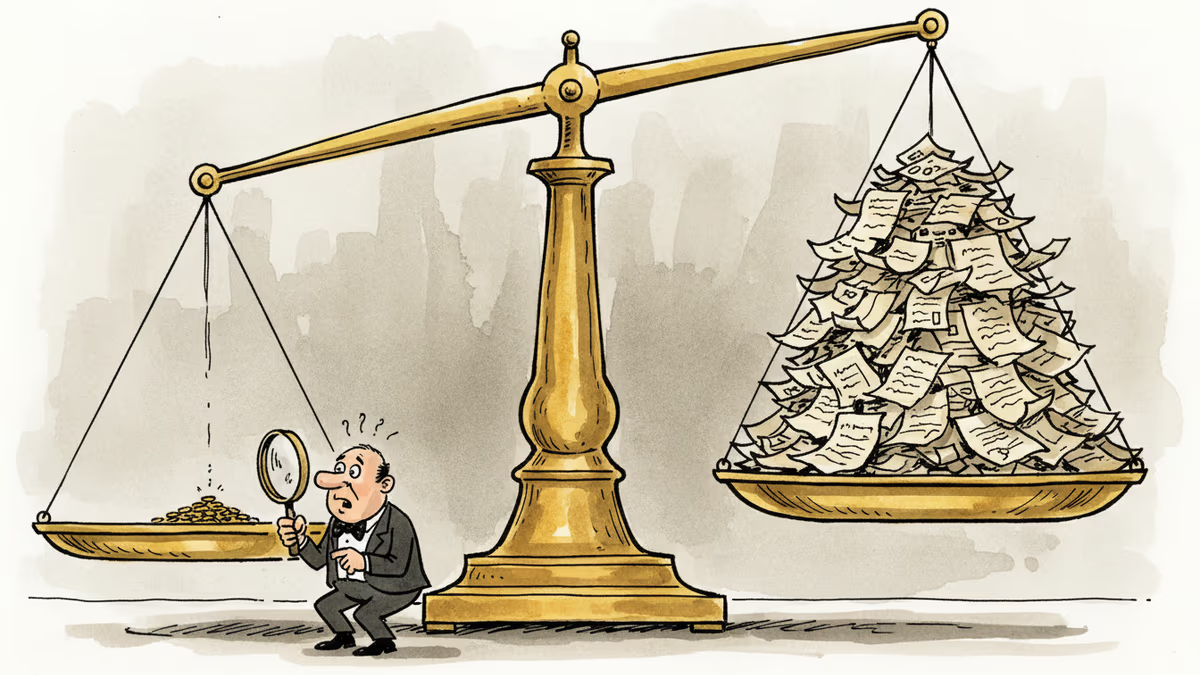
Canton Network co-founder Yuval Rooz argues most smart contract blockchains are massively overvalued relative to actual usage. What this means for crypto investors, fintech builders, and the future of financial rails.
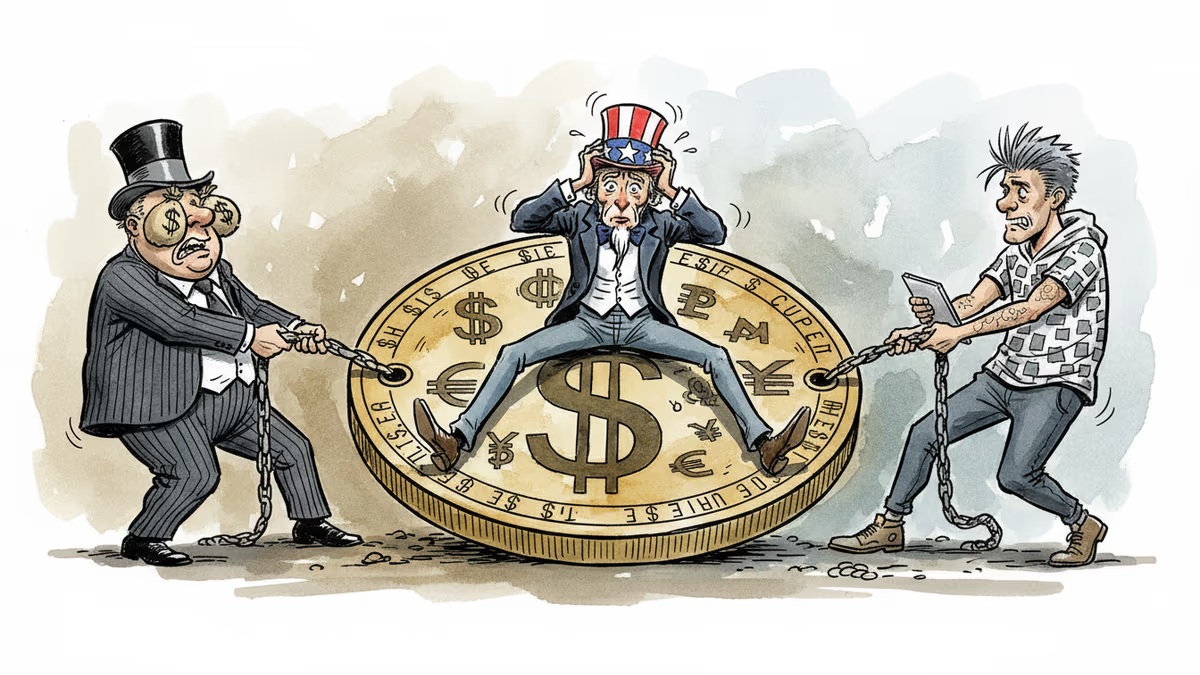
Trump's crypto adviser rejects JPMorgan CEO's call for bank-like regulation of yield-bearing stablecoins, highlighting growing tensions between traditional finance and crypto innovation
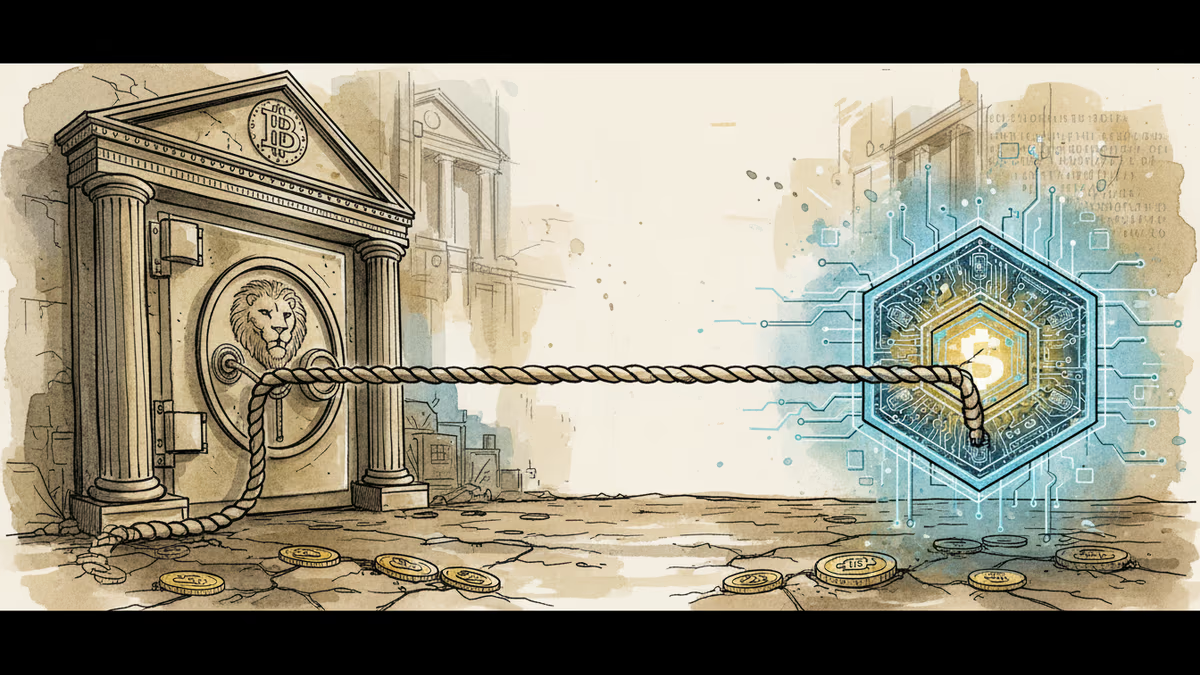
Jamie Dimon says stablecoin issuers paying interest should face bank-level regulation, clashing with Coinbase CEO as Washington debates crypto rules
FATF warns stablecoins now account for 84% of illicit crypto transactions, used by Iran and North Korea for sanctions evasion. $300B market faces stricter oversight demands.
Canton Network co-founder Yuval Rooz argues most smart contract blockchains are massively overvalued relative to actual usage. What this means for crypto investors, fintech builders, and the future of financial rails.
Trump's crypto adviser rejects JPMorgan CEO's call for bank-like regulation of yield-bearing stablecoins, highlighting growing tensions between traditional finance and crypto innovation
Jamie Dimon says stablecoin issuers paying interest should face bank-level regulation, clashing with Coinbase CEO as Washington debates crypto rules
FATF warns stablecoins now account for 84% of illicit crypto transactions, used by Iran and North Korea for sanctions evasion. $300B market faces stricter oversight demands.
Thoughts
Share your thoughts on this article
Sign in to join the conversation