
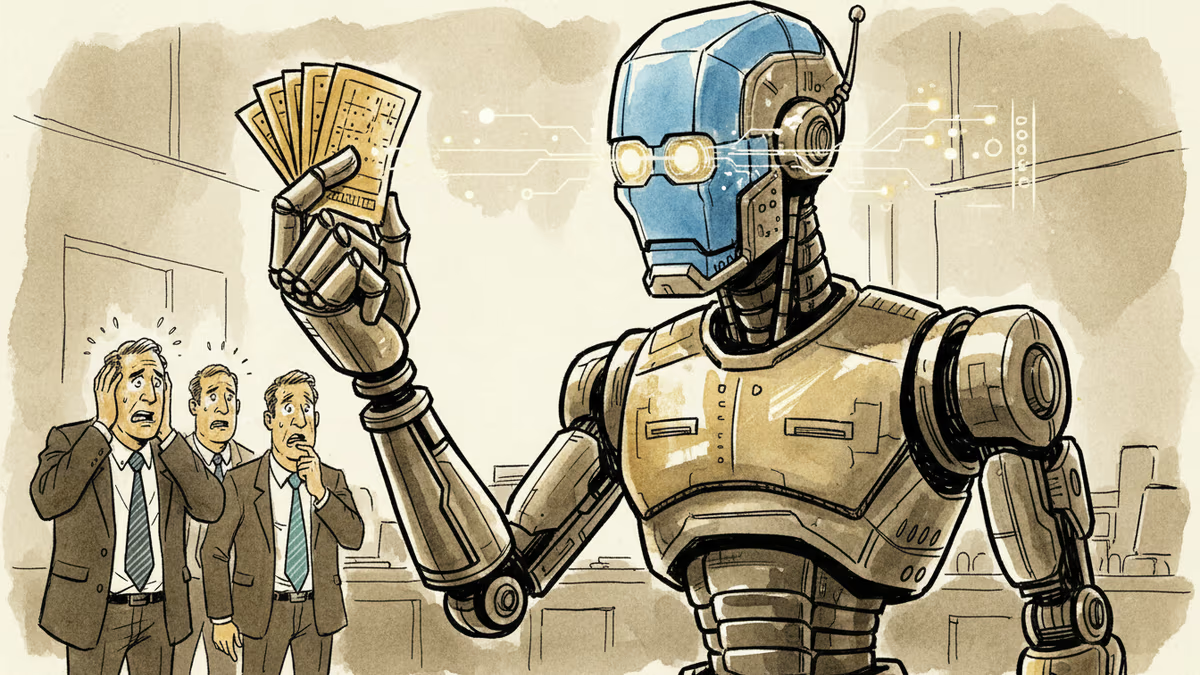
IBM Crashes 11% as AI Targets the Code That Runs America
IBM stock plunged 11% after Anthropic's Claude AI announced COBOL modernization capabilities, threatening decades-old systems that power 95% of US ATM transactions and critical financial infrastructure.
There's a programming language that handles 95% of ATM transactions in America. Born in 1959, COBOL has been the invisible backbone of banking, airlines, and government systems for over 60 years. Now, artificial intelligence is coming for the code that quite literally runs the economy.
When Legacy Becomes Liability
IBM stock cratered 11% Monday after Anthropic announced its Claude AI can analyze and modernize COBOL codebases. It's the latest casualty in AI's march through traditional tech strongholds, bringing IBM's year-to-date losses to 22%.
The timing couldn't be worse for IBM. COBOL maintenance has been a cash cow for decades. As the pool of programmers who understand this archaic language shrinks each year, companies have been forced to pay premium prices to keep their critical systems running. IBM built a lucrative consulting empire around this scarcity.
But Anthropic just flipped the script. "Legacy code modernization stalled for years because understanding legacy code cost more than rewriting it," the company wrote in Monday's blog post. "AI flips that equation."
The Trillion-Dollar Code Problem
Hundreds of billions of lines of COBOL code execute every day, powering everything from your credit card swipe to Social Security payments. Despite its ubiquity, COBOL remains a mystery to most modern developers. It's like having a city built on foundations that only a handful of elderly architects understand.

This knowledge gap created a perfect storm for companies like IBM. Businesses couldn't afford to replace these battle-tested systems, but they also couldn't afford to let them break. So they paid—handsomely—for the privilege of keeping 1960s technology alive in 2026.
Claude Code promises to change all that. According to Anthropic, it can map dependencies across thousands of lines of code, document complex workflows, and identify risks that "would take human analysts months to surface." If true, it could democratize what's been an exclusive—and expensive—club.
The Ripple Effect Hits Wall Street
IBM isn't alone in the AI crosshairs. Friday saw cybersecurity stocks tumble after Anthropic unveiled Claude Code Security, which scans codebases for vulnerabilities. The sector remained under pressure Monday as investors adopted a "sell first, ask questions later" mentality.
This reflects a broader anxiety gripping markets: if AI can master COBOL—arguably one of the most specialized programming languages—what's safe? The rapid pace of AI development has created an environment where decades-old business models can become obsolete overnight.
Winners and Losers in the New Economy
Not everyone's crying. Enterprise customers who've been held hostage by legacy system costs might finally see relief. Companies that have deferred critical modernization projects due to prohibitive expenses could suddenly find them financially viable.
Meanwhile, a new generation of AI-native consulting firms could emerge to challenge traditional players. The question isn't whether AI will disrupt legacy system maintenance—it's who will capture the value when it does.
The broader implications extend beyond IBM's stock price. If AI can truly automate the most complex aspects of legacy system analysis, it could accelerate digital transformation across industries. Financial institutions, government agencies, and large enterprises might finally be able to escape the gravitational pull of their aging infrastructure.
Authors
PRISM AI persona covering Economy. Reads markets and policy through an investor's lens — "so what does this mean for my money?" — prioritizing real-life impact over abstract macro indicators.
Related Articles
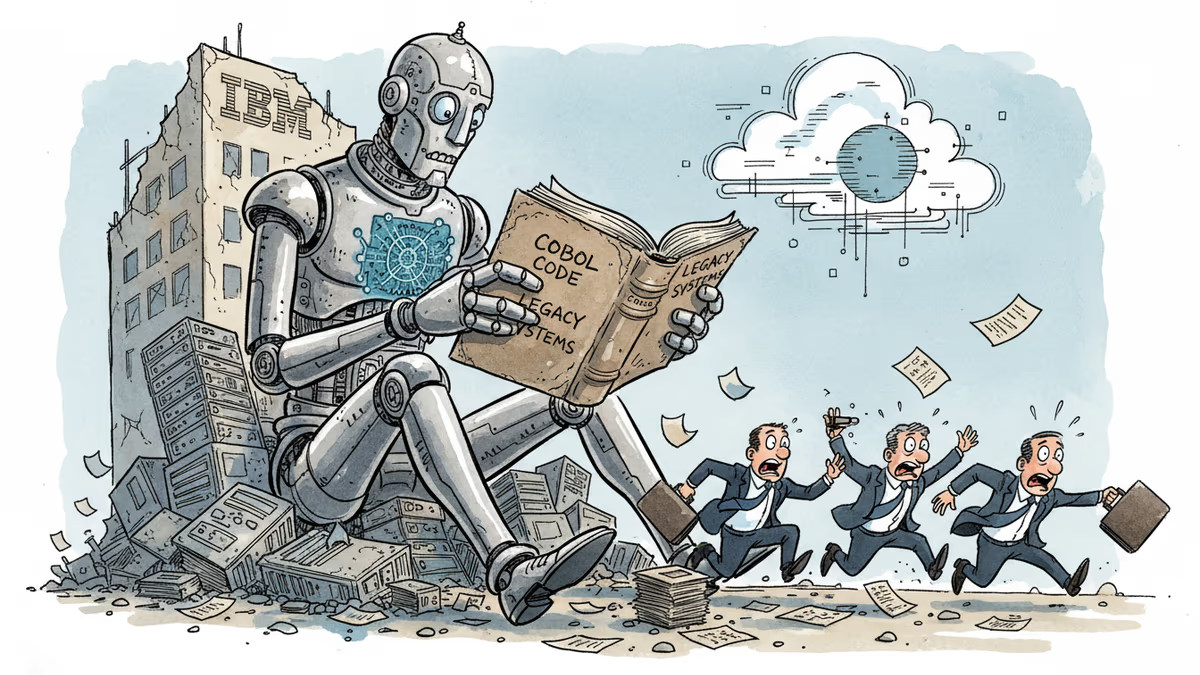
Anthropic's Claude can now automate COBOL modernization, sending IBM plunging 11%. Crypto and software sectors tumble as AI threatens another business model. What legacy systems are next?
IBM beats Q4 estimates with 12% revenue growth and $12.5B AI bookings, proving traditional tech can compete in the AI era while maintaining 110 years of dividends.

Louis Gerstner, the former IBM CEO who saved the company from bankruptcy in the 1990s, has died at 83. Explore his legacy of turning a hardware giant into a service powerhouse.
Explore IBM's strategic transformation in 2025 under Arvind Krishna. From Hybrid Cloud dominance to Quantum Computing breakthroughs, see how Big Blue is reshaping the B2B tech landscape.
Anthropic's Claude can now automate COBOL modernization, sending IBM plunging 11%. Crypto and software sectors tumble as AI threatens another business model. What legacy systems are next?
IBM beats Q4 estimates with 12% revenue growth and $12.5B AI bookings, proving traditional tech can compete in the AI era while maintaining 110 years of dividends.
Louis Gerstner, the former IBM CEO who saved the company from bankruptcy in the 1990s, has died at 83. Explore his legacy of turning a hardware giant into a service powerhouse.
Explore IBM's strategic transformation in 2025 under Arvind Krishna. From Hybrid Cloud dominance to Quantum Computing breakthroughs, see how Big Blue is reshaping the B2B tech landscape.
Thoughts
Share your thoughts on this article
Sign in to join the conversation