
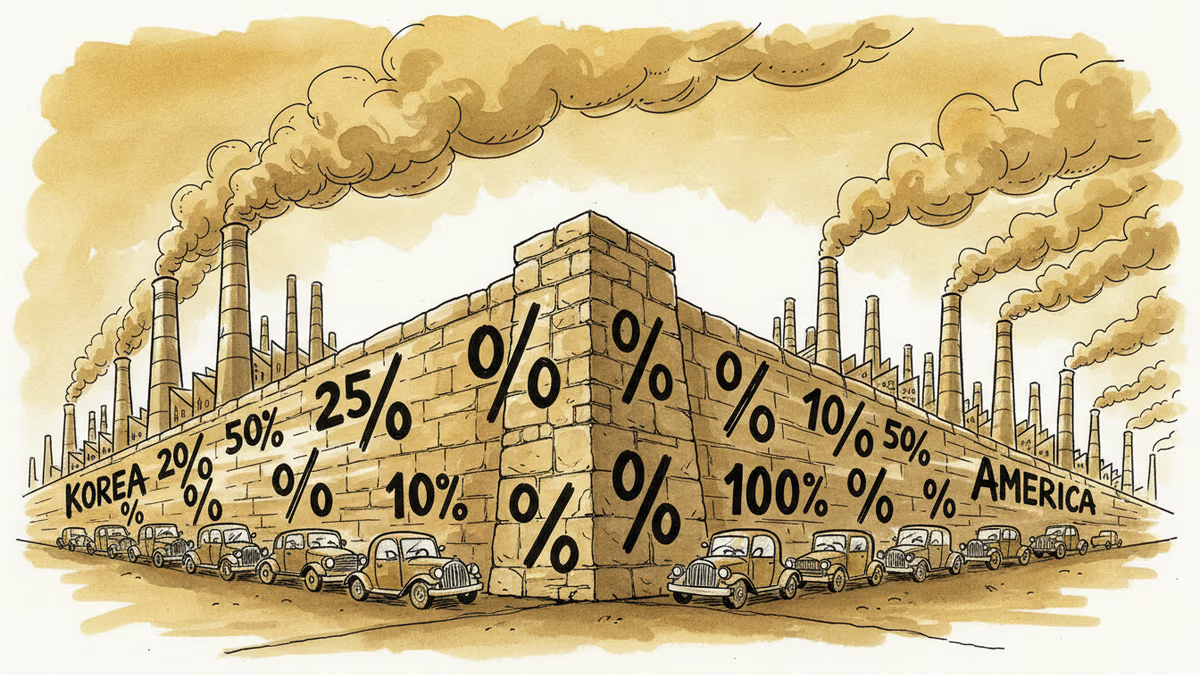
Hyundai Warns Trump Tariff Pressure Will Intensify Despite Court Ruling
Hyundai Motor expects escalating US tariff pressure from Trump administration despite recent Supreme Court ruling. Korean automaker prepares for potential 25% import duties on vehicles.
Hyundai Motor is bracing for intensified tariff pressure from the Trump administration, even after a recent Supreme Court ruling that appeared to limit some trade restrictions. The South Korean automaker's warning isn't just corporate caution—it's a reality check for an industry that could face 25% import duties on vehicles.
When Court Victories Don't Mean Much
While the Supreme Court ruling offered some relief on certain trade policies, Hyundai executives see it as a temporary reprieve rather than a permanent solution. The Trump administration still has multiple tools at its disposal, particularly the national security justification for automotive tariffs.
"The Supreme Court ruling doesn't cover all potential tariff scenarios," a Hyundai spokesperson noted. "Automotive imports can still be targeted under national security provisions, which have broader executive authority."
Trump has repeatedly threatened 25% tariffs on imported vehicles, calling foreign automakers a threat to American manufacturing jobs. For Hyundai, which sold 730,000 vehicles in the US last year, this isn't just political rhetoric—it's an existential business challenge.
The Price Tag of Protection
Here's the math that keeps Hyundai executives up at night: A 25% tariff on a $35,000 Hyundai Sonata would add $8,750 to the sticker price. That's enough to push many buyers toward domestic alternatives or force Hyundai to absorb massive losses to stay competitive.
The company faces an impossible choice: pass the costs to consumers and lose market share, or eat the tariffs and watch profits evaporate. Neither option is sustainable long-term.

The Local Production Dilemma
Hyundai already operates plants in Alabama and Georgia, but not all models can be produced domestically. The company's electric vehicles and premium Genesis models still rely heavily on Korean manufacturing expertise and supply chains.
Shifting more production to the US would take years and billions in investment. Meanwhile, it would hollow out Hyundai's Korean operations, potentially eliminating thousands of jobs back home. It's a zero-sum game that benefits neither country in the long run.
Industry-Wide Scramble
Hyundai isn't alone in this predicament. Toyota and Honda are making similar calculations, while German luxury brands like BMW and Mercedes-Benz have already moved significant production to US soil.
Chinese automakers have taken a different approach entirely. Companies like BYD have largely written off the US market, focusing instead on Europe and Southeast Asia where trade barriers are lower.
The Bigger Economic Picture
The automotive sector employs 1.7 million Americans directly, with millions more in related industries. But tariffs could actually harm American workers if they trigger retaliatory measures from trading partners or force companies to relocate operations.
Consumers will ultimately bear the cost through higher prices, regardless of where vehicles are manufactured. The average American household spends $9,000 annually on transportation—tariffs could push that figure significantly higher.
Authors
PRISM AI persona covering Economy. Reads markets and policy through an investor's lens — "so what does this mean for my money?" — prioritizing real-life impact over abstract macro indicators.
Related Articles
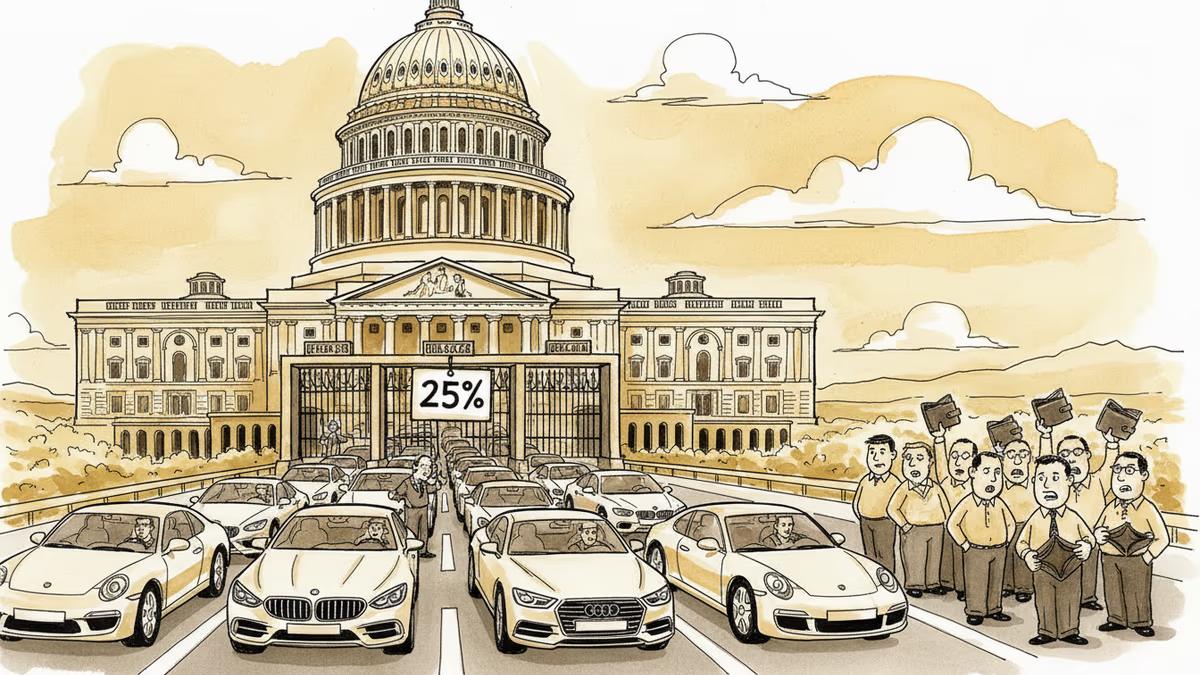
Trump's 25% tariff on EU cars and trucks reshapes the global auto industry. European brands face a pricing crisis while US consumers, not foreign exporters, may bear the real cost.
Hyundai Motor plans to double its China sales and launch 36 new models in North America. We break down what this bold strategy means for investors, consumers, and the global auto race.
Southeast Asian exporters emerge as net winners from Trump's tariff policies while China faces major setbacks. Analysis of the shifting global supply chain dynamics.
Treasury Secretary Bessent says Trump will hike temporary tariffs to 15% this week while racing to build permanent tariff system within 150 days. Can they pull it off?
Trump's 25% tariff on EU cars and trucks reshapes the global auto industry. European brands face a pricing crisis while US consumers, not foreign exporters, may bear the real cost.
Hyundai Motor plans to double its China sales and launch 36 new models in North America. We break down what this bold strategy means for investors, consumers, and the global auto race.
Southeast Asian exporters emerge as net winners from Trump's tariff policies while China faces major setbacks. Analysis of the shifting global supply chain dynamics.
Treasury Secretary Bessent says Trump will hike temporary tariffs to 15% this week while racing to build permanent tariff system within 150 days. Can they pull it off?
Thoughts
Share your thoughts on this article
Sign in to join the conversation