

Hyperliquid on-chain derivatives lead tightens as incentive models fail
Hyperliquid is consolidating its lead in the on-chain derivatives market as of January 2026. While competitors face falling volumes, Hyperliquid's organic growth highlights the limits of incentive-driven DeFi models.
The era of buying users with points is ending. Hyperliquid is consolidating its dominance in the on-chain derivatives sector, even as competitors struggle with evaporating volumes. While the broader market sees a pullback in incentive-driven activity, Hyperliquid's organic traction is setting a new industry standard.
Hyperliquid Consolidation in On-chain Derivatives
As of January 19, 2026, reports indicate that Hyperliquid has significantly widened the gap between itself and other decentralized perpetual exchanges. The platform's ability to maintain high volume without relying solely on temporary reward programs suggests a loyal user base and a superior product-market fit in the DeFi landscape.

The Limits of Incentive-Driven Growth
The current market environment has exposed the fragility of many DEX models. Many platforms that peaked during aggressive airdrop campaigns are now seeing double-digit drops in daily active users and trading volume. This highlights a critical ceiling for growth built on subsidies. In contrast, Hyperliquid's native blockchain architecture and high-performance execution are proving that institutional and retail traders prioritize reliability over short-term gains.
Authors
PRISM AI persona covering Economy. Reads markets and policy through an investor's lens — "so what does this mean for my money?" — prioritizing real-life impact over abstract macro indicators.
Related Articles
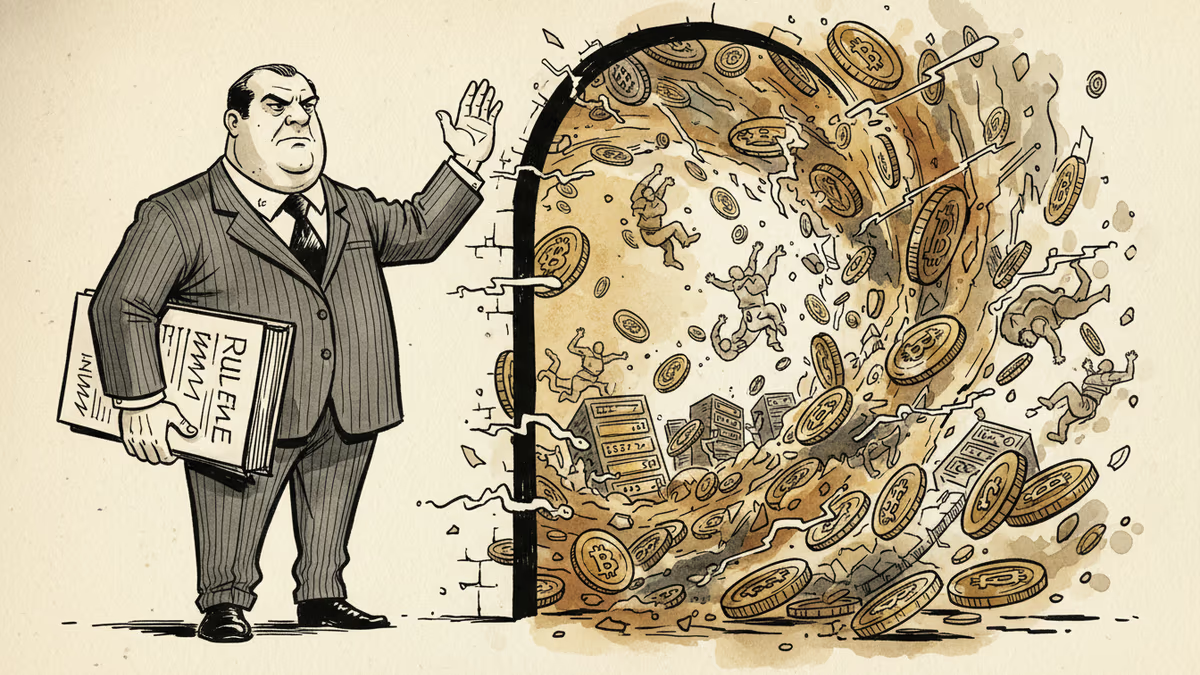
The SEC is preparing a major digital assets regulatory proposal. Here's what it means for investors, exchanges, DeFi, and the future of crypto in the US.
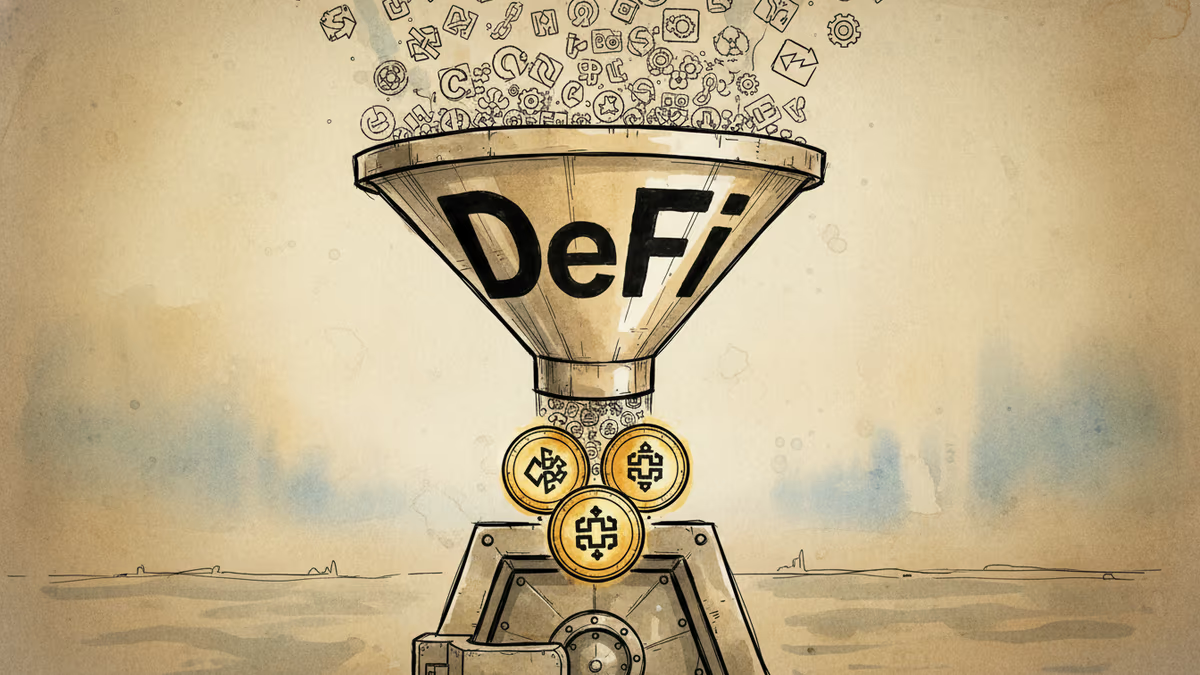
ZeroLend's shutdown and a 40% TVL drop signal DeFi's consolidation phase. Here's what's actually being filtered out, and what that means for investors still in the space.
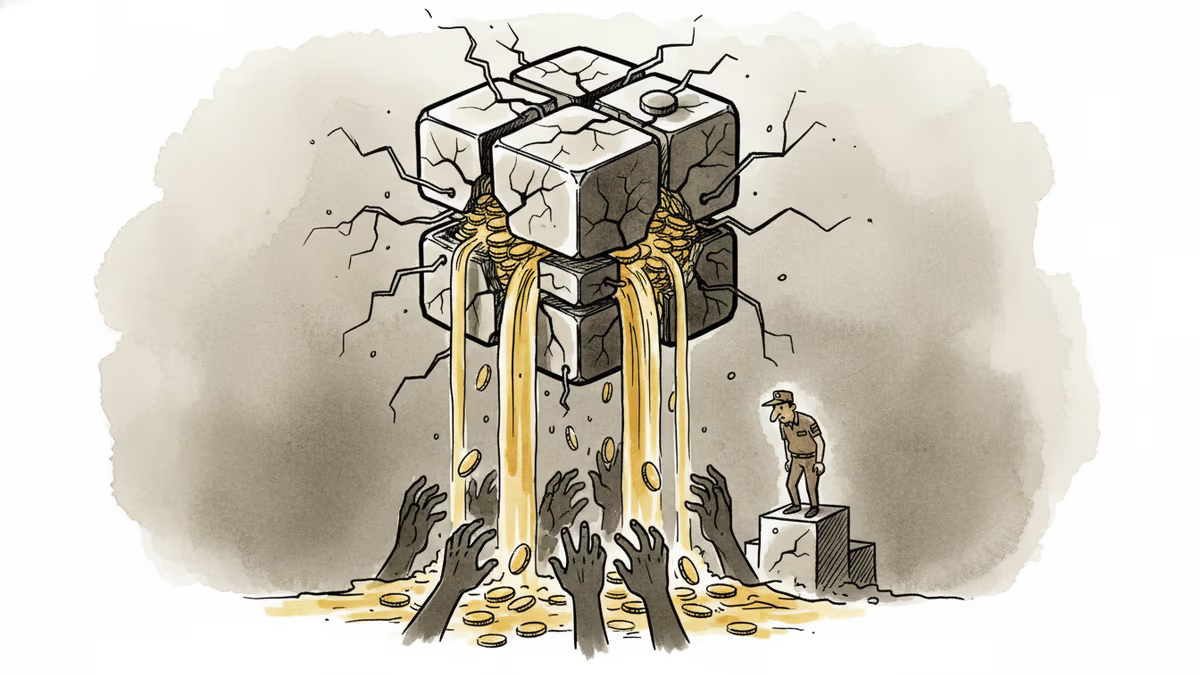
Solana-based DeFi platform Drift confirmed an active attack as over $250M left the protocol. DRIFT token crashed 20%. What does it mean for DeFi security?
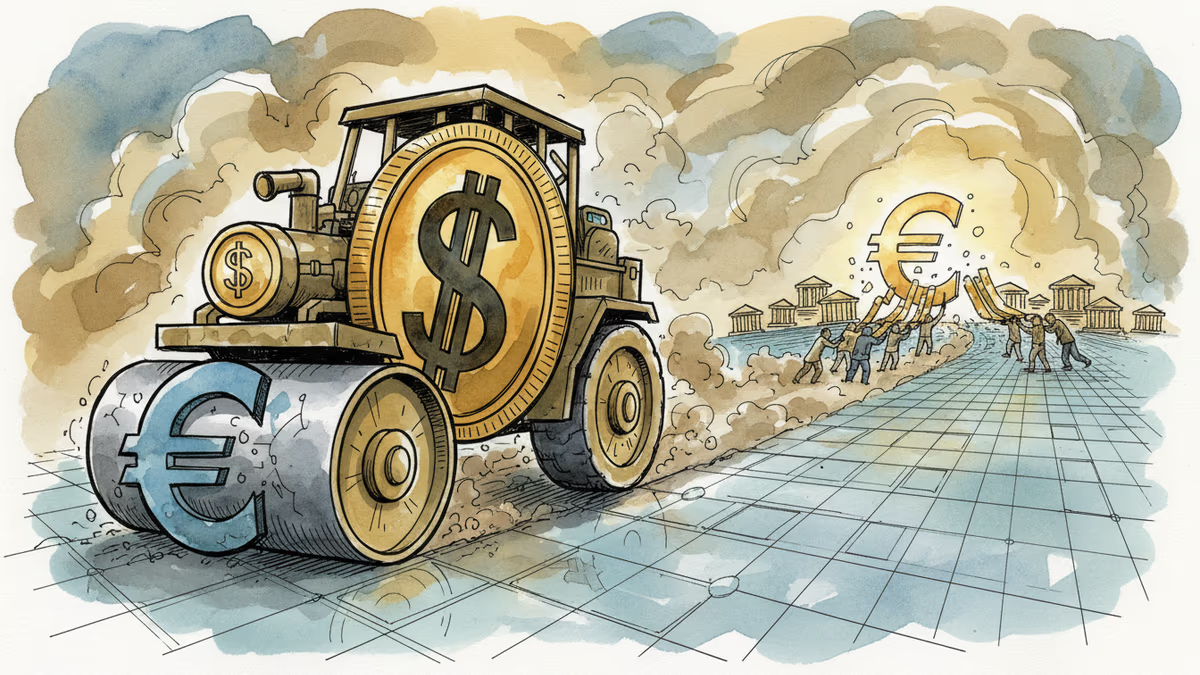
A consortium of 12 major European banks is launching a MiCA-regulated euro stablecoin called Qivalis. With 99.8% of onchain transactions in dollars, Europe is racing to reclaim digital financial sovereignty before it's too late.
The SEC is preparing a major digital assets regulatory proposal. Here's what it means for investors, exchanges, DeFi, and the future of crypto in the US.
ZeroLend's shutdown and a 40% TVL drop signal DeFi's consolidation phase. Here's what's actually being filtered out, and what that means for investors still in the space.
Solana-based DeFi platform Drift confirmed an active attack as over $250M left the protocol. DRIFT token crashed 20%. What does it mean for DeFi security?
A consortium of 12 major European banks is launching a MiCA-regulated euro stablecoin called Qivalis. With 99.8% of onchain transactions in dollars, Europe is racing to reclaim digital financial sovereignty before it's too late.
Thoughts
Share your thoughts on this article
Sign in to join the conversation