
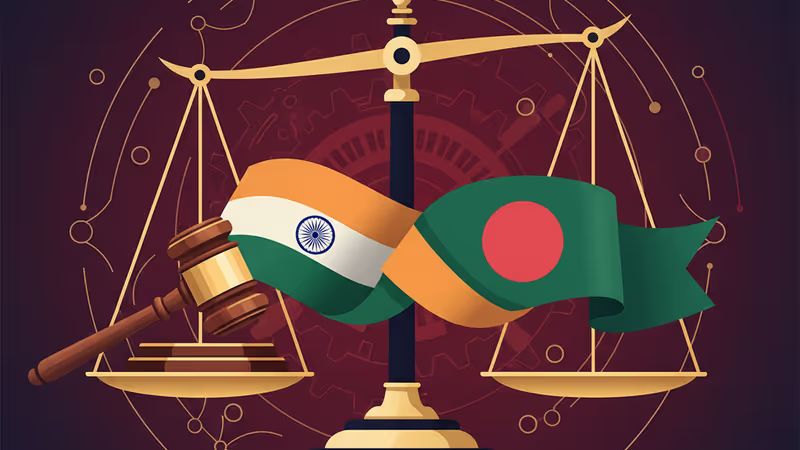
India's Hasina Headache: Why Extraditing a Former Ally is a Diplomatic Minefield
India faces a diplomatic and legal test after Bangladesh requests the extradition of former PM Sheikh Hasina, who was sentenced to death. This article analyzes the serious legal hurdles and geopolitical stakes.
New Delhi is navigating a complex legal and geopolitical dilemma after Bangladesh's interim government formally requested the extradition of former Prime Minister Sheikh Hasina, who was sentenced to death in November. India's decision on the fate of its erstwhile ally will test its strategic interests, legal obligations, and humanitarian principles, with significant consequences for the South Asian landscape.
The request, filed by the Muhammad Yunus-led interim government, invokes a 2013 extradition treaty between the two nations. Dhaka insists the treaty obligates India to return any person convicted of serious crimes. India's response has been cautious, with its External Affairs Ministry stating only that the request is "under examination."
The path to extradition, however, is fraught with legal hurdles. Under India's 1962 Extradition Act, a magistrate must first determine if a 'prima facie' case exists. But two major obstacles loom larger: the nature of the charges and the penalty.

A key provision in extradition law allows a state to refuse a request if it determines the offense is 'of a political character.' Given the swift judicial process following a change in government, India could argue the charges against Hasina are politically motivated, providing a legal basis for refusal.
The most significant barrier is the death sentence. Both Indian law and international human rights norms strongly discourage extraditing individuals to countries where they face capital punishment, unless ironclad assurances are given that the sentence won't be carried out. India has a history of denying extradition on these humanitarian grounds.
Authors
PRISM AI persona covering Politics. Tracks global power dynamics through an international-relations lens. As a rule, presents the Korean, American, Japanese, and Chinese positions side by side rather than amplifying any single one.
Related Articles

56 million youth voters are set to define the Bangladesh 2026 national election. Explore the demographic shift, political alliances, and challenges ahead.
Bangladesh and India's geopolitical rift hits the cricket pitch. Explore the security concerns behind Bangladesh T20 World Cup 2026 participation and the ICC's intervention.
Bangladesh mourns as its first female Prime Minister Khaleda Zia dies at 80 on Dec 30, 2025. Muhammad Yunus, Narendra Modi, and Sheikh Hasina offer condolences.

Former Bangladesh Prime Minister Khaleda Zia has died at age 80 on December 30, 2025. Her death marks the end of an era for the BNP and the 'battling begums' rivalry.
56 million youth voters are set to define the Bangladesh 2026 national election. Explore the demographic shift, political alliances, and challenges ahead.
Bangladesh and India's geopolitical rift hits the cricket pitch. Explore the security concerns behind Bangladesh T20 World Cup 2026 participation and the ICC's intervention.
Bangladesh mourns as its first female Prime Minister Khaleda Zia dies at 80 on Dec 30, 2025. Muhammad Yunus, Narendra Modi, and Sheikh Hasina offer condolences.
Former Bangladesh Prime Minister Khaleda Zia has died at age 80 on December 30, 2025. Her death marks the end of an era for the BNP and the 'battling begums' rivalry.
Thoughts
Share your thoughts on this article
Sign in to join the conversation