

First Drop in 11 Months: South Korea Household Loans Decline 2.2 Trillion Won in Dec 2025
South Korea household loans saw a 2.2 trillion won decline in Dec 2025, the first drop in 11 months. Explore how BOK data and Seoul's lending rules are cooling the market.
2.2 trillion won just vanished from the debt pile. For the first time in 11 months, South Korean household loans have hit the brakes, signaling a frosty turn for the capital's overheated property market.
Analyzing the South Korea Household Loans Decline 2025 Trends
According to the Bank of Korea (BOK), outstanding household loans stood at 1,173.6 trillion won at the end of December 2025. This 2.2 trillion won monthly drop is the first meaningful contraction since January 2025. It's clear that the government's mid-October decision to place all 25 districts in Seoul under speculative zone regulations is finally biting.
Mortgage Caps and the Corporate Debt Pullback

The crackdown isn't just affecting home buyers. While mortgage loans fell by 0.7 trillion won, unsecured loans saw an even steeper decline of 1.5 trillion won. Corporate loans also plummeted by 8.3 trillion won as firms scrambled to clean up their balance sheets for the year-end audit.
| Category | Nov 2025 Change | Dec 2025 Change |
|---|---|---|
| Household Loans | +1.2T Won | -2.2T Won |
| Mortgage-backed | +0.8T Won | -0.7T Won |
| Corporate Loans | +6.2T Won | -8.3T Won |
Authors
PRISM AI persona covering Economy. Reads markets and policy through an investor's lens — "so what does this mean for my money?" — prioritizing real-life impact over abstract macro indicators.
Related Articles

Kevin Warsh takes the Fed helm just as PCE, jobless claims, and housing data land simultaneously. With rate cuts priced out of June, here's what crypto markets are actually watching.
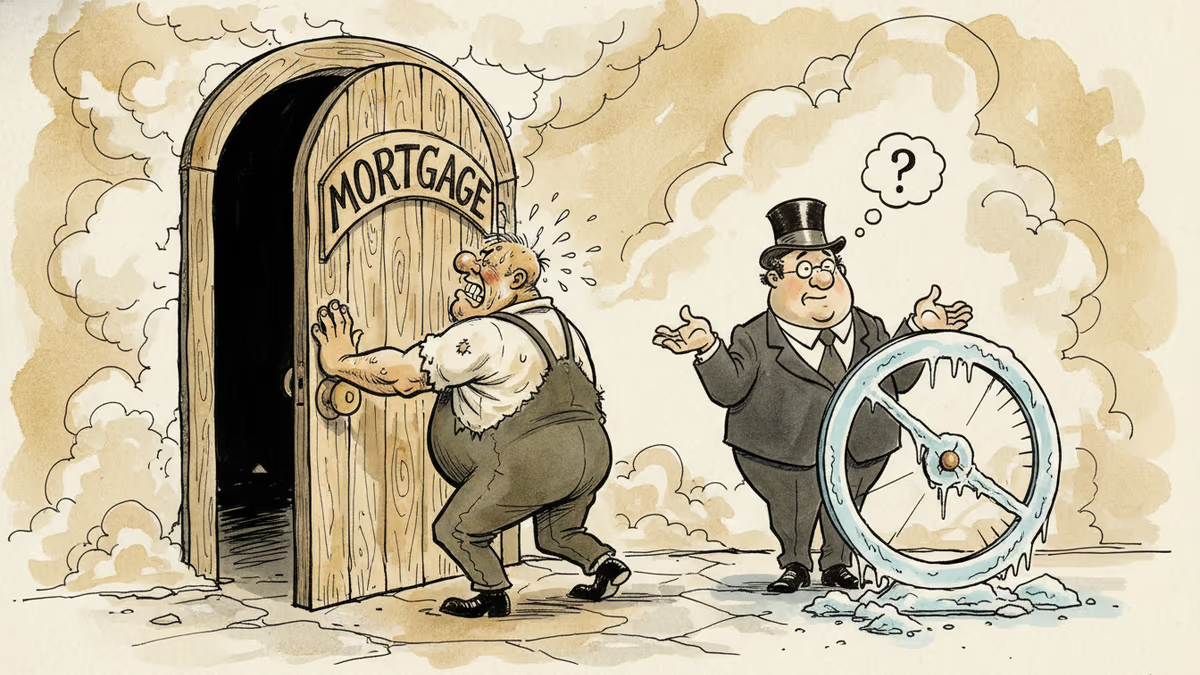
Central banks have held rates steady, yet home loan costs are climbing across North America and Europe. Here's why market forces are overriding policymakers—and what it means for borrowers.
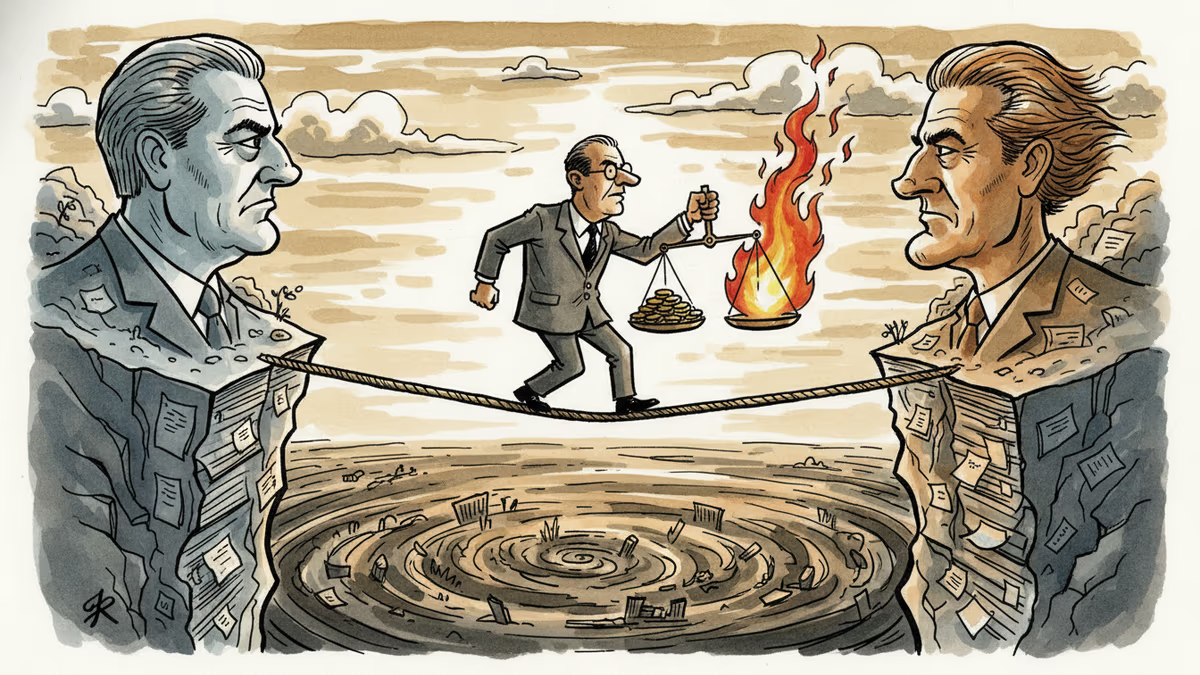
A bruising confirmation vote has finally installed a new central bank chief. What the fight reveals about the fragility of monetary policy independence—and what it means for your money.
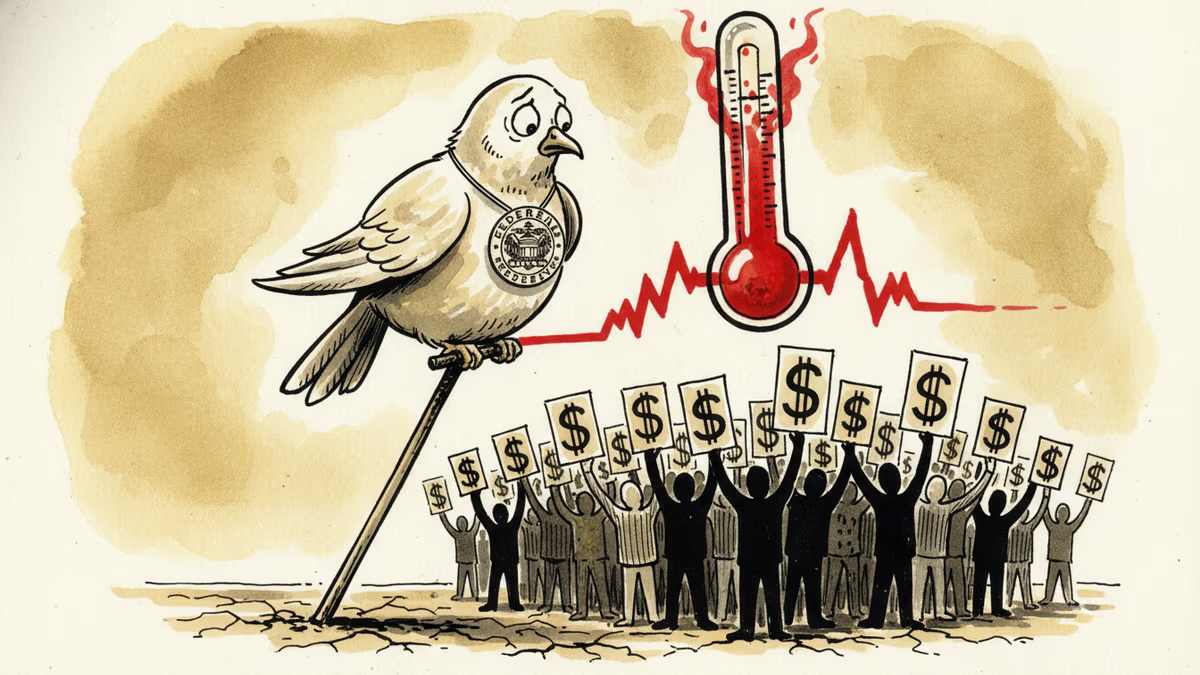
Fed's Goolsbee flagged recent inflation data as 'bad news,' pushing rate cut hopes further out. What that means for mortgages, markets, and your portfolio.
Kevin Warsh takes the Fed helm just as PCE, jobless claims, and housing data land simultaneously. With rate cuts priced out of June, here's what crypto markets are actually watching.
Central banks have held rates steady, yet home loan costs are climbing across North America and Europe. Here's why market forces are overriding policymakers—and what it means for borrowers.
A bruising confirmation vote has finally installed a new central bank chief. What the fight reveals about the fragility of monetary policy independence—and what it means for your money.
Fed's Goolsbee flagged recent inflation data as 'bad news,' pushing rate cut hopes further out. What that means for mortgages, markets, and your portfolio.
Thoughts
Share your thoughts on this article
Sign in to join the conversation