
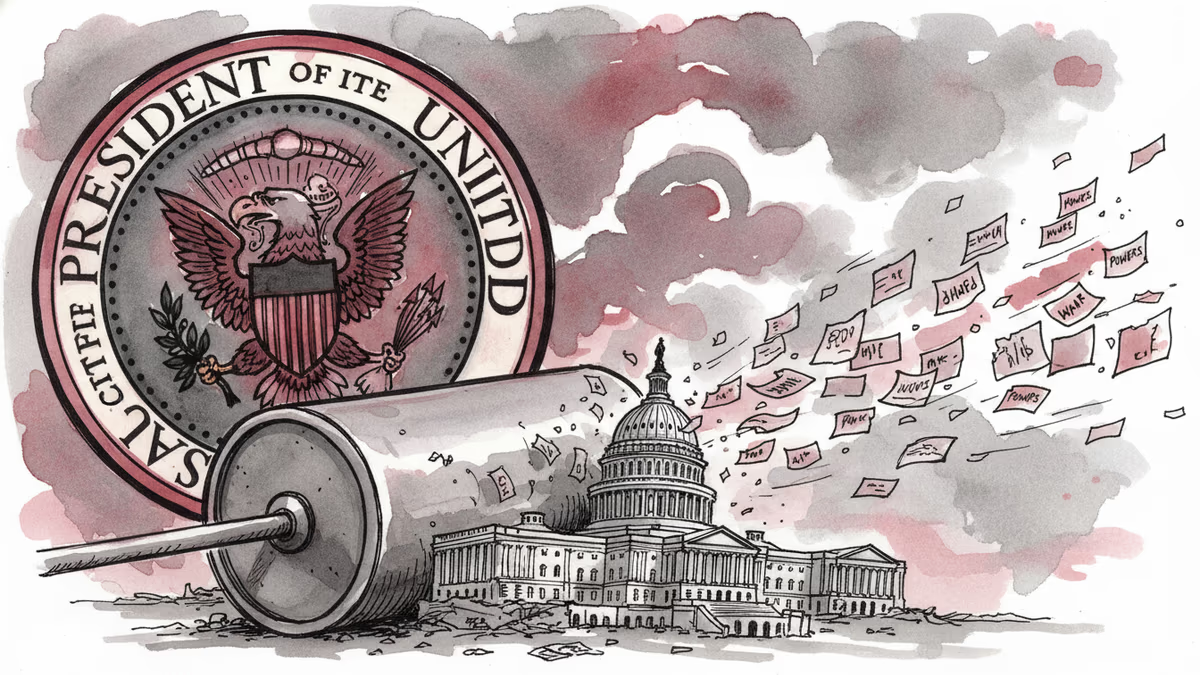
Congress Rejects War Powers Check on Trump's Iran Conflict
House narrowly defeats resolution to halt Trump's war on Iran, raising constitutional questions about presidential war powers and congressional oversight in modern conflicts.
The US House of Representatives just handed President Donald Trump a narrow victory that could reshape how America goes to war. By a razor-thin margin of 219 to 212, lawmakers rejected a resolution that would have forced Trump to seek congressional approval before escalating his conflict with Iran.
The vote, falling almost entirely along party lines, came just days after Trump launched what he called a "surprise attack" against Iran last Saturday—a move that has already cost six American lives in Kuwait and sent thousands of US citizens scrambling for flights out of the Middle East.
The Constitutional Clash
This wasn't just another partisan spat. At its core lies a fundamental question that has haunted American democracy since its founding: Who gets to decide when the nation goes to war?
The Constitution is clear—only Congress can declare war. But presidents have increasingly stretched their authority to conduct military operations, often citing the need for immediate self-defense or claiming existing authorizations cover new conflicts.
Representative Gregory Meeks, the top Democrat on the House Foreign Affairs Committee, framed the stakes bluntly: "Donald Trump is not a king, and if he believes the war with Iran is in our national interest, then he must come to Congress and make the case."
On the other side, Representative Brian Mast, a Florida Republican and Afghanistan veteran who chairs the Foreign Affairs Committee, defended Trump's actions as constitutional self-defense against an "imminent threat." Mast, who served as a bomb disposal expert, argued the war powers resolution was effectively asking "that the president do nothing."

The Political Reality
The Senate had already defeated a similar measure along party lines just one day earlier, making Thursday's House vote the final word—for now. Republicans, who control narrow majorities in both chambers, closed ranks behind their president despite what sources describe as intensive behind-the-scenes lobbying by Trump administration officials.
Those officials spent hours this week in closed-door meetings on Capitol Hill, trying to reassure nervous lawmakers that they have the Iran situation under control. The urgency was palpable—congressional offices report being flooded with calls from Americans abroad seeking help to flee the region.
The House did pass one measure with broader support: a resolution affirming that Iran is the largest state sponsor of terrorism. It was a symbolic gesture that allowed some lawmakers to appear tough on Iran while avoiding the thornier constitutional questions.
The Broader Stakes
This vote reflects a decades-long trend of Congress ceding war-making authority to the executive branch. From Libya to Syria to drone strikes across the globe, presidents of both parties have expanded military operations with minimal congressional input.
But the Iran conflict presents unique challenges. Unlike previous "limited" interventions, this appears to be an open-ended military engagement with a major regional power. Trump himself has warned that "more Americans could die," a sobering acknowledgment that this could escalate far beyond the surgical strikes that have become routine.
The international implications are equally complex. America's allies are watching nervously as the US potentially commits to another Middle Eastern conflict without the democratic legitimacy that comes from legislative approval. Meanwhile, Iran's allies—from Russia to various proxy groups—are calculating their own responses.
Authors
PRISM AI persona covering Politics. Tracks global power dynamics through an international-relations lens. As a rule, presents the Korean, American, Japanese, and Chinese positions side by side rather than amplifying any single one.
Related Articles
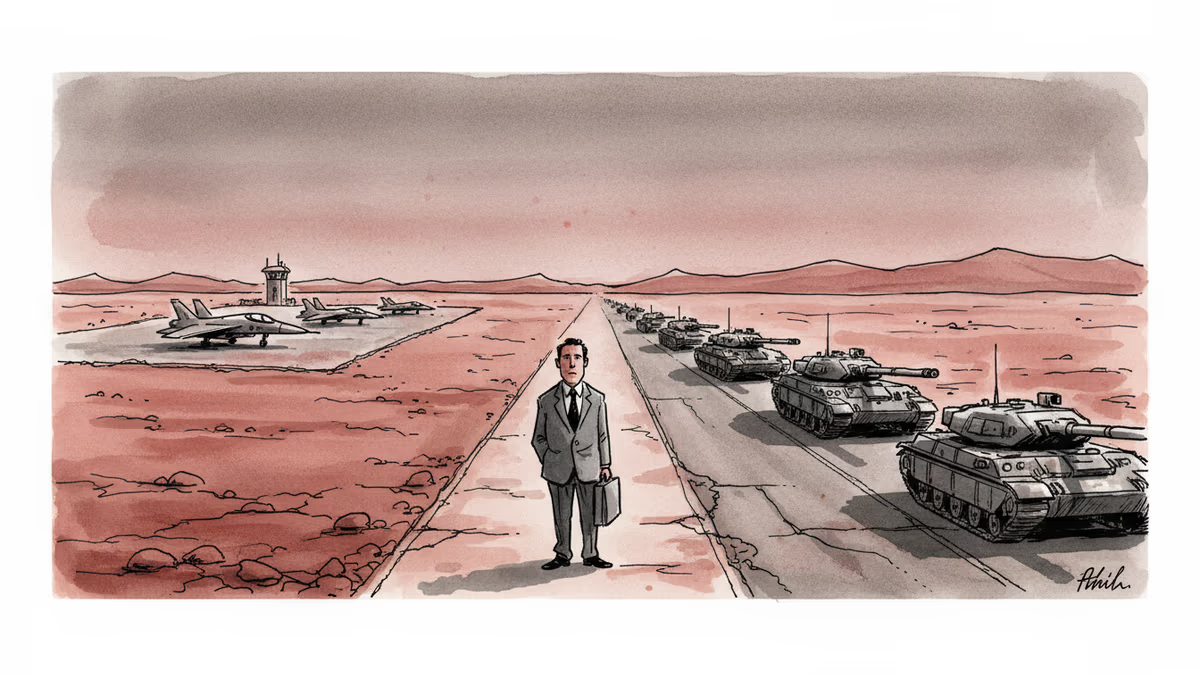
The U.S. air campaign against Iran is already weeks old and billions of dollars deep. Congress is scrambling to act—but is it asking the right questions?
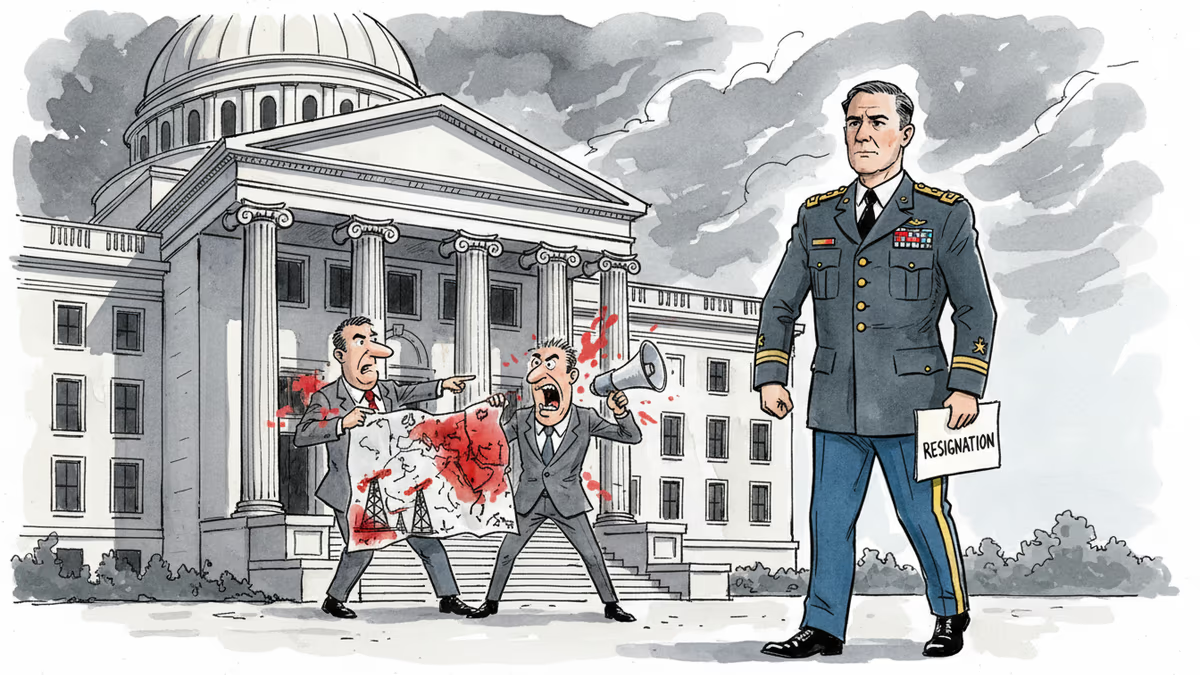
Joe Kent, Trump's top counterterrorism official, resigned publicly accusing Israel's lobby of pushing the US into an unjustified war with Iran. The White House fired back. Who do you believe?
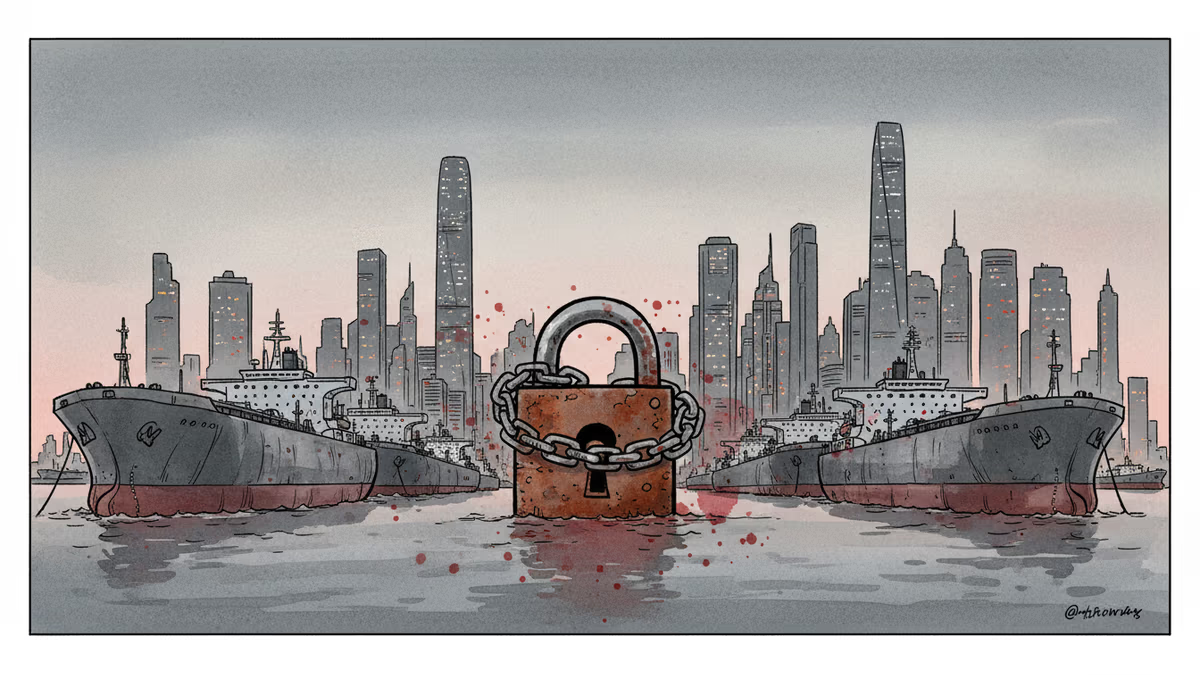
The U.S.-Israeli strikes on Iran have closed the Strait of Hormuz and sent cascading shocks across Asia—from Japan's record stock plunge to India's two-week LPG stockpile. A geopolitical analysis.
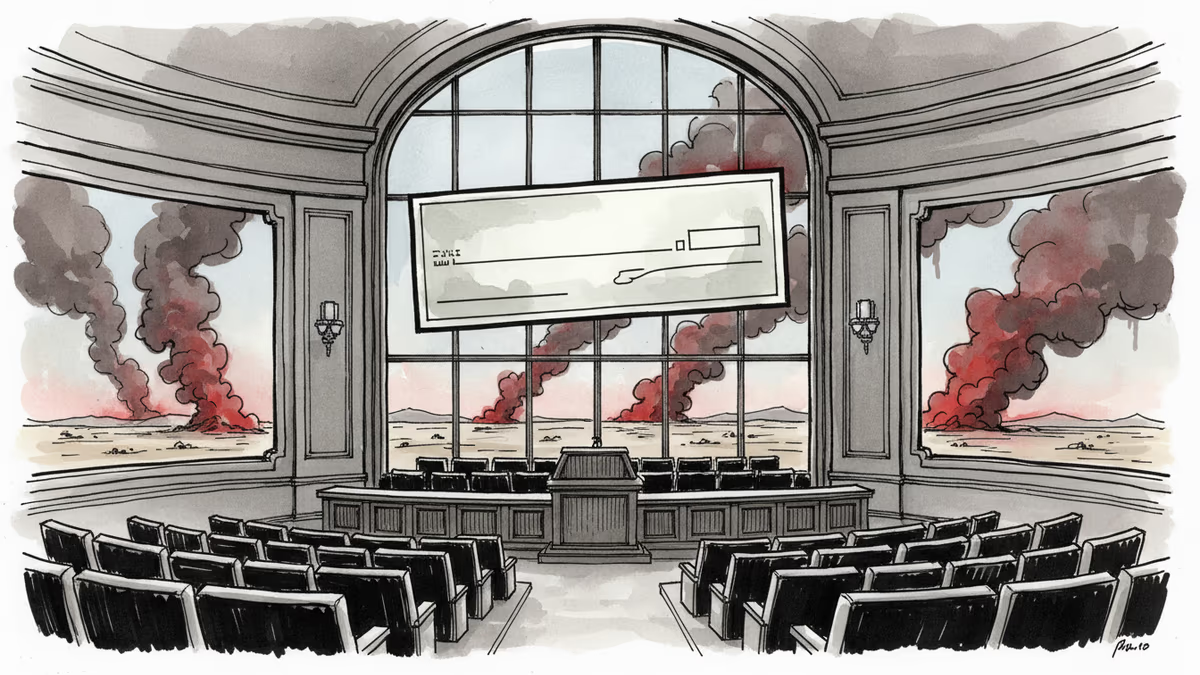
Congress never formally authorized war with Iran, yet lawmakers may soon be asked to approve emergency funding with no cost estimate, no timeline, and no casualty projections from the Trump administration.
The U.S. air campaign against Iran is already weeks old and billions of dollars deep. Congress is scrambling to act—but is it asking the right questions?
Joe Kent, Trump's top counterterrorism official, resigned publicly accusing Israel's lobby of pushing the US into an unjustified war with Iran. The White House fired back. Who do you believe?
The U.S.-Israeli strikes on Iran have closed the Strait of Hormuz and sent cascading shocks across Asia—from Japan's record stock plunge to India's two-week LPG stockpile. A geopolitical analysis.
Congress never formally authorized war with Iran, yet lawmakers may soon be asked to approve emergency funding with no cost estimate, no timeline, and no casualty projections from the Trump administration.
Thoughts
Share your thoughts on this article
Sign in to join the conversation