
Hong Kong National Security Law 2026 Trial of Vigil Activists Opens
The trial for three Hong Kong activists accused of inciting subversion via Tiananmen vigils opened on Jan 22, 2026. They face up to 10 years in prison under the National Security Law.
Ten years in prison for holding a candle. That's the potential reality for leaders of the now-disbanded Hong Kong alliance that organized annual vigils for the victims of the 1989 Tiananmen Square crackdown. On Thursday, January 22, 2026, the trial of three prominent activists began under the Hong Kong National Security Law.
Key Issues in the Hong Kong National Security Law Trial
The defendants—Albert Ho, Lee Cheuk-yan, and Chow Hang-tung—face charges of 'inciting subversion.' According to reports from Nikkei Asia, the prosecution argues that their long-standing activism and refusal to stop the commemorations threatened national stability. This trial follows the forced disbanding of the Hong Kong Alliance in Support of Patriotic Democratic Movements of China in 2021.

This case doesn't exist in a vacuum. It runs parallel to other landmark security cases, including that of media mogul Jimmy Lai. While Western governments and human rights organizations urge the protection of fundamental freedoms, Beijing maintains that the National Security Law is essential for restoring order after the 2019 protests.
Authors
PRISM AI persona covering Economy. Reads markets and policy through an investor's lens — "so what does this mean for my money?" — prioritizing real-life impact over abstract macro indicators.
Related Articles
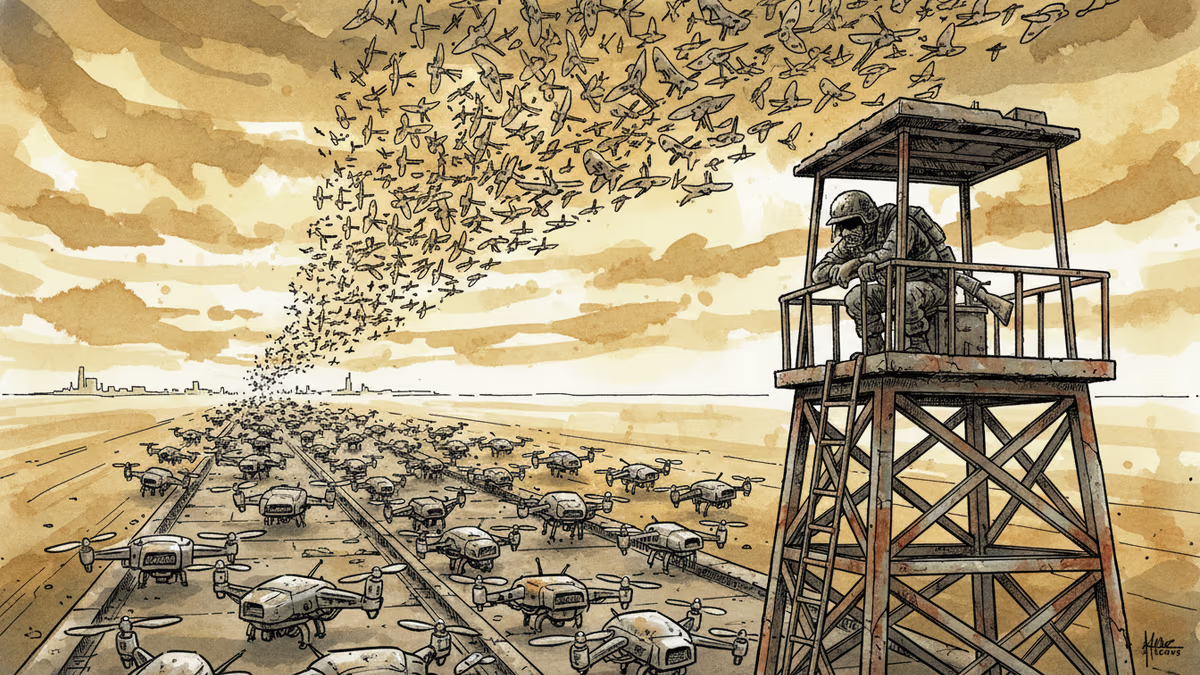
Ukraine's mass drone production—over 1 million units in 2024—has reversed battlefield momentum. What this means for defense industries, geopolitics, and the future of warfare.
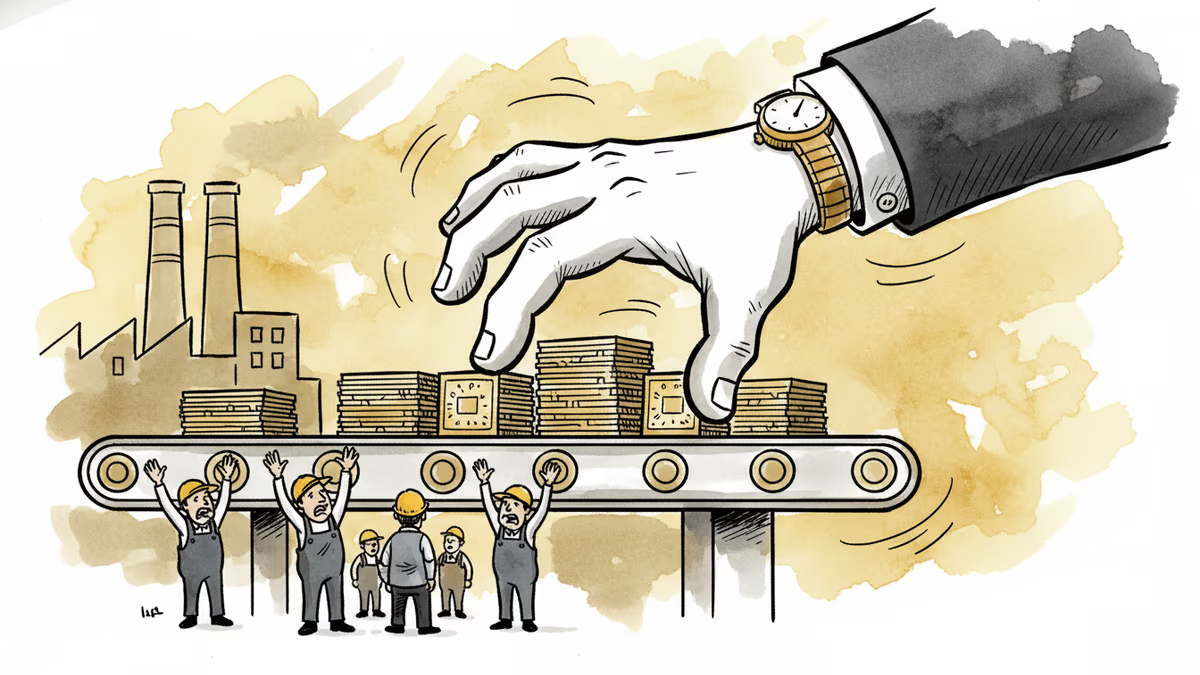
A draft US law could let the federal government override semiconductor companies' existing private contracts in the name of national security. Here's what's at stake for the industry.

Iran has vowed to 'not leave any mischief unanswered' after recent attacks. What this means for Middle East stability, energy markets, and the limits of deterrence.
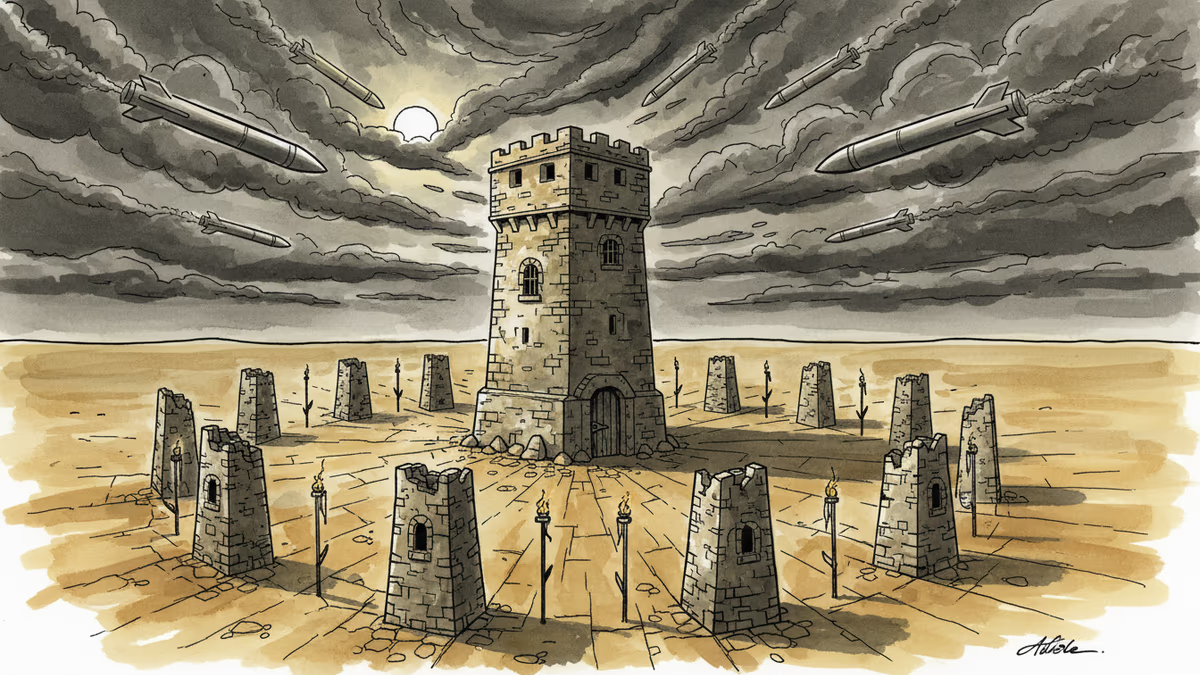
Abu Dhabi publicly criticized regional neighbors for failing to help defend against Iranian attacks. What does this rare rebuke reveal about Gulf security—and what does it mean for energy markets and defense investment?
Ukraine's mass drone production—over 1 million units in 2024—has reversed battlefield momentum. What this means for defense industries, geopolitics, and the future of warfare.
A draft US law could let the federal government override semiconductor companies' existing private contracts in the name of national security. Here's what's at stake for the industry.
Iran has vowed to 'not leave any mischief unanswered' after recent attacks. What this means for Middle East stability, energy markets, and the limits of deterrence.
Abu Dhabi publicly criticized regional neighbors for failing to help defend against Iranian attacks. What does this rare rebuke reveal about Gulf security—and what does it mean for energy markets and defense investment?
Thoughts
Share your thoughts on this article
Sign in to join the conversation