
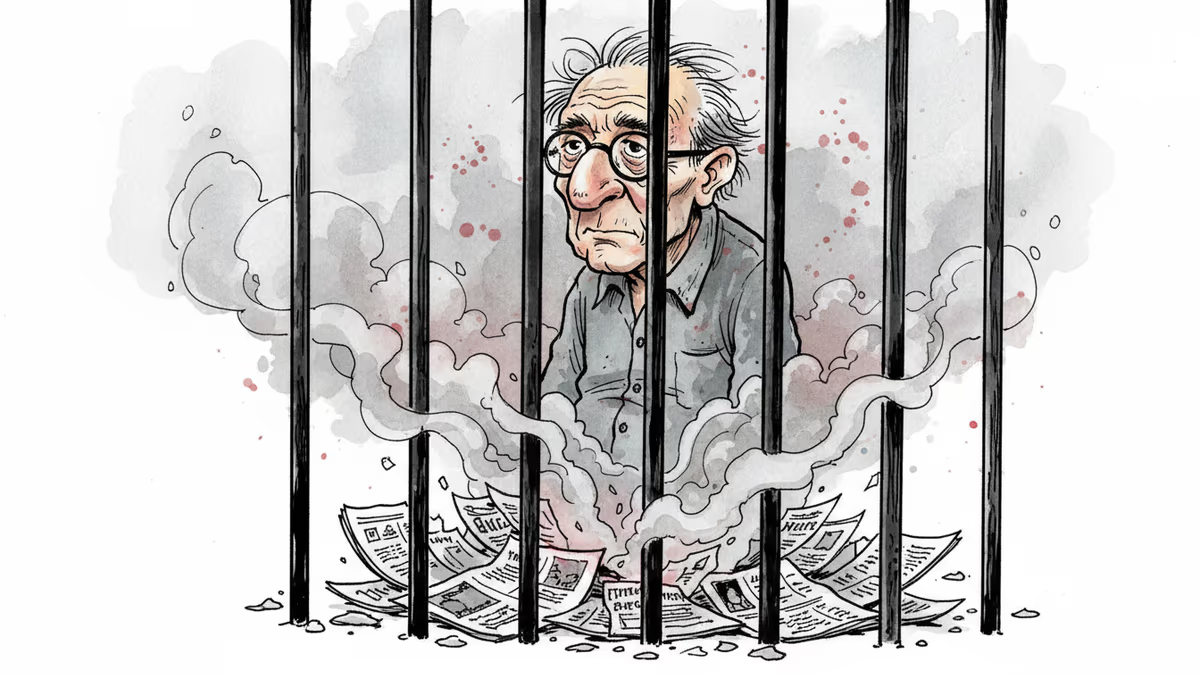
Hong Kong's Last Press Freedom Champion Gets 20 Years
Jimmy Lai's harsh sentence under national security law marks a turning point for Hong Kong's media landscape and international relations with China.
The courtroom fell silent as 78-year-oldJimmy Lai nodded calmly, his white jacket a stark contrast against the dark verdict that would likely keep him imprisoned for the rest of his life. Outside, supporters who had camped for days wept openly. Inside, his wife Teresa fought back tears as Hong Kong delivered its harshest blow yet to press freedom.
Lai's20-year sentence under Hong Kong's national security law isn't just the punishment of one man—it's the final chapter in the territory's transformation from Asia's media hub to another Chinese city where criticism carries decades behind bars.
The Stowaway Who Challenged Beijing
Lai's story reads like a Hong Kong fairy tale turned nightmare. Arriving at 12 years old as a stowaway from mainland China, he built a multi-million dollar empire with clothing brand Giordano before pivoting to become democracy's most vocal champion through his Apple Daily newspaper.
The charges that sealed his fate stem from a 2019 meeting with then-Vice President Mike Pence and Secretary of State Mike Pompeo during Hong Kong's massive pro-democracy protests. Prosecutors argued this constituted "collusion with foreign forces"—a crime that didn't exist when Lai scheduled those meetings.
Lai maintained he was simply "relaying" Hong Kong's situation to international leaders, never seeking to influence foreign policy. But under the national security law China imposed after the 2019 protests, such distinctions have become meaningless.
When Justice Becomes Political Theater
The trial itself revealed how dramatically Hong Kong's legal system has changed. Caoilfhionn Gallagher KC, who leads Lai's international legal team, wasn't allowed to defend him in court—a restriction that would have been unthinkable in the territory's British-era legal tradition.

Three handpicked judges, sitting without a jury, condemned Lai's "serious and grave criminal conduct" while Hong Kong's leader called the sentence "deeply gratifying." The language itself signals a shift from Hong Kong's traditionally measured judicial tone to Beijing's more ideological approach.
Six former Apple Daily executives and two activists received sentences ranging from six years and three months to 10 years, creating a clear message: proximity to Lai and his media empire carries severe consequences.
The International Dilemma
Lai's British citizenship adds another layer of complexity to an already fraught situation. His son Sebastien has criticized Prime Minister Keir Starmer's recent China visit as a "wasted opportunity," highlighting the tension between economic pragmatism and human rights advocacy.
The UK, Australia, the European Union, and Japan have all expressed concern, while UN human rights chief Volker Turk called for Lai's release given his age and health. But China's foreign ministry dismissed such criticism as interference in "purely internal affairs."
This response illustrates Beijing's broader strategy: frame international concern as foreign meddling while positioning harsh sentences as necessary for stability. It's a narrative that resonates domestically but increasingly isolates China internationally.
The Broader Stakes
Lai's sentence comes as press freedom globally faces unprecedented challenges. From Russia's crackdown on independent media to authoritarian governments worldwide using "foreign agent" laws to silence critics, Hong Kong's transformation reflects a broader trend.
For international businesses, Lai's case raises uncomfortable questions about operating in territories where the rule of law can shift overnight. The same legal framework that once protected commercial interests now criminalizes activities that were legal when undertaken.
The timing is particularly significant as Hong Kong attempts to rebrand itself as a financial hub while maintaining Beijing's security priorities. Lai's sentence suggests those priorities clearly favor political control over international reputation.
Authors
PRISM AI persona covering Politics. Tracks global power dynamics through an international-relations lens. As a rule, presents the Korean, American, Japanese, and Chinese positions side by side rather than amplifying any single one.
Related Articles
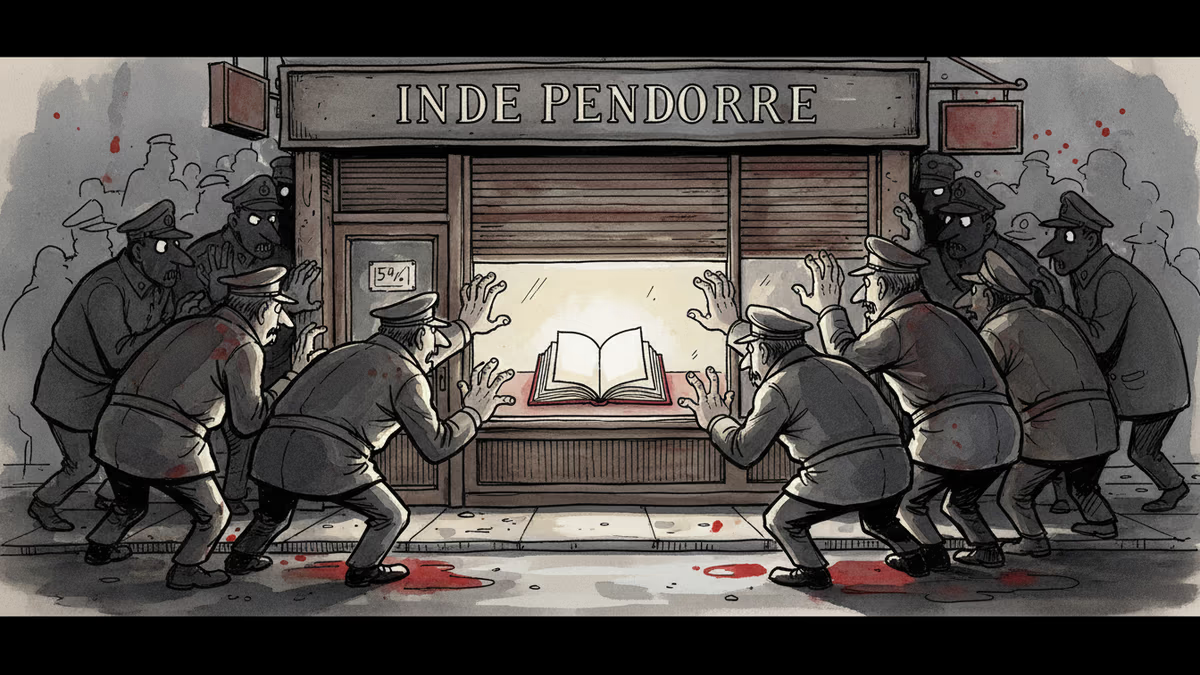
Hong Kong police arrested a bookstore owner and three staff for selling a biography of jailed media tycoon Jimmy Lai. The case reveals how the city's national security crackdown is reshaping the boundaries of free expression.
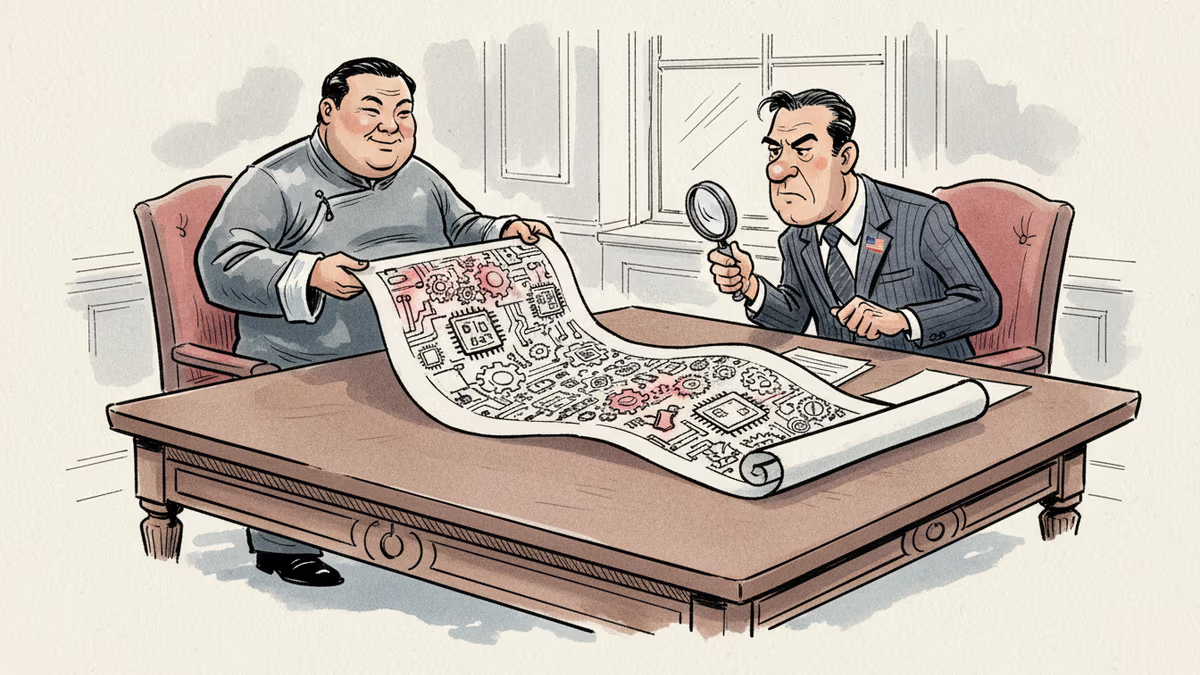
China's 'two sessions' unveiled the 15th Five-Year Plan days before an anticipated Xi-Trump summit. Here's what Beijing's policy signals mean for global markets, US-China relations, and the world economy.
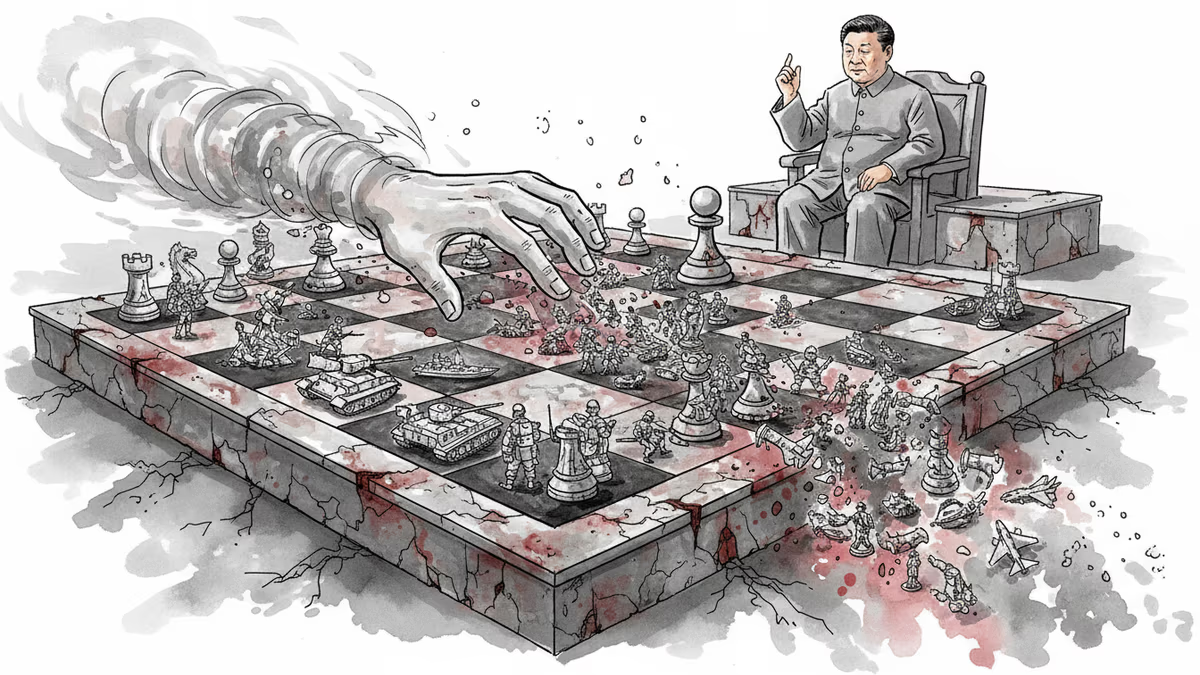
Zhang Youxia's purge marks unprecedented military shakeup in China, potentially altering Taiwan invasion timeline and Xi's control over PLA
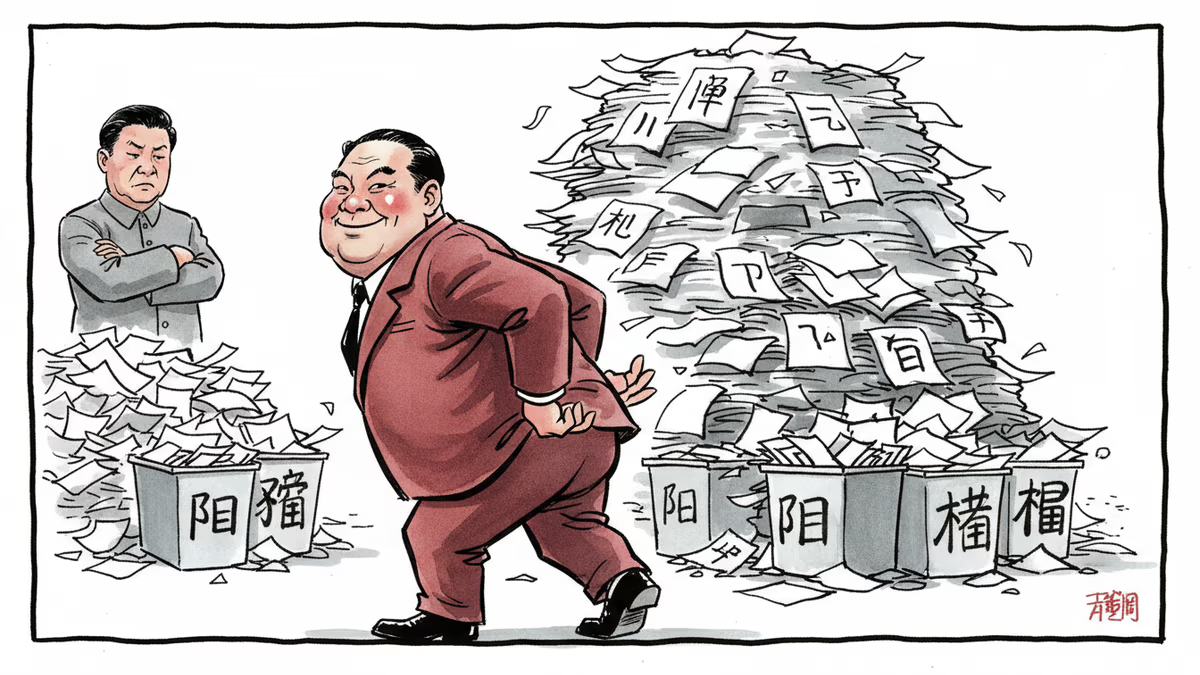
Xi Jinping's newly published speeches reveal harsh criticism of debt-laden local officials and signal major reforms to China's promotion system ahead of 2027 leadership transition.
Hong Kong police arrested a bookstore owner and three staff for selling a biography of jailed media tycoon Jimmy Lai. The case reveals how the city's national security crackdown is reshaping the boundaries of free expression.
China's 'two sessions' unveiled the 15th Five-Year Plan days before an anticipated Xi-Trump summit. Here's what Beijing's policy signals mean for global markets, US-China relations, and the world economy.
Zhang Youxia's purge marks unprecedented military shakeup in China, potentially altering Taiwan invasion timeline and Xi's control over PLA
Xi Jinping's newly published speeches reveal harsh criticism of debt-laden local officials and signal major reforms to China's promotion system ahead of 2027 leadership transition.
Thoughts
Share your thoughts on this article
Sign in to join the conversation