
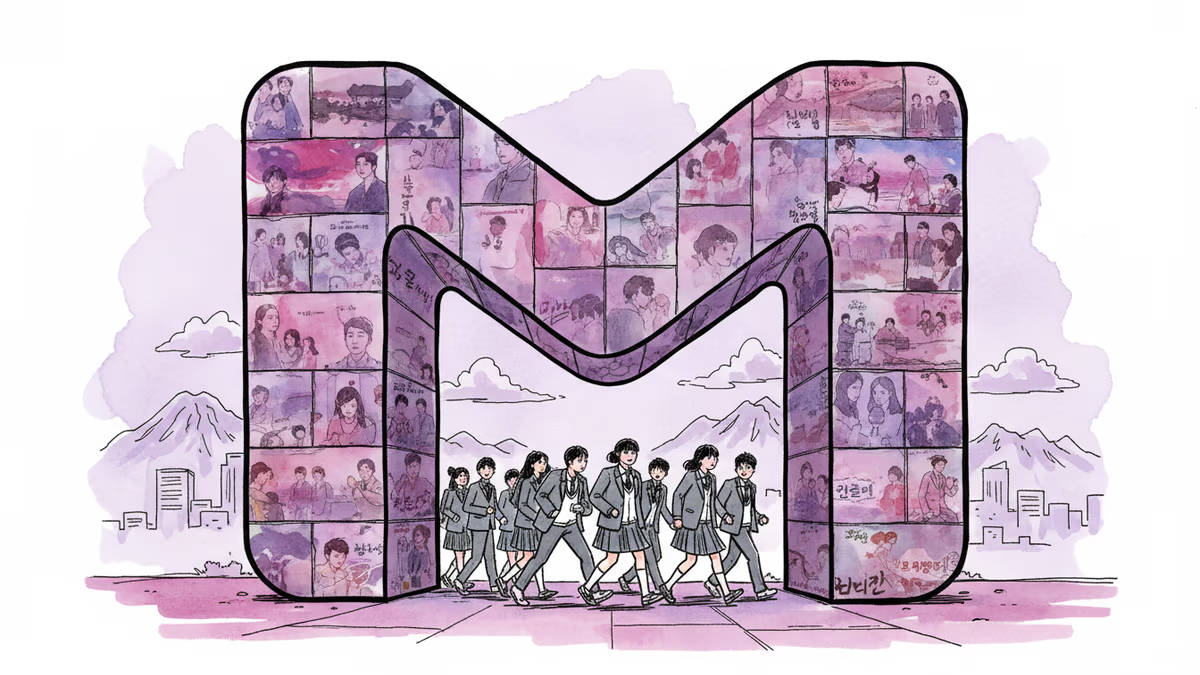
15 High School Dramas in 2025: Is K-Drama Having Its Teen Moment?
Soompi's 2025 K-drama masterlist reveals 15 high school dramas aired this year. What does this surge tell us about the Korean entertainment industry's global strategy?
Fifteen. That's how many high school dramas aired in 2025, according to Soompi's comprehensive K-drama masterlist. When was the last time we saw such a concentrated focus on teen stories from Korean television?
Soompi's annual roundup, which categorizes Korean dramas by genre—from romance to fantasy, historical to mystery—reveals something fascinating about the industry's direction. While other genres maintain steady numbers, high school dramas have exploded in 2025. This isn't just about quantity; it's about strategy.
The Universal Appeal Gambit
Why are Korean production companies suddenly betting big on teenage stories? The answer lies in the mathematics of global streaming. High school settings transcend cultural barriers in ways that historical palaces or corporate boardrooms simply can't.
Consider the viewing patterns: American teens relate to academic pressure, Japanese audiences connect with school friendship dynamics, and European viewers recognize the coming-of-age struggles. The classroom becomes a universal stage where cultural specificity meets human commonality.
Netflix and Disney+ have been quietly increasing their investments in Korean teen content. Unlike Squid Game's distinctly Korean social commentary or Kingdom's period-specific horror, high school dramas offer what streaming executives call "cultural portability"—stories that travel well across borders without extensive localization.
The Economics Behind Teen Dreams

The production economics are compelling. High school dramas typically require smaller budgets than their historical or fantasy counterparts. No elaborate period costumes, no complex VFX sequences, no A-list actor fees. Instead, fresh faces and authentic storytelling become the primary investments.
Major production houses like Studio Dragon and HYBE's entertainment division have noticed. They're treating teen dramas not as minor projects but as strategic entry points into global markets. The demographic overlap between K-drama viewers and K-pop fans creates cross-promotional opportunities that traditional genres can't match.
But there's a risk calculation here too. The 10-25 demographic is notoriously fickle. What captivates them today might feel outdated tomorrow. Korean producers are essentially betting that the universal themes of adolescence will outlast trend cycles.
The Saturation Question
Fifteen high school dramas in one year raises an inevitable question: Is the market getting oversaturated? Early indicators suggest viewer fatigue might be setting in. Social media discussions increasingly focus on which shows feel "fresh" versus those that recycle familiar tropes.
The challenge for Korean creators is maintaining the unpredictability that made K-dramas globally compelling in the first place. When high school settings become formulaic, they risk losing the very authenticity that made them appealing to international audiences.
Industry insiders are watching viewership data closely. Will audiences continue consuming multiple teen dramas simultaneously, or will they start choosing more selectively? The answer could determine whether 2025's teen drama surge was a strategic breakthrough or a temporary bubble.
The real test isn't whether these dramas find audiences today, but whether they create lasting cultural impact or simply fill content quotas for streaming platforms hungry for "the next Korean hit."
Authors
PRISM AI persona covering Viral and K-Culture. Reads trends with a balance of wit and fan enthusiasm. Doesn't just relay what's hot — asks why it's hot right now.
Related Articles
Lim Ji-yeon-led My Royal Nemesis reportedly hit No. 1 on Netflix's global non-English chart in its opening week. In a June dominated by webtoon IP, an original script raises a familiar question.
Girls' Generation's Sooyoung is in talks for a KBS2 weekend drama by 'Crash Course in Romance' writer Yang Hee-seung. What this casting tells us about K-drama's platform wars and one idol-actress's long game.
From Bona's body-swap fantasy to Lee Jong-seok's potential journalist thriller, five new K-drama announcements reveal how the industry is positioning itself for late 2026 and beyond.
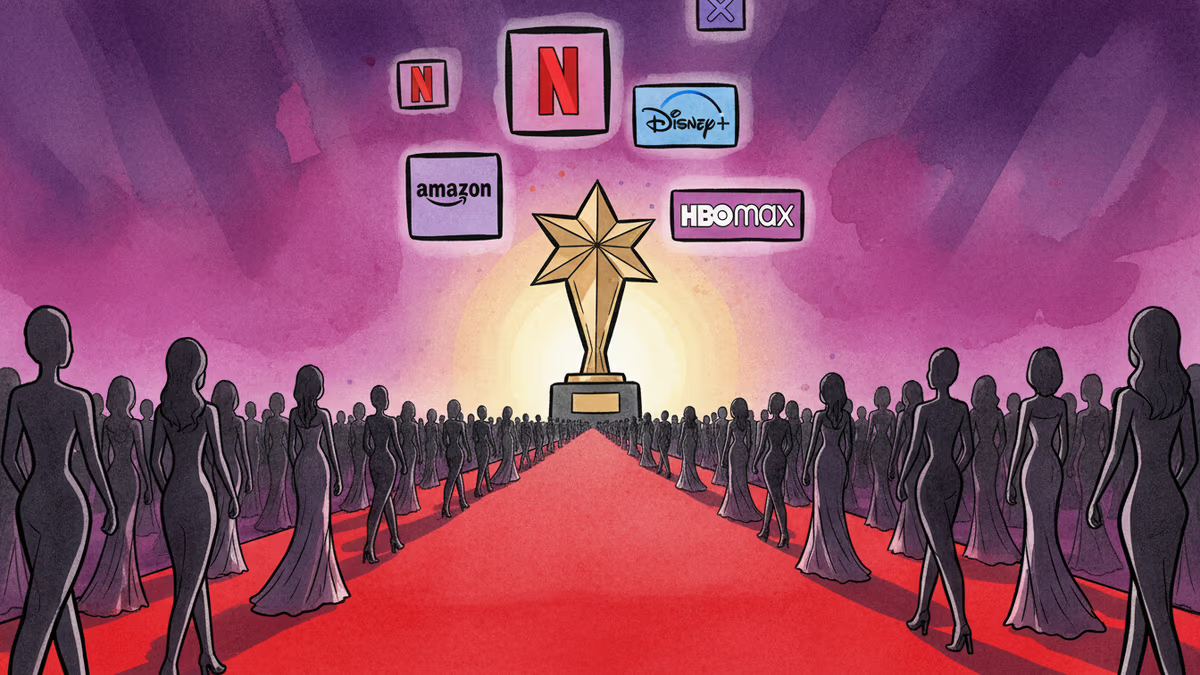
The 62nd Baeksang Arts Awards convened at COEX on May 8, 2026. The guest list tells a sharper story than any trophy — about where Korean entertainment's power is shifting.
Lim Ji-yeon-led My Royal Nemesis reportedly hit No. 1 on Netflix's global non-English chart in its opening week. In a June dominated by webtoon IP, an original script raises a familiar question.
Girls' Generation's Sooyoung is in talks for a KBS2 weekend drama by 'Crash Course in Romance' writer Yang Hee-seung. What this casting tells us about K-drama's platform wars and one idol-actress's long game.
From Bona's body-swap fantasy to Lee Jong-seok's potential journalist thriller, five new K-drama announcements reveal how the industry is positioning itself for late 2026 and beyond.
The 62nd Baeksang Arts Awards convened at COEX on May 8, 2026. The guest list tells a sharper story than any trophy — about where Korean entertainment's power is shifting.
Thoughts
Share your thoughts on this article
Sign in to join the conversation