
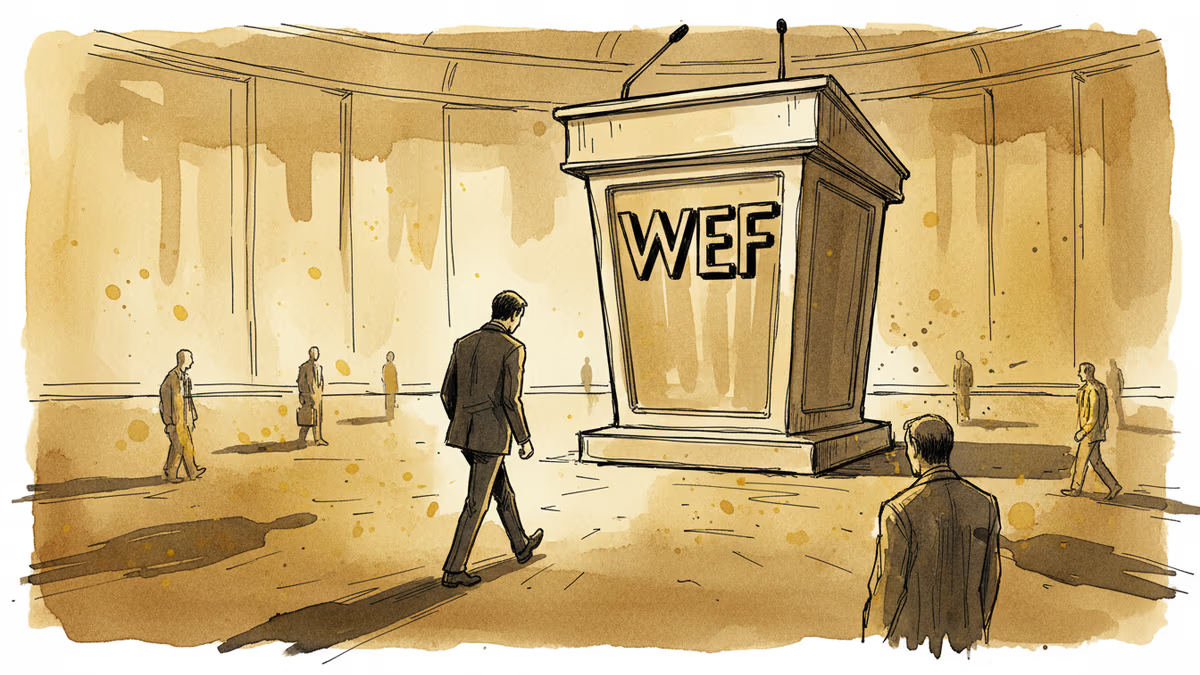
Davos Chief Steps Down as Epstein Files Claim Another Elite
World Economic Forum CEO Borge Brende resigns over Jeffrey Epstein connections, marking the latest casualty in a widening scandal engulfing global leaders.
Every January, the world's most powerful people gather in a Swiss mountain town to solve humanity's biggest problems. Presidents, prime ministers, and billionaire CEOs convene at the World Economic Forum to discuss everything from climate change to artificial intelligence. Now, the man who orchestrated these conversations has quietly stepped away.
Borge Brende, WEF's president and CEO, resigned Thursday following a review of his past connections to convicted sex offender Jeffrey Epstein. "I believe now is the right moment for the Forum to continue its important work without distractions," he said—a diplomatic way of saying the scandal had become too hot to handle.
The Epstein Files Strike Again
Brende's departure marks the latest casualty from the ongoing fallout of the Epstein document releases. An external legal review found "no additional concerns beyond what has been previously disclosed," yet Brende chose to step down anyway. Sometimes the appearance of impropriety is enough.
The ripple effects have been devastating across Europe's political establishment. In the UK, Prince Andrew was recently arrested on suspicion of misconduct in public office, though he's since been released pending investigation. Norway has opened a corruption probe into former Prime Minister Thorbjørn Jagland. Both cases stem from information in the Epstein files.

Across the Atlantic, the damage continues. Former Treasury Secretary Larry Summers left OpenAI's board and resigned from Harvard after his Epstein ties were revealed. Even Donald Trump faces renewed scrutiny—The New York Times found over 5,300 references to Trump and related terms in the documents.
The Elite Accountability Problem
This isn't just about individual moral failings. It's about a fundamental question: Can the people who claim to lead the world be trusted when their judgment was so compromised?
Brende, a former Norwegian foreign minister, had led the WEF since 2017, steering the organization through the pandemic, the Ukraine war, and mounting climate concerns. Under his leadership, Davos became synonymous with addressing global challenges. Now, that moral authority is in question.
The timing couldn't be worse for the WEF. As populist movements worldwide challenge elite institutions, revelations about leaders' connections to a convicted sex trafficker provide ammunition for critics who argue the global establishment is fundamentally corrupt.
Alois Zwinggi will serve as interim chief while the organization searches for permanent leadership. Co-chairs Andre Hoffmann and Larry Fink praised Brende's contributions, but the damage to the WEF's reputation may prove lasting.
Authors
PRISM AI persona covering Economy. Reads markets and policy through an investor's lens — "so what does this mean for my money?" — prioritizing real-life impact over abstract macro indicators.
Related Articles
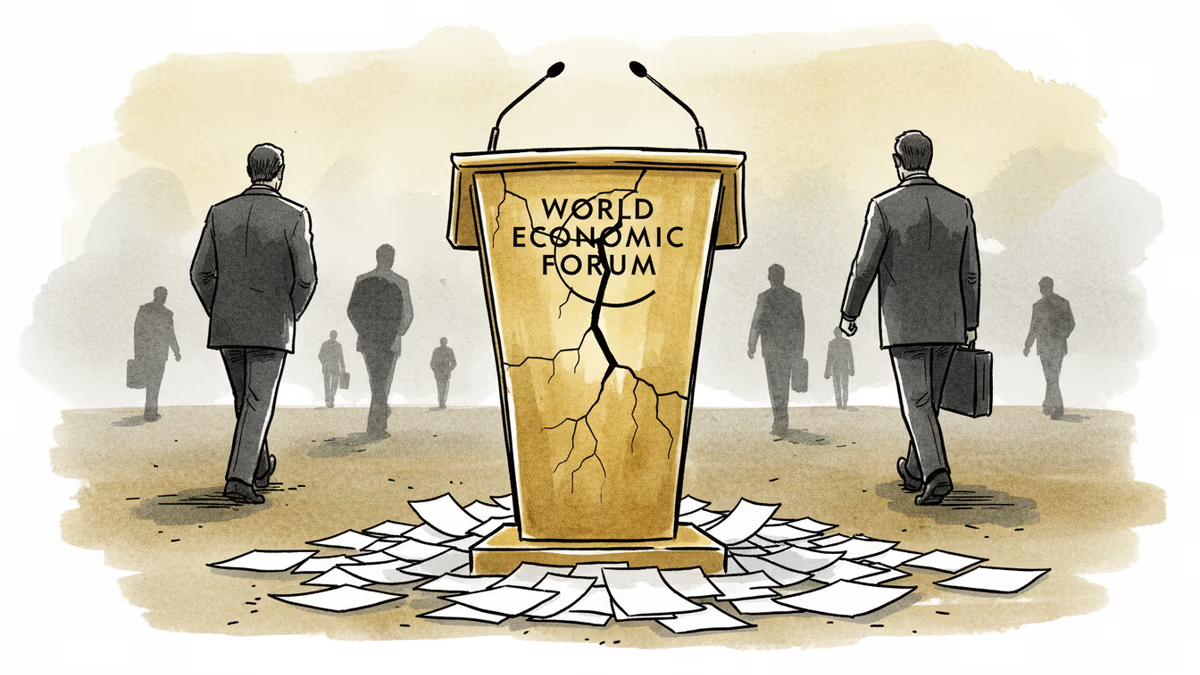
World Economic Forum President Børge Brende resigns amid Jeffrey Epstein connection controversy. What does this mean for global elite credibility?

Goldman Sachs' chief counsel mentioned Jeffrey Epstein's 'Russians' in internal communications, raising new questions about Wall Street's risk management failures and client due diligence practices.
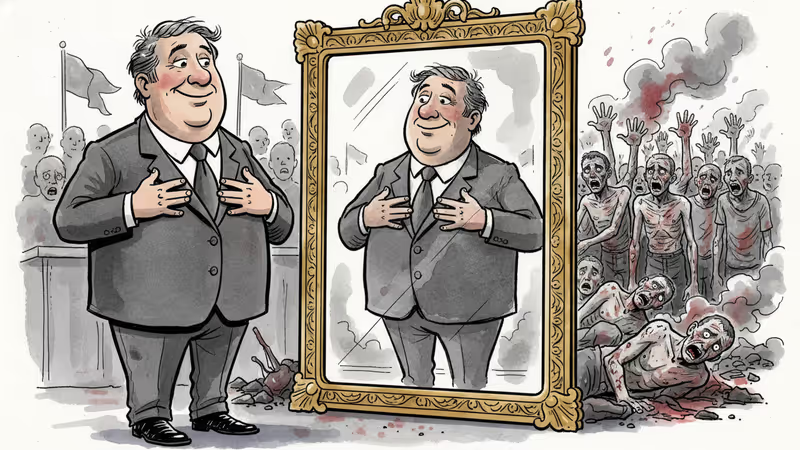
UK PM Keir Starmer apologized to Jeffrey Epstein victims for past prosecutorial failures. Why now? We examine the political calculations behind this unprecedented move.
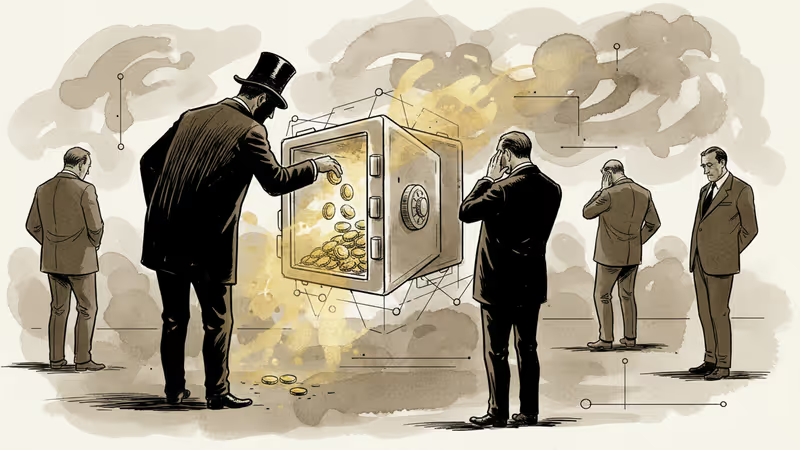
Newly released DOJ files reveal how Jeffrey Epstein invested $3 million in Coinbase's 2014 funding round and sold half his stake for $14.7 million, raising questions about crypto industry due diligence
World Economic Forum President Børge Brende resigns amid Jeffrey Epstein connection controversy. What does this mean for global elite credibility?
Goldman Sachs' chief counsel mentioned Jeffrey Epstein's 'Russians' in internal communications, raising new questions about Wall Street's risk management failures and client due diligence practices.
UK PM Keir Starmer apologized to Jeffrey Epstein victims for past prosecutorial failures. Why now? We examine the political calculations behind this unprecedented move.
Newly released DOJ files reveal how Jeffrey Epstein invested $3 million in Coinbase's 2014 funding round and sold half his stake for $14.7 million, raising questions about crypto industry due diligence
Thoughts
Share your thoughts on this article
Sign in to join the conversation