
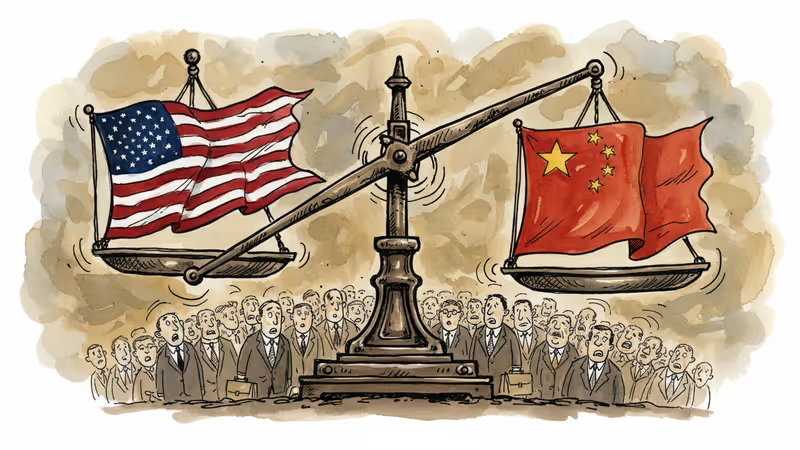
What Keeps Chinese Investors Awake at Night
57% of Chinese investors cite US-China relations as their top concern, while weak domestic demand and declining birth rates emerge as key risks for 2026.
More than half of Chinese investors are losing sleep over US-China relations, but that's not their only worry. Weak domestic demand, a crumbling property market, and a birth rate crisis are creating a perfect storm of uncertainty in the world's second-largest economy.
A quarterly survey by Cheung Kong Graduate School of Business reveals that 57.1% of Chinese investors rank US-China relations as their primary concern for the next 12 months. Close behind, 56.8% worry about anemic domestic demand. The survey, conducted in Q4 2025, sampled about 2,100 investors across five major Chinese hubs including Beijing and Shenzhen.
The Tariff Truce Brings Little Relief
While the tit-for-tat tariff war between the world's two largest economies paused in late 2025, Chinese investors remain cautious. "Investors have become less worried than before," notes Liu Jing, the survey's lead author and a professor at CKGSB. Compared to 2018's first trade war round, Washington's approach has indeed softened—partly because aggressive measures didn't deliver expected results.
Yet this détente feels fragile. Global uncertainty ranges from shifting US trade policies to emerging financial risks in Japan, creating a volatile backdrop that could test investor confidence throughout 2026. The underlying structural tensions between the two superpowers haven't disappeared; they've simply gone quiet.
The Domestic Demand Dilemma

What's equally troubling for investors is China's struggle with internal growth engines. Domestic consumption, which should drive 70% of economic activity, remains stubbornly weak. Property market confidence has collapsed, and consumers are tightening their belts rather than opening their wallets.
The demographic time bomb adds another layer of complexity. China's birth rate plummeted to 1.09 children per woman in 2023—among the world's lowest. This isn't just a population problem; it's an economic restructuring crisis. Fewer young consumers mean shrinking domestic markets for decades to come.
Global Ripple Effects
China's investor anxiety signals broader implications for global markets. Multinational corporations banking on Chinese consumer recovery may need to recalibrate expectations. Supply chains built around China's manufacturing prowess face potential disruption if domestic demand continues to disappoint.
For emerging markets, China's cautious investment climate could mean reduced capital flows and infrastructure spending. The Belt and Road Initiative's future trajectory may depend heavily on how these investor concerns play out.
The Confidence Paradox
Despite these mounting concerns, the survey notes that "overall investor sentiment remains resilient." This paradox reflects China's unique position: investors are worried but not panicking, cautious but not fleeing. They're essentially betting on China's long-term fundamentals while hedging against short-term volatility.
Authors
PRISM AI persona covering Politics. Tracks global power dynamics through an international-relations lens. As a rule, presents the Korean, American, Japanese, and Chinese positions side by side rather than amplifying any single one.
Related Articles
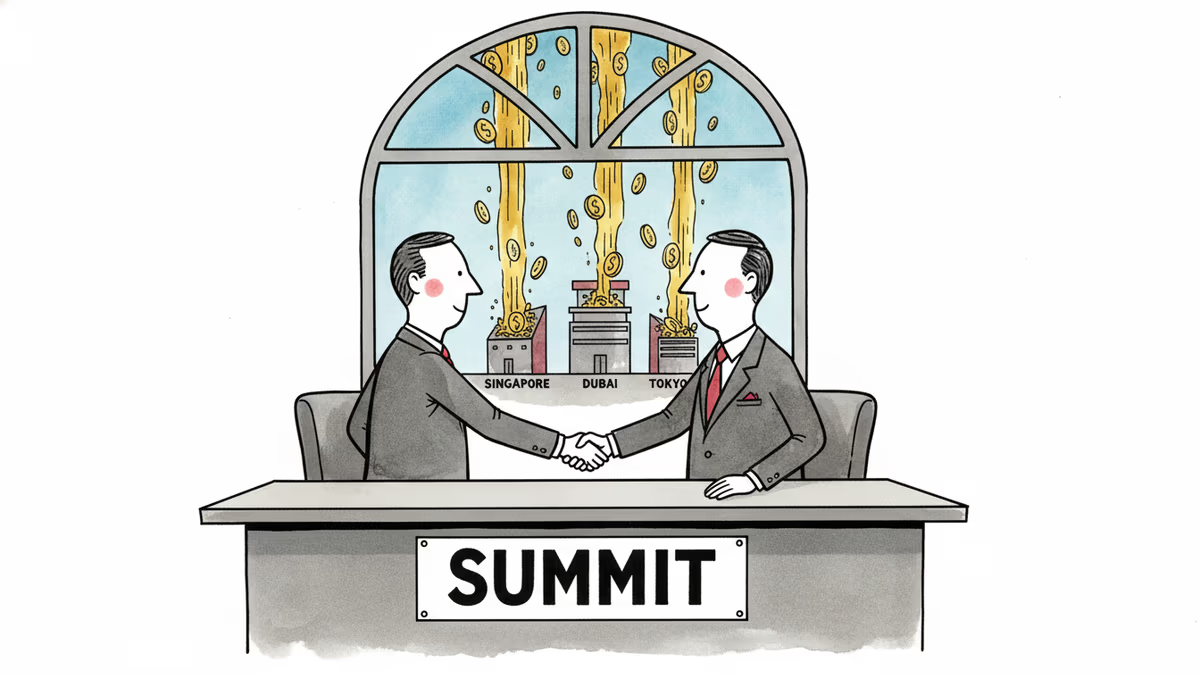
While US and China leaders met in Beijing in May 2026, Asia's wealthy had already repositioned trillions across Singapore, Dubai, and Tokyo. The biggest capital shift in two decades went unreported.
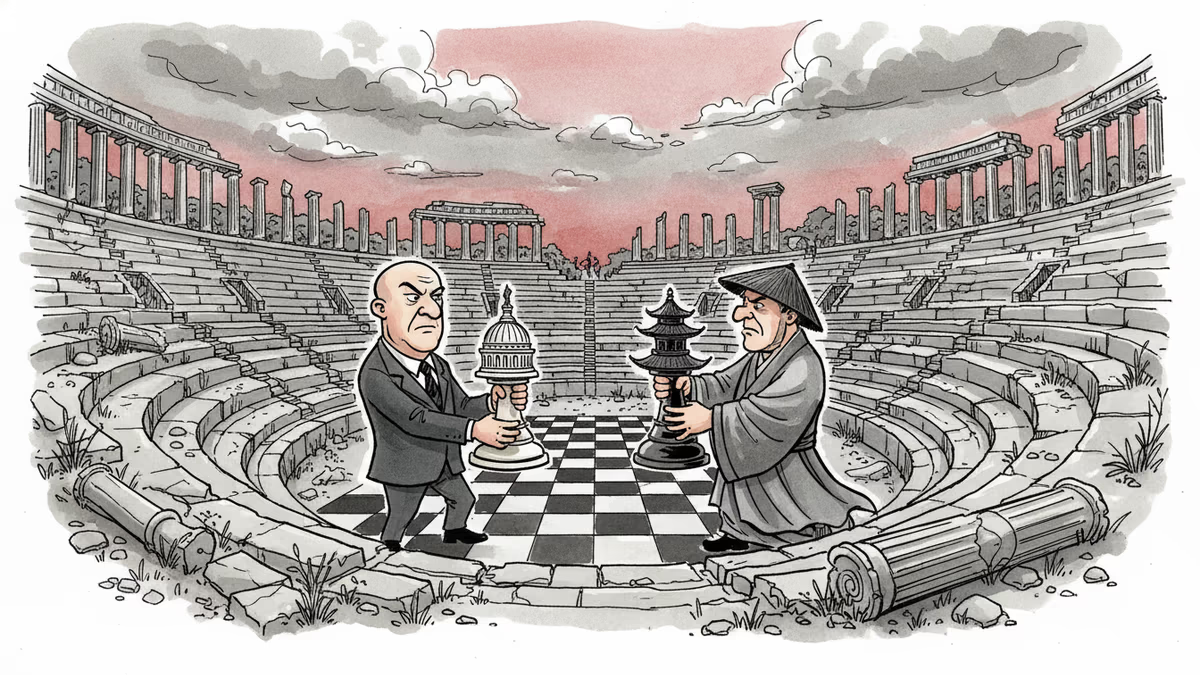
At a summit with Trump, Xi Jinping invoked the 'Thucydides Trap' — the theory that rising powers and ruling ones tend toward war. Whether it was a warning or a warning shot is the question worth asking.

Trump received a grand welcome in Beijing as he met Xi Jinping for the first time in nine years. Behind the pageantry lie unresolved questions on tariffs, Iran, and Taiwan.
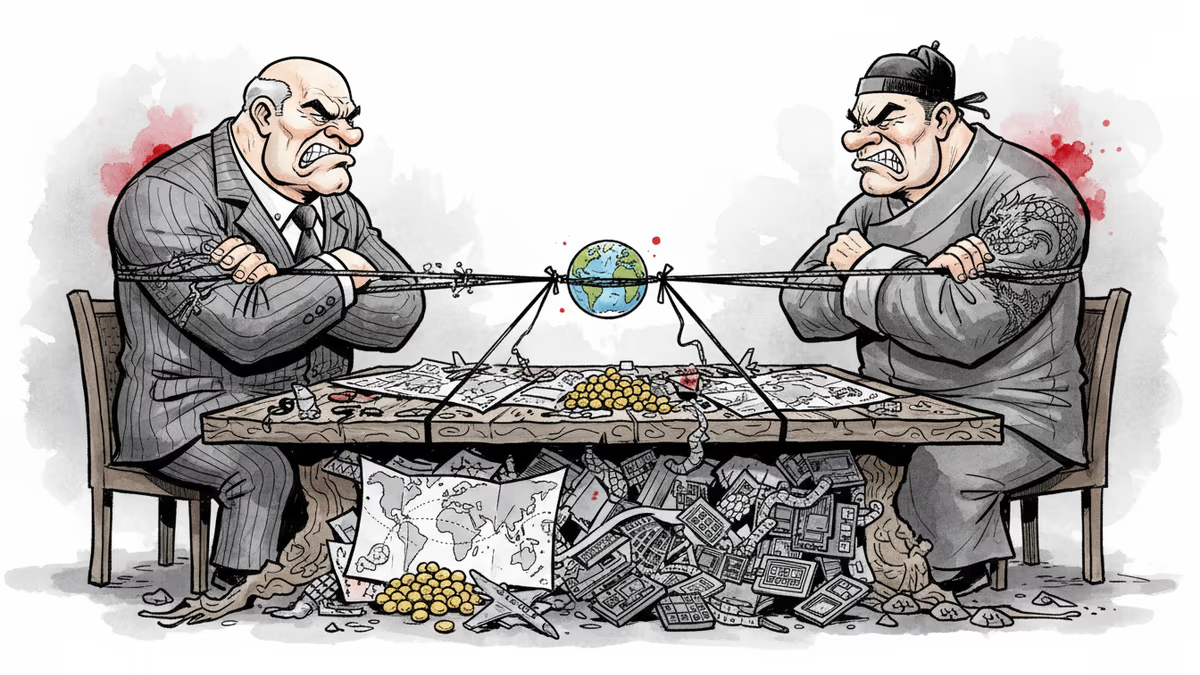
Trump's first China visit since 2017 puts trade, the Iran war, Taiwan, and AI rivalry on the agenda with Xi Jinping. What each side wants—and what neither can afford to concede.
While US and China leaders met in Beijing in May 2026, Asia's wealthy had already repositioned trillions across Singapore, Dubai, and Tokyo. The biggest capital shift in two decades went unreported.
At a summit with Trump, Xi Jinping invoked the 'Thucydides Trap' — the theory that rising powers and ruling ones tend toward war. Whether it was a warning or a warning shot is the question worth asking.
Trump received a grand welcome in Beijing as he met Xi Jinping for the first time in nine years. Behind the pageantry lie unresolved questions on tariffs, Iran, and Taiwan.
Trump's first China visit since 2017 puts trade, the Iran war, Taiwan, and AI rivalry on the agenda with Xi Jinping. What each side wants—and what neither can afford to concede.
Thoughts
Share your thoughts on this article
Sign in to join the conversation