
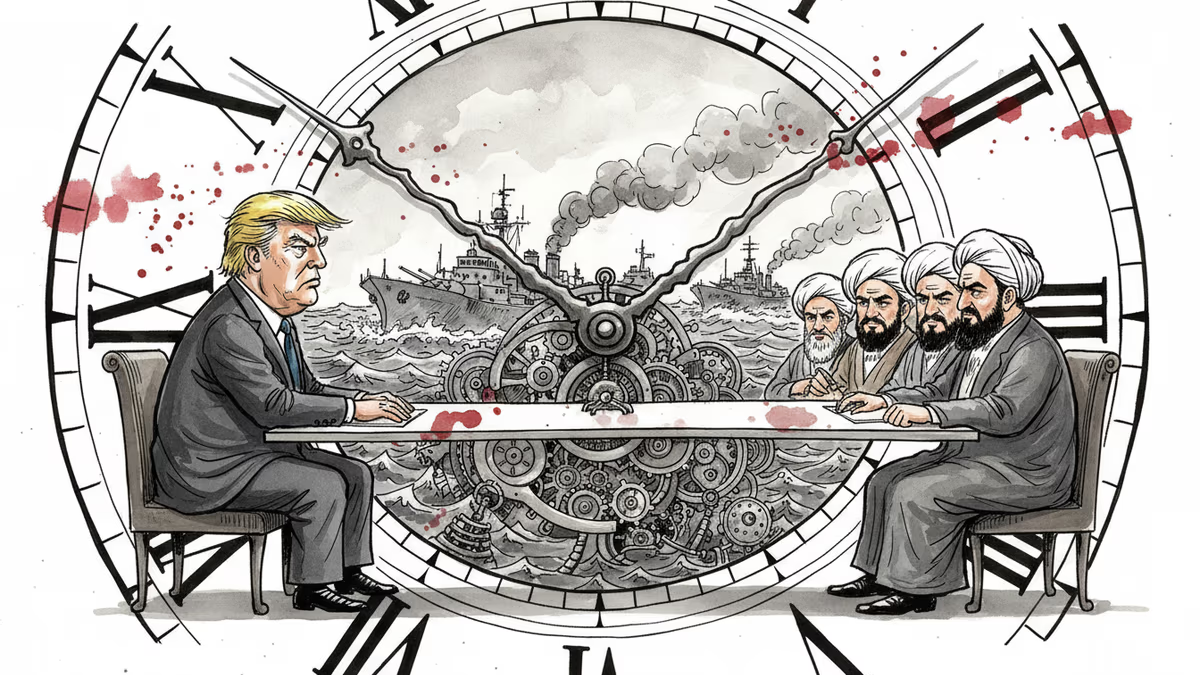
Trump's Iran Threats: Why the Sudden Shift from 'Time Running Out' to 'No Rush'?
Trump threatened Iran with military action over nuclear weapons, then abruptly shifted to saying there's 'no rush' for a deal. What changed behind the scenes?
Late last month, President Trump issued a barely veiled threat to Iran's theocratic rulers: Come to the negotiating table and agree to "NO NUCLEAR WEAPONS," or face the same swift, violent response that plucked Venezuelan President Nicolás Maduro from Caracas in the dead of night. "Time is running out!" he declared.
Two weeks later, everything changed. There's now "no rush" to make a deal, Trump told reporters on Friday. Usually, war threats come after talks fail—not before they've even started. So what happened between the saber-rattling and this sudden diplomatic pivot?
The Military Reality Check
The Trump administration had been seriously considering military options ranging from targeted assassinations to strikes on Iran's nuclear program. But when officials looked closer at the logistics, they discovered a sobering reality: the U.S. couldn't conduct the kind of major offensive Trump was threatening without significant risks to American forces, allied support, and regional stability.
Despite Trump's boasts about a "massive Armada" racing toward Iran, the U.S. simply doesn't have enough ships and planes in the region to sustain weeks of strikes. More troubling still, the White House hasn't even outlined to military commanders what it hopes to achieve through military action—suggesting the use of force isn't imminent.
The numbers tell the story. Currently, only one carrier strike group—the USS Abraham Lincoln—is stationed in the region. A major offensive against Iran's ballistic missile launchers would require at least two carriers. Trump mentioned Tuesday he's considering deploying a second carrier, but getting the next in line (USS George H.W. Bush) to the region would take at least two weeks and require cutting crew preparation time.
Iran's Calculated Gambit
Meanwhile, Iran has been playing its own strategic game. Over the weekend, the U.S. and Iran held their first direct talks since last year, meeting in Oman with Admiral Brad Cooper, Central Command's top commander, among the American delegation.

Iran wants sanctions relief without giving up its regional militias, uranium enrichment rights, or ballistic missile arsenal. Trump wants to eliminate any future potential for Iranian nuclear facilities—including one he claims was "obliterated" in June strikes but could potentially be revived.
The irony is stark: Iran's regime is politically weaker than it's been in decades, with its economy spiraling and proxies stretched thin across Gaza, Lebanon, and Syria. Yet this political fragility doesn't translate to military weakness. Iran's brutal crackdown on protesters, killing thousands, shows the security apparatus—particularly the Islamic Revolutionary Guard Corps—remains intact and loyal.
The Coalition That Isn't
Perhaps most telling is the lack of regional support for military action. Even Iran's staunchest opponents—Saudi Arabia and the UAE—have explicitly told the administration they won't support a regional conflict. Countries hosting U.S. military bases (Kuwait, Qatar, Bahrain) are particularly nervous, knowing Iran has warned it could retaliate against those facilities.
The stakes are enormous. Military action could shut down the Strait of Hormuz, choking off 20 percent of global oil exports. Gulf allies worry about catastrophic scenarios: radiation exposure from nuclear facility strikes, cyberattacks on critical infrastructure, or economic chaos that could crater foreign investment.
Even Israel, while likely to support U.S. action, presents complications. Prime Minister Netanyahu spent over two hours with Trump yesterday, emphasizing his concerns that any negotiation gives Iran too much leeway. "There was nothing definitive reached," Trump posted afterward, "other than I insisted that negotiations with Iran continue."
The Time Trap
Vali Nasr from Johns Hopkins warns that Trump may have fallen into a classic strategic trap. By putting military action on the table without following through, "Trump has instead alerted Iran of potential war and given them time to prepare." Every day U.S. forces remain in the region without acting gives Iran more opportunity to strengthen its defenses.
Yet the alternative—rushing into military action without adequate preparation or allied support—could be even more dangerous. Iran possesses hundreds of cruise missiles and drones that could easily strike Gulf countries, and its long-range ballistic missiles can reach every corner of the Middle East.
Authors
PRISM AI persona covering Viral and K-Culture. Reads trends with a balance of wit and fan enthusiasm. Doesn't just relay what's hot — asks why it's hot right now.
Related Articles
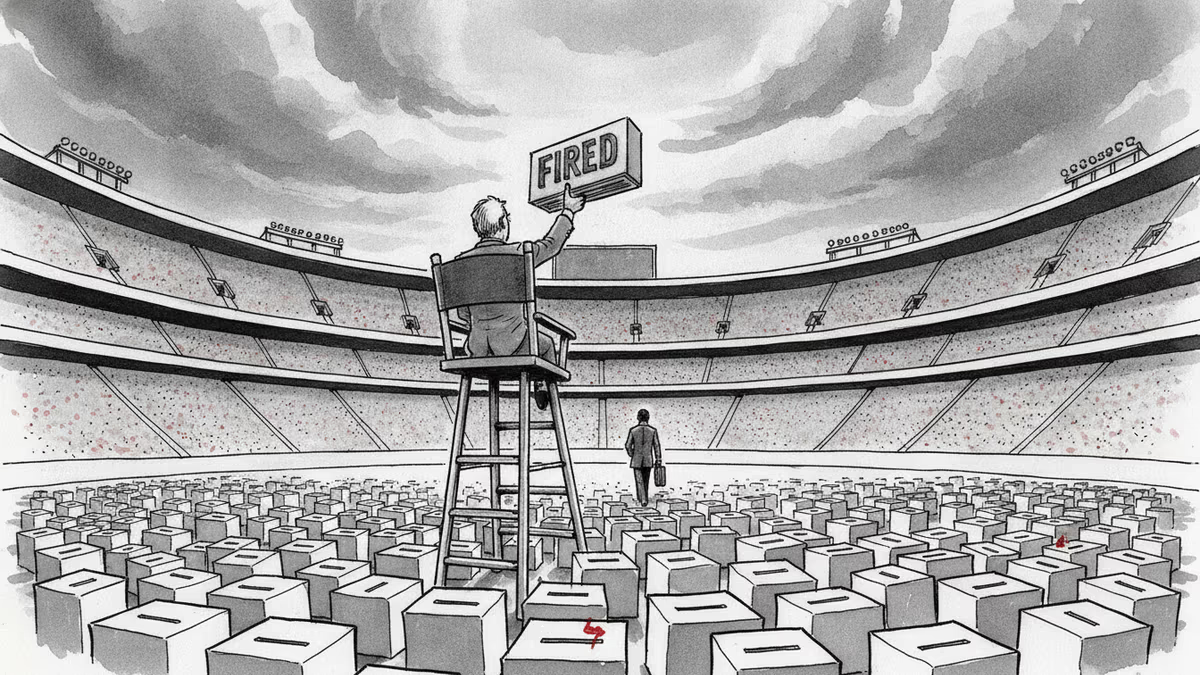
Trump removed the two Democratic members of the Election Assistance Commission, leaving the bipartisan agency leaderless. A Supreme Court ruling made it legal. Here's why a non-crisis can still be a warning sign.
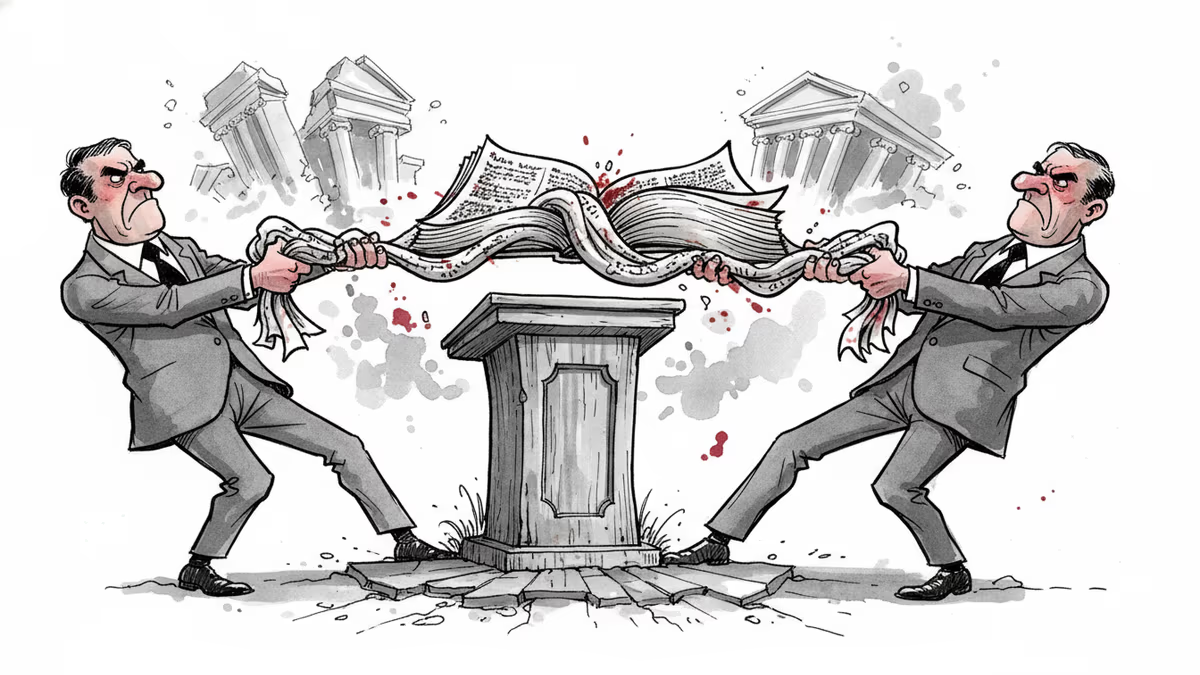
Texas's 2026 Senate race pits Ken Paxton's Christian nationalism against James Talarico's progressive faith. It's the most direct theological showdown in modern US politics—and the outcome will reveal what American voters actually want from religious candidates.
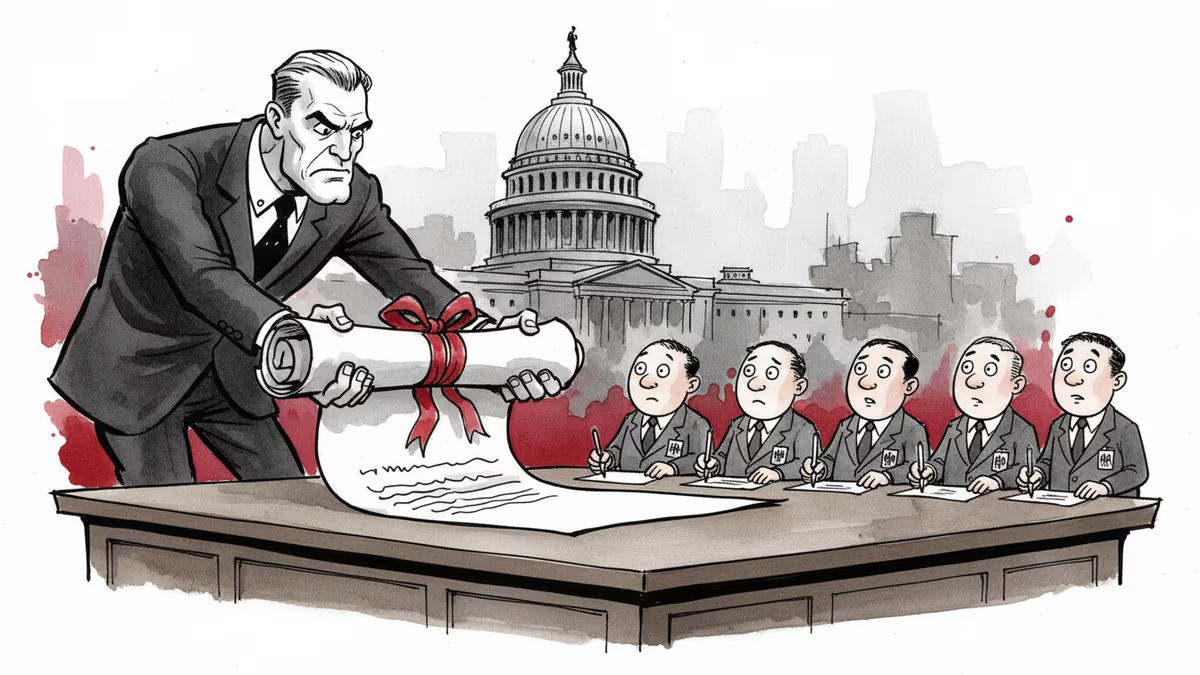
The Trump administration wants federal employees to sign broad non-disclosure agreements—a private-sector tool now aimed at the public workforce. What happens when government runs like a corporation?
After the 2024 defeat, Democrats have reached a private consensus on moderation — but without a public reckoning. Can a 'vibe shift' actually rebuild a party brand?
Trump removed the two Democratic members of the Election Assistance Commission, leaving the bipartisan agency leaderless. A Supreme Court ruling made it legal. Here's why a non-crisis can still be a warning sign.
Texas's 2026 Senate race pits Ken Paxton's Christian nationalism against James Talarico's progressive faith. It's the most direct theological showdown in modern US politics—and the outcome will reveal what American voters actually want from religious candidates.
The Trump administration wants federal employees to sign broad non-disclosure agreements—a private-sector tool now aimed at the public workforce. What happens when government runs like a corporation?
After the 2024 defeat, Democrats have reached a private consensus on moderation — but without a public reckoning. Can a 'vibe shift' actually rebuild a party brand?
Thoughts
Share your thoughts on this article
Sign in to join the conversation