
The Half-Second Before Touch: How K-Drama Manufactures Tension
The 'reaching for the top shelf' trope isn't just fan service—it's a production logic, a global distribution strategy, and a gender grammar that K-dramas have refined over two decades.
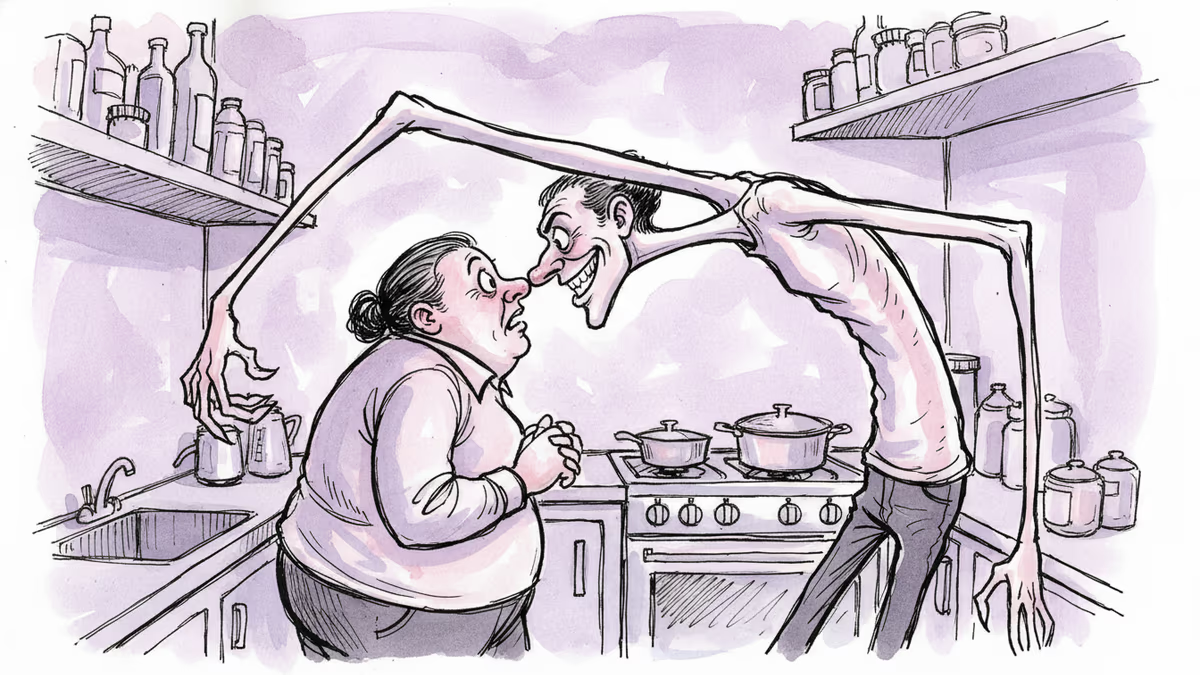
Two people. One room. An arm reaches past a shoulder toward a shelf neither character actually needs anything from. The bodies hover at zero-point-five seconds of almost-contact—and every K-drama fan in the world knows exactly what comes next.
Dramabeans' ongoing 'K-Drama Treasure Hunt' series catalogs exactly these moments: the oppa applying a Band-Aid, the convenient deadly allergy, and now the reach-over-the-shoulder skinship. They're all variations on the same production problem—how do you convey intimacy without showing it directly? The answer K-dramas settled on two decades ago is still running in 2026, and the reasons it persists go well beyond fan nostalgia.
The Economics of the Almost-Touch
Romance tropes aren't failures of imagination. They're risk management in narrative form. A scene with a proven emotional return is a predictable asset in a medium where audience retention is measured by the minute.
Since Netflix and domestic platforms like Tving began publishing granular viewing data—rewatch rates, drop-off points, pause-and-rewind segments—production teams have had numerical confirmation of what editors long suspected: scenes of suspended anticipation outperform scenes of resolution. The moment before the kiss generates more replays than the kiss itself. The 'top shelf reach' is a machine for producing exactly that suspension.
Dramabeans readers cataloging these tropes are, without quite meaning to, doing the same work as a platform's data team—identifying which beats produce the strongest engagement. The difference is that fan taxonomies feed back into production. Once a trope is named and circulated widely enough, it stops being an unconscious device and becomes an expected code. Writers then face a choice: deploy it earnestly, subvert it visibly, or quote it ironically. All three approaches are currently running simultaneously across the 2026 K-drama slate.
Gender Architecture and the Body in Space

The 'top shelf' scene has a default geometry: taller man, shorter woman, the male figure's arm creating a temporary enclosure. This spatial arrangement traces back to the trendy drama era of the late 1990s—《Star in My Heart》, 《Stairway to Heaven》—where physical dominance coded as romantic protection rather than intrusion.
What's shifted since roughly 2022 is that this geometry is no longer the only available configuration. 《Extraordinary Attorney Woo》 and the quieter physical vocabulary of 《My Mister》-era dramas introduced proximity without enclosure. Male leads who step back rather than lean in. Women who initiate the spatial breach. The trope hasn't disappeared, but it's acquired visible alternatives—which means its continued use is now a choice rather than a default.
There's also a structural reason the 'almost-touch' format survives the global streaming era intact: it travels. A scene that implies rather than depicts physical intimacy clears content guidelines across Southeast Asia, the Middle East, and Eastern Europe simultaneously. The trope is, among other things, a distribution strategy. What reads as charming restraint in Seoul is also what gets the show onto a Netflix regional front page in Jakarta.
When Fans Name the Trope, What Happens to It?
The history of K-drama trope lifecycles offers a useful case study. The kabedon (壁ドン)—the wall-slam lean-in borrowed from Japanese shōjo manga—entered Korean drama vocabulary around 2014–2015. Fan communities named it, cataloged it, made compilation videos. By 2018–2019, it had migrated into car commercials and convenience store ads. The tension had been fully extracted; what remained was a gesture emptied of charge.
The 'top shelf reach' is currently in an earlier phase of that cycle—widely recognized by engaged fans but not yet fully metabolized by mainstream parody. Whether it follows the kabedon into exhaustion or mutates into something with renewed tension depends partly on how writers respond to the fan taxonomy being built around it right now.
The more interesting question isn't whether the trope survives, but what replaces the function it serves. Every era of K-drama romance has needed a mechanism for the pre-contact beat—the moment that concentrates attention before resolution disperses it. The specific physical staging changes; the narrative need doesn't.
This content is AI-generated based on source articles. While we strive for accuracy, errors may occur. We recommend verifying with the original source.
Related Articles
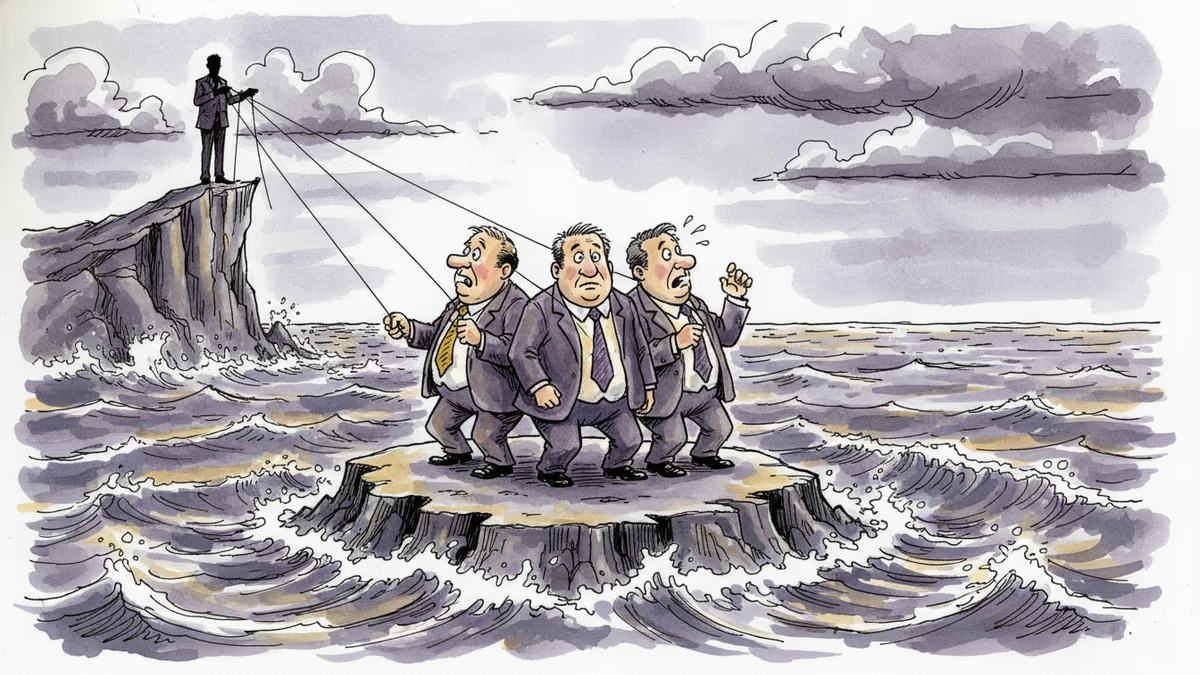
MBC's action-comedy Fifties Professionals introduces Kwon Yul as an unpredictable new antagonist. Here's why this drama's premise matters beyond the casting news.
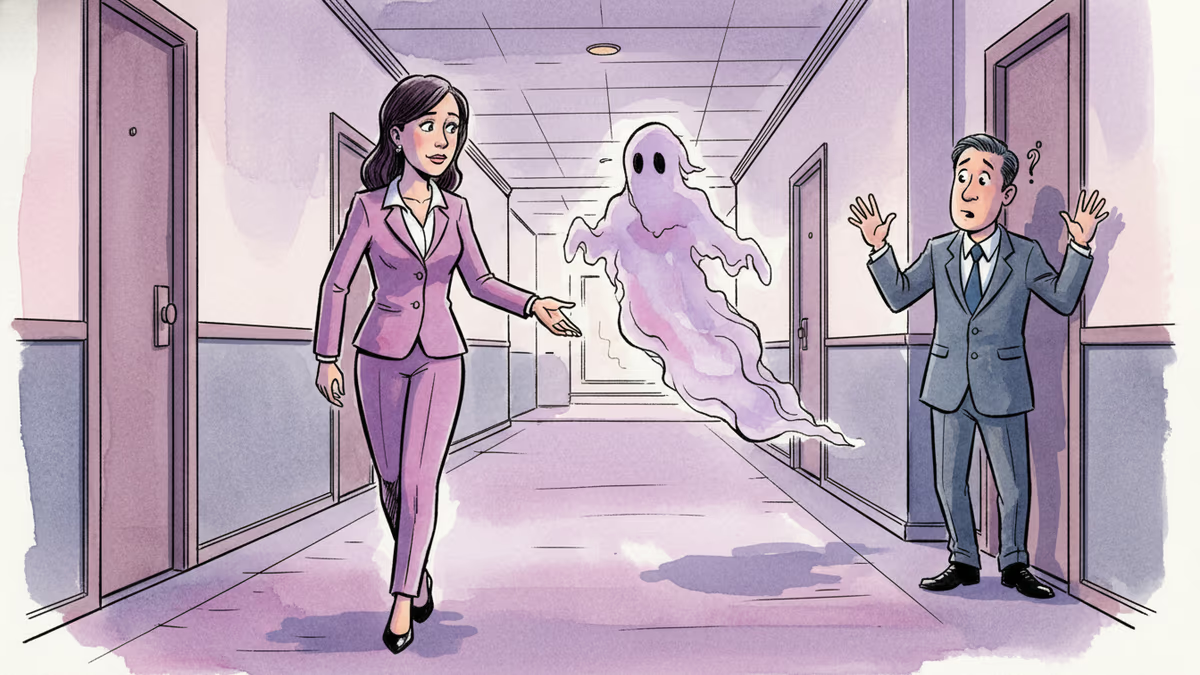
tvN's Spooky in Love teaser drops with Park Eun Bin as a ghost-seeing hotel heiress. Behind the occult romance lies a calculated industry strategy worth unpacking.
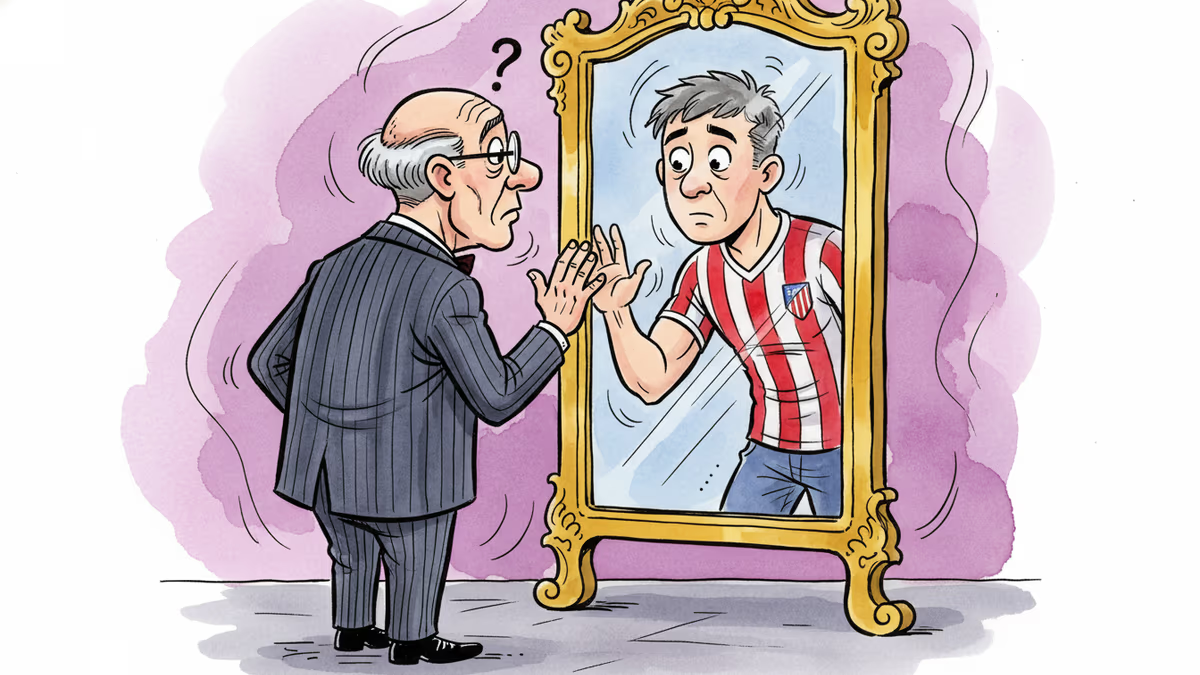
JTBC's Reborn Rookie pairs veteran actor Son Hyun Joo with idol-turned-actor Lee Jun Young in a body-swap drama. A look at the genre's industrial logic and what it signals about Korean TV's audience strategy.
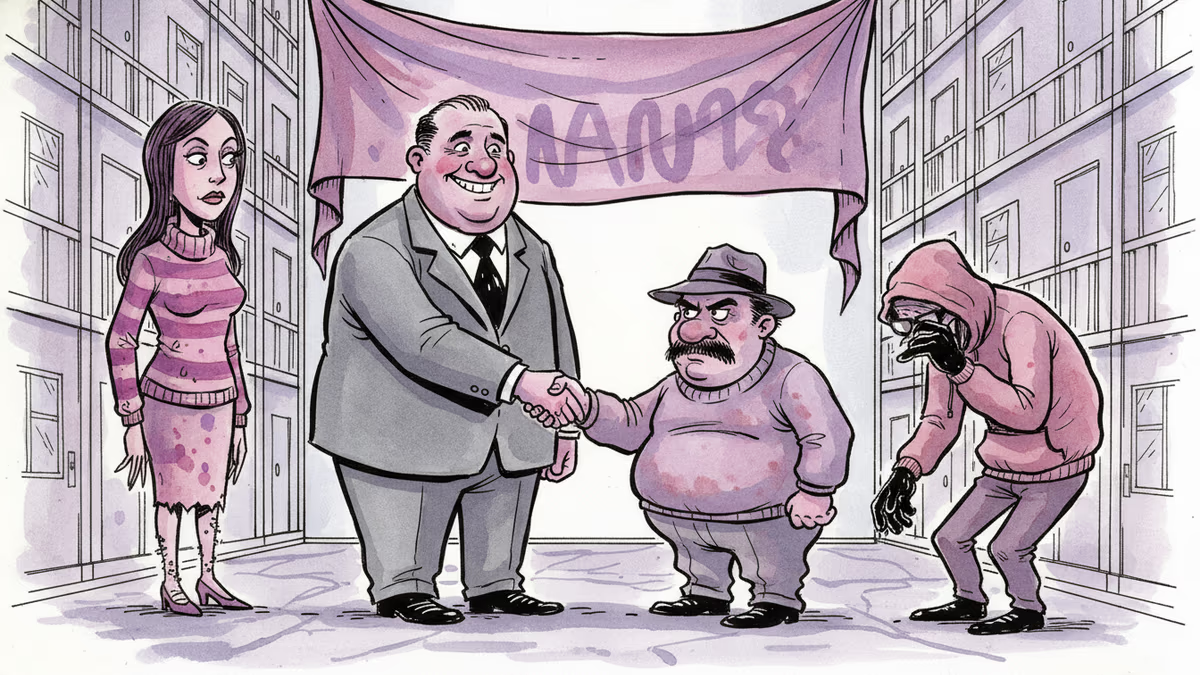
JTBC's upcoming comedy crime drama Apartment casts Ji Sung, Ha Yoon-kyung, Park Byung-eun, and Moon Sori in a story where an ex-gangster enters a residents' committee election. What does the project reveal about JTBC's 2026 strategy?
MBC's action-comedy Fifties Professionals introduces Kwon Yul as an unpredictable new antagonist. Here's why this drama's premise matters beyond the casting news.
tvN's Spooky in Love teaser drops with Park Eun Bin as a ghost-seeing hotel heiress. Behind the occult romance lies a calculated industry strategy worth unpacking.
JTBC's Reborn Rookie pairs veteran actor Son Hyun Joo with idol-turned-actor Lee Jun Young in a body-swap drama. A look at the genre's industrial logic and what it signals about Korean TV's audience strategy.
JTBC's upcoming comedy crime drama Apartment casts Ji Sung, Ha Yoon-kyung, Park Byung-eun, and Moon Sori in a story where an ex-gangster enters a residents' committee election. What does the project reveal about JTBC's 2026 strategy?
Thoughts
Share your thoughts on this article
Sign in to join the conversation