

Gunmen Abduct 28 Muslim Travelers in Central Nigeria Amid Rising Security Concerns
28 people were abducted in central Nigeria by armed gunmen demanding ransom. The incident highlights the country's ongoing kidnap-for-ransom crisis and comes amid international scrutiny over its security situation.
Armed men have abducted , including women and children, from a bus in central Plateau state, local police reported. The victims were traveling to an annual Islamic event on , when their vehicle was ambushed. A local journalist confirmed that families of the hostages have already begun receiving ransom demands, underscoring the financial motive behind the attack.
A Persistent 'Kidnap-for-Ransom' Industry
Police spokesperson Alabo Alfred stated that authorities have "deployed assets" to the area to secure the victims' release, but the perpetrators' identities remain unknown. The incident is characteristic of criminal gangs, known locally as "bandits," who have turned kidnapping into a lucrative enterprise across northern and central .
This abduction comes just a day after the release of from a separate mass kidnapping in neighboring Niger state last month. While paying ransoms is illegal, it's widely believed to be the most common method for resolving these cases. Officials have been quick to differentiate this criminal activity from the long-running Islamist insurgency in the country's northeast.
Domestic Insecurity and International Scrutiny
Nigeria's security crisis recently drew renewed international attention after former President Donald threatened to send troops to the country, alleging that Christians were being specifically targeted. The Nigerian federal government has acknowledged its security challenges but has consistently denied that any single religious group is being singled out.
On , Information Minister Mohammed Idris announced that recent tensions with Washington over the issue had been "largely resolved," leading to stronger bilateral relations. As part of its domestic response, he added that the government plans to deploy trained forest guards to secure remote areas used as hideouts by criminal groups, supplementing ongoing army operations.
Nigeria's government is fighting a war on two fronts: a kinetic one against bandits and an information war against international perceptions. Domestic failures like this kidnapping directly fuel external criticism, trapping the administration in a reactive cycle of domestic security promises and diplomatic damage control.
This content is AI-generated based on source articles. While we strive for accuracy, errors may occur. We recommend verifying with the original source.
Related Articles

A series of high-level visits by Japanese lawmakers to Taiwan is deepening ties with Taipei but risks further escalating tensions with Beijing, putting Prime Minister Sanae Takaichi's diplomacy to the test.
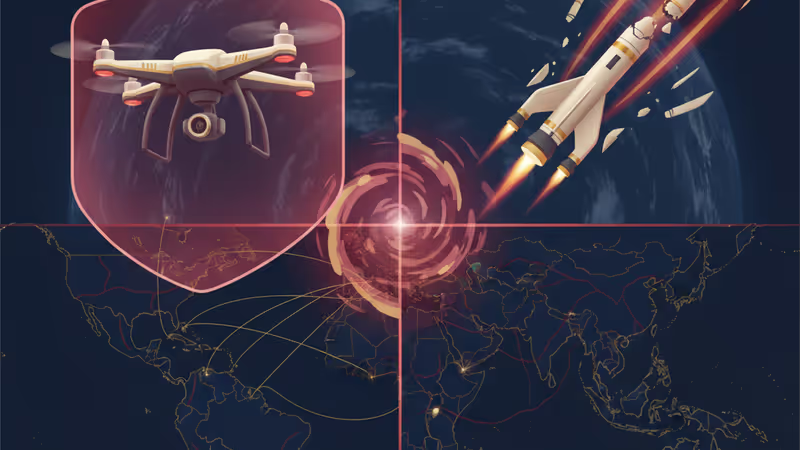
The US escalates its tech crackdown by blacklisting drone maker DJI, citing national security risks. Meanwhile, China suffers a major setback in its space program with a second failed reusable rocket recovery, highlighting the intensifying rivalry.

Advocates warn of an unprecedented plan to strip legal permissions from 1.6 million immigrants in the U.S. This analysis explores the scale, political context, and potential impact of the 'largest-ever' effort of its kind.
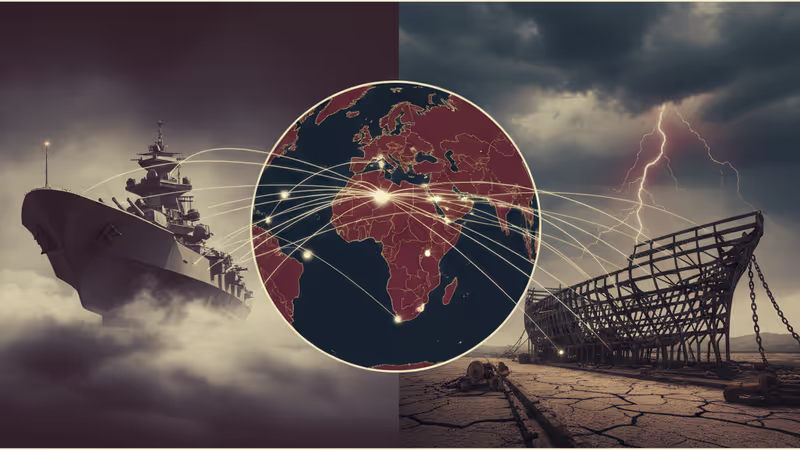
Donald Trump claims he will build the most powerful warship ever, but the promise clashes with the U.S. Navy's recent cancellation of a smaller ship due to cost overruns, raising questions about feasibility.
A series of high-level visits by Japanese lawmakers to Taiwan is deepening ties with Taipei but risks further escalating tensions with Beijing, putting Prime Minister Sanae Takaichi's diplomacy to the test.
The US escalates its tech crackdown by blacklisting drone maker DJI, citing national security risks. Meanwhile, China suffers a major setback in its space program with a second failed reusable rocket recovery, highlighting the intensifying rivalry.
Advocates warn of an unprecedented plan to strip legal permissions from 1.6 million immigrants in the U.S. This analysis explores the scale, political context, and potential impact of the 'largest-ever' effort of its kind.
Donald Trump claims he will build the most powerful warship ever, but the promise clashes with the U.S. Navy's recent cancellation of a smaller ship due to cost overruns, raising questions about feasibility.