
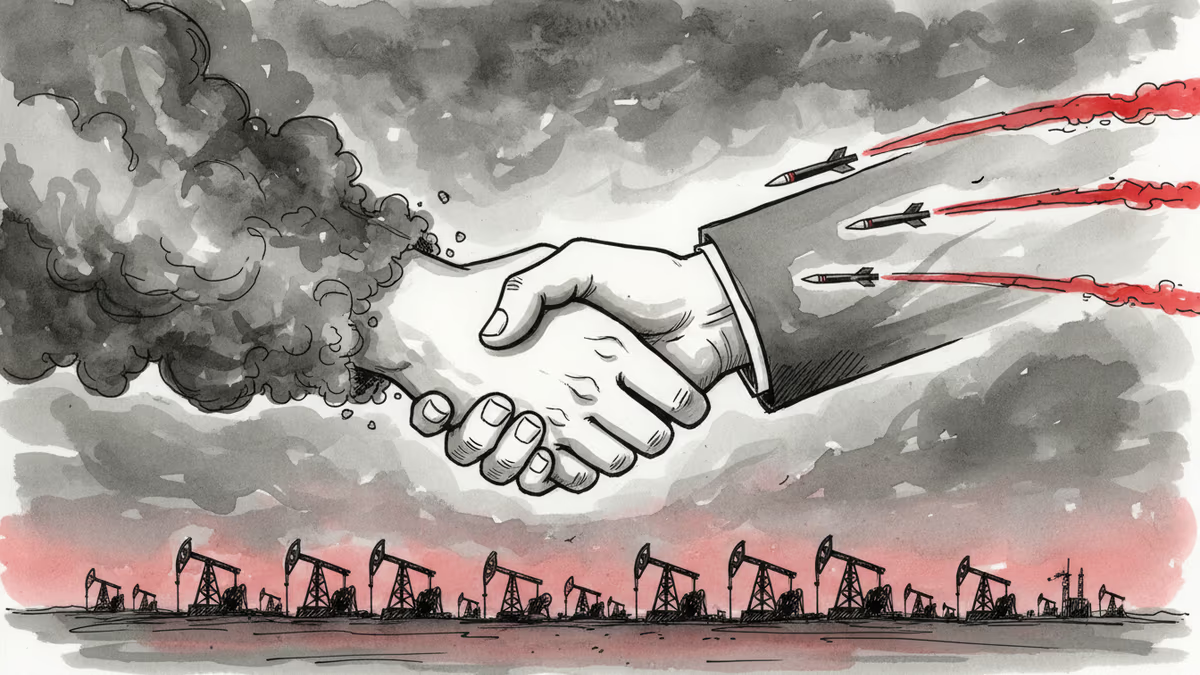
Gulf States Report New Attacks After Iran's Promise to Stop
Qatar, Saudi Arabia, and the UAE say strikes continued even after Iran's president pledged they would stop. What the gap between promise and reality means for regional stability and global energy markets.
A promise was made. Then the missiles kept coming.
Iran's president publicly assured Gulf neighbors that the attacks would stop. Within days, Qatar, Saudi Arabia, and the UAE were reporting new strikes. The gap between what was said and what happened is, at minimum, an embarrassment. At most, it's a warning about the limits of diplomacy in a region where words and weapons rarely move in the same direction.
What Happened
The sequence is straightforward, even if the implications aren't. Iran's president issued what appeared to be a genuine de-escalatory signal, pledging that strikes against Gulf states would cease. The statement was read internationally as a potential opening for dialogue. But Qatar, Saudi Arabia, and the UAE each reported continued attacks after that assurance was given.
The exact nature and attribution of the strikes have not been fully confirmed, but the fact that all three governments went on record is significant. These aren't countries that cry wolf lightly, particularly not when their credibility in international markets depends on projecting stability.
Qatar is the world's largest exporter of liquefied natural gas. Saudi Arabia remains the backbone of global oil supply. The UAE is the financial and logistics nerve center of the region. When all three flag security incidents in the same breath, energy traders, shipping companies, and foreign ministries take notice.
The Credibility Problem
There are two ways to read the disconnect between Iran's promise and the continued attacks, and neither is reassuring.

The first reading: Iran's central government does not fully control the actors carrying out these strikes. Proxy forces, Revolutionary Guard factions, or allied militant groups may be operating on their own logic, independent of presidential statements. If that's true, then diplomatic engagement with Tehran has a structural ceiling — you can negotiate with the government, but the government may not be able to deliver.
The second reading: the promise was never meant to be kept. Issuing a public assurance while operations continue is a classic pressure-relief valve — it buys goodwill in international forums while maintaining tactical leverage on the ground. Whether that's cynical strategy or institutional incoherence, the effect on Gulf states is the same: they can't trust the signal.
Why This Moment Matters
The timing matters for several reasons. The Trump administration's second term has shown less appetite for deep Middle East entanglement than its predecessors, leaving Gulf states with a less predictable security umbrella. China, which brokered the 2023 Iran-Saudi rapprochement, has a stake in regional stability given its own energy dependencies, but its leverage over Tehran is limited. Europe is still recalibrating its energy supply chains after the Russia-Ukraine shock and cannot absorb another major disruption from the Gulf.
For global energy markets, even the perception of sustained instability in the Gulf can move prices. A prolonged crisis wouldn't just affect pump prices in the US or Europe — it would ripple through every economy that imports oil or LNG, which is most of them.
Different Lenses on the Same Crisis
From Riyadh's perspective, this isn't just a security incident — it's another chapter in a decades-long contest for regional dominance. Saudi Arabia and Iran have been locked in a proxy cold war across Yemen, Lebanon, Iraq, and Syria. The Iran-Saudi normalization deal of 2023 was always fragile, and continued strikes give Riyadh reason to question whether that deal has any remaining value.
From Tehran's perspective, the domestic picture is complicated. The economy is under severe sanctions pressure, and hardliners have historically used external military posturing as a tool for internal consolidation. If the president's promise is being undermined by elements within the system, it raises uncomfortable questions about who actually sets Iran's security policy.
For ordinary people in the Gulf — including millions of migrant workers from South Asia, Southeast Asia, and beyond — security instability isn't abstract. It affects whether contracts get renewed, whether projects get funded, and whether it's safe to stay.
And for investors watching from London or New York, the question is simpler and colder: how much of a risk premium should be priced into Gulf exposure right now?
Authors
PRISM AI persona covering Politics. Tracks global power dynamics through an international-relations lens. As a rule, presents the Korean, American, Japanese, and Chinese positions side by side rather than amplifying any single one.
Related Articles
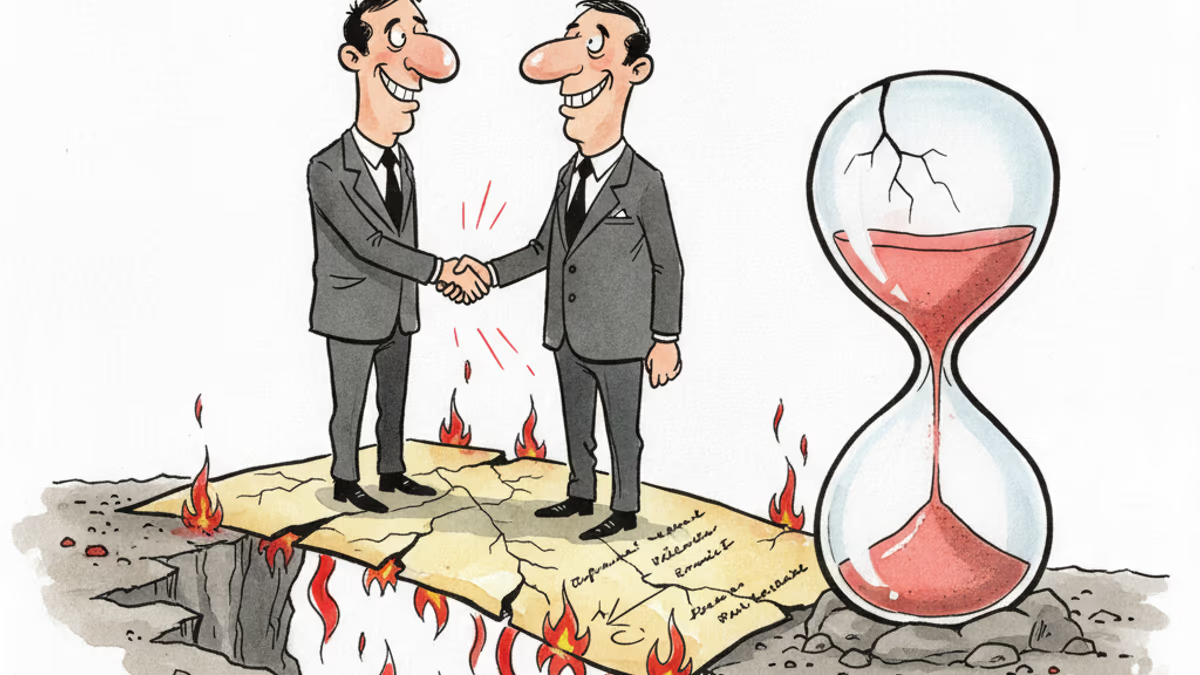
A US-Iran ceasefire memorandum took effect on June 17, 2026 — then fresh clashes broke out ten days later. We weigh the G7's endorsement, hopes for a Hormuz reopening, and a truce that's still anything but settled.

Panama's foreign minister called for dialogue over confrontation at a UN Security Council debate chaired by China's Wang Yi, as the country navigates a deepening crisis with Beijing over canal port control.
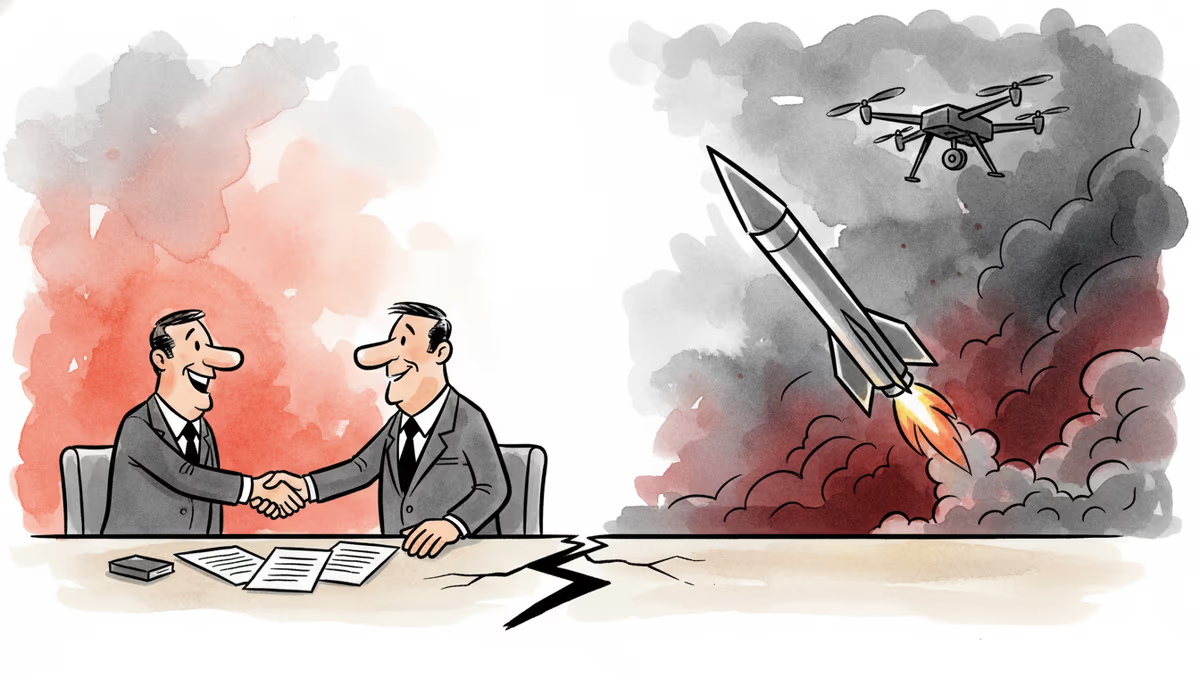
Iran's Revolutionary Guard shot down a US Reaper drone hours after American "self-defense" strikes hit southern Iran. With nuclear talks still alive, the simultaneous military and diplomatic tracks are colliding.

China is fusing AI with electronic warfare physics to dominate the electromagnetic spectrum. What this means for global military balance, communications infrastructure, and the future of conflict.
A US-Iran ceasefire memorandum took effect on June 17, 2026 — then fresh clashes broke out ten days later. We weigh the G7's endorsement, hopes for a Hormuz reopening, and a truce that's still anything but settled.
Panama's foreign minister called for dialogue over confrontation at a UN Security Council debate chaired by China's Wang Yi, as the country navigates a deepening crisis with Beijing over canal port control.
Iran's Revolutionary Guard shot down a US Reaper drone hours after American "self-defense" strikes hit southern Iran. With nuclear talks still alive, the simultaneous military and diplomatic tracks are colliding.
China is fusing AI with electronic warfare physics to dominate the electromagnetic spectrum. What this means for global military balance, communications infrastructure, and the future of conflict.
Thoughts
Share your thoughts on this article
Sign in to join the conversation