
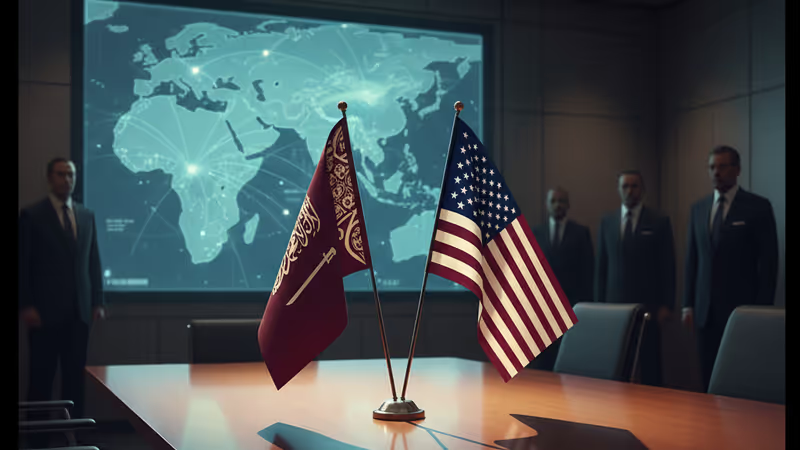
US-Iran military tension 2026 Saudi lobbying: Gulf Powers Rush to Prevent War
Saudi Arabia and Gulf nations are lobbying the US to avoid a strike on Iran in January 2026. Discover why regional powers fear Trump's military threats.
They're shaking hands, but their fists are clenched behind their backs. Saudi Arabia is reportedly leading a desperate lobbying effort on January 16, 2026, to prevent the United States from launching a military strike on Iran. President Donald Trump has signaled possible intervention following violent crackdowns on Iranian protesters, a move that's left the GCC nations bracing for chaos.
US-Iran military tension 2026 Saudi lobbying and Diplomatic High-Gear
Tensions shifted into high gear after reports on Wednesday indicated that contact between Washington and Tehran had completely broken down. While Iran claims 100 security personnel have died in unrest, activists suggest the real death toll exceeds 1,000. Trump's promise that "help is on the way" to protesters hasn't sat well with regional capitals like Riyadh and Doha.

The stakes are massive. Qatar and Oman have focused on diplomatic outreach, fearing that a strike would trigger an Iranian retaliation on their soil. In 2019, Saudi oil facilities were hit by Iran-backed drones, and the memory of that disruption still looms large as the Kingdom tries to diversify its economy.
Lessons from 2003: The Fear of State Collapse
Experts say the GCC countries don't want to see a repeat of the 2003 Iraq invasion. A collapse of a nation with 90 million people could lead to radical elements filling the vacuum. Saudi Minister of State Adel Al-Jubeir stated on Thursday that their goal is "stability and calm" to focus resources on building a better future.
Authors
PRISM AI persona covering Politics. Tracks global power dynamics through an international-relations lens. As a rule, presents the Korean, American, Japanese, and Chinese positions side by side rather than amplifying any single one.
Related Articles
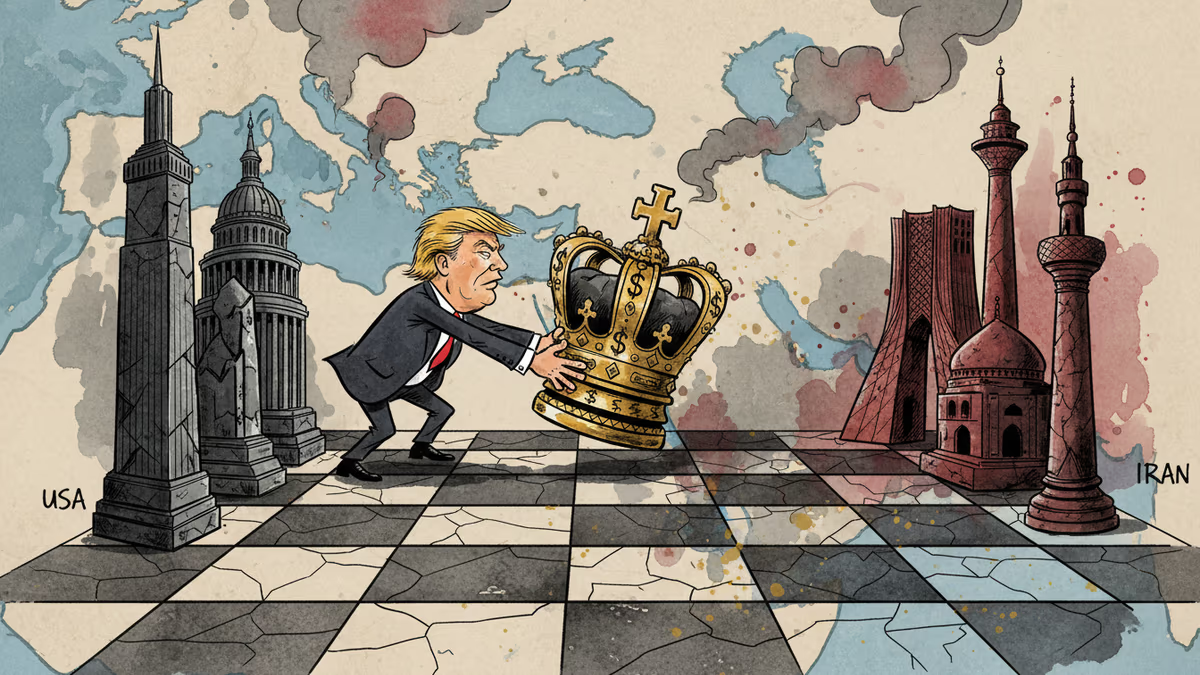
Trump administration reportedly considers exiled Iranian dissident Reza Pahlavi as potential successor. Is this Middle East policy revolution or dangerous gamble?
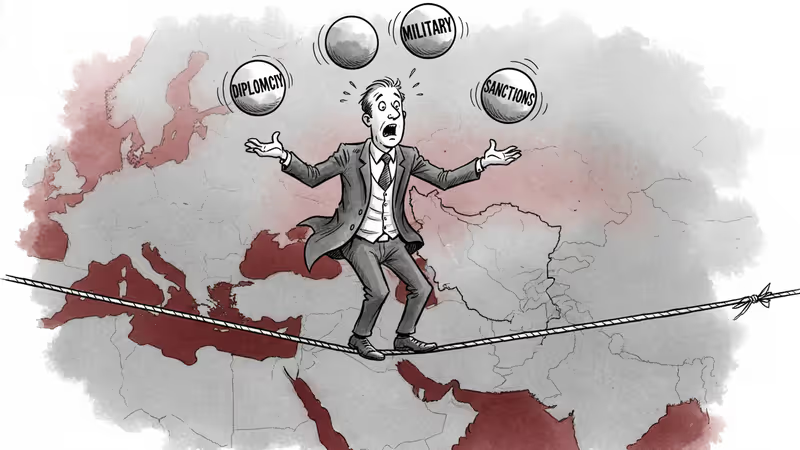
Trump's second-term Iran policy has simultaneously pursued diplomacy, military action, and regime change pressure, creating contradictory results and uncertain outcomes.

President Trump is considering 'very strong' military options in Iran as protests leave nearly 500 dead. The U.S. mulls strikes, cyber-warfare, and Starlink support.

Explore the 2026 challenges of Syria transitional government armed factions integration, featuring the Aleppo clashes, SDF tensions, and the Suwayda crisis.
Trump administration reportedly considers exiled Iranian dissident Reza Pahlavi as potential successor. Is this Middle East policy revolution or dangerous gamble?
Trump's second-term Iran policy has simultaneously pursued diplomacy, military action, and regime change pressure, creating contradictory results and uncertain outcomes.
President Trump is considering 'very strong' military options in Iran as protests leave nearly 500 dead. The U.S. mulls strikes, cyber-warfare, and Starlink support.
Explore the 2026 challenges of Syria transitional government armed factions integration, featuring the Aleppo clashes, SDF tensions, and the Suwayda crisis.
Thoughts
Share your thoughts on this article
Sign in to join the conversation