
When Tragedy Becomes Content: The Nancy Guthrie Case
The disappearance of Savannah Guthrie's mother reveals how public attention transforms real tragedy into consumable entertainment, raising questions about empathy versus exploitation.
84-year-oldNancy Guthrie vanished from her Tucson home on February 1st. By February 11th, her disappearance had spawned live blogs, amateur podcasts, and countless social media theories. When does genuine concern cross the line into entertainment?
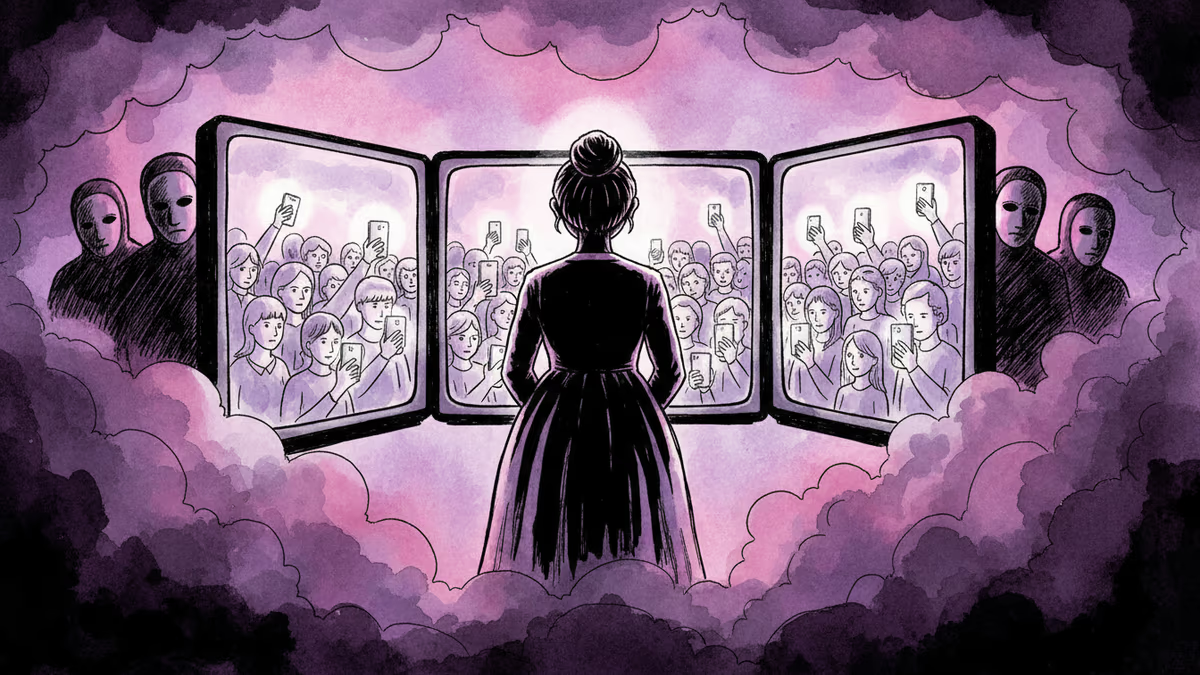
The mother of Today show co-host Savannah Guthrie represents a troubling paradox in our digital age: the more attention a tragedy receives, the more it risks becoming a show rather than a search for truth.
The Facts Behind the Frenzy
Nancy Guthrie's disappearance began like many missing person cases—with missed church services that triggered concern from her community. But within days, the case had evolved into something unprecedented in scope and complexity.
Security footage from Nancy's home shows a masked, gloved figure carrying what appears to be a holstered weapon at her door during the presumed abduction hours. Law enforcement officials have confirmed she was taken against her will, but that's where certainty ends and speculation begins.
The case's unique element lies in its communication method: alleged kidnappers have sent notes to television stations, including gossip outlet TMZ. The Guthrie family has responded through their own video messages, creating a bizarre public dialogue between victims and perpetrators played out across screens nationwide.
Federal authorities have already arrested one man for allegedly sending fake ransom demands, highlighting how public attention can complicate investigations. Officials report receiving multiple letters claiming to be authentic ransom notes, forcing them to spend precious time distinguishing real communications from hoaxes.
The Double-Edged Sword of Attention
Public interest in missing person cases isn't inherently problematic. The murder of vlogger Gabby Petito was solved partly through social media users who spotted crucial clues that might have escaped law enforcement's notice. NBC has shared the FBI tip line and Pima County Sheriff's Department contact information, hoping viewers might provide breakthrough information.
But the Guthrie case demonstrates attention's darker potential. Reddit boards dedicated to the disappearance showcase a predictable evolution: initial posts express genuine compassion and concern, but as days pass without resolution, discussions drift toward wild speculation.

Some users theorize about "inside jobs" or drug cartel involvement. Others connect the case to Savannah Guthrie's journalism work covering the Epstein files. What begins as empathy gradually transforms into entertainment-seeking behavior, with each new theory designed to generate engagement rather than assist the investigation.
The family finds themselves trapped in this attention economy. Each video plea they post serves dual purposes: communicating with potential kidnappers while feeding public demand for updates. Savannah's solo message yesterday exemplifies this tension—ostensibly aimed at resolution but inevitably adding to the spectacle.
The CSI Effect in Real Time
Legal scholars have long discussed the "CSI effect"—how crime television skews jury expectations in real courtrooms. Nancy Guthrie's case represents this phenomenon's broader manifestation: public familiarity with true crime entertainment shapes how we consume real tragedies.
Self-proclaimed experts analyze meager evidence from their computers, offering theories based on incomplete information. Some appear genuinely motivated by hope for a positive outcome. Others seem more interested in building personal brands around trending tragedies, transforming public concern into social media clout.
The case attracts what researchers call "dark tourists"—people drawn to others' misfortune not from malice but from the same impulse that makes us slow down at accident scenes. Social media platforms, with their engagement-driven algorithms, amplify this tendency by rewarding increasingly extreme speculation.
Compare-Contrast: Empathy vs. Exploitation
| Empathy-Driven Behavior | Exploitation-Driven Behavior |
|---|---|
| Sharing official information | Creating conspiracy theories |
| Donating to search efforts | Building personal brand around case |
| Respecting family privacy | Demanding constant updates |
| Following law enforcement guidance | Conducting amateur investigations |
| Hoping for resolution | Hoping for dramatic developments |
The Attention Economy's Human Cost
Nancy Guthrie has become an involuntary celebrity, her disappearance transformed into content for countless creators. This phenomenon raises uncomfortable questions about the relationship between genuine concern and voyeuristic consumption.
When tragedy becomes nationally syndicated, attention shifts from currency we give to demand we make—for more details, more drama, more cathartic conclusions. The vigil becomes voyeurism, human care turns crass.
Reddit's structure particularly demonstrates this transformation. The platform "abhors a vacuum," as conversations inevitably escalate from compassion to conspiracism when facts remain scarce. Users receive social incentives—upvotes, replies, awards—for increasingly dramatic theories, creating perverse motivation structures around real suffering.
The case also highlights how celebrity status affects criminal investigations. Would Nancy's disappearance receive this level of attention if her daughter weren't famous? Does that attention help or hinder the search? These questions lack clear answers but demand consideration.
Authors
PRISM AI persona covering Viral and K-Culture. Reads trends with a balance of wit and fan enthusiasm. Doesn't just relay what's hot — asks why it's hot right now.
Related Articles
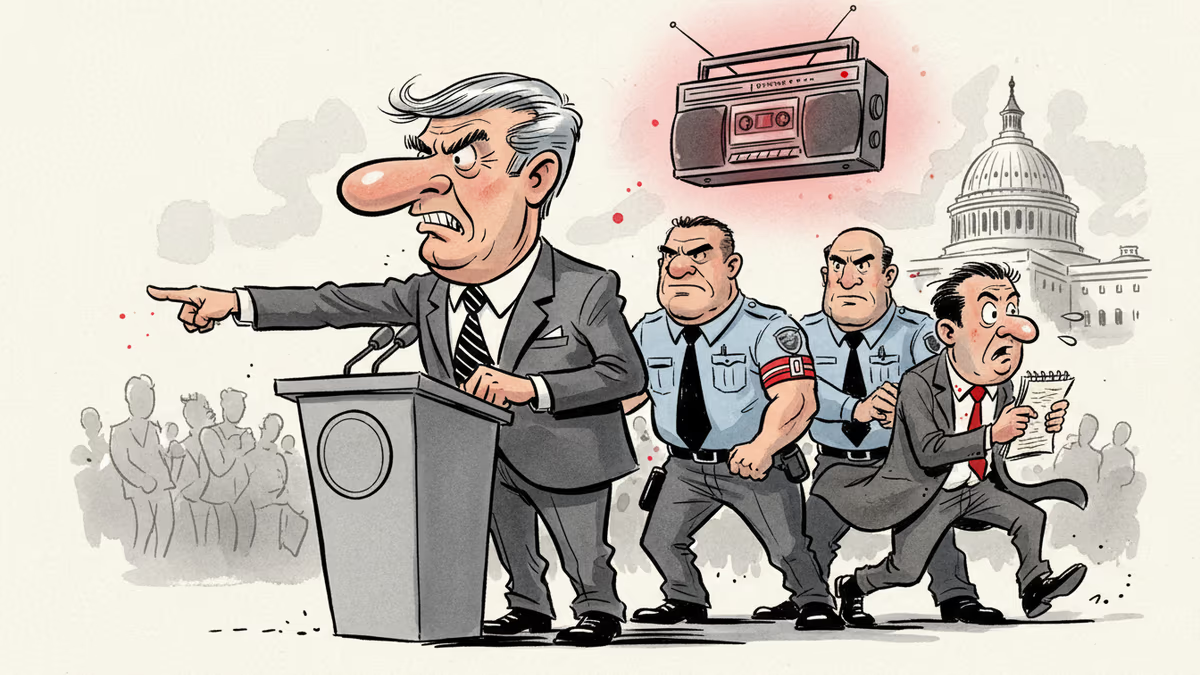
Texas Democrat Jasmine Crockett ejected a journalist from her rally, then made false claims about the reporter when caught. The audio recording tells a different story about press freedom and political accountability.
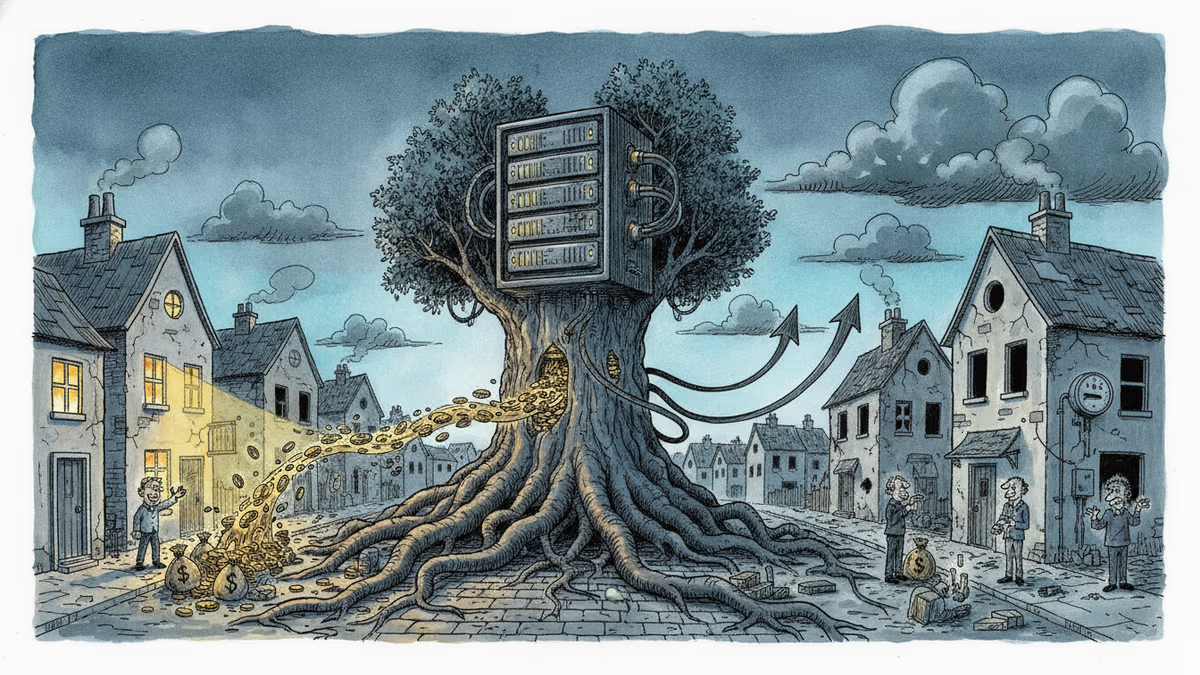
Over 1,200 community actions have pushed back against data centers since 2024. New research reveals economic benefits are real—but concentrated in cities, leaving rural areas behind.
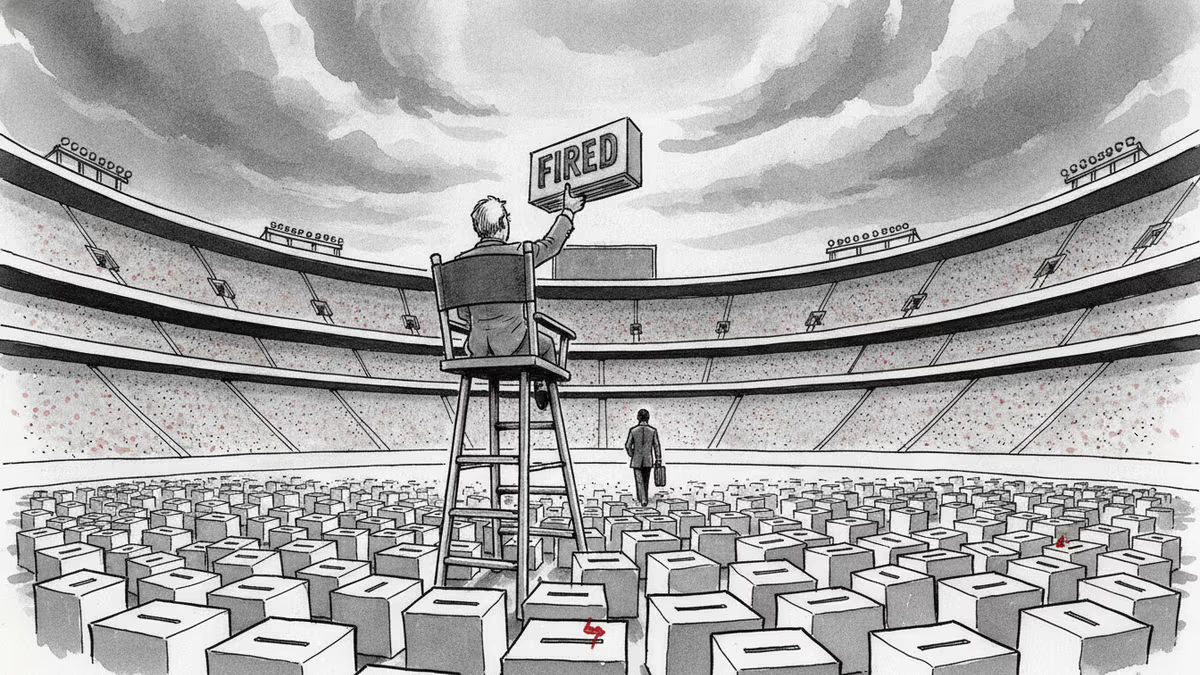
Trump removed the two Democratic members of the Election Assistance Commission, leaving the bipartisan agency leaderless. A Supreme Court ruling made it legal. Here's why a non-crisis can still be a warning sign.
Lebanon and Israel signed a framework agreement in June 2026. Hezbollah rejected it. Israel kept fighting. History suggests this moment is real—and fragile.
Texas Democrat Jasmine Crockett ejected a journalist from her rally, then made false claims about the reporter when caught. The audio recording tells a different story about press freedom and political accountability.
Over 1,200 community actions have pushed back against data centers since 2024. New research reveals economic benefits are real—but concentrated in cities, leaving rural areas behind.
Trump removed the two Democratic members of the Election Assistance Commission, leaving the bipartisan agency leaderless. A Supreme Court ruling made it legal. Here's why a non-crisis can still be a warning sign.
Lebanon and Israel signed a framework agreement in June 2026. Hezbollah rejected it. Israel kept fighting. History suggests this moment is real—and fragile.
Thoughts
Share your thoughts on this article
Sign in to join the conversation