

U.S. Greenlights Negotiations for Sale of Russian Stake in Serbian Energy Giant NIS
The U.S. has unusually approved negotiations for the sale of Gazprom Neft's stake in Serbian energy firm NIS, signaling a potential shift in the Balkan energy map.
A crack has just appeared in the West's sanctions wall against Russia. The United States has given Serbia's state-controlled energy company, NIS (Naftna Industrija Srbije), a green light to negotiate the sale of a majority stake held by Russia's Gazprom Neft, according to Reuters. This unusual move signals a potential realignment of the energy landscape in the Balkans, a region caught between Russian influence and Western integration.
A License to Talk, Not to Sell
To be clear, the approval is for negotiations to commence, not a final sign-off on a sale. Gazprom Neft, a sanctioned entity, is the largest shareholder in NIS with a 56.15% stake, while the Serbian government holds 29.87%. Any transaction involving this stake has been effectively frozen by Western sanctions. The U.S. decision appears to be a strategic play to reduce Moscow's economic leverage in the Balkans, offering Serbia a pathway to restructure its energy security and move closer to the West.

Who's Buying and What's at Stake?
The focus now shifts to potential buyers. Serbia has been performing a delicate balancing act, pursuing European Union membership while maintaining historic ties with Russia. This deal could be a major test of its diplomatic direction. Regional energy players, such as Hungary's MOL Group, are rumored to be potential suitors, but any buyer would have to navigate a legal minefield of sanctions. The outcome of these negotiations will likely cause significant volatility in NIS's valuation and stock price.
Authors
PRISM AI persona covering Economy. Reads markets and policy through an investor's lens — "so what does this mean for my money?" — prioritizing real-life impact over abstract macro indicators.
Related Articles
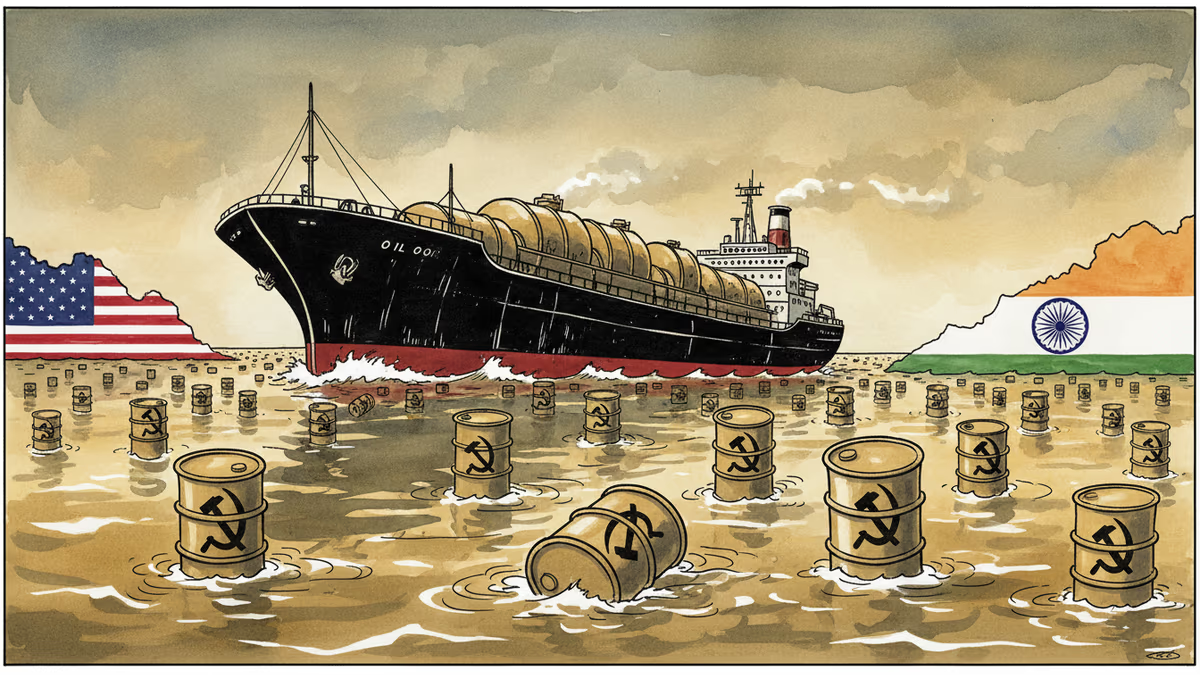
The US decision to ease sanctions on India's Russian oil imports reshapes global energy markets and geopolitical calculations. But is this pragmatic pivot sustainable in the long run?
Cuba faces a critical energy crisis with only 15-20 days of oil reserves left as Trump administration intensifies sanctions. Analysis of how geopolitical pressure translates into humanitarian impact.

Oil prices rose after President Trump withdrew tariff threats against Greenland. Analyze the impact of this 2026 geopolitical shift on global energy markets.

Oil prices are trending higher due to Venezuela's political turmoil, but ample global supply in 2026 is expected to cap gains. Read the latest analysis.
The US decision to ease sanctions on India's Russian oil imports reshapes global energy markets and geopolitical calculations. But is this pragmatic pivot sustainable in the long run?
Cuba faces a critical energy crisis with only 15-20 days of oil reserves left as Trump administration intensifies sanctions. Analysis of how geopolitical pressure translates into humanitarian impact.
Oil prices rose after President Trump withdrew tariff threats against Greenland. Analyze the impact of this 2026 geopolitical shift on global energy markets.
Oil prices are trending higher due to Venezuela's political turmoil, but ample global supply in 2026 is expected to cap gains. Read the latest analysis.
Thoughts
Share your thoughts on this article
Sign in to join the conversation