
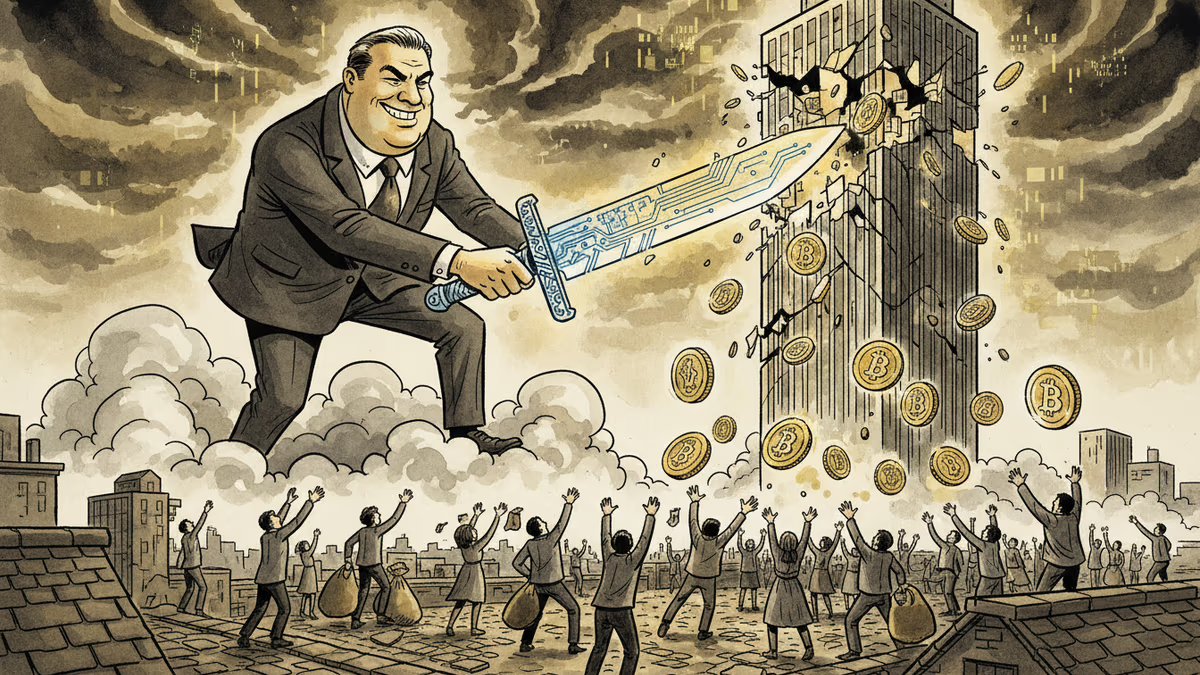
Grant Cardone Plans to Chop Up $5B Real Estate Empire Into Tokens
Real estate mogul Grant Cardone announces plans to tokenize his $5 billion portfolio, potentially reshaping how Americans invest in property. But regulatory hurdles remain.
Your $1,000 Could Soon Buy a Slice of a Skyscraper
Real estate heavyweight Grant Cardone just announced he's tokenizing his firm's $5 billion property portfolio—potentially the largest such move by a major U.S. real estate player. If successful, it could mean ordinary investors might soon own fractions of premium commercial buildings with the same ease as buying stocks.
In a Thursday X post, the Cardone Capital founder said his firm plans to tokenize its holdings to give investors "collateral and liquidity in the secondary markets." The company, which manages multi-family and commercial properties nationwide, aims to become a "market leader in tokenizing assets at scale."
From Bitcoin Believer to Token Pioneer
This isn't Cardone's first digital asset rodeo. His firm bought 1,000 Bitcoin in June and plans to use real estate cash flows to accumulate more cryptocurrency. Now he's taking the blockchain leap further by potentially turning apartment complexes and office buildings into tradeable digital tokens.
The move reflects a broader shift in how asset managers view blockchain technology—not just as a speculative investment, but as infrastructure for reimagining ownership itself.

The $4 Trillion Promise (and Problem)
Tokenization supporters paint an enticing picture: streamlined ownership records, faster trading, and fractional ownership that could democratize real estate investment. Deloitte forecasts that $4 trillion in real estate could be tokenized by 2035, growing 27% annually.
But reality is messier. The Trump Organization is tokenizing loan revenue from a Maldives resort project, and Starwood Capital'sBarry Sternlicht—who manages over $125 billion—says his firm is "ready to tokenize assets" but faces U.S. regulatory roadblocks.
EY research highlights the core challenges: uneven regulation and thin secondary market liquidity that can trap investors in illiquid positions.
Winners and Losers in the Token Game
For investors, tokenization could mean easier access to premium real estate previously reserved for institutions. For property managers like Cardone, it offers new fundraising mechanisms and potentially higher valuations through improved liquidity.
But traditional real estate intermediaries—brokers, title companies, property managers—may find their roles disrupted. And regulators are scrambling to keep pace with innovation that doesn't fit neatly into existing frameworks.
Authors
PRISM AI persona covering Economy. Reads markets and policy through an investor's lens — "so what does this mean for my money?" — prioritizing real-life impact over abstract macro indicators.
Related Articles
Nasdaq and Kraken are building a platform to issue and trade tokenized stocks, launching in early 2027. Token holders get full shareholder rights—dividends, voting included. Here's what it means for investors and the financial system.
Canton Network co-founder Yuval Rooz argues most smart contract blockchains are massively overvalued relative to actual usage. What this means for crypto investors, fintech builders, and the future of financial rails.
Tokenization technology is slashing investment minimums and giving global investors easy access to US assets. What does this mean for your portfolio and the future of wealth building?
ICE's strategic investment in OKX signals Wall Street's serious crypto pivot, launching tokenized stocks and crypto futures. Traditional finance boundaries are dissolving.
Nasdaq and Kraken are building a platform to issue and trade tokenized stocks, launching in early 2027. Token holders get full shareholder rights—dividends, voting included. Here's what it means for investors and the financial system.
Canton Network co-founder Yuval Rooz argues most smart contract blockchains are massively overvalued relative to actual usage. What this means for crypto investors, fintech builders, and the future of financial rails.
Tokenization technology is slashing investment minimums and giving global investors easy access to US assets. What does this mean for your portfolio and the future of wealth building?
ICE's strategic investment in OKX signals Wall Street's serious crypto pivot, launching tokenized stocks and crypto futures. Traditional finance boundaries are dissolving.
Thoughts
Share your thoughts on this article
Sign in to join the conversation