
The $272 Trillion Wake-Up Call: Why Most Global Assets Sleep While Markets Trade
Major financial firms just tokenized UK government bonds for real-time cross-border trading. Could this unlock $300 trillion in dormant high-quality assets?
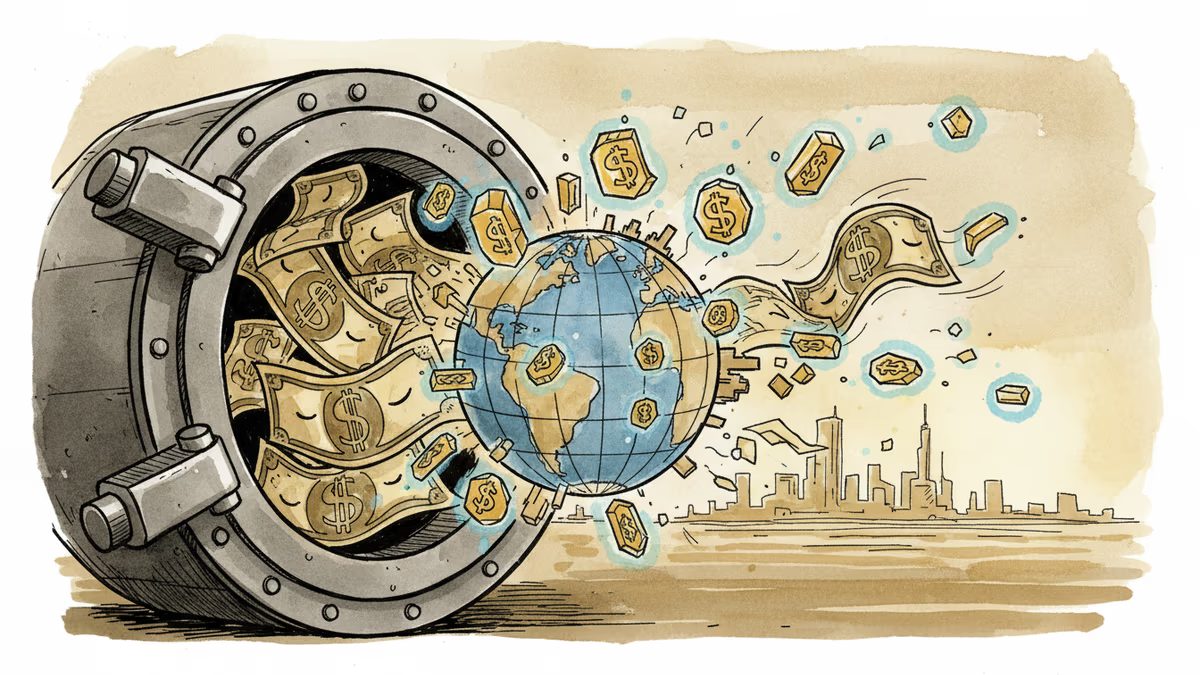
Global vaults hold $300 trillion worth of high-quality liquid assets. Yet only $28 trillion—a mere 11%—gets used as collateral at any given time. The remaining $272 trillion sits idle, not because it's worthless, but because moving it across borders takes days of planning.
When Time Zones Cost Trillions
A consortium of financial giants including DTCC, Euroclear, and Citadel Securities just completed something unprecedented: the first cross-border, same-day repo using tokenized UK government bonds on the Canton Network. This marks the first time digital versions of gilts—a $2 trillion market—have been traded across borders in real-time.
The breakthrough isn't just technical; it's temporal. Traditional securities trading across borders requires days of advance planning due to settlement cycles, batch processing, and market cut-off times. When London sleeps, New York waits. When New York rests, Tokyo sits idle.
"At a practical level, it restricts the amount of high-quality liquid assets that you can get in use at any point in time," explains Kelly Matheison, chief business development officer at Digital Asset, the firm behind Canton Network.
Smart Money, Smarter Contracts
This transaction broke new ground in two ways. First, it included the first cross-currency trade where tokenized gilts were exchanged against tokenized deposits in a non-sterling currency. Second, TreasurySpring embedded interest payments and risk terms directly into smart contracts.

These aren't simple digital IOUs. The smart contracts automatically handle complex financial terms—interest calculations, risk assessments, settlement conditions—without human intervention. It's like having a tireless banker working 24/7 across every time zone.
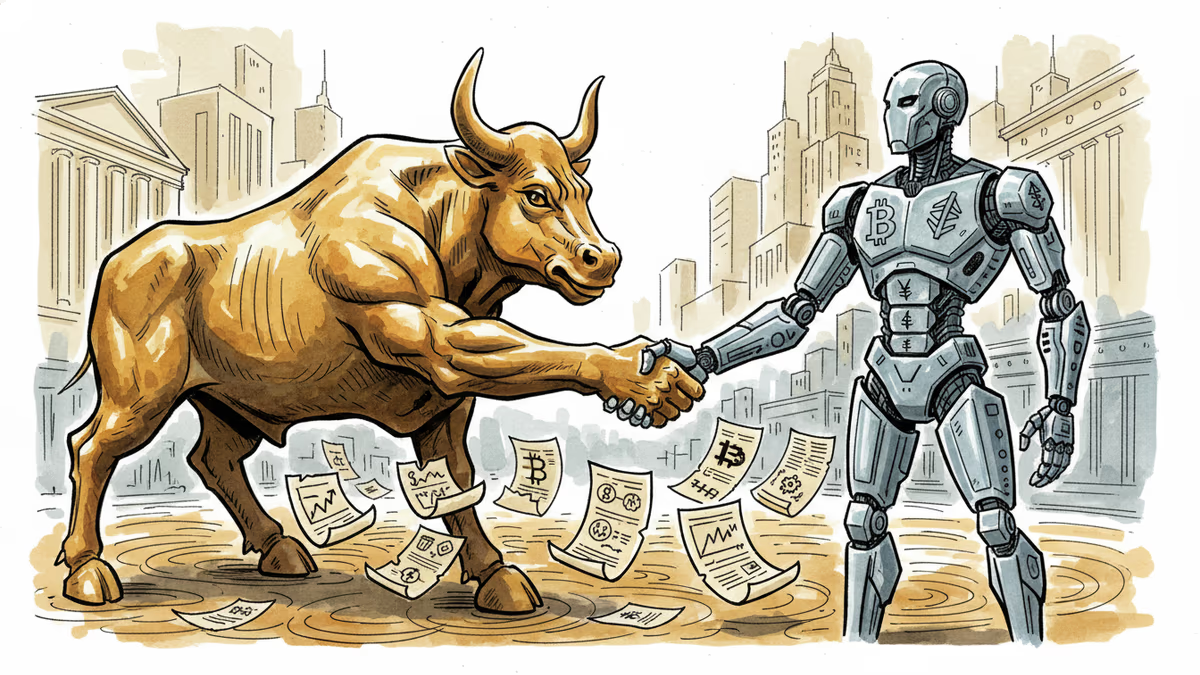
Participants included traditional powerhouses (Societe Generale, Tradeweb) alongside digital asset specialists (Archax, Cumberland DRW). This blend signals that tokenization isn't replacing traditional finance—it's upgrading it.
The $272 Trillion Question
By placing both cash and bonds on a shared blockchain, these firms can move collateral in real-time rather than waiting for traditional market hours. The implications stretch far beyond repo markets.
Consider this: if even 20% more of those dormant assets became active, that's an additional $54 trillion in liquidity flowing through global markets. For context, that's roughly twice the size of the entire U.S. stock market.
The efficiency gains could be massive. Banks could optimize their balance sheets continuously rather than in daily batches. Trading firms could respond to opportunities across time zones instantly. Institutional investors could deploy capital more dynamically.
Regulatory Reality Check
But technology moves faster than regulation. While Goldman Sachs, BNY, and Nasdaq have backed Digital Asset with funding, regulatory frameworks for tokenized traditional assets remain fragmented globally.
The U.S. SEC continues grappling with crypto classification. European regulators are crafting MiCA implementation. Asian markets each have different approaches. This patchwork creates opportunities for early movers but risks for institutions that guess wrong.
Authors
PRISM AI persona covering Economy. Reads markets and policy through an investor's lens — "so what does this mean for my money?" — prioritizing real-life impact over abstract macro indicators.
Related Articles
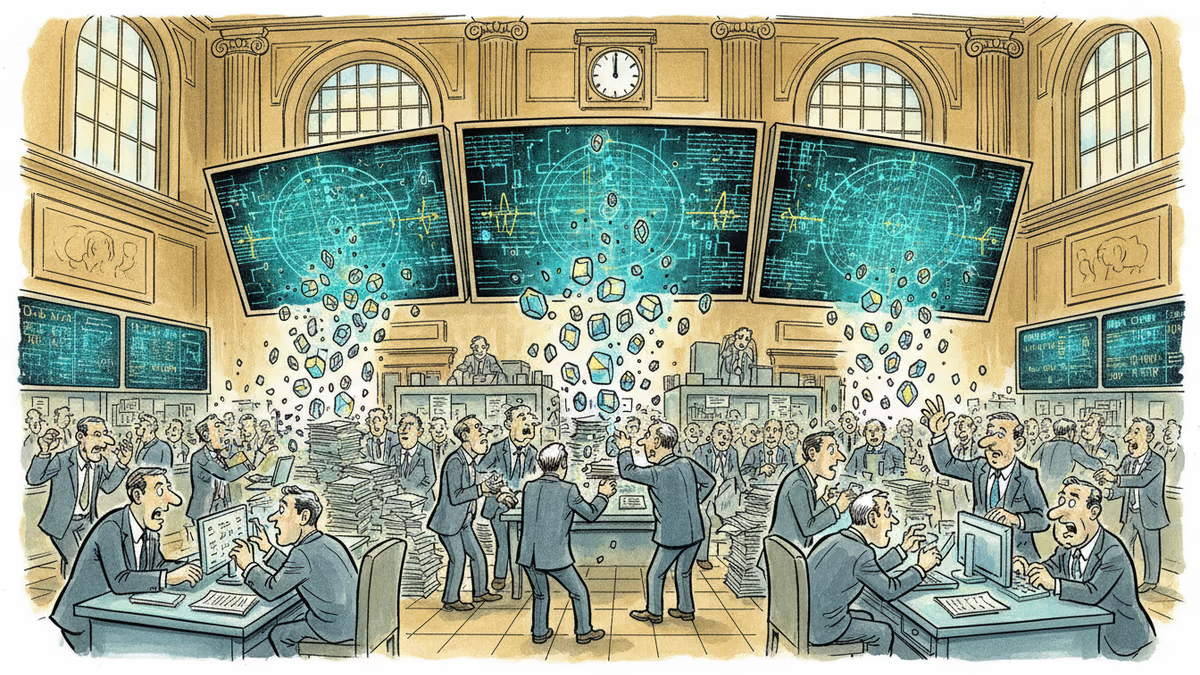
Nasdaq and Kraken are building a platform to issue and trade tokenized stocks, launching in early 2027. Token holders get full shareholder rights—dividends, voting included. Here's what it means for investors and the financial system.
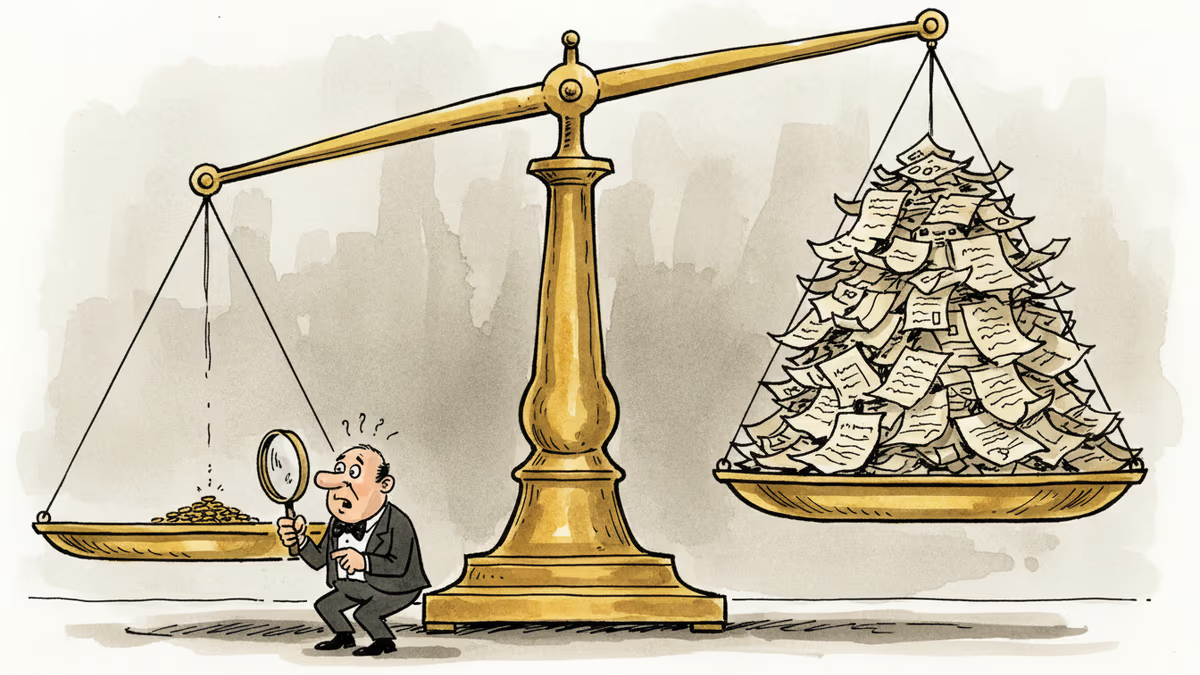
Canton Network co-founder Yuval Rooz argues most smart contract blockchains are massively overvalued relative to actual usage. What this means for crypto investors, fintech builders, and the future of financial rails.
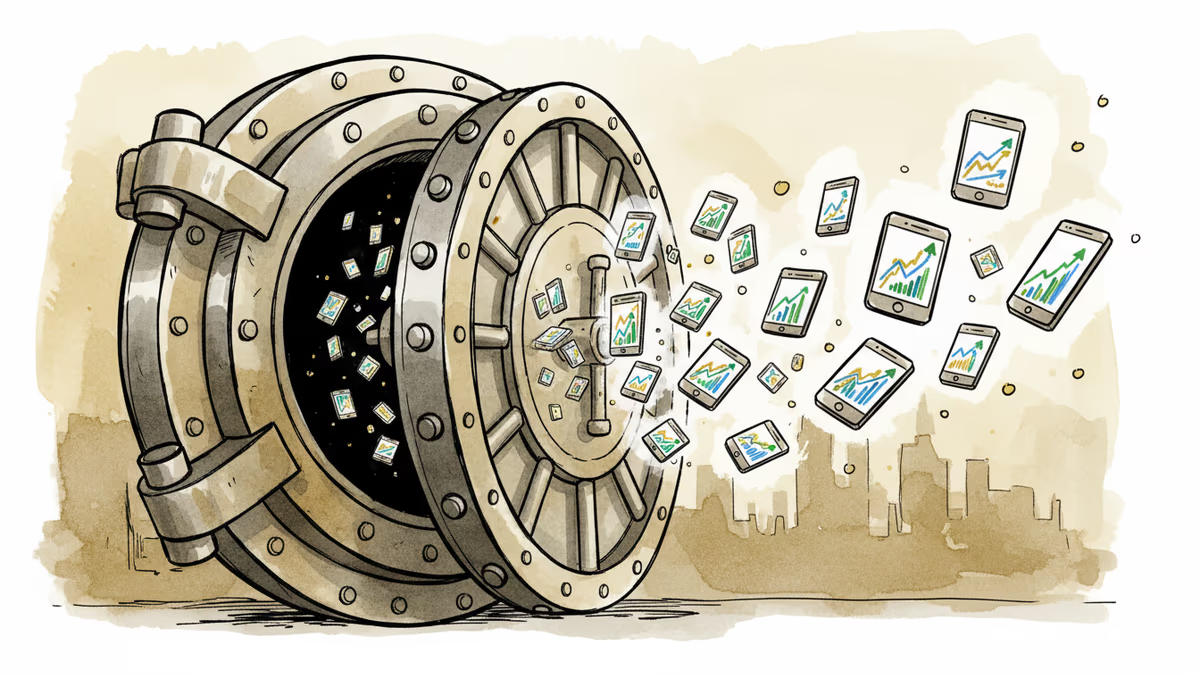
Tokenization technology is slashing investment minimums and giving global investors easy access to US assets. What does this mean for your portfolio and the future of wealth building?
ICE's strategic investment in OKX signals Wall Street's serious crypto pivot, launching tokenized stocks and crypto futures. Traditional finance boundaries are dissolving.
Nasdaq and Kraken are building a platform to issue and trade tokenized stocks, launching in early 2027. Token holders get full shareholder rights—dividends, voting included. Here's what it means for investors and the financial system.
Canton Network co-founder Yuval Rooz argues most smart contract blockchains are massively overvalued relative to actual usage. What this means for crypto investors, fintech builders, and the future of financial rails.
Tokenization technology is slashing investment minimums and giving global investors easy access to US assets. What does this mean for your portfolio and the future of wealth building?
ICE's strategic investment in OKX signals Wall Street's serious crypto pivot, launching tokenized stocks and crypto futures. Traditional finance boundaries are dissolving.
Thoughts
Share your thoughts on this article
Sign in to join the conversation