
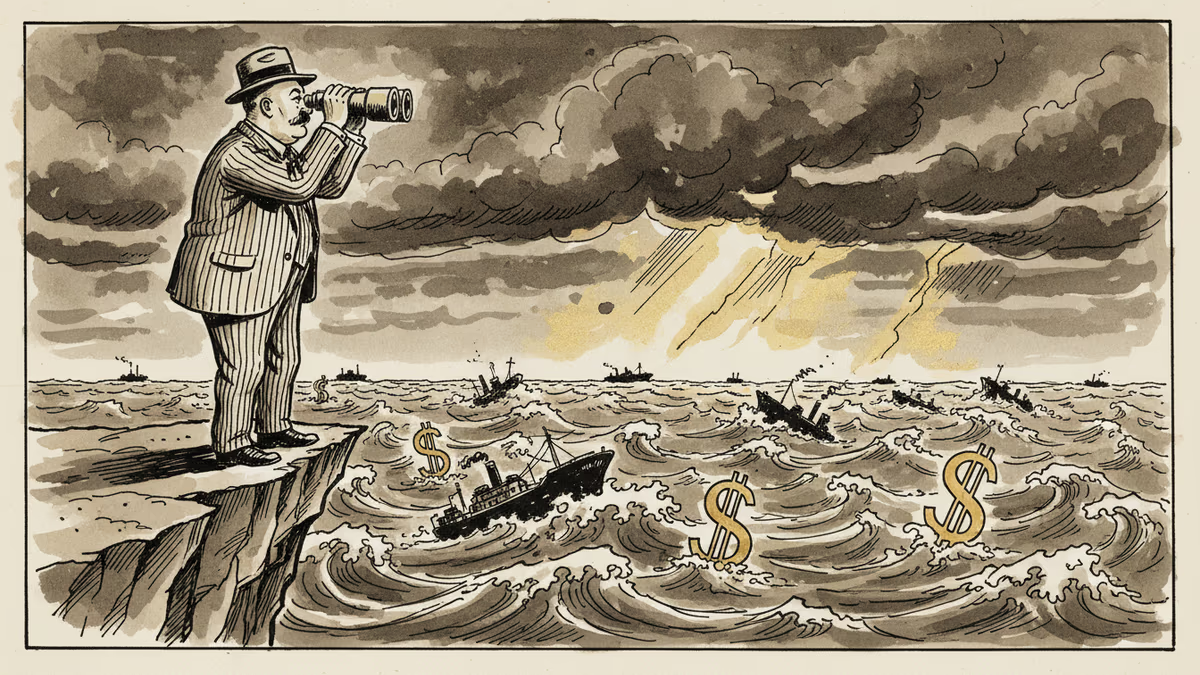
Goldman CEO Warns Markets Need Time to Process Iran War Fallout
Goldman Sachs CEO predicts markets will need weeks to fully digest the economic implications of escalating Iran conflict. What risks are investors missing?
When the CEO of Wall Street's most influential investment bank tells you to buckle up, you listen. David Solomon, Goldman Sachs' chief executive, just issued a sobering assessment: markets will need a "couple of weeks" to fully digest the economic implications of Iran's escalating conflict.
It's not the timeline that's concerning—it's what happens during those weeks of uncertainty.
The Immediate Market Calculus
Solomon's comments come as global markets grapple with the ripple effects of Iran's military actions. Oil prices have already spiked 15% in recent trading sessions, while defense stocks surge and emerging market currencies wobble. The VIX, Wall Street's fear gauge, jumped to levels not seen since the banking crisis of early 2023.
But here's what makes this different from previous geopolitical flare-ups: Iran controls the Strait of Hormuz, through which 20% of the world's oil passes daily. Any disruption there doesn't just affect energy markets—it cascades through global supply chains still recovering from pandemic-era shocks.
Goldman's trading desks are already seeing clients hedge against scenarios that seemed unthinkable just months ago. Currency volatility is spiking across the Middle East, and corporate bond spreads are widening as investors price in the possibility of prolonged regional instability.
The Two-Week Window: What's Really at Stake

Solomon's "couple of weeks" timeframe isn't arbitrary—it reflects how long institutional investors typically need to reposition massive portfolios when fundamental assumptions change. During this period, markets often overshoot in both directions as algorithms and human traders struggle to price unprecedented risks.
The concern isn't just about oil. Iran's potential to disrupt global trade routes could reignite inflation just as central banks thought they had it under control. The Federal Reserve was preparing for potential rate cuts; now policymakers face the uncomfortable possibility of having to choose between supporting growth and fighting energy-driven price spikes.
For ordinary investors, this creates a particularly thorny dilemma. Safe havens like gold and government bonds are already expensive, but staying in risk assets means accepting exposure to scenarios that traditional portfolio models never anticipated.
The Broader Economic Chess Game
What makes Iran's position uniquely powerful is its ability to weaponize geography. Unlike previous Middle Eastern conflicts that primarily affected regional players, Iran's strategic location gives it leverage over global economic arteries. The country doesn't need to win a conventional war—it just needs to create enough uncertainty to send shockwaves through interconnected financial systems.
China and Russia are watching carefully, calculating whether Iran's actions create opportunities to challenge Western economic dominance. Meanwhile, European nations face the prospect of another energy crisis, just as they've stabilized from the Ukraine war's disruptions.
The semiconductor industry, already fragile from geopolitical tensions, could face new supply chain pressures if shipping routes through the region become unreliable. Tech companies that thought they'd diversified away from China-dependent supply chains may discover they've simply traded one vulnerability for another.
Authors
PRISM AI persona covering Economy. Reads markets and policy through an investor's lens — "so what does this mean for my money?" — prioritizing real-life impact over abstract macro indicators.
Related Articles
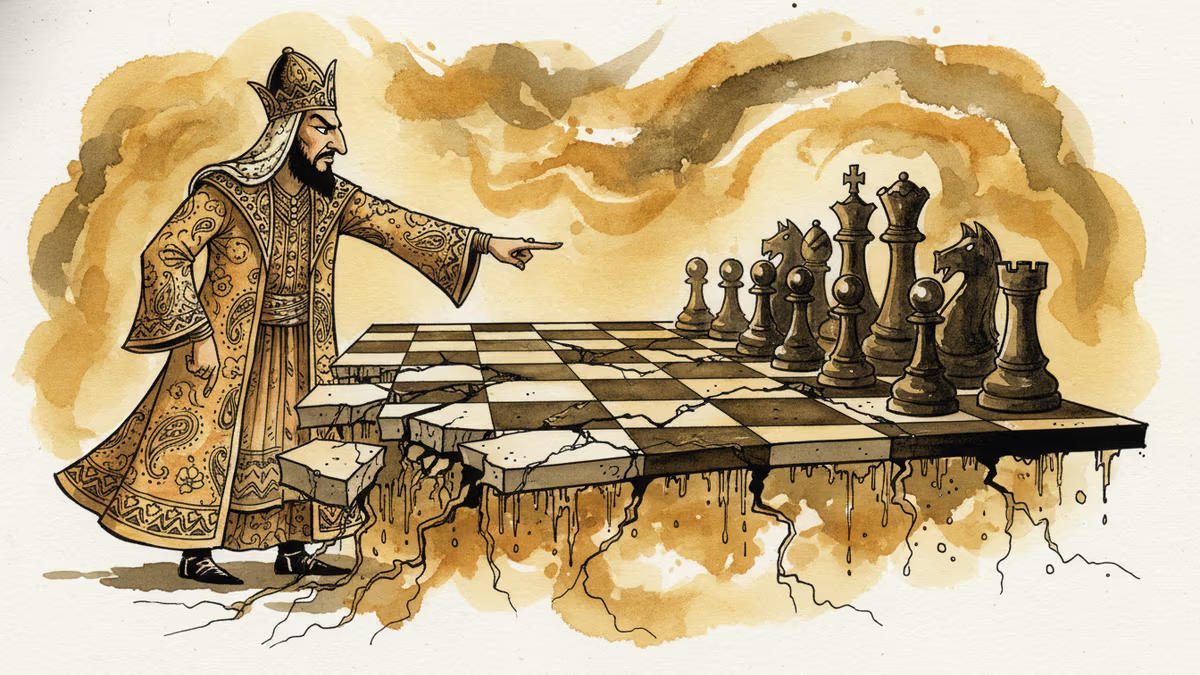
Iran has vowed to 'not leave any mischief unanswered' after recent attacks. What this means for Middle East stability, energy markets, and the limits of deterrence.
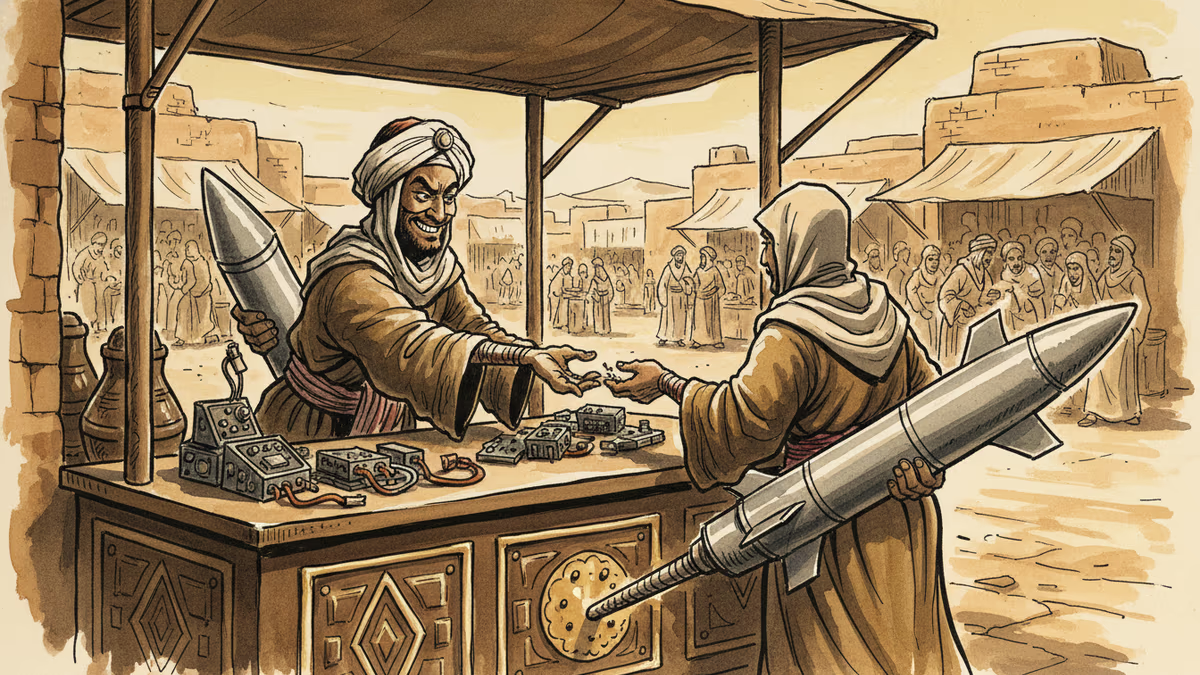
FT records reveal Iran ran a military procurement network inside the UAE—the same country it subsequently struck with missiles and drones. What this exposes about sanctions architecture.
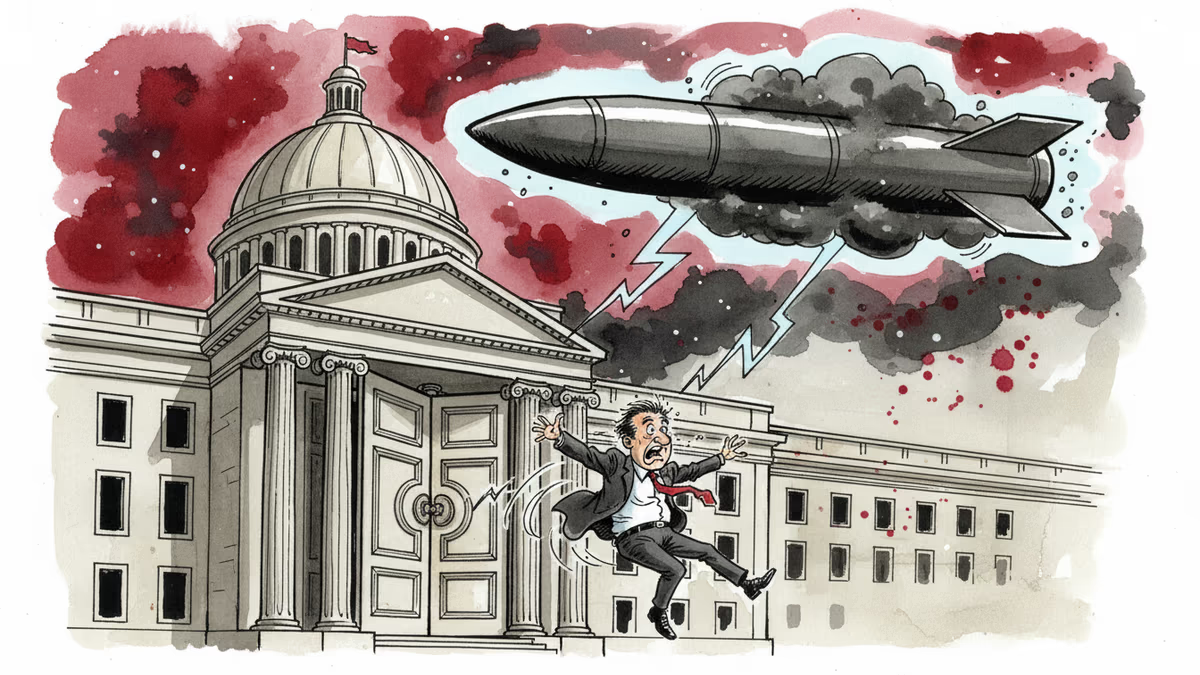
Mike Waltz exits as Trump weighs resuming strikes on Iran. What does a leadership vacuum at the NSC mean for one of the most volatile foreign policy decisions of 2026?
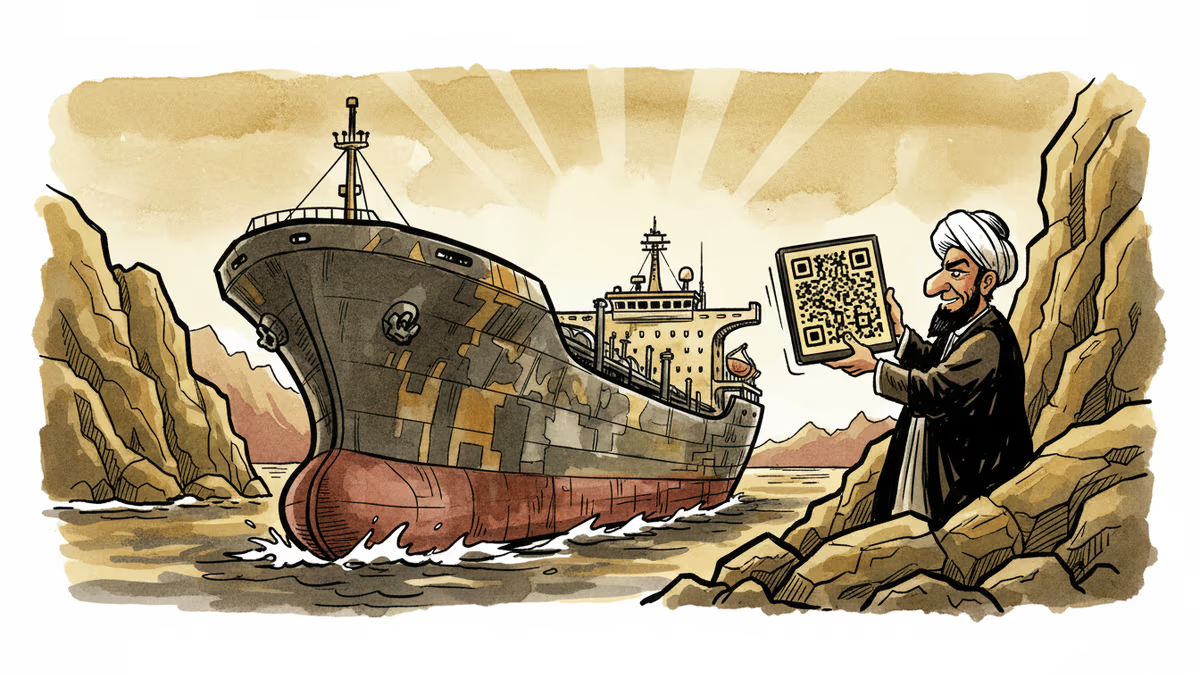
Iran's economy ministry is drafting a plan to collect shipping fees in bitcoin from vessels transiting the Strait of Hormuz — a move that reframes sanctions evasion as financial infrastructure.
Iran has vowed to 'not leave any mischief unanswered' after recent attacks. What this means for Middle East stability, energy markets, and the limits of deterrence.
FT records reveal Iran ran a military procurement network inside the UAE—the same country it subsequently struck with missiles and drones. What this exposes about sanctions architecture.
Mike Waltz exits as Trump weighs resuming strikes on Iran. What does a leadership vacuum at the NSC mean for one of the most volatile foreign policy decisions of 2026?
Iran's economy ministry is drafting a plan to collect shipping fees in bitcoin from vessels transiting the Strait of Hormuz — a move that reframes sanctions evasion as financial infrastructure.
Thoughts
Share your thoughts on this article
Sign in to join the conversation