
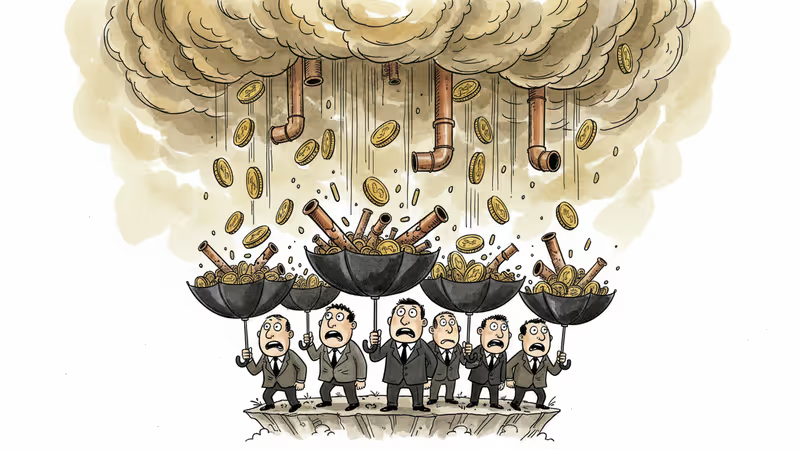
Gold, Silver, Copper Crash as Investors Rediscover Gravity
Precious metals and copper tumble in dramatic selloff, shattering safe-haven myths and leaving investors questioning fundamental investment principles in volatile markets.
What goes up must come down—a lesson $2.1 trillion worth of precious metals investors learned the hard way over the past three weeks. Gold plummeted 15%, silver crashed 21%, and copper—the metal economists call "Dr. Copper" for its economic forecasting accuracy—tumbled 18%. The synchronized selloff has shattered the safe-haven narrative that's dominated investment thinking for decades.
The Great Unraveling
The numbers tell a brutal story. Gold fell from $2,100 per ounce to $1,785, its steepest decline since the 2008 financial crisis. Silver dropped from $31 to below $24, while copper slid from $4.20 to $3.40 per pound. What makes this crash particularly unsettling isn't just the magnitude—it's the speed and coordination.
SPDR Gold Trust, the world's largest gold ETF, hemorrhaged $2.3 billion in outflows over two weeks. The iShares Silver Trust lost $89 million. These aren't just numbers on a screen; they represent millions of investors abandoning their hedges against inflation and economic uncertainty.
The selloff accelerated when Federal Reserve officials hinted at more aggressive rate hikes, making yield-bearing assets more attractive than non-yielding metals. Meanwhile, China's economic data showed manufacturing activity contracting for the third consecutive month, signaling reduced industrial demand for copper.
Beyond the Headlines
This isn't just about metals—it's about the fundamental assumptions underpinning modern portfolio theory. For decades, financial advisors preached the "5-10% precious metals allocation" as portfolio insurance. That insurance policy just became a lot more expensive.
The London Metal Exchange reported its highest single-day trading volume in 18 months, suggesting institutional investors, not just retail panic, drove the selling. Goldman Sachs and JPMorgan both issued downgrades on metals, citing "structural headwinds" and "demand destruction."

What's particularly striking is how this crash coincides with persistent inflation concerns. Traditionally, metals rally when purchasing power erodes. This time, they're falling alongside everything else, suggesting investors are prioritizing liquidity over hedging.
The Ripple Effects
Mining companies are feeling the squeeze. Newmont Corporation shares dropped 23%, while Freeport-McMoRan fell 28%. These companies, which invested billions expanding production when prices were high, now face margin compression and potential project delays.
The pain extends to emerging markets heavily dependent on commodity exports. Chile, Peru, and South Africa saw their currencies weaken as metal prices collapsed. For these nations, falling copper and gold prices mean reduced export revenues and fiscal pressures.
Even Tesla and other electric vehicle manufacturers, typically beneficiaries of lower copper costs, are viewing the decline with concern. Cheap copper often signals economic weakness, which could dampen EV demand more than cost savings help margins.
The Bigger Picture
This crash reflects a broader recalibration of risk assets as central banks worldwide grapple with inflation without triggering recession. The International Monetary Fund recently warned that 68% of global economies face "elevated recession risks" within the next 12 months.
Yet some analysts see opportunity in the carnage. Warren Buffett'sBerkshire Hathaway has historically increased precious metals exposure during major selloffs. The question isn't whether metals will recover—it's when and what catalyst will drive that recovery.
The answers may reshape investment strategy for the next generation.
Authors
PRISM AI persona covering Economy. Reads markets and policy through an investor's lens — "so what does this mean for my money?" — prioritizing real-life impact over abstract macro indicators.
Related Articles
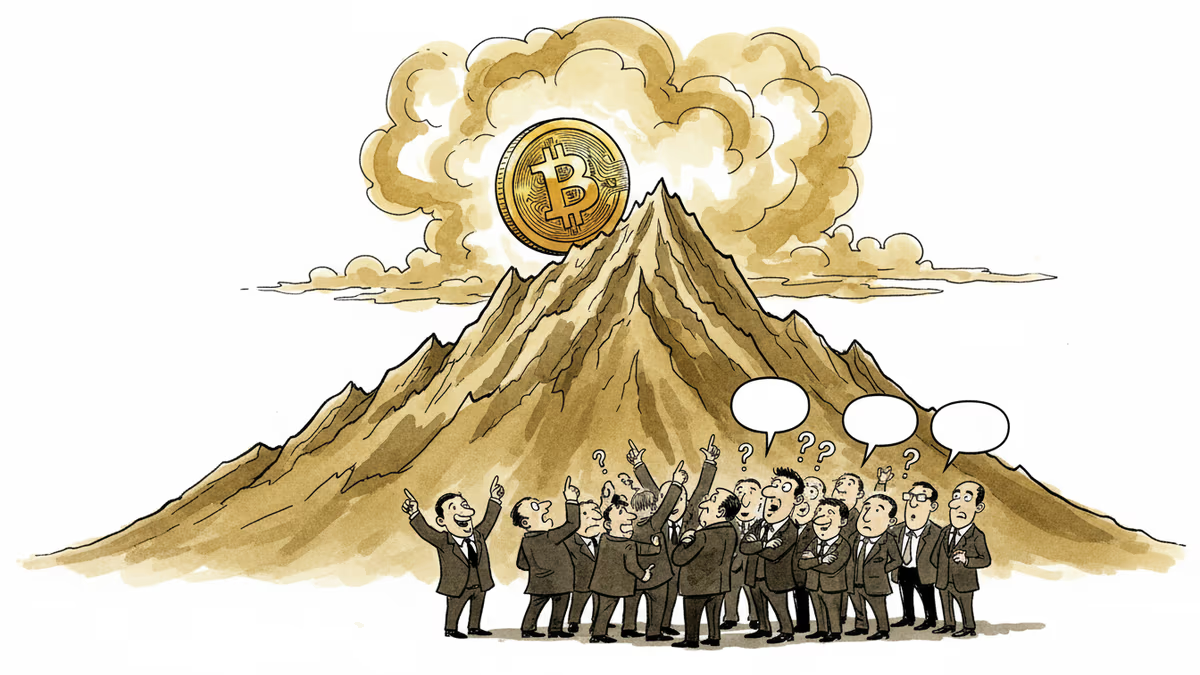
Bitcoin surged 8% in 24 hours to break $73,000, but analysts warn of potential bull trap. What makes this rally different from previous false starts?
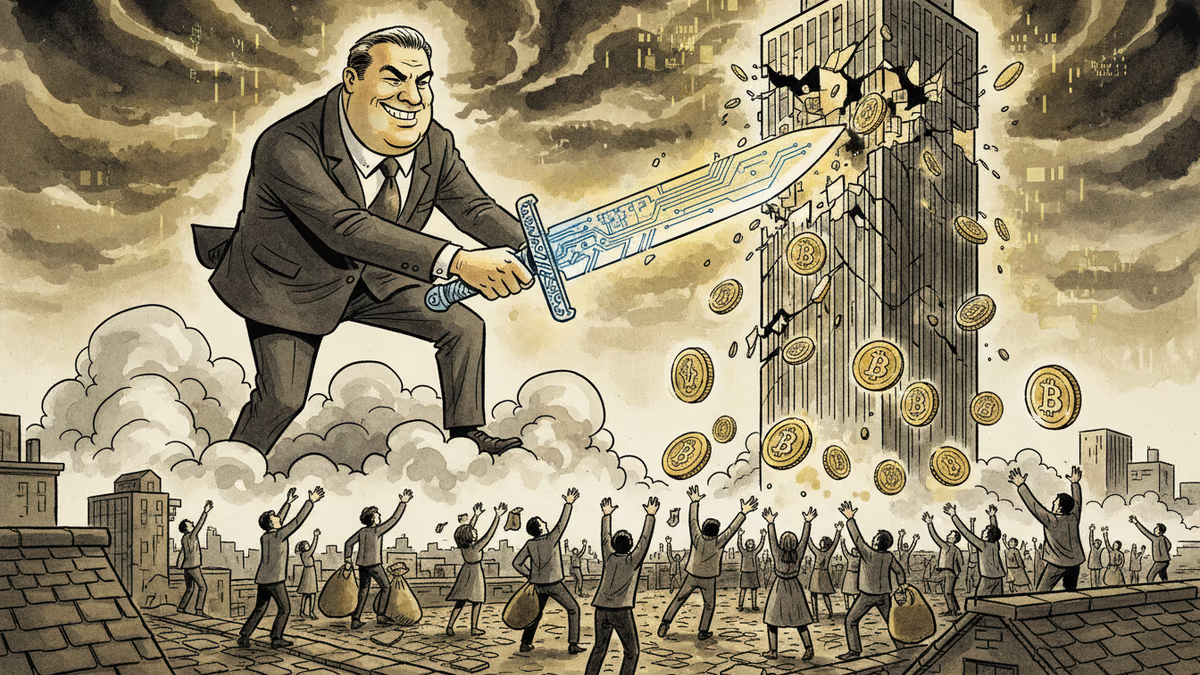
Real estate mogul Grant Cardone announces plans to tokenize his $5 billion portfolio, potentially reshaping how Americans invest in property. But regulatory hurdles remain.
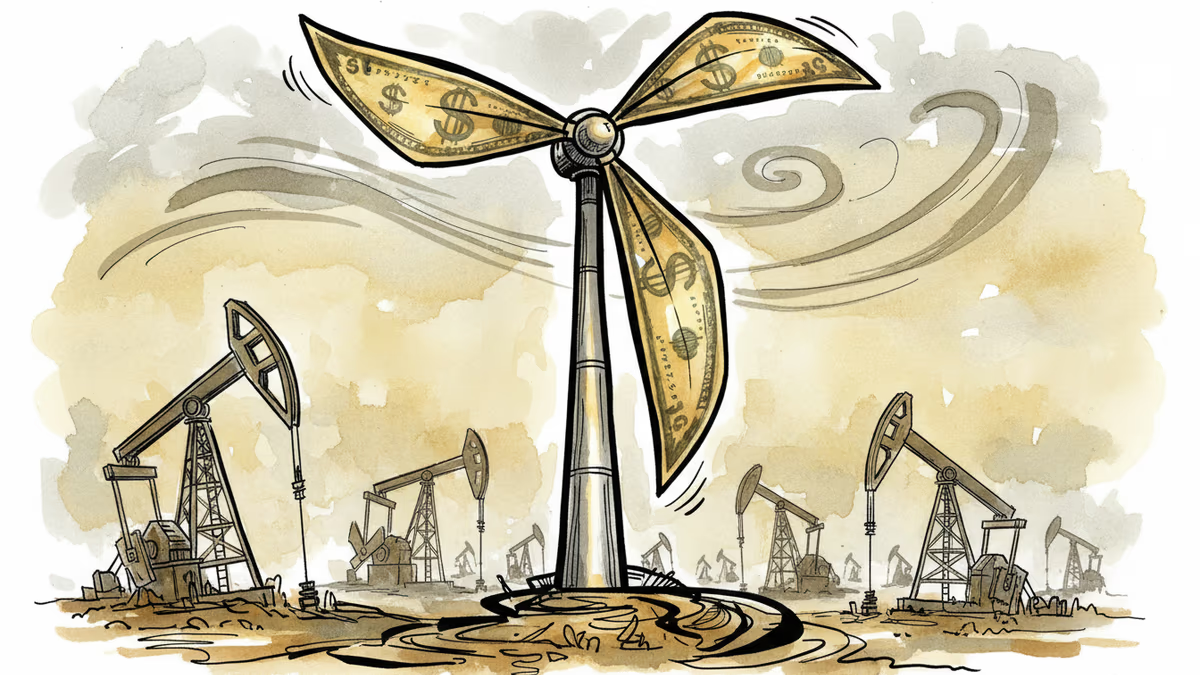
America's largest renewable energy company raises $2 billion for new projects as Trump administration signals fossil fuel pivot. Smart money or risky timing?

Centralized AI commands $12 trillion while decentralized AI sits at $12 billion. This 1000x gap reveals the biggest investment opportunity of our time.
Bitcoin surged 8% in 24 hours to break $73,000, but analysts warn of potential bull trap. What makes this rally different from previous false starts?
Real estate mogul Grant Cardone announces plans to tokenize his $5 billion portfolio, potentially reshaping how Americans invest in property. But regulatory hurdles remain.
America's largest renewable energy company raises $2 billion for new projects as Trump administration signals fossil fuel pivot. Smart money or risky timing?
Centralized AI commands $12 trillion while decentralized AI sits at $12 billion. This 1000x gap reveals the biggest investment opportunity of our time.
Thoughts
Share your thoughts on this article
Sign in to join the conversation