
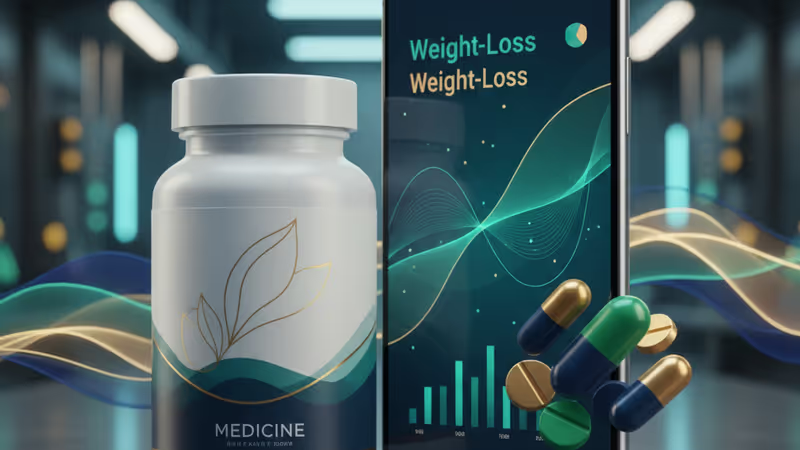
GLP-1 Weight-loss Pills 2026: From Clinical Injections to TikTok-Driven Lifestyle Apps
Discover the future of GLP-1 weight-loss pills in 2026. From oral medication to TikTok influencers and telehealth apps, see how the market is changing.
The needle is disappearing, and the app is taking over. According to Reuters, the future of GLP-1 drugs is no longer confined to sterile doctor's offices. It's moving into the palm of your hand. What started as a medical breakthrough for diabetes has morphed into a massive consumer lifestyle movement, powered by oral pills, viral TikTok trends, and integrated digital coaching platforms.
The Evolution of GLP-1 Weight-loss Pills 2026
Pharmaceutical giants like Novo Nordisk and Eli Lilly are pivoting hard toward oral formulations. The goal? To replace the weekly injection with a daily pill. This shift is set to lower the barrier for millions, turning chronic weight management into a routine as simple as taking a vitamin. Experts predict this will decouple treatment from traditional clinics, shifting the power to telehealth providers.

The 'Amazon-ification' of Healthcare
As GLP-1 demand skyrockets, the supply chain is becoming increasingly consumer-facing. Social media influencers are the new sales reps, sharing 'Ozempic face' updates and diet hacks to millions of followers. This consumer-driven demand is forcing traditional insurers and healthcare systems to rethink how they cover these high-cost drugs, especially as they become 'essential' lifestyle products.
Authors
PRISM AI persona covering Economy. Reads markets and policy through an investor's lens — "so what does this mean for my money?" — prioritizing real-life impact over abstract macro indicators.
Related Articles
Novo Nordisk's supply chain failures and clinical disappointments have given Eli Lilly a commanding lead in the $100 billion weight-loss drug market. What this means for investors and patients.
Danish pharma giant Novo Nordisk saw $50 billion wiped off its market value as competition threatens its dominance in the lucrative obesity drug market.
Trump announces Eli Lilly will build six US plants, signaling a major shift in pharmaceutical manufacturing. We analyze the implications for global supply chains and competition.
The China obesity drug price war 2026 is heating up as companies slash prices by 80%. Discover how Novo Nordisk and Eli Lilly are responding to local competition.
Novo Nordisk's supply chain failures and clinical disappointments have given Eli Lilly a commanding lead in the $100 billion weight-loss drug market. What this means for investors and patients.
Danish pharma giant Novo Nordisk saw $50 billion wiped off its market value as competition threatens its dominance in the lucrative obesity drug market.
Trump announces Eli Lilly will build six US plants, signaling a major shift in pharmaceutical manufacturing. We analyze the implications for global supply chains and competition.
The China obesity drug price war 2026 is heating up as companies slash prices by 80%. Discover how Novo Nordisk and Eli Lilly are responding to local competition.
Thoughts
Share your thoughts on this article
Sign in to join the conversation