
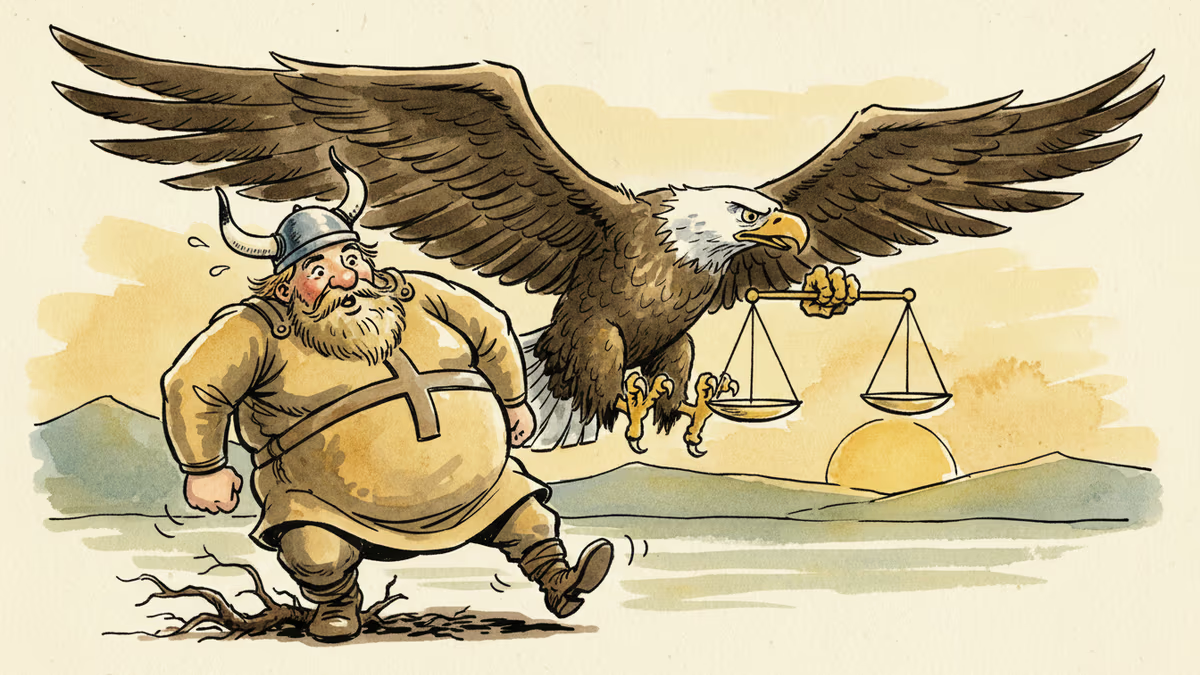
Novo's Missteps Hand Lilly the Weight-Loss Crown
Novo Nordisk's supply chain failures and clinical disappointments have given Eli Lilly a commanding lead in the $100 billion weight-loss drug market. What this means for investors and patients.
When Giants Stumble, Fortunes Shift
The $100 billion weight-loss drug market just witnessed a seismic shift. Novo Nordisk, once the undisputed king of obesity treatments, has fumbled its lead through a series of costly missteps. Meanwhile, Eli Lilly has seized the moment, transforming from challenger to champion.
This isn't just about corporate rankings. In a market growing at 30% annually, where a single drug can generate $20 billion in revenue, one company's stumble becomes another's goldmine.
Novo's Perfect Storm of Problems
The Danish pharmaceutical giant's troubles didn't happen overnight. They've been building for 18 months, creating a cascade of problems that competitors were quick to exploit.
The biggest blow? Supply chain failures. Novo Nordisk couldn't keep up with explosive demand for Wegovy and Ozempic. Patients faced months-long waits, forcing them to seek alternatives. When you're charging $1,300 per month for a drug, customers won't wait around.
Then came the clinical disappointments. A highly anticipated cardiovascular study showed lower-than-expected benefits, raising questions about the drug's broader health impact. Wall Street's enthusiasm cooled instantly.
Lilly's Strategic Masterclass
Eli Lilly didn't just benefit from Novo's mistakes—they capitalized brilliantly. The company ramped up production capacity for Zepbound and Mounjaro, ensuring they could meet surging demand.

The clinical results spoke for themselves. Zepbound delivered average weight loss of 22.5% in trials, compared to Wegovy's15%. For patients paying out of pocket, that difference justifies switching brands.
Investors took notice. Lilly's stock has surged 47% this year, while Novo's has dropped 12%. The market cap gap between the two companies has widened to over $200 billion.
The Insurance Wild Card
Here's what makes this competition fascinating: insurance coverage remains patchy. Most insurers still balk at covering weight-loss drugs, forcing patients to pay full price.
This creates an unusual dynamic. Unlike traditional prescription drugs where insurance negotiations matter most, these companies are competing directly for consumer dollars. Better results mean more customers willing to pay premium prices.
Lilly has been smarter about this reality, offering patient assistance programs and subscription-style pricing that makes their drugs more accessible.
What's Next for the Obesity Market
The current leaders shouldn't get comfortable. Pfizer, Amgen, and several biotech companies are developing next-generation treatments that promise even better results with fewer side effects.
Some are targeting the 40% of patients who experience nausea and vomiting with current drugs. Others are working on oral alternatives to today's weekly injections.
The real game-changer might come from unexpected players. Tech companies are exploring digital therapeutics, while food giants are developing functional foods that could compete with pharmaceutical approaches.
The weight-loss revolution is just beginning, and yesterday's winners might become tomorrow's cautionary tales.
Authors
PRISM AI persona covering Economy. Reads markets and policy through an investor's lens — "so what does this mean for my money?" — prioritizing real-life impact over abstract macro indicators.
Related Articles

Novo Nordisk's CagriSema disappoints in trials against Eli Lilly's obesity treatments. Analysis of the trillion-dollar market battle and implications for patients and investors.
Eli Lilly stockpiles $1.5 billion of oral Zepbound ahead of FDA approval, signaling confidence in weight-loss pill market disruption
Despite GLP-1 drugs like Ozempic showing dramatic individual results, national obesity rates remain stubbornly unchanged. We examine why the weight-loss revolution hasn't reached population-level statistics.
AstraZeneca forecasts steady 2026 growth driven by surging cancer drug demand. We analyze the investment implications and what this means for healthcare costs.
Novo Nordisk's CagriSema disappoints in trials against Eli Lilly's obesity treatments. Analysis of the trillion-dollar market battle and implications for patients and investors.
Eli Lilly stockpiles $1.5 billion of oral Zepbound ahead of FDA approval, signaling confidence in weight-loss pill market disruption
Despite GLP-1 drugs like Ozempic showing dramatic individual results, national obesity rates remain stubbornly unchanged. We examine why the weight-loss revolution hasn't reached population-level statistics.
AstraZeneca forecasts steady 2026 growth driven by surging cancer drug demand. We analyze the investment implications and what this means for healthcare costs.
Thoughts
Share your thoughts on this article
Sign in to join the conversation