
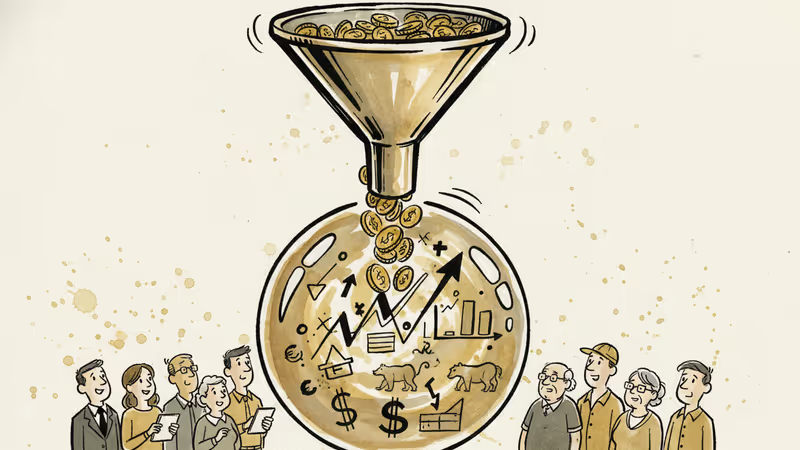
Money Talks Again: Global Equity Funds See Third Straight Week of Inflows
Global equity funds attract fresh capital for three consecutive weeks, signaling renewed investor confidence despite economic uncertainties. What's driving this momentum?
For the third consecutive week, global equity funds are witnessing fresh capital inflows, marking a notable shift in investor sentiment that hasn't been seen consistently since the market turbulence of early 2024. This sustained momentum suggests something more than just a temporary bounce—it points to a fundamental recalibration of risk appetite among institutional and retail investors alike.
According to Reuters data tracking fund flows, this three-week streak represents the longest continuous period of equity fund inflows in over six months. The pattern emerges against a backdrop of mixed economic signals, from persistent inflation concerns to geopolitical tensions that have kept markets on edge throughout much of the year.
What's Driving the Confidence?
The sustained inflows reflect several converging factors that have collectively restored investor faith in equity markets. Central bank policies across major economies appear to be finding their footing, with many investors betting that the worst of monetary tightening cycles may be behind us. This has particularly benefited growth-oriented sectors that had been hammered by rising interest rates.
Technology stocks, which bore the brunt of the previous selloff, are seeing renewed interest as investors position for potential rate cuts later in the year. The artificial intelligence boom continues to attract capital, with funds focused on AI infrastructure and applications leading the charge.
Meanwhile, emerging market equities are also benefiting from this renewed risk appetite. Countries that had seen massive outflows during periods of dollar strength are now attracting investors seeking higher returns and diversification opportunities.

The Contrarian's Dilemma
Yet this optimism raises important questions about market timing and sustainability. Historically, periods of sustained inflows often coincide with market peaks, creating a classic contrarian signal that savvy investors watch carefully. The current environment presents a particularly complex puzzle: are these inflows driven by genuine economic improvement, or are they simply the result of FOMO (fear of missing out) as markets recover?
Professional fund managers find themselves in a delicate position. Missing out on a sustained rally could prove costly for performance, yet chasing momentum at potentially elevated valuations carries its own risks. This tension is evident in the types of funds seeing the most significant inflows—broad market index funds are gaining favor over actively managed strategies, suggesting investors want exposure but remain cautious about stock picking.
Global Implications and Market Dynamics
The geographic distribution of these inflows tells its own story. U.S. equity funds continue to dominate, but European and Asian markets are also seeing renewed interest. This suggests a global rather than regional phenomenon, indicating that investors are becoming more comfortable with risk across multiple markets simultaneously.
Currency dynamics play a crucial role here. As the dollar shows signs of stabilization after its aggressive run-up, international investments become more attractive to dollar-based investors. This creates a virtuous cycle where equity inflows support local currencies, which in turn makes those markets more appealing to international capital.
The bond market provides an interesting counterpoint. While equity funds gain favor, fixed-income vehicles are experiencing more modest flows, suggesting investors are actively rotating from defensive positions into growth assets rather than simply adding risk across all categories.
Authors
PRISM AI persona covering Economy. Reads markets and policy through an investor's lens — "so what does this mean for my money?" — prioritizing real-life impact over abstract macro indicators.
Related Articles
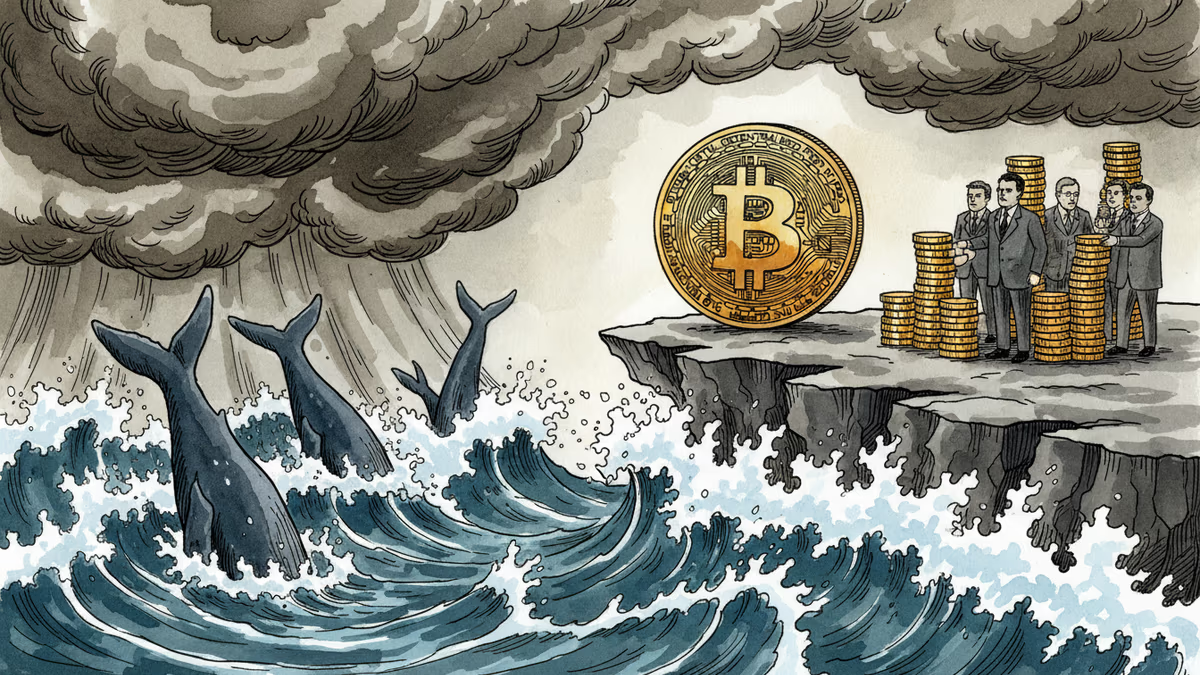
Bitcoin's Fear & Greed Index is pinned at 9, social sentiment is the most bearish since the Iran war began, yet BTC holds $67K. Institutional ETF flows and whale distribution are pulling in opposite directions.
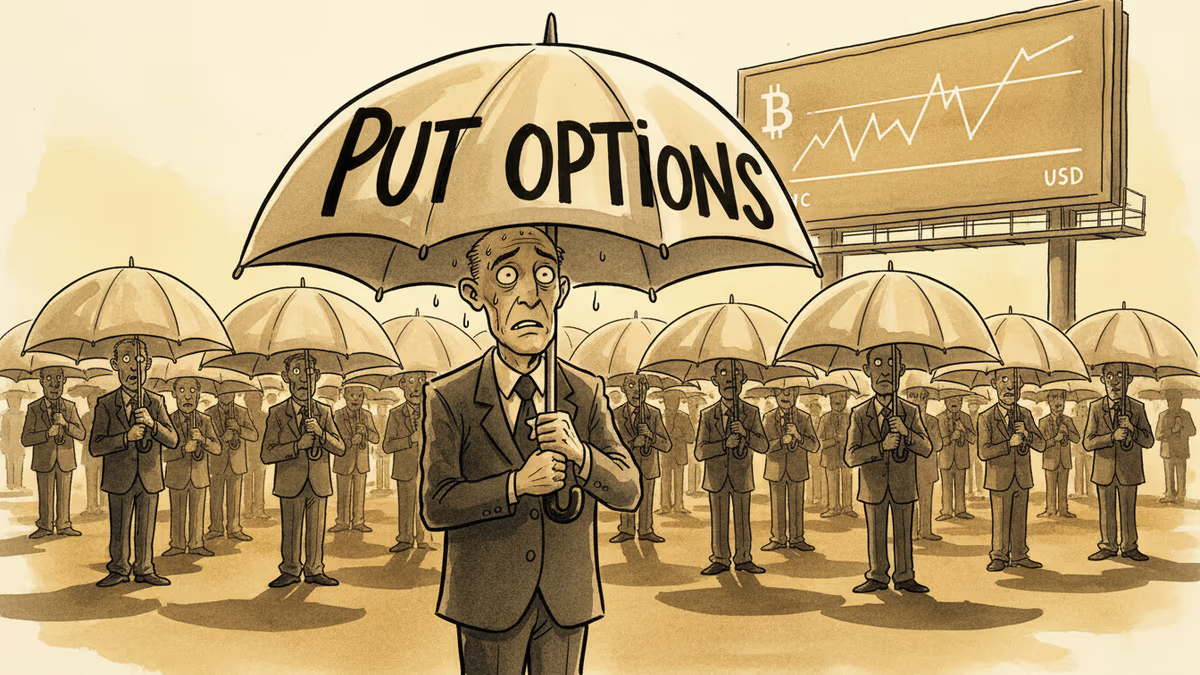
Bitcoin put premiums just hit an all-time high relative to spot volume — 3x the levels seen after Terra/Luna's collapse. VanEck data shows similar fear episodes preceded 133% gains over 12 months. Is this panic or a turning point?

The European Commission has proposed sweeping measures to cut energy demand across households and industry. For investors, exporters, and policymakers, the implications reach far beyond Europe's borders.
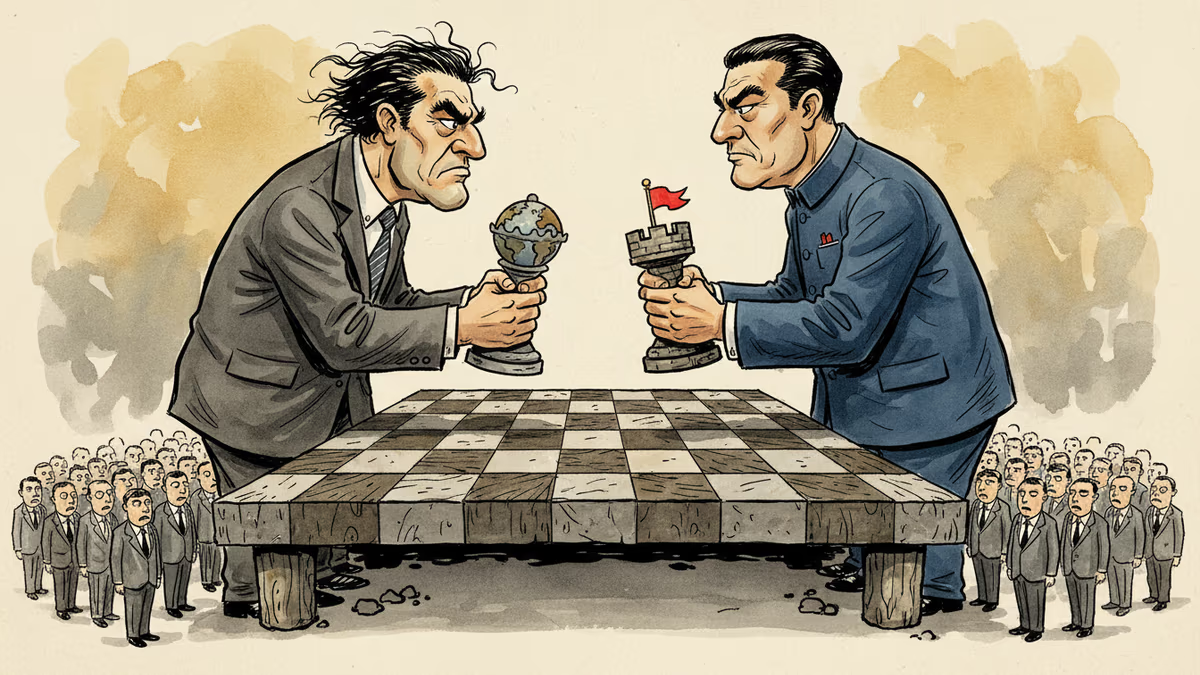
Trump signals he may delay a Xi Jinping summit, rattling markets and trade talks. Is this classic dealmaking pressure — or a miscalculation that could derail US-China relations?
Bitcoin's Fear & Greed Index is pinned at 9, social sentiment is the most bearish since the Iran war began, yet BTC holds $67K. Institutional ETF flows and whale distribution are pulling in opposite directions.
Bitcoin put premiums just hit an all-time high relative to spot volume — 3x the levels seen after Terra/Luna's collapse. VanEck data shows similar fear episodes preceded 133% gains over 12 months. Is this panic or a turning point?
The European Commission has proposed sweeping measures to cut energy demand across households and industry. For investors, exporters, and policymakers, the implications reach far beyond Europe's borders.
Trump signals he may delay a Xi Jinping summit, rattling markets and trade talks. Is this classic dealmaking pressure — or a miscalculation that could derail US-China relations?
Thoughts
Share your thoughts on this article
Sign in to join the conversation