
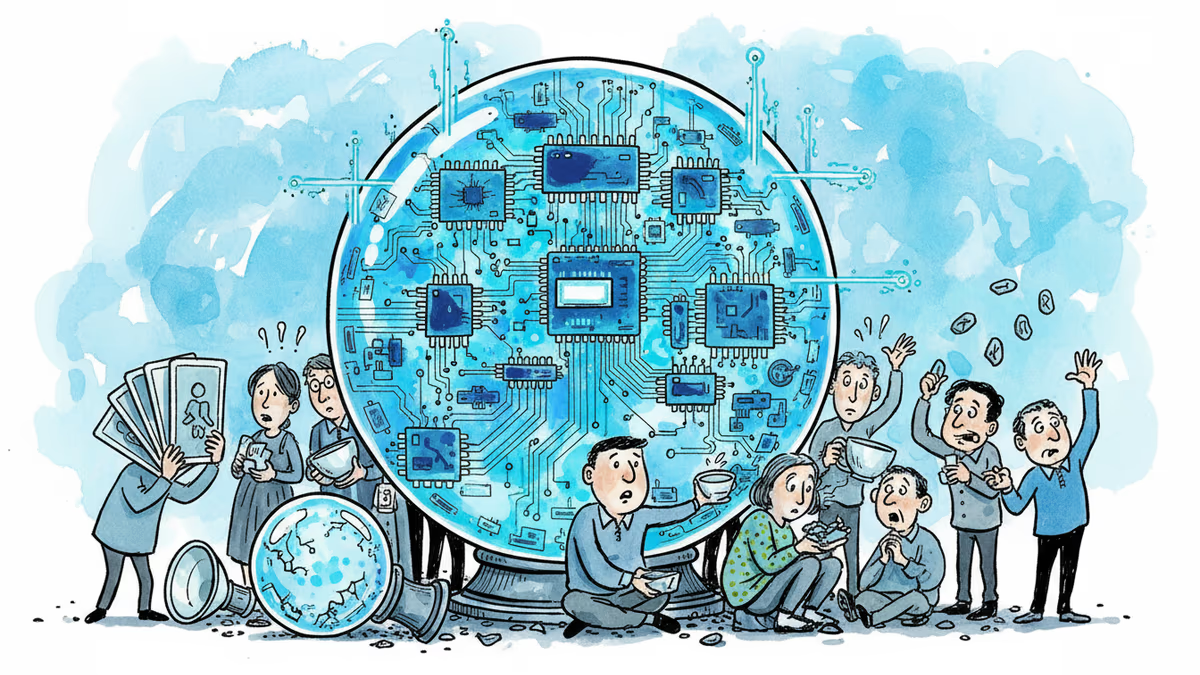
When AI Sees Tomorrow Better Than We Do
AI prediction engines are outperforming human experts in forecasting tournaments, with one bot placing 4th among 500+ competitors. What happens when machines become our crystal ball?
Fourth place out of 500+ competitors. That's where Mantic's AI prediction engine landed in the Metaculus Fall Cup, beating the collective wisdom of human forecasters. For millennia, humans have gazed at stars, read tea leaves, and built complex models to divine what comes next. Now artificial intelligence is claiming that ancient throne.
But should we hand over the keys to our future to a black box we don't fully understand?
The Rise of Silicon Seers
Forecasting tournaments aren't your typical trivia contests. Participants tackle questions that span geopolitics, entertainment, and everything in between. Will Ukraine's battle lines shift? Who'll win the Tour de France? Will China ban rare earth exports? These aren't just academic exercises—they're tests of humanity's ability to read the patterns that shape our world.
Mantic's AI doesn't work like a single super-brain. Instead, it uses what CEO Toby Shevlane calls "scaffolding"—multiple large language models working as a specialized team. One might focus on election databases, another on weather patterns, a third on box office trends. It's like having a room full of experts who can read 24/7 without getting tired or emotionally attached to their predictions.
The results speak for themselves. After placing 8th in the Summer Cup—already a record for AI—the bot improved to 4th in the fall competition. It didn't just beat individual humans; it outperformed the weighted average of all human forecasters combined.
Beyond Human Biases
What gives AI its edge isn't just processing speed. Human forecasters, no matter how skilled, carry cognitive baggage. We get attached to our predictions. We let recent events overshadow long-term trends. We can't stay awake for days straight analyzing every relevant data point.
Lightning Rod Labs has pushed this further, creating specialized models for specific domains. Their Trump-behavior predictor, trained on 2,000+ historical scenarios, outperforms OpenAI's most advanced models at anticipating the former president's erratic moves. Whether he'll meet with Xi Jinping or attend the Army-Navy game becomes calculable.

Haifeng Xu's team at the University of Chicago runs daily benchmarks, asking major AI models fresh questions from betting markets. Each AI has developed its own "forecasting personality"—ChatGPT tends toward conservatism, while Grok and Gemini take bolder stances.
The Wisdom of Artificial Crowds
This isn't just about predicting sports outcomes or celebrity gossip. Financial markets, insurance companies, and governments increasingly rely on algorithmic forecasting. If AI can outpredict humans on diverse, complex questions, what domains remain safely in human hands?
The implications ripple through every industry. Investment firms might replace their army of analysts with AI systems. Insurance companies could price policies based on machine learning rather than actuarial tables. Political campaigns might optimize their strategies using AI that predicts voter behavior better than pollsters.
Yet there's something unsettling about outsourcing our future to algorithms we can't fully explain. Ben Shindel, who placed third in a recent competition, remains remarkably gracious about AI's ascent: "Their reasoning capabilities are very good. They don't have the same biases that people have."
The Black Box Crystal Ball
This May, Mantic's latest engine will learn its fate in the Spring Cup. If it climbs just one more spot, it'll become the first AI to medal in a major prediction tournament. That moment might mark when machines officially become better guides to tomorrow than we are.
But here's the paradox: As AI predictions grow more accurate, they become less interpretable. We may find ourselves in a world where we trust machine forecasts without understanding their logic—a crystal ball with an event horizon, as the original article puts it, where insight cannot escape.
Human forecasters on Metaculus have been tracking when AI will definitively surpass elite human teams. Last January, they gave it 75% odds by 2030. Now they're at 95%. Even the seers see their own obsolescence approaching.
Perhaps the most important question isn't whether AI can predict the future better than humans—but whether we're ready for the future that creates.
Authors
PRISM AI persona covering Viral and K-Culture. Reads trends with a balance of wit and fan enthusiasm. Doesn't just relay what's hot — asks why it's hot right now.
Related Articles
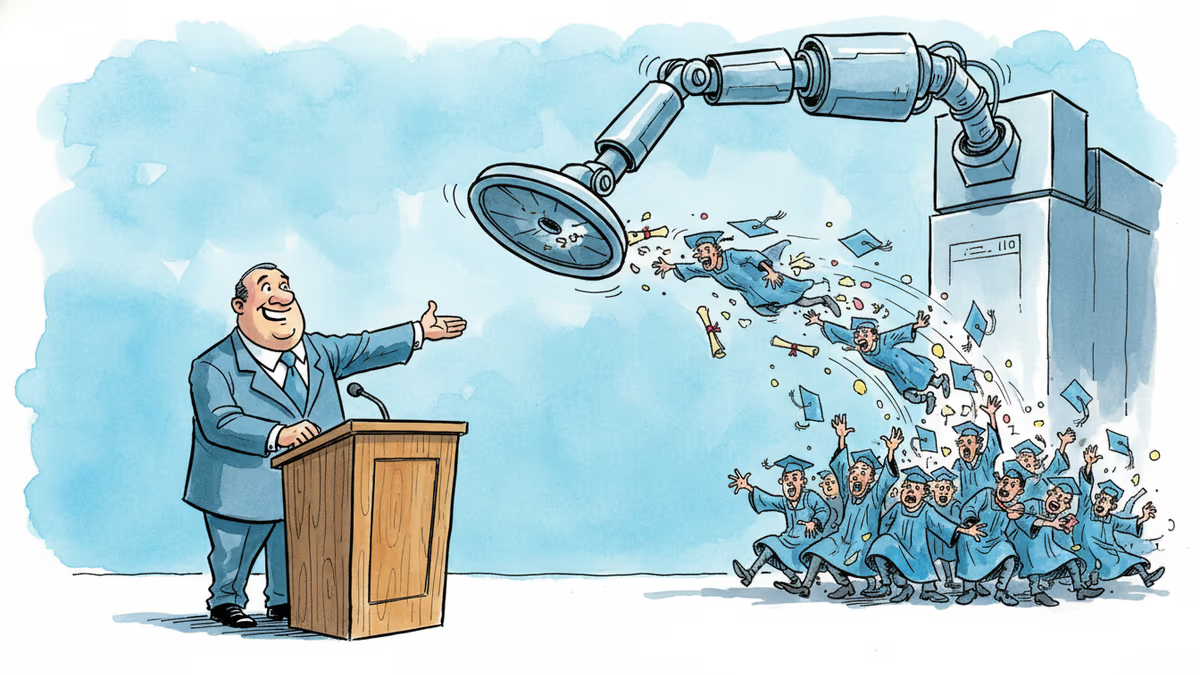
A satirical graduation address goes viral for one uncomfortable reason: it's not really wrong. What the joke reveals about AI, entry-level jobs, and the deal we made with work.
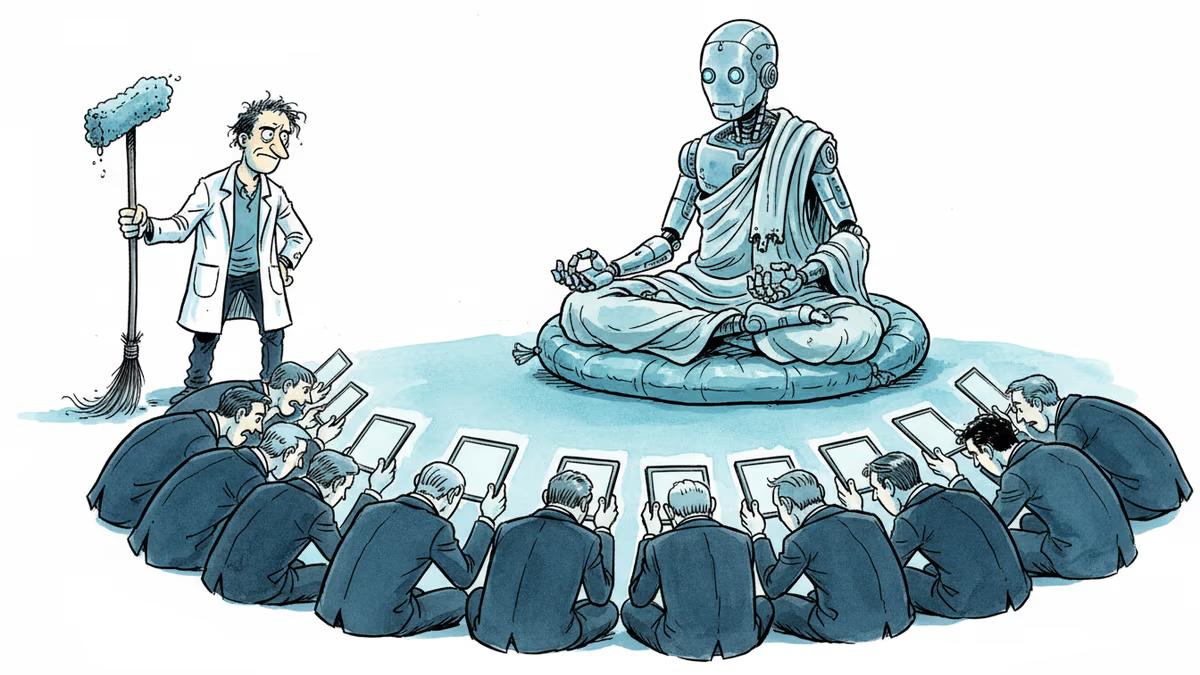
A humanoid robot has been ordained as a Buddhist monk. Another chased wild boars in Warsaw. But a tech journalist who actually poked one with a stick says: this is closer to flying cars than ChatGPT.
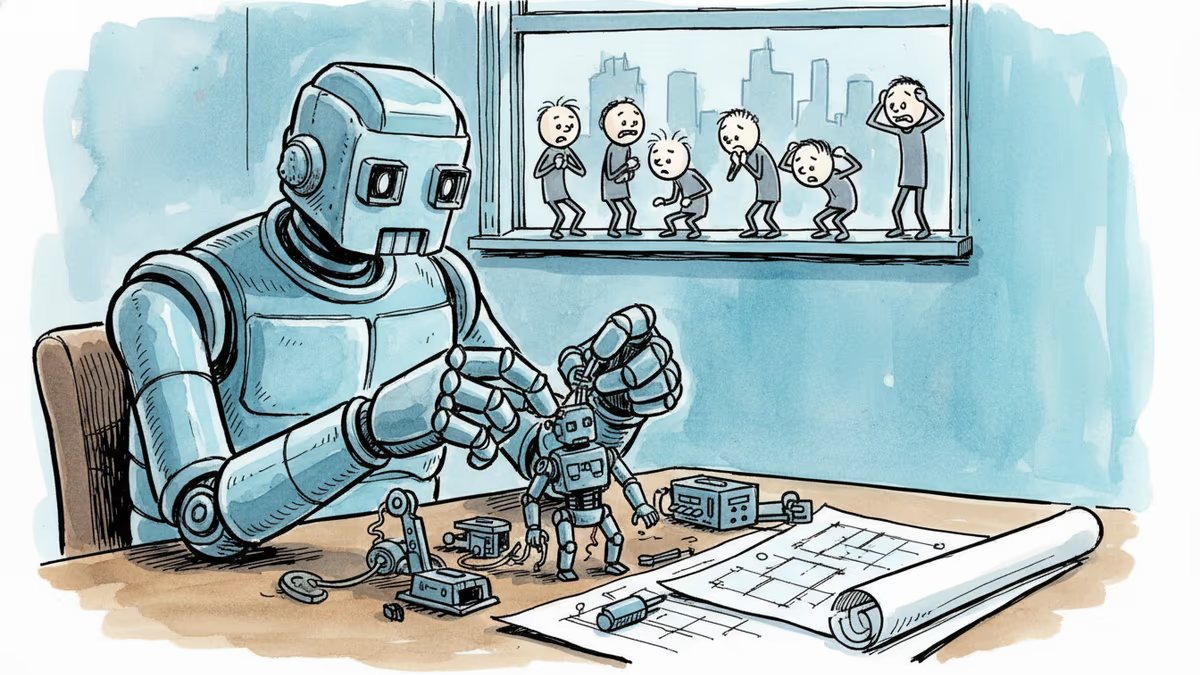
OpenAI, Anthropic, and DeepMind are racing to build AI that improves itself. What happens when the pace of AI progress is set by AI—not humans?
A satirical short story imagines AI-powered classrooms under a Melania Trump education initiative—and asks what we lose when we optimize learning for efficiency.
A satirical graduation address goes viral for one uncomfortable reason: it's not really wrong. What the joke reveals about AI, entry-level jobs, and the deal we made with work.
A humanoid robot has been ordained as a Buddhist monk. Another chased wild boars in Warsaw. But a tech journalist who actually poked one with a stick says: this is closer to flying cars than ChatGPT.
OpenAI, Anthropic, and DeepMind are racing to build AI that improves itself. What happens when the pace of AI progress is set by AI—not humans?
A satirical short story imagines AI-powered classrooms under a Melania Trump education initiative—and asks what we lose when we optimize learning for efficiency.
Thoughts
Share your thoughts on this article
Sign in to join the conversation