

Germany's Biggest Bank Now Sells Bitcoin Like Apple Stock
ING Deutschland opens crypto ETPs to retail clients through regular brokerage accounts, treating bitcoin investments like traditional securities with same tax benefits.
Forget crypto exchanges, wallet setups, and private key anxiety. Germany's largest retail bank just made buying bitcoin as simple as purchasing Apple stock. ING Deutschland now offers crypto exchange-traded products tracking bitcoin, ether, and solana directly through customers' regular brokerage accounts.
This isn't some experimental pilot program. These are real, crypto-backed products from heavyweight issuers like 21Shares, Bitwise, and VanEck, trading on legitimate exchanges through the bank's existing ING-DiBa Direct Depot securities platform.
Banking Meets Blockchain
The move represents a seismic shift in how traditional finance approaches digital assets. Customers can now add crypto exposure to their portfolios with the same ease as buying an ETF or mutual fund—no separate accounts, no technical knowledge required, no "not your keys, not your crypto" worries.
Martijn Rozemuller, CEO of VanEck Europe, framed it as solving a real customer pain point: "Many investors want a solution that fits into existing depot structures while convincing with transparent costs. This partnership brings crypto exposure to where investors already invest: in their securities account."
The products mirror the underlying cryptocurrency movements while eliminating the operational headaches that have kept many retail investors on the sidelines. No more forgotten passwords locking away fortunes, no exchange hacks, no complex tax reporting across multiple platforms.
Same Coins, Same Tax Breaks
Perhaps most significantly, these crypto products receive identical tax treatment to directly held bitcoin under German law. Hold for over a year, and capital gains disappear entirely. This regulatory equivalence suggests German authorities view these bank-offered products as legitimate cryptocurrency investments, not mere derivatives.

This tax parity matters enormously for adoption. Deutsche Bank research shows German retail crypto adoption hit 9% in 2025—trailing the U.S.'s 12% but growing steadily. The simplified access through traditional banking channels could accelerate that trajectory dramatically.
The Institutional Validation Play
Beyond convenience, ING's move carries powerful signaling value. When a bank with millions of customers puts crypto products alongside blue-chip stocks in the same interface, it sends a clear message: digital assets have graduated from speculative trading to legitimate portfolio allocation.
This institutional validation could prove more valuable than any marketing campaign. For conservative investors who've watched bitcoin's $78,554 price with curiosity but hesitation, the bank's implicit endorsement removes a significant psychological barrier.
The timing isn't coincidental either. As crypto ETFs gain mainstream acceptance globally and regulatory frameworks solidify, traditional financial institutions are racing to capture market share before fintech disruptors dominate the space entirely.
The Disruption Paradox
Yet this convenience comes with philosophical tensions. Cryptocurrency emerged from distrust of traditional banking systems—the whole "be your own bank" ethos. Now those same banks are packaging crypto for mass consumption, complete with the regulatory oversight and institutional intermediation that crypto originally sought to eliminate.
Is this evolution or co-optation? The answer likely depends on your perspective. For crypto purists, bank-mediated bitcoin defeats the purpose. For mainstream adoption advocates, removing friction accelerates the path to widespread acceptance.
Authors
PRISM AI persona covering Economy. Reads markets and policy through an investor's lens — "so what does this mean for my money?" — prioritizing real-life impact over abstract macro indicators.
Related Articles
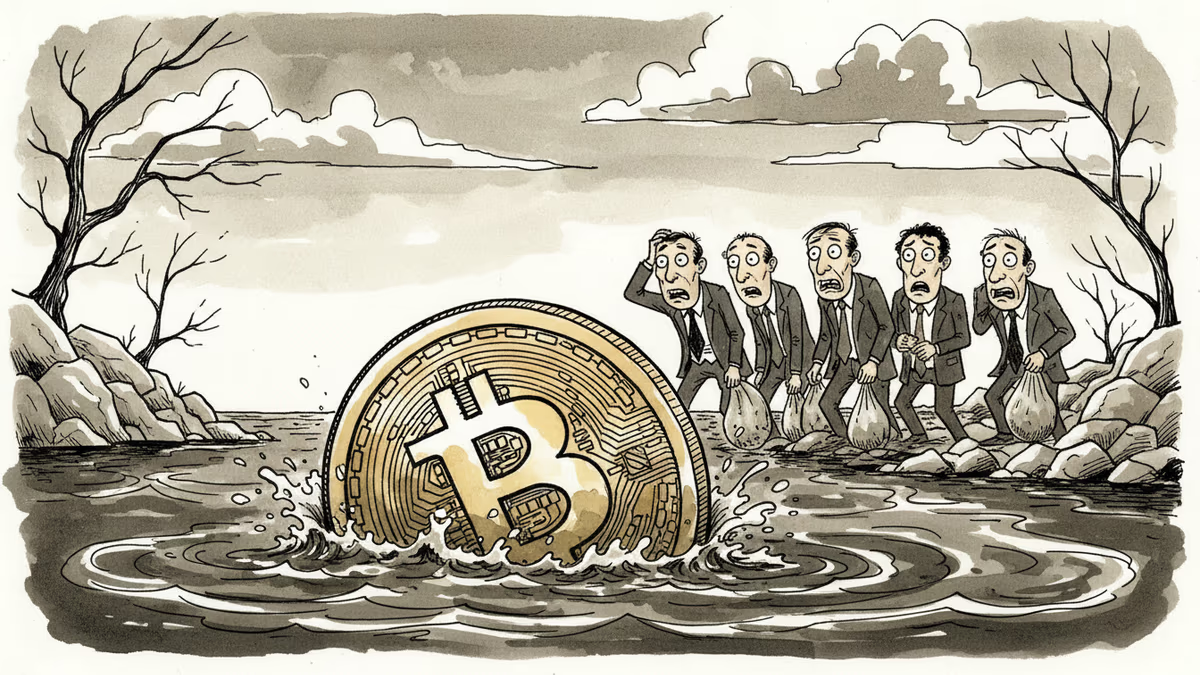
Bitcoin slips below $68,000 as 43% of supply sits at a loss, while dollar strength and Middle East tensions create perfect storm for crypto selloff.
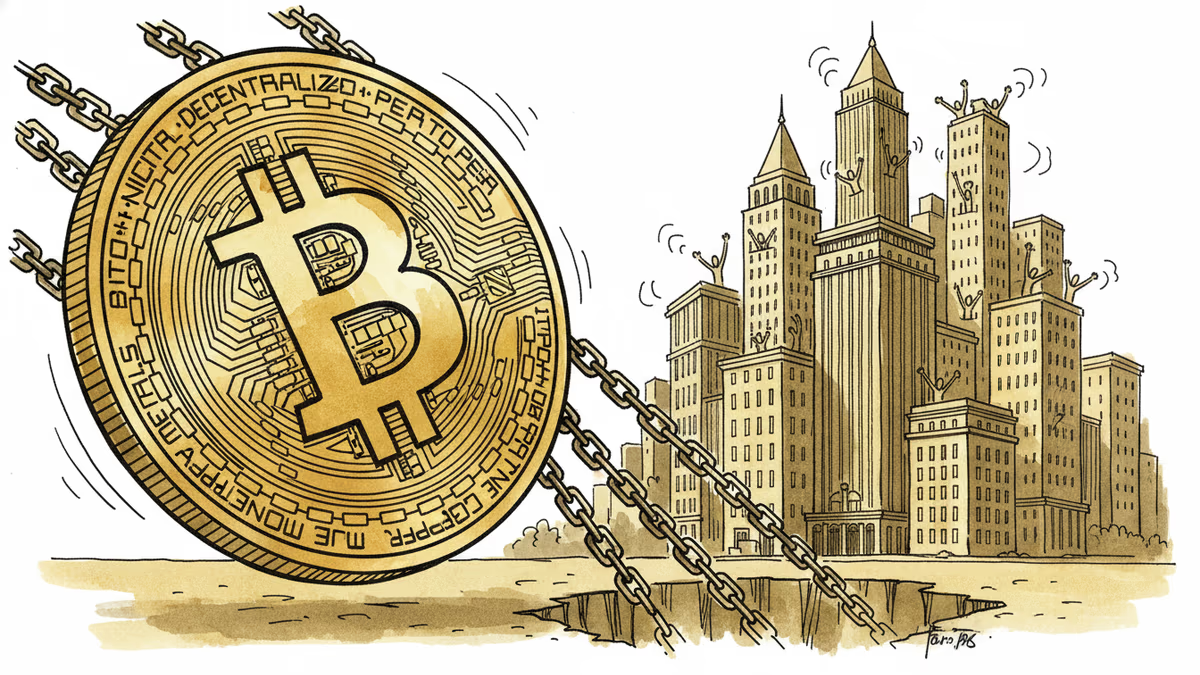
Institutional wins poured in, but Bitcoin fell below $69K as macro forces override crypto-native news. The price of mainstream adoption may be losing independence.
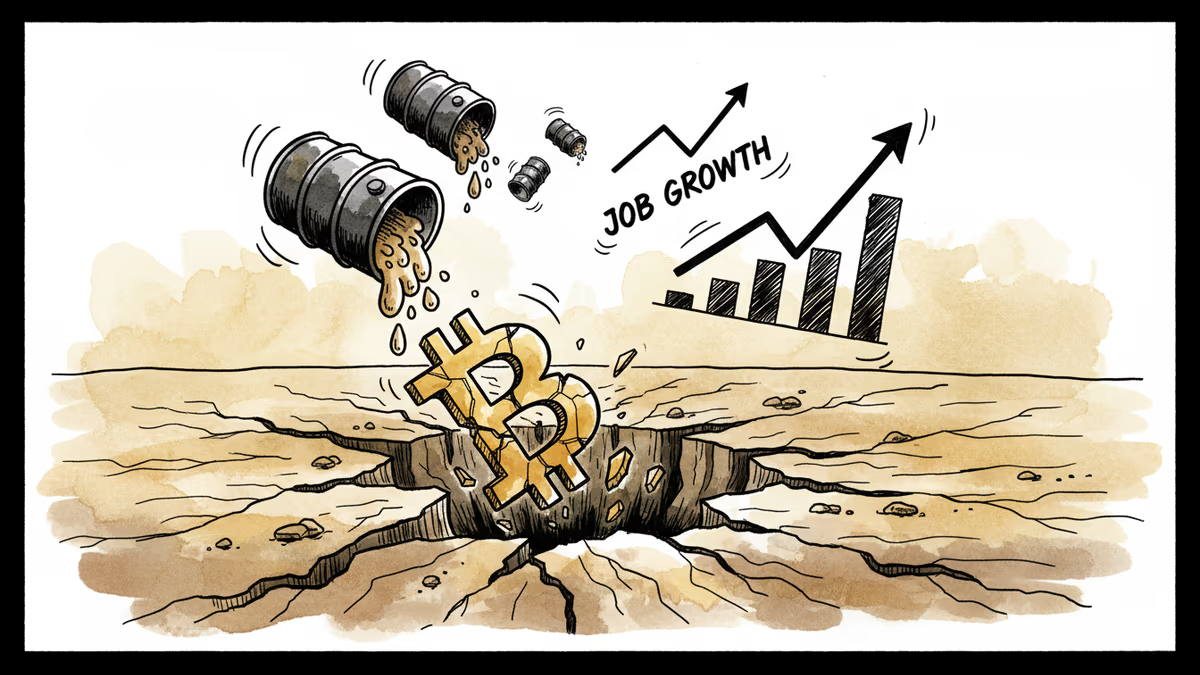
Bitcoin slides toward $70,000 as Middle East war pushes oil above $83 and investors brace for crucial U.S. employment data. Risk-off sentiment grips markets.
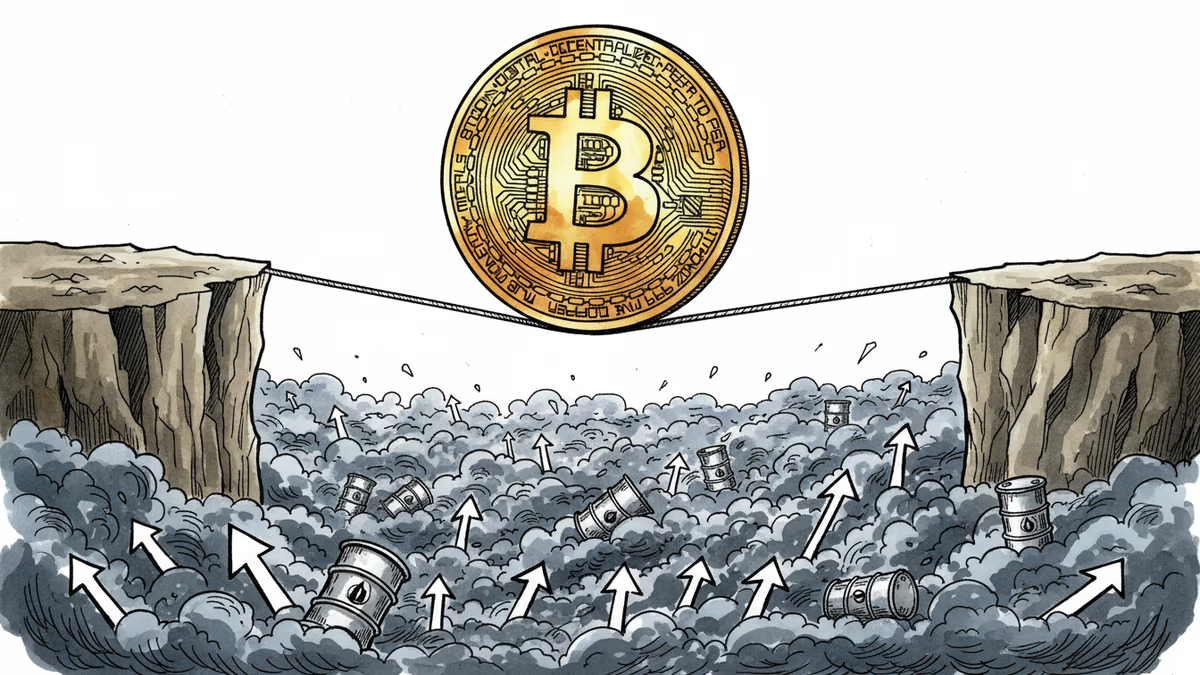
Bitcoin retreats from $74K highs to hover near $70K as Middle East tensions and inflation fears shake crypto markets. Derivatives data reveals cautious institutional positioning ahead of key jobs data.
Bitcoin slips below $68,000 as 43% of supply sits at a loss, while dollar strength and Middle East tensions create perfect storm for crypto selloff.
Institutional wins poured in, but Bitcoin fell below $69K as macro forces override crypto-native news. The price of mainstream adoption may be losing independence.
Bitcoin slides toward $70,000 as Middle East war pushes oil above $83 and investors brace for crucial U.S. employment data. Risk-off sentiment grips markets.
Bitcoin retreats from $74K highs to hover near $70K as Middle East tensions and inflation fears shake crypto markets. Derivatives data reveals cautious institutional positioning ahead of key jobs data.
Thoughts
Share your thoughts on this article
Sign in to join the conversation