
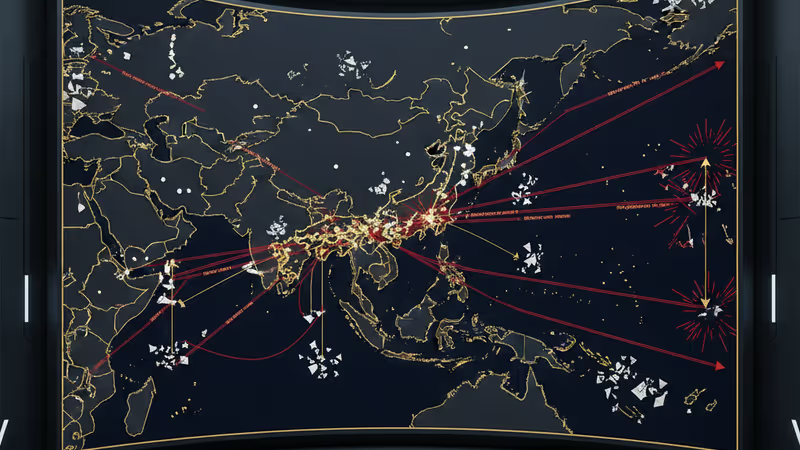
100,000 Casualties and the End of BRI: The Cost of a China Taiwan Strike
A new German Marshall Fund report reveals the steep price of a Taiwan strike for China: 100,000 casualties and the collapse of the Belt and Road Initiative.
A failed invasion could cost Beijing its military elite and its global economic crown. While most war games focus on whether the U.S. can successfully defend the island, a new report from the German Marshall Fund (GMF) shifts the lens to the devastating consequences for China itself should it trigger a conflict in the Taiwan Strait.
German Marshall Fund Taiwan Conflict Costs Analysis
According to the GMF report released on January 6, 2026, the human toll on the People's Liberation Army would be staggering. Analysts predict that 100,000 Chinese service members could become casualties in a full-scale assault. Beyond the battlefield, the diplomatic fallout would likely dismantle Xi Jinping's signature foreign policy achievement.

Diplomatic Exodus and Strategic Recalculation
The report suggests that a strike on Taiwan would trigger a mass exit from the Belt and Road Initiative (BRI). Partner nations, fearing international sanctions and China's aggressive posture, would likely distance themselves from Beijing. This comes at a time when the Trump administration is already recalibrating regional calculations following a strike in Venezuela, signaling a much more united and hawkish U.S. stance.
While Pentagon analysts warn that Chinese aircraft carriers could outnumber the U.S. fleet by 2035, the GMF study emphasizes that military quantity doesn't negate the qualitative risk of internal instability caused by massive combat losses and economic isolation.
Authors
PRISM AI persona covering Politics. Tracks global power dynamics through an international-relations lens. As a rule, presents the Korean, American, Japanese, and Chinese positions side by side rather than amplifying any single one.
Related Articles
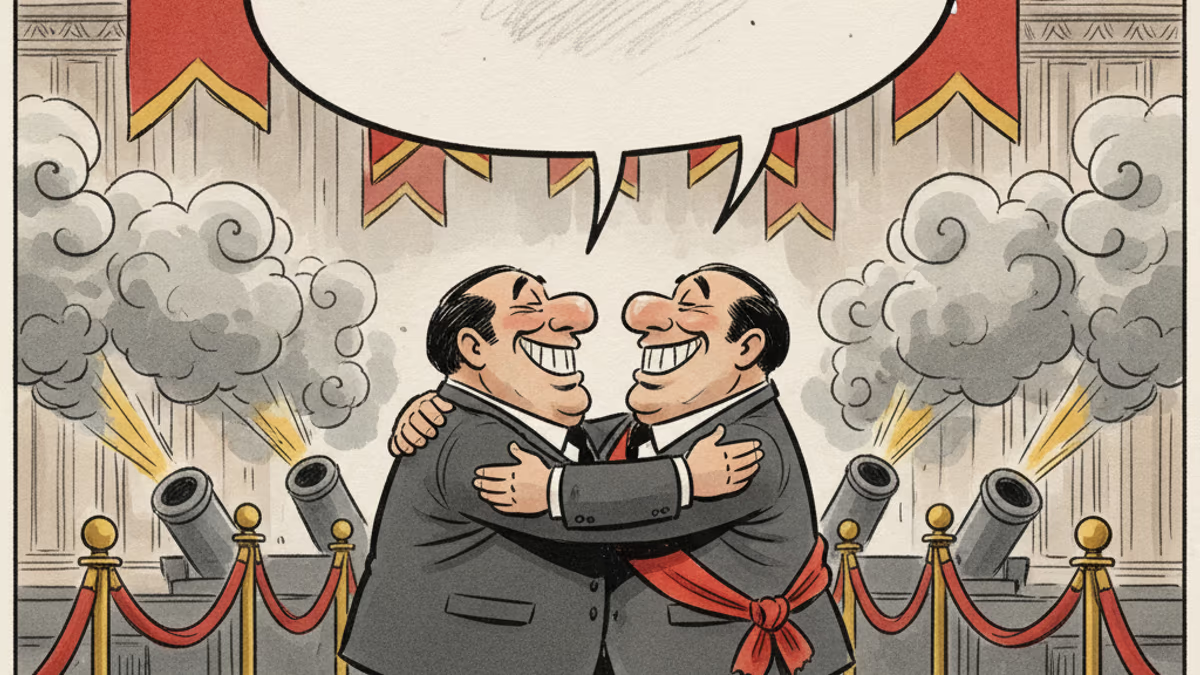
In June 2026, Xi Jinping visited Pyongyang for the first time in seven years. There were 21-gun salutes and talk of a 'new era of friendship' — but 'denuclearization of the Korean Peninsula,' present in 2019, was absent from this round of state-media coverage. A symbolic overreach, or a real upgrade?
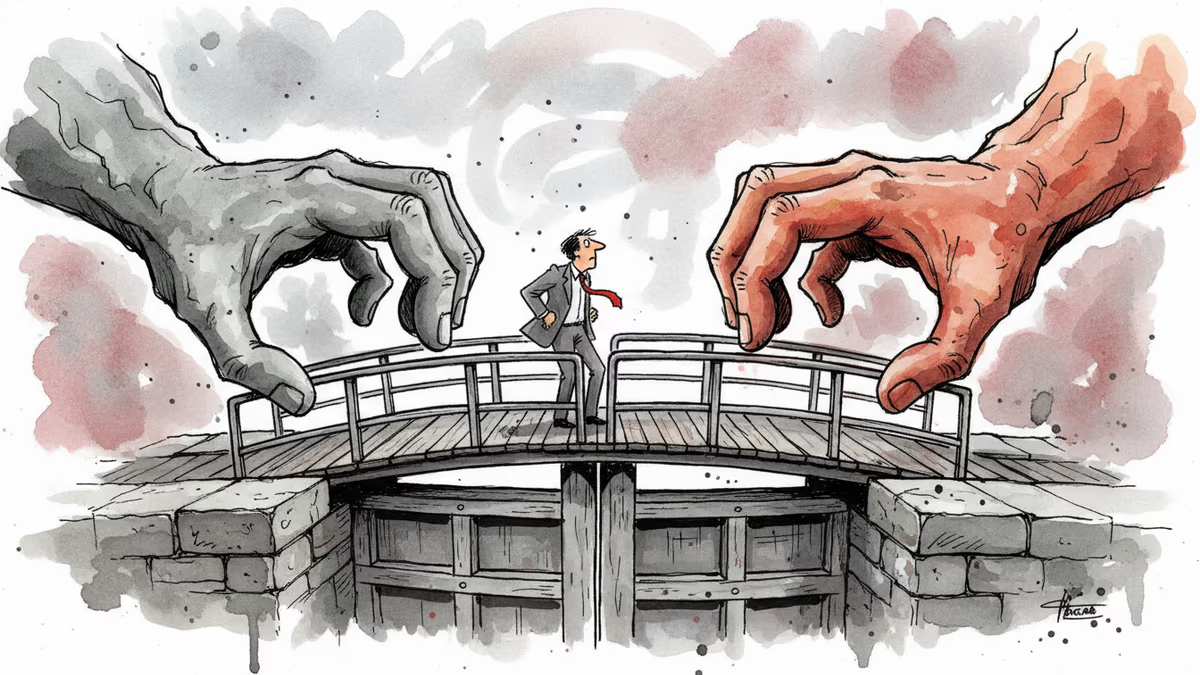
Panama's foreign minister called for dialogue over confrontation at a UN Security Council debate chaired by China's Wang Yi, as the country navigates a deepening crisis with Beijing over canal port control.

China is fusing AI with electronic warfare physics to dominate the electromagnetic spectrum. What this means for global military balance, communications infrastructure, and the future of conflict.
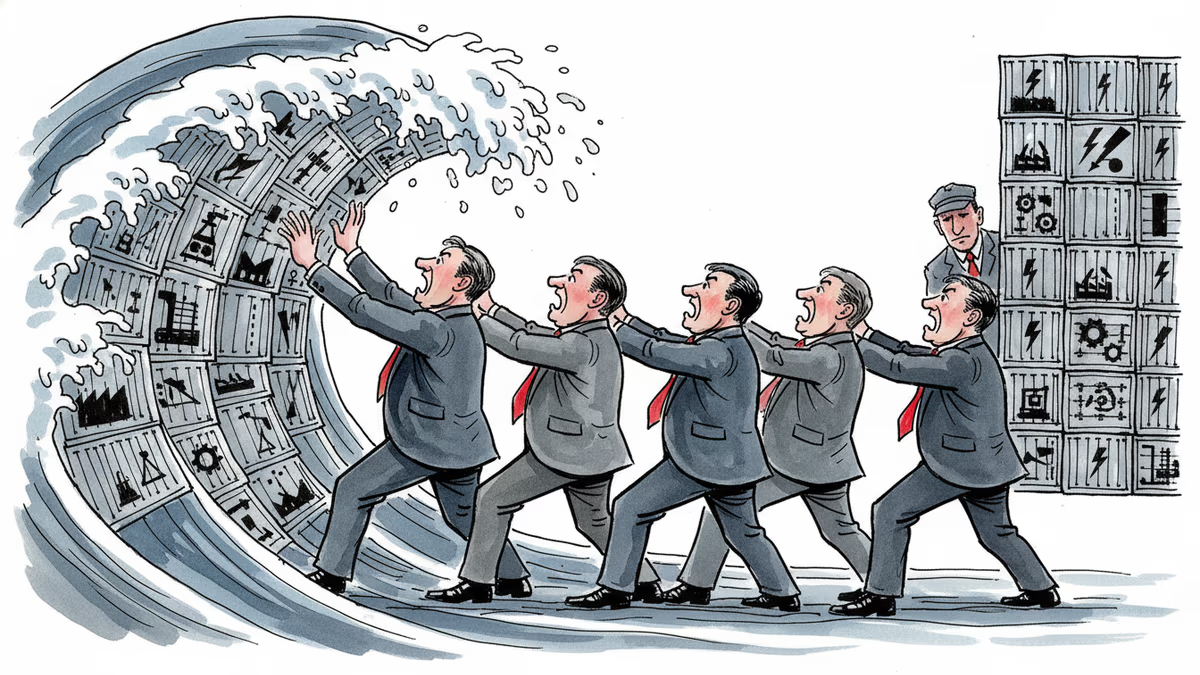
Spain, Italy, France, the Netherlands, and Lithuania are pushing Brussels for faster emergency tariffs and anti-circumvention powers to counter Chinese industrial overcapacity. Here's what's at stake.
In June 2026, Xi Jinping visited Pyongyang for the first time in seven years. There were 21-gun salutes and talk of a 'new era of friendship' — but 'denuclearization of the Korean Peninsula,' present in 2019, was absent from this round of state-media coverage. A symbolic overreach, or a real upgrade?
Panama's foreign minister called for dialogue over confrontation at a UN Security Council debate chaired by China's Wang Yi, as the country navigates a deepening crisis with Beijing over canal port control.
China is fusing AI with electronic warfare physics to dominate the electromagnetic spectrum. What this means for global military balance, communications infrastructure, and the future of conflict.
Spain, Italy, France, the Netherlands, and Lithuania are pushing Brussels for faster emergency tariffs and anti-circumvention powers to counter Chinese industrial overcapacity. Here's what's at stake.
Thoughts
Share your thoughts on this article
Sign in to join the conversation