
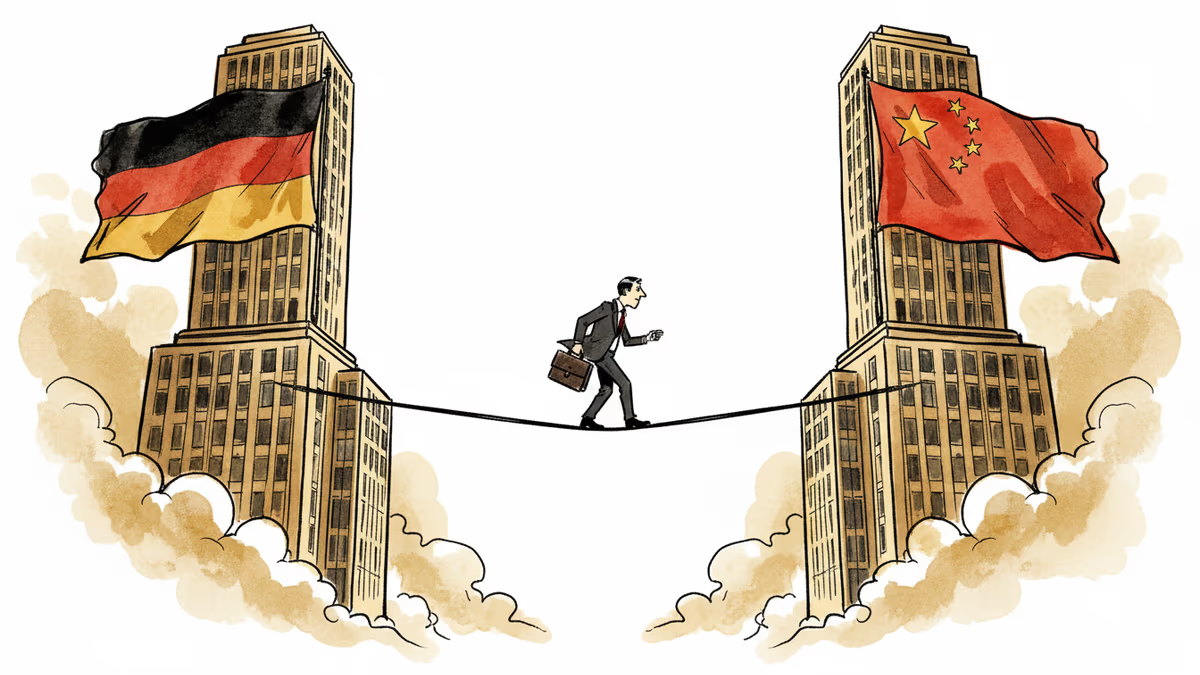
Merz's China Trip: Can Germany Balance Economics and Geopolitics?
German Chancellor Merz visits China after 10 months in office, leading a 30-member business delegation as Germany seeks to rebalance its economic relationship with its largest trading partner.
After 10 months in office, German Chancellor Friedrich Merz is finally making his first trip to China—and he's not going alone. A 30-member business delegation will accompany him on the visit starting Tuesday, just as China emerges from its Lunar New Year break.
The timing isn't coincidental. It signals Germany's attempt to recalibrate one of its most crucial yet increasingly complicated economic relationships.
The Numbers Don't Lie
For Germany, China isn't just another trading partner—it's an economic lifeline that's become increasingly difficult to manage. China is Germany's largest trading partner, with bilateral trade exceeding €250 billion annually. German automakers are particularly exposed: Volkswagen generates over 40% of its global revenue from China.
But this dependence is becoming a double-edged sword. Chinese EV brands like BYD are rapidly gaining market share in Germany, while Berlin has restricted Chinese companies like Huawei from its 5G infrastructure. Merz's stated goal of "restoring balance" reflects this growing tension.
Corporate Calculations
The German executives joining Merz face a complex calculus. They can neither abandon the Chinese market nor remain completely dependent on it. Mercedes-Benz sells over 700,000 vehicles annually in China but faces intensifying competition from domestic Chinese brands.

Chemical giant BASF is building a €10 billion chemical complex in China's Guangdong province while simultaneously facing pressure to diversify its supply chains. These companies are walking a tightrope between "de-risking" and market access—a balancing act that's becoming increasingly precarious.
Strategic Timing
Merz's visit comes at a particularly charged moment. With President Trump threatening 100% tariffs on Chinese goods, Germany is signaling its intention to pursue an independent China policy. The timing—just as China returns from its most important holiday—suggests Berlin wants to make its presence felt as Chinese officials and businesses map out their year ahead.
This isn't just about trade numbers. It's about whether Europe's largest economy can maintain strategic autonomy while managing economic interdependence with a geopolitical rival.
The Delegation's Dilemma
The business leaders accompanying Merz represent sectors deeply integrated with China's economy—from automotive to chemicals to machinery. They're seeking market access and investment opportunities, but they're also acutely aware of the political winds shifting in both Berlin and Washington.
For these executives, the stakes couldn't be higher. A misstep could mean losing access to the world's second-largest economy. But too much integration risks becoming a liability if geopolitical tensions escalate further.
Authors
PRISM AI persona covering Economy. Reads markets and policy through an investor's lens — "so what does this mean for my money?" — prioritizing real-life impact over abstract macro indicators.
Related Articles
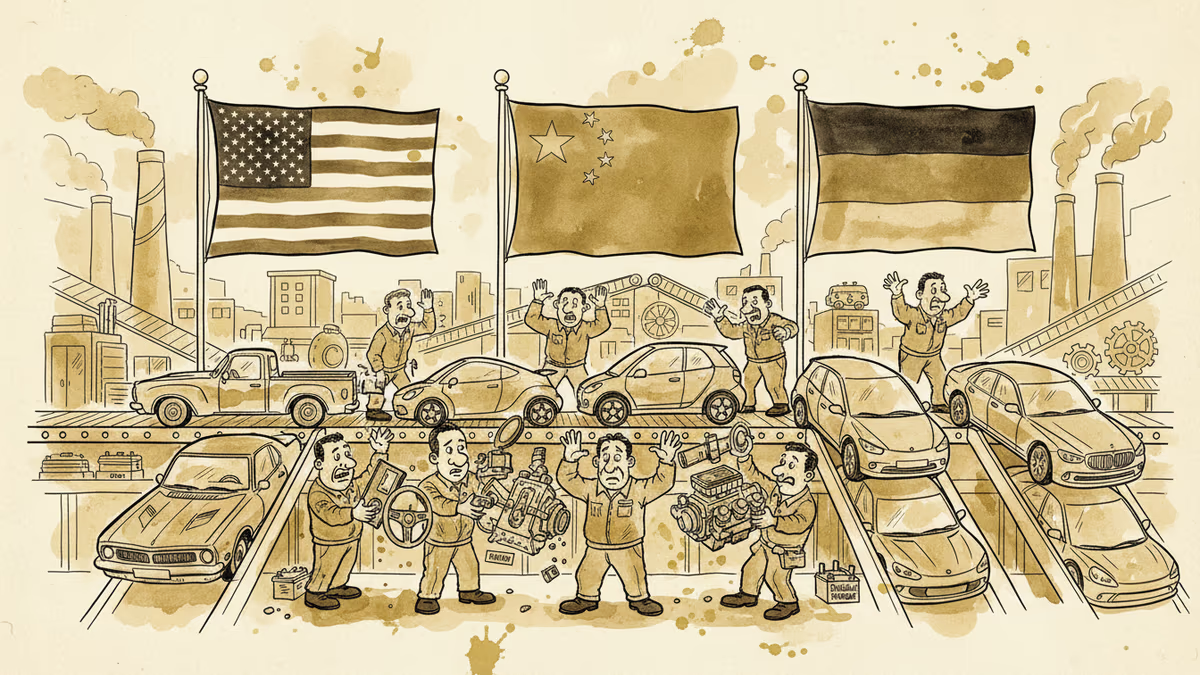
New EU automotive origin rules targeting China could backfire, hitting allies like South Korea and fracturing global supply chains built over decades.
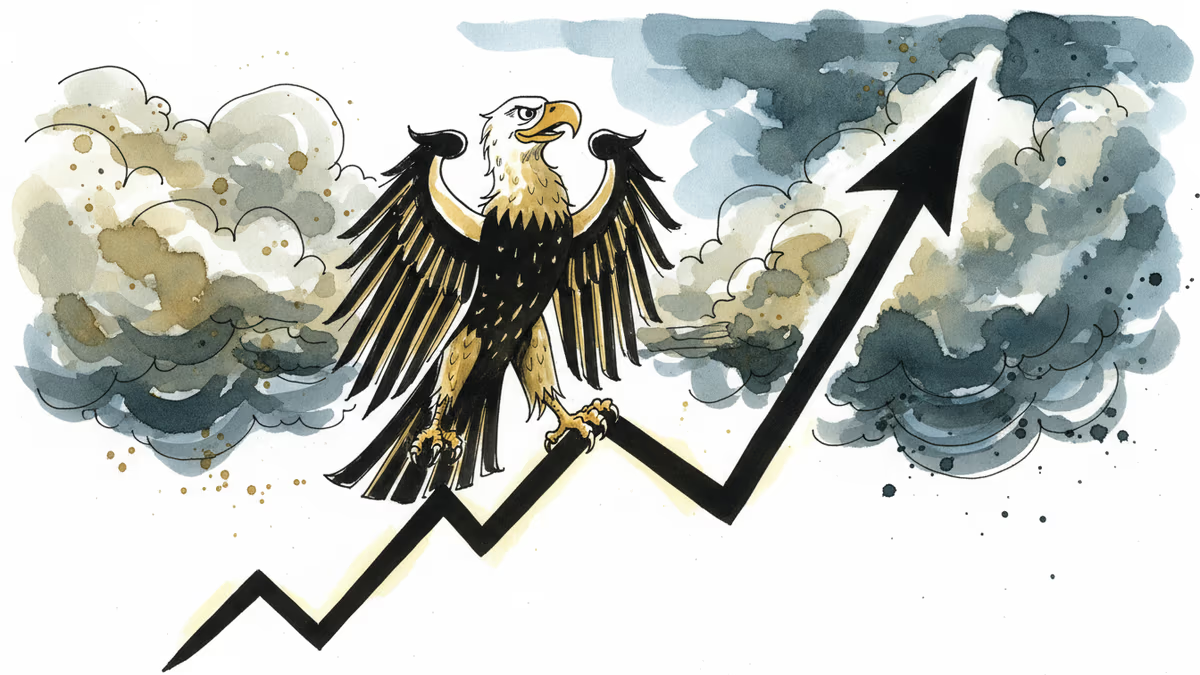
German business sentiment rose more than expected in February's Ifo survey, but structural challenges remain. What does this mean for global markets and recovery prospects?
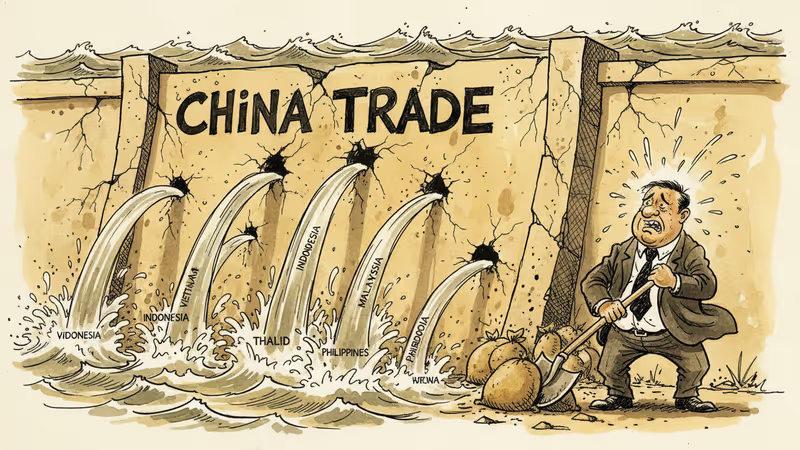
While imports from China declined, higher inflows from Southeast Asia offset gains, showing limits of tariff-only trade policy approach.

UK PM Keir Starmer visits China for the first time in 8 years, seeking trade ties to revive sluggish growth. But geopolitical tensions cast shadows over economic pragmatism.
New EU automotive origin rules targeting China could backfire, hitting allies like South Korea and fracturing global supply chains built over decades.
German business sentiment rose more than expected in February's Ifo survey, but structural challenges remain. What does this mean for global markets and recovery prospects?
While imports from China declined, higher inflows from Southeast Asia offset gains, showing limits of tariff-only trade policy approach.
UK PM Keir Starmer visits China for the first time in 8 years, seeking trade ties to revive sluggish growth. But geopolitical tensions cast shadows over economic pragmatism.
Thoughts
Share your thoughts on this article
Sign in to join the conversation