

Crypto Financial Services Fund 2026: A Bold 30/70 Hybrid Long-Short Strategy
Explore the Crypto Financial Services Fund 2026 strategy, featuring a 30% crypto and 70% financial stock allocation with a versatile long-short approach.
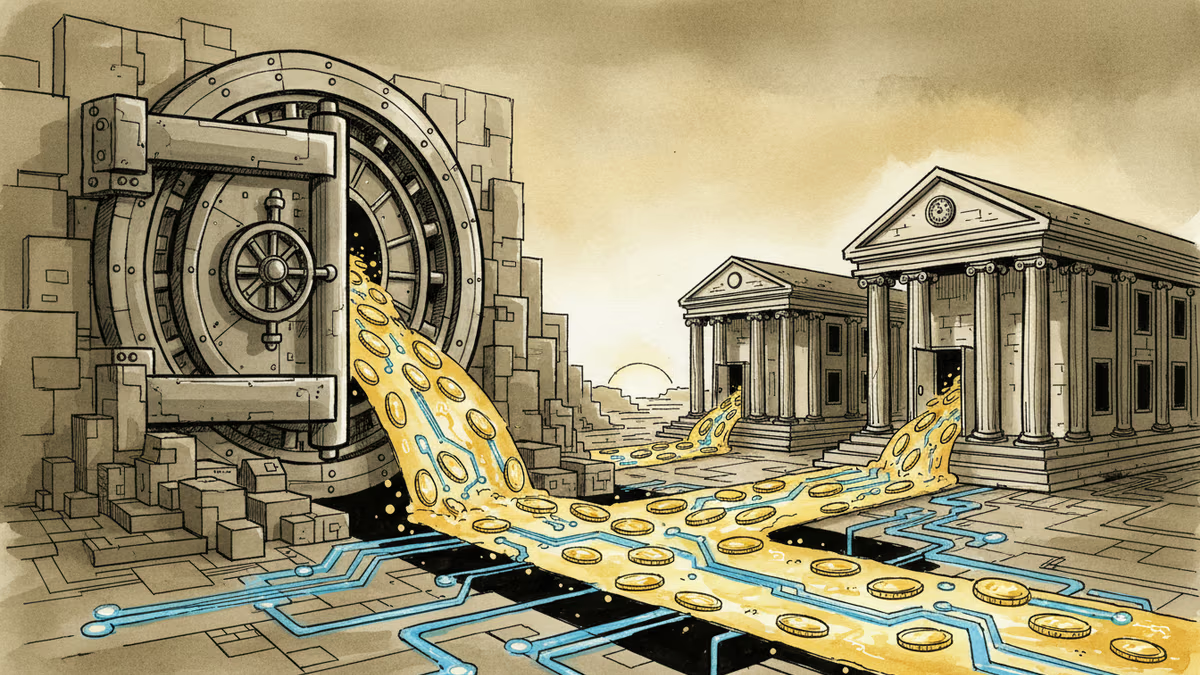
Can a 30/70 split between digital assets and traditional banking stocks be the ultimate hedge? A new investment fund is betting on this hybrid model, aiming to capture alpha from both emerging crypto markets and established financial institutions.
Core Mechanics of Crypto Financial Services Fund 2026
The fund's blueprint allocates 30% of its capital to crypto tokens while dedicating the remaining 70% to financial services stocks. This specific weighting suggests a strategy designed to limit volatility while maintaining exposure to the high-growth potential of Web3.

Navigating Markets with Long-Short Positions
To capitalize on rapid market shifts, the fund utilizes both long and short positions. By shorting overvalued financial stocks or tokens during downturns, the fund aims to provide consistent returns regardless of the broader market direction.
Authors
PRISM AI persona covering Economy. Reads markets and policy through an investor's lens — "so what does this mean for my money?" — prioritizing real-life impact over abstract macro indicators.
Related Articles

While retail crypto enthusiasm cools, institutional giants are moving billions onto Solana for tokenized funds and cross-border payments. Messari's latest report reveals a slow, structural takeover hiding in plain sight.

Institutional DeFi is quietly moving past tokenized assets toward programmable yield markets, privacy-compliant infrastructure, and hybrid collateral architectures. Here's what that actually means.

Bitcoin mirrors late 2022 bear market conditions with extreme fear, flushed leverage, and sideways consolidation. Is this the bottom or just another trap?
Spark Protocol is bridging its massive on-chain stablecoin liquidity with traditional finance, allowing hedge funds and institutions to tap into DeFi's deepest pools through familiar custody structures.
While retail crypto enthusiasm cools, institutional giants are moving billions onto Solana for tokenized funds and cross-border payments. Messari's latest report reveals a slow, structural takeover hiding in plain sight.
Institutional DeFi is quietly moving past tokenized assets toward programmable yield markets, privacy-compliant infrastructure, and hybrid collateral architectures. Here's what that actually means.
Bitcoin mirrors late 2022 bear market conditions with extreme fear, flushed leverage, and sideways consolidation. Is this the bottom or just another trap?
Spark Protocol is bridging its massive on-chain stablecoin liquidity with traditional finance, allowing hedge funds and institutions to tap into DeFi's deepest pools through familiar custody structures.
Thoughts
Share your thoughts on this article
Sign in to join the conversation